












The French E-Commerce Market in 2026: Scale and Structure
French e-commerce is no longer an emerging channel: it is the default channel. According to FEVAD, France's federation of e-commerce and distance selling, French consumers spent nearly €196.4 billion online in 2025, up 7% year-over-year, across 3.2 billion transactions, equivalent to more than 100 orders placed somewhere in France every single second. Product sales reached €76.1 billion (up 4%), while services (travel, ticketing, subscriptions, and other digital services) reached €120.3 billion (up 9%), a reminder that \"e-commerce\" in France spans well beyond retail goods.
The growth trajectory matters as much as the headline number. FEVAD reported the market at roughly €147 billion in 2022; reaching near €200 billion by 2025 means the market has grown by close to a third in three years, even as the base got larger. This is a mature market still compounding, not a category still finding its footing. That combination changes the calculus for anyone building a digital storefront here: French shoppers are sophisticated, comparison-shop across channels by default, and have specific expectations (around payment methods, delivery flexibility, and data privacy) that a template built for the US or UK market will not automatically satisfy.
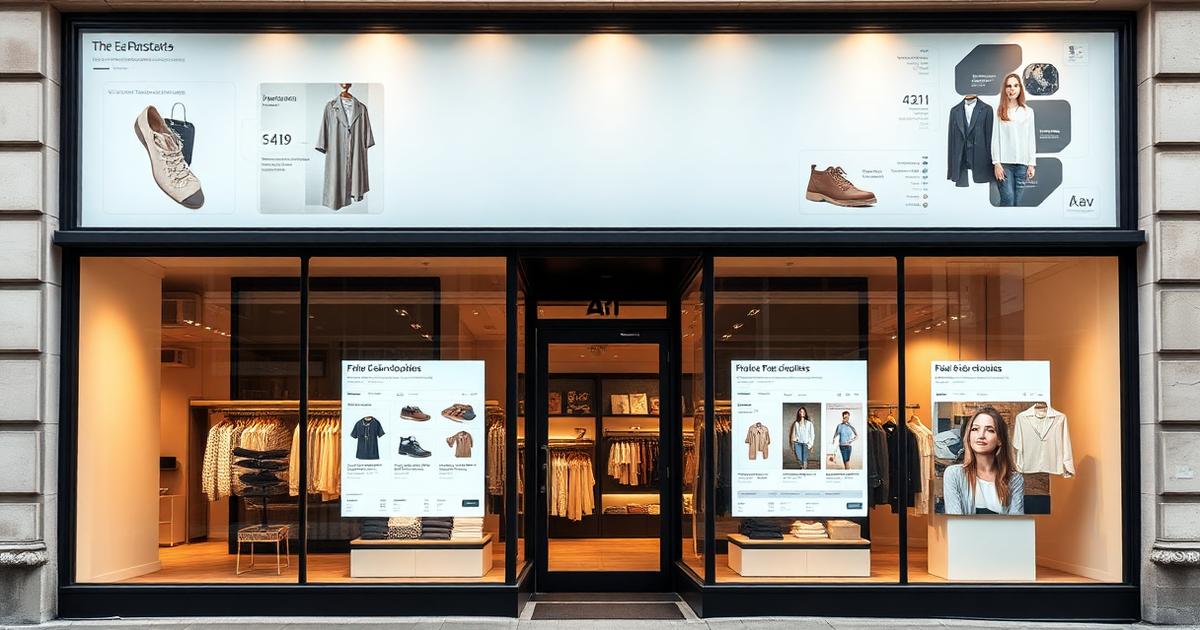
The French e-commerce opportunity in 2026 isn't about getting online. Nearly every established retailer already is. It's about being coherent across channels: the same inventory, loyalty status, and brand experience whether a customer is on a smartphone in the Métro, browsing a boutique window in Le Marais, or opening the retailer's app inside the store itself.
Market structure also matters for anyone entering as a new brand: large horizontal marketplaces (Amazon's French storefront, Cdiscount, Fnac-Darty) and flash-sale platforms (Veepee) sit alongside a dense layer of direct-to-consumer brands and independent boutiques, and French shoppers move fluidly between all of them in a single purchase journey. For a brand or retailer building or upgrading a mobile app for this market, three structural shifts matter more than the size of the overall number: the move to genuine omnichannel infrastructure, the rise of social commerce as a discovery and purchase channel, and mobile as the default checkout surface, the subjects of the next three sections.
Omnichannel Retail: Click & Collect and Unified Commerce
Omnichannel is often used loosely, so it's worth being precise: multichannel means a brand has an app, a website, and stores that each work fine on their own. Omnichannel means a customer's inventory visibility, loyalty status, and order history are unified across all of them, so an item added to a cart on the app shows up in the website cart, a loyalty point earned in-store applies online, and staff can see a customer's full order history regardless of where the order was placed. It's a genuinely harder engineering problem than a good-looking app, because most of the difficulty lives in backend integration, not the interface.
Galeries Lafayette, the well-known French department store group, is a real, documented example of this shift. It modernized its digital commerce ecosystem onto a unified platform (built on SAP Commerce Cloud) integrating commerce, order management, and product information management to support click & collect, ship-from-store, and a loyalty program across its stores and digital channels. In select stores, including La Rochelle and Cannes, it has also deployed NFC-enabled digital showroom tables for leather goods, letting a customer tap a product to pull up sizes, colors, and stock directly on the retailer's website from inside the store, a small but telling example of the store and the app being designed as one system rather than two.
Core Components of an Omnichannel Retail App
- Unified inventory & order management (OMS): A single source of truth for stock levels and order status across every store and the app, so "in stock" actually means in stock.
- Click & collect and ship-from-store: Order online, pick up or ship from the nearest location with sufficient stock, the two logistics patterns French shoppers now expect as standard.
- Cross-channel loyalty: Points, tiers, and offers that work identically whether the purchase happened in the app, on the website, or at a till in a physical store.
- In-store digital assist: NFC or QR-triggered access to full catalog, sizing, and stock from inside a physical location, extending the app's reach onto the shop floor.
- A single customer profile: One identity and purchase history across channels, so personalization and support don't reset every time a customer switches devices.
Click & collect in particular has deep roots in French retail. French grocery chains pioneered a dedicated \"drive\" pickup model (parking-bay collection points and drive-through lanes built specifically for pre-ordered groceries) well before click and collect became a mainstream expectation elsewhere in Europe, and that same convenience-first pickup culture has since carried over into fashion, beauty, home goods, and general retail. An app that treats \"buy online, pick up nearby\" as an afterthought is fighting a strong, pre-existing consumer habit rather than working with it.
Mobile-First Shopping and Payment Localization
Mobile is no longer a secondary consideration in French e-commerce: it's the primary one. Statista data puts the majority of French e-commerce transaction value flowing through smartphones, with a large share of transactions themselves completed on a phone rather than a desktop or tablet. That shifts what actually drives conversion: a fast, biometric-authenticated checkout with saved payment methods now matters more to the bottom line than almost any other single feature, because the difference between a completed purchase and an abandoned cart increasingly comes down to how few taps stand between "add to cart" and "order confirmed."
Payment localization is where generic, US-built checkout flows most often fail French shoppers. Carte Bancaire (CB), France's domestic card network, is typically co-badged with Visa or Mastercard on French bank cards and is the default expectation at checkout: a payment gateway that only recognizes Visa and Mastercard branding without properly supporting CB co-badging can create friction or outright declines. PayPal remains widely used. And for fashion, beauty, and other higher-ticket categories, offering buy-now-pay-later has moved from differentiator to expectation: Alma, a French BNPL fintech, and Klarna are both widely used payment options in the French market, alongside PayPal's own installment offering.
- Carte Bancaire (CB) support: Proper co-badged CB/Visa/Mastercard acceptance through a PCI-compliant payment gateway, not just generic international card processing.
- Apple Pay and Google Pay: One-tap, biometric checkout that removes manual card entry entirely, a meaningful conversion lever given mobile's dominant share of transactions.
- At least one BNPL option: Alma or Klarna for fashion, beauty, and higher-ticket categories, where installment payment is increasingly a purchase-decision factor, not just a convenience.
- PayPal: Still a widely trusted, widely used fallback payment method for French online shoppers, particularly for cross-border and marketplace purchases.
Luxury Digital Experience: French Maisons and Digital-Native Brands
Sézane is one of the clearest real-world examples of digital-first luxury and premium fashion in France. Founded in 2013 by Morgane Sézalory, Sézane is widely described as France's first fashion brand born entirely online: Sézalory built the brand's identity and community through limited monthly online \"rendezvous\" drops before it ever had a physical address. Only after establishing that digital-first identity did Sézane open physical boutiques, deliberately designed to feel like homey Parisian apartments rather than conventional retail stores, in Paris and internationally, including New York. It's the online-to-offline model running in the opposite direction from most legacy retailers, and it's a useful case study for any digitally native brand thinking about what a physical footprint should reinforce rather than replace.
Established French luxury houses take a different but related approach, generally investing heavily in digital storefronts, personalization, and high-fidelity content as extensions of a carefully controlled brand experience rather than pure conversion funnels. The common thread across both digital-native brands and heritage luxury houses is that a luxury digital experience is judged by different criteria than a mass-market one: it needs to feel considered, not optimized within an inch of its life.
What Luxury Digital Experience Actually Requires
- Editorial-grade photography and video treated as core product content, not an afterthought bolted onto a template product page.
- Exclusivity mechanics (limited drops, waitlists, early access for loyalty members) built into the commerce logic itself, not simulated with a countdown timer.
- Multi-language and multi-currency support for an international customer base that expects a local-feeling experience regardless of where they're shopping from.
- Integrated concierge or stylist chat, treating customer service as part of the shopping experience rather than a separate support ticket system.
- Motion, transitions, and load performance polished to flagship-device standards, luxury shoppers notice jank and lag more, not less, than mass-market users.
None of this changes the underlying technical requirements covered elsewhere in this guide (payments, GDPR compliance, and omnichannel integration all still apply), but it does change the design and content priorities, and it's worth scoping explicitly with a team like our mobile app design services practice rather than treating it as a generic e-commerce build with nicer photos.
Neighborhood Retail Goes Digital: Le Marais and Independent Boutiques
Not every French retail app needs to be an enterprise omnichannel platform. Le Marais, one of Paris's most distinctive shopping districts, illustrates a different but equally real segment of the market: independent designer boutiques concentrated along streets like Rue des Rosiers, Rue des Francs-Bourgeois, and Rue Vieille du Temple, anchored by the BHV Marais department store and newer arrivals like Dover Street Market Paris. Unlike the flagship megastores of the Champs-Élysées, Le Marais's character comes from dozens of small, independently owned shops: exactly the kind of business that has real digital needs but neither the budget nor the operational complexity to justify a Galeries Lafayette-scale omnichannel platform.
For this segment, the right digital investment looks different: strong geolocation-aware discovery through tools like Google Business Profile and Maps so a shopper walking through the district can find a boutique's current hours and stock; simple, boutique-level inventory visibility rather than a full multi-warehouse OMS; QR-triggered access to a catalog or loyalty program from inside the shop; and a fast, mobile-friendly checkout rather than a heavy native app most independent retailers don't have the volume to justify maintaining. Our MVP development service is built for exactly this kind of scoped, right-sized build: enough digital infrastructure to compete, without enterprise-scale cost or complexity neither the budget nor the business model calls for.
Compliance by Design: GDPR, CNIL, and Data Protection
Any e-commerce app selling into France operates under the General Data Protection Regulation (GDPR), the EU-wide framework governing how personal data is collected, stored, and used, and in France, GDPR is enforced by the CNIL, the country's data protection authority, which is widely regarded as one of the strictest regulators in the EU on cookie and tracking consent specifically. The CNIL's guidance requires that consent for non-essential cookies and tracking be an explicit, affirmative opt-in (no pre-ticked boxes, no consent implied by continued browsing) and it recommends limiting cookie lifespans and re-obtaining user consent at least every 13 months rather than treating a single opt-in as permanent.
Crucially, none of this is limited to companies headquartered in France. The CNIL's guidance applies to any business processing the personal data of French residents, regardless of where that business is legally based: a US-headquartered brand selling into the French market through an app or website is just as much in scope as a French company, and \"we already have a GDPR banner\" from a US-first build is often not sufficient on its own to meet CNIL's more specific expectations.
GDPR-by-Design Checklist for a French E-Commerce App
- A consent management platform (CMP) with granular, affirmative opt-in: no dark patterns, no pre-checked boxes.
- Data minimization in signup and checkout flows: collect only what's needed to fulfill the order, not everything the form could theoretically ask for.
- Encrypted storage and PCI DSS-aligned handling for any payment data that touches your own systems.
- A clear, working data retention and erasure workflow so a customer's "delete my data" request is actually fulfillable, not just promised in a privacy policy.
- Documented legal basis for every category of marketing communication, separate from the legal basis for order fulfillment.
- Data processing agreements (DPAs) in place with every third-party vendor (analytics, payment, email) that touches customer data.
Because compliance gaps are much cheaper to design around upfront than to retrofit after launch, this is one of the areas where a dedicated security audit before or shortly after launch pays for itself: catching a CNIL-relevant gap in a review is a fraction of the cost of fixing it after a complaint or an enforcement inquiry.
What It Takes to Build: Architecture, Cost, and Timeline
The first real decision is architecture: native iOS and Android, a cross-platform framework like React Native, or a progressive web app. Our React Native vs. native development guide and web app vs. mobile app guide both go deeper on this tradeoff generally; for French e-commerce specifically, the deciding factor is usually less about the framework itself and more about how deeply the app needs to integrate with in-store systems (point of sale, warehouse inventory): the tighter that integration needs to be, the more a dedicated native or cross-platform app earns its cost over a web-only approach.
Beyond the customer-facing app itself, a serious French retail build needs a defined integration surface: a product information management (PIM) and order management system (OMS) as its backbone (the same pattern Galeries Lafayette used in its own omnichannel transformation), a CB/BNPL/PayPal-capable payment gateway, loyalty and CRM connectivity, social commerce API integration for TikTok Shop and Instagram Shopping, a proper consent management platform for GDPR/CNIL compliance, and localization for French (and often other EU languages, depending on target markets).
| Build Tier | What's Included | Typical Cost Range | Typical Timeline |
|---|---|---|---|
| Single-Brand D2C MVP | Product catalog, cart, CB/PayPal checkout, basic account & order tracking | €150,000-€250,000 | 3-4 months |
| Omnichannel Retail Platform | Click & collect, ship-from-store, loyalty integration, in-store digital assist, multi-location inventory sync | €250,000-€400,000 | 4-7 months |
| Enterprise / Luxury Multi-Market Platform | Personalization & recommendations, social commerce integrations, multi-currency & multi-language, concierge/stylist chat, advanced GDPR/CMP architecture | €400,000-€600,000+ | 7-12+ months |
These are Frenchy Digital's own estimation ranges based on typical scope at each tier, not a universal market rate: actual cost depends heavily on how much of the integration surface above (PIM/OMS, payment localization, social commerce APIs) already exists versus needs to be built from scratch. Teams unsure which tier fits their situation, or wanting to validate an approach before committing to a full build, often start with our 90-day MVP development guide or a startup consulting engagement to scope the right starting point.
Why Frenchy Digital for French E-Commerce and Retail Apps
Frenchy Digital builds mobile apps, web apps, and AI-integrated retail products for founders and enterprises entering or scaling in the French market: from a single-brand direct-to-consumer MVP through full omnichannel platforms with click & collect, social commerce integrations, and luxury-grade digital experience. That work spans everything covered in this guide: payment localization for CB and French BNPL providers, GDPR/CNIL-compliant architecture designed in from the start, and integration with the PIM/OMS backbone that genuine omnichannel retail depends on.
Frenchy Digital is headquartered in Los Angeles, with international teams in Geneva, Switzerland and Paris, France. The Paris team in particular gives clients working knowledge of French payment expectations, CNIL guidance, and the local retail and social commerce landscape that a purely US-based team would otherwise have to learn on the client's dime.
Frenchy Digital French E-Commerce & Retail Capabilities
- Omnichannel architecture: unified inventory, order management, and loyalty across app, web, and in-store systems.
- Payment localization: Carte Bancaire (CB), Alma, Klarna, PayPal, Apple Pay, and Google Pay integration.
- Social commerce integration: TikTok Shop and Instagram Shopping product feeds and commerce APIs.
- GDPR/CNIL-compliant architecture: consent management, data minimization, and retention/erasure workflows built in from day one.
- Luxury and premium digital experience design, including editorial content, exclusivity mechanics, and concierge chat integration.
- Security audits, MVP development, and startup consulting for teams scoping their first move into the French market.
Ready to build for the French e-commerce market? Schedule your free discovery call and get a scoped architecture and cost estimate for your omnichannel platform, social commerce integration, or luxury digital experience.
Ready to Build for the French E-Commerce Market?
Get a scoped architecture and cost estimate for your omnichannel, social commerce, or luxury digital experience, from a team with boots on the ground in Paris.
1517 S Bentley Ave Suite 204, Los Angeles CA 90025
Frequently Asked Questions
Sources & References
- 1FEVAD: Bilan du e-commerce en France 2025↗
- 2CNIL: French Data Protection Authority↗
- 3Statista: Mobile Commerce in France↗
- 4Sézane: Official Site↗
- 5MediaPost: TikTok Shop Launches in France, Germany and Italy↗
- 6Clever Age: Omnichannel Digital Transformation of Galeries Lafayette↗
- 7General Data Protection Regulation (GDPR): Official Text↗

Social Commerce: TikTok Shop, Instagram, and Live Shopping
TikTok Shop officially launched in France on March 31, 2025, alongside its expansion into Germany and Italy, bringing native in-app shopping (checkout inside videos, livestreams, and a dedicated shopping tab) to one of the country's most-used social platforms. Carrefour, the French grocery and retail group, was one of TikTok's first major French retail partners: the two companies worked on building what's been described as \"ultra-local cloud shelves,\" integrating real-time inventory from roughly 2,000 physical Carrefour stores, and piloting a fast local delivery service in central Paris that closes the loop between a livestream order and in-store pickup. It's a concrete example of a household French retail name treating a social platform as a genuine sales channel, not just a marketing one.
Alongside TikTok Shop, live shopping (real-time selling through TikTok Live, YouTube Shopping, and Instagram Live Shopping) has become one of the fastest-growing formats in French social commerce, blending entertainment, influencer credibility, and immediate purchase in a single session. Instagram's native shopping tags and product catalogs remain a mainstay for fashion and beauty brands specifically, functioning as a discovery layer that routes traffic into a brand's own checkout rather than TikTok's native one.
The strategic takeaway is not that social platforms replace an owned app or website: it's that they've become a real, French-specific acquisition and conversion channel that a serious e-commerce build now has to architect for from day one, alongside the owned app or site that still holds the deeper customer relationship, first-party data, and margin.