
The Two Halves Problem
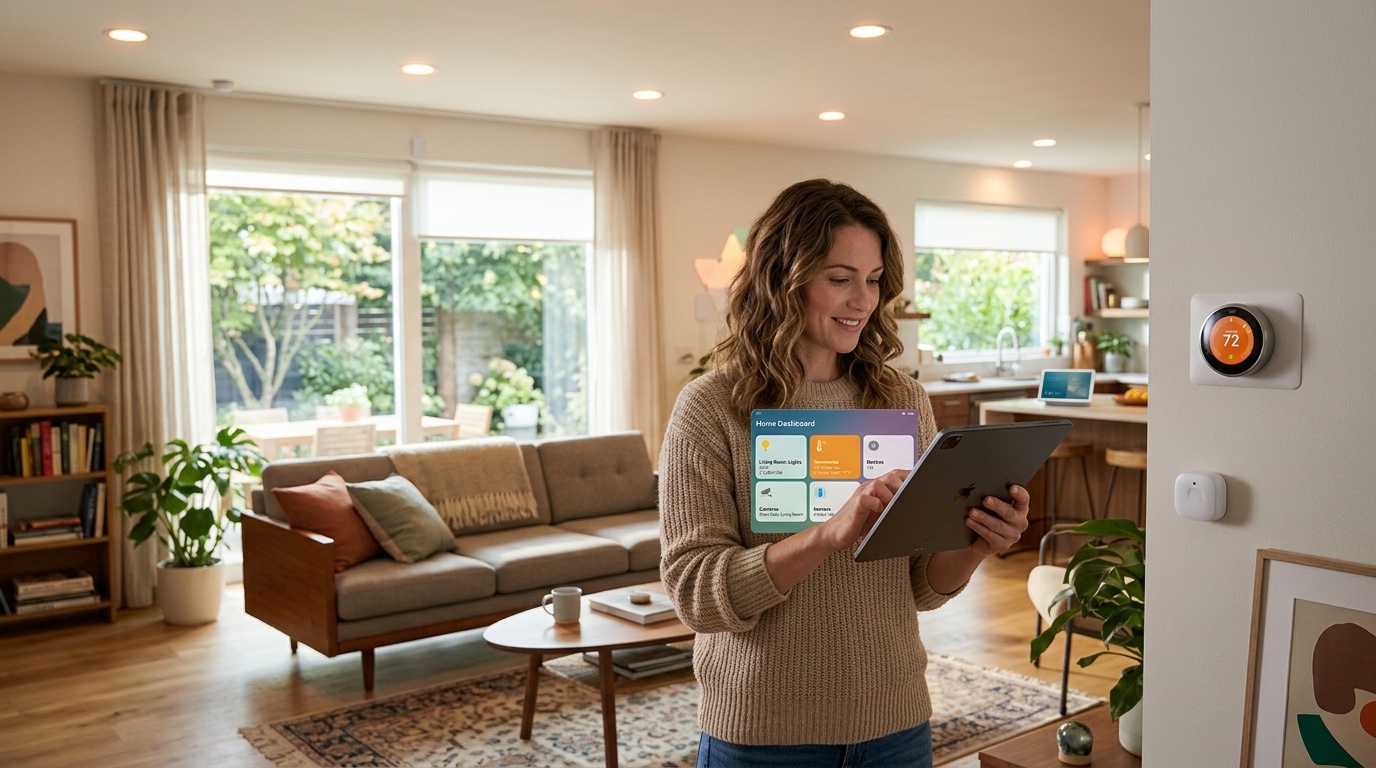
Picture the most annoying kind of bug in a pair of Bluetooth headphones. It isn't in the app code or in the firmware. It lives in the gap between them, in the moment the phone asks for the battery level and the headphones answer a little later than the app expects.
That gap is what an IoT app development company is really selling. Not an app. Not a circuit board. The contract between the two, and the discipline to keep it true while both sides change.
Most rankings of IoT developers don't see that gap at all. They list firmware houses, mobile studios and cloud consultancies side by side, score them on awards and device counters, and never ask which half of the product each one actually builds.
So here is my claim, with the date on it. On September 30, 2026 I scored ten IoT app development companies on six things a buyer can check from a public page in about fifteen minutes per firm. Softeq and Very tied for first on 8 of 12. The average was 5.9.
To be clear about the conflict up front: I run Frenchy Digital, which builds apps, backends and admin tools, including the software for the LIVV Audio Bluetooth headphone platform. It is not in the scored table. It gets its own disclosed section at the end, scored on the same rubric. It comes fifth of eleven on points, and I say plainly why, and who should pick someone else.
If you're earlier than this and still deciding what your connected product should even do, our roundup of IoT app use cases with real deployments is the better starting point. This article is the named-company version: who builds what, what they publish, and what they don't.
Why IoT Agency Lists Fail
Most rankings of IoT development companies fail for three reasons: the author is a contestant, the firms on the list do different jobs, and the scores rest on numbers only the firm can check.
The first is universal in our industry. Agencies publish "best IoT companies" lists and put themselves near the top. I'm not immune to the temptation, which is why my company sits outside the table.
The second is specific to IoT, and it's the one that costs buyers money. A connected product has at least four layers: the electronics, the firmware on the device, the phone app that talks to it over Bluetooth or Wi-Fi, and a cloud backend that stores accounts and data. Some firms build all four. Many build one or two and partner for the rest. A list that doesn't say which is which sends a startup with no circuit board to an app studio, or a team with finished hardware to a firm whose best people are board designers.
The third is the counter problem. IoT agency homepages lead with connected devices in the market, apps launched, clients served and satisfaction rates. I saw several of each today. No one outside the firm audits any of them, and there is no public registry of who wrote which firmware.
The wrong model is that a ranking measures who builds the best connected products. The real model is that a public ranking can only measure what firms disclose and what third parties confirm. Engineering quality you judge yourself, by talking to the engineers and, where you can, holding the products they shipped.
That last part is a real advantage in this category. Many of the named products below are things you can buy. A pool sensor, a breathalyzer, a pair of earbuds. Few other kinds of software let you hold the portfolio in your hand before you sign.
The Entry Test
Before scoring anyone, each candidate had to pass two tests: named or clearly described IoT or Bluetooth work on its own website, and no acquisition, merger or shutdown from 2024 to 2026.
A directory profile alone didn't count. A page titled "IoT development services" with stock photos didn't count either. The firm's own site had to describe connected products it had built, even if the client wasn't named. Unnamed work passes the entry test but scores lower.
The scope is national and global. Connected hardware is rarely built by a team down the street; the ranked firms sit in Houston, Bozeman, Minneapolis, Lafayette, Boston, Venice Beach, Florida, Gdańsk and further afield. I kept giant IT outsourcers and chip vendors out, because a buyer choosing a partner for one product is a different buyer from one choosing a global systems integrator.
On acquisitions, one ranked firm needs a note. Cardinal Peak's own homepage calls it an FPT company, and FPT announced the acquisition in November 2023. That's outside my 2024 to 2026 window, so it stays in, and I mention it in the profile because ownership affects who staffs your project and where.
For the other nine, searches on September 30, 2026 found no acquisition, merger or shutdown news from 2024 to 2026. Absence from search results isn't proof. Ask.
A few names that recur on IoT lists didn't make the ten. Large consultancies with an IoT practice page but no named connected product I could open were out. So were firms whose IoT pages turned out to be platform products they sell rather than services they deliver. I also looked at a well-known Ukrainian engineering firm with strong connected car credentials, but couldn't find a named Bluetooth or device project on its own pages in the time I had, so it didn't pass.
How I Scored Them
Six attributes, 0 to 2 points each, twelve maximum, all checked on September 30, 2026 from pages anyone can open.
- Named IoT or Bluetooth work: 2 for three or more named connected products or clients on the company's own site; 1 for connected work that is unnamed, anonymized, a single project, or visible only on a third party's page; 0 for none.
- Hardware and firmware capability: 2 for electronics or PCB design and firmware both stated on the company's own site; 1 for firmware, embedded or beacon work without electronics design; 0 for app and cloud only.
- Vendor directory listing: 2 for a partner page published by a chip or cloud vendor (Nordic Semiconductor, Silicon Labs, AWS) that I opened or confirmed today; 1 for partnerships claimed only on the firm's own site; 0 for none.
- Published pricing: 2 for price figures on the company's own site; 1 for a described pricing model without figures; 0 for neither.
- Public IP terms: 2 for an explicit source code, firmware and IP ownership statement; 1 for ownership language short of that; 0 for nothing on the pages checked.
- Years operating: 2 for a founding year or ten-plus years stated on the company's own site; 1 for a founding year from a third party only; 0 for none found.
Ties break on named IoT work, then years operating, then alphabetically. That's the whole rubric.
The hardware attribute is what makes this list different from our other rankings. It doesn't say a firm is better for having it. It says the firm can take you from a bare idea to a board. If you already have a board, a zero there may be exactly what you want: a team that spends all its time on the phone side.
The directory attribute is the one a third party vouches for. Nordic Semiconductor and Silicon Labs are two of the best-known makers of Bluetooth chips, and both publish partner pages. The chip maker, not the agency, decides who appears. Nordic's pages go further and list which wireless technologies the partner works with.
What I excluded, and why.Connected devices shipped, apps launched, clients served, satisfaction rates and outcome lifts, because every one is the firm's own claim. Team size, because it doesn't tell you who works on your product. Awards and growth rankings, because they measure revenue or marketing. Clutch ratings, because Clutch blocks automated reading and the snippets that reach me disagree.
How to re-check it.Open each firm's homepage, work page and about page. Note named products and the founding year. Search the site for "PCB", "firmware", "pricing" and "intellectual property". Then search Nordic Semiconductor's and Silicon Labs' partner pages for the firm's name. It takes about fifteen minutes per firm. If something changes after September 30, the score should change too.
The Scoreboard and Evidence
Softeq and Very lead with 8 of 12. Four ties decide most of the order, so read the tiebreaks as ordering, not distance.
| Rank | Company | Named IoT work | Hardware and firmware | Vendor directory | Pricing | IP terms | Years | Total / 12 |
|---|---|---|---|---|---|---|---|---|
| 1 | Softeq | 2 | 2 | 2 | 0 | 0 | 2 | 8 |
| 2 | Very | 2 | 2 | 2 | 0 | 0 | 2 | 8 |
| 3 | Sirin Software | 2 | 2 | 1 | 0 | 0 | 2 | 7 |
| 4 | Cardinal Peak | 2 | 2 | 2 | 0 | 0 | 1 | 7 |
| 5 | Punch Through | 2 | 2 | 0 | 0 | 0 | 2 | 6 |
| 6 | Integra Sources | 1 | 2 | 0 | 1 | 0 | 2 | 6 |
| 7 | Bright Inventions | 1 | 1 | 1 | 0 | 0 | 2 | 5 |
| 8 | Klika Tech | 1 | 1 | 2 | 0 | 0 | 1 | 5 |
| 9 | SumatoSoft | 1 | 0 | 1 | 0 | 0 | 2 | 4 |
| 10 | Dogtown Media | 1 | 0 | 0 | 0 | 0 | 2 | 3 |
Do the arithmetic. The ten totals add to 59, so the average is 5.9 of 12, just under half. The leaders disclose about 1.36x what the average firm does, and about 2.7x what the firm at the bottom does.
Now read the columns, because that's where the finding is. Pricing: nine zeros and a single 1. IP terms: ten zeros. Not one firm on this list publishes a price or says in public who owns the firmware and the app when the project ends.
Meanwhile named work, hardware and years are well covered: eight of ten state electronics, firmware or embedded capability, and all ten clear a year test. So the IoT market is open about what it can build and how long it has been building. It is silent on cost and ownership, the two things that decide whether you can switch vendors later.
That ownership silence is worse in IoT than in plain app work. On a web project you have one codebase to hand over. On a connected product you have firmware, the bootloader, the signing keys for over-the-air updates, the mobile apps, the backend and often a manufacturing test tool. If any one of those stays with a vendor, you can't ship an update without them.
Every score above traces to a cell below. Where a cell names a product or partner, it's from the firm's own site or the vendor's partner page, and I say which.
| Company | Named IoT work | Hardware and firmware | Vendor directory | Pricing | IP terms | Years operating |
|---|---|---|---|---|---|---|
| Softeq | Daikin thermostat device management, Revolution Robotics kit, smart pet collar app | Firmware, RTOS, board bring-up, PCB, FPGA, enclosures | Nordic Semiconductor partner page | Not publicly disclosed | Not publicly disclosed | Nearly 30 years (own site) |
| Very | SUN Automation, Telly, CSC ServiceWorks | PCBs, firmware, wireless, sensors, electrical engineering | Nordic Semiconductor partner page | Not publicly disclosed | Not publicly disclosed | Fifteen years (own site) |
| Sirin Software | Telewave, TechnoVerde, Tower IQ | PCB, custom electronics, FPGA, firmware | Microsoft and Apple named as partners on own site only | Not publicly disclosed | Not publicly disclosed | Founded 2014 (own site) |
| Cardinal Peak | Connected beauty device, iZotope Portable Studio, wireless earbuds | Embedded, FPGA, DSP, BLE and Mesh, Matter, Zigbee | Silicon Labs design partner page | Not publicly disclosed | Not publicly disclosed | Founding year from press coverage of its 2023 sale only |
| Punch Through | Inspire, Synchron, HyperIce Core, BACtrack, WaterGuru, Whistle | Embedded software and electronics design | None found on a vendor site | Not publicly disclosed | Not publicly disclosed | 2009 (own site) |
| Integra Sources | IoT cases unnamed (plant care, glucose monitor, AR glasses firmware) | PCB, FPGA, firmware, board support packages | None found | Fixed price and time and materials described, no figures | Not publicly disclosed | Founded 2014 (own site) |
| Bright Inventions | IoT cases unnamed (fish transport water quality, equipment tracking) | iBeacon and embedded work mentioned | AWS Partner Network and Zebra ISV claimed on own site | Not publicly disclosed | Not publicly disclosed | 14 years (own site) |
| Klika Tech | Quext, on an AWS partner page; own portfolio not readable | Firmware, prototyping, embedded systems named | Nordic partner page; AWS partner success page | Not publicly disclosed | Not publicly disclosed | 2013, from AWS's page only |
| SumatoSoft | IoT cases anonymized (wind energy operator) | None stated on pages checked | AWS Partner claimed on own site | Estimate tool only | Not publicly disclosed | 2012 (own site) |
| Dogtown Media | Revision portable battery app | None stated on pages checked | None found | Not publicly disclosed | Not publicly disclosed | 2011 (own site) |
Three cells deserve a note. Klika Tech's portfolio pages are rendered in the browser and my tools couldn't read the case studies; the one named client I could verify, Quext, is on an AWS page. If you open Klika's portfolio in a normal browser you may find more, and its named work score could rise.
Silicon Labs' Cardinal Peak page blocks automated readers, but a search result shows the page and Cardinal Peak's own partnerships page describes the same relationship. I scored it 2 and I'm telling you how.
And Cardinal Peak's founding year appears only in coverage of its 2023 sale, not on the pages I read of its own site, so years scores 1. That single point is the gap between it and Sirin Software.
The Ten, Profiled
Each profile says who the firm suits, what I could verify and what I couldn't.None of this judges quality. I haven't worked with any of these firms and I didn't audit their products.

Softeq
full stack from board to cloud, Nordic listed
Score: 8 of 12. Suits: companies starting from a product idea that need electronics, firmware, apps and cloud from one team.
Verifiable: its homepage claims nearly 30 years, a Houston headquarters, and case studies including a device management suite for Daikin smart thermostats, an electronic kit for Revolution Robotics and a smart pet collar app. It lists firmware, RTOS and board bring-up, PCB, FPGA and enclosure design. Its Nordic Semiconductor partner page describes it as a consultancy, design house and ODM, and lists Bluetooth LE, Bluetooth 5.1 direction finding, 6.0 channel sounding, Wi-Fi, Zigbee, Thread, LTE-M and NB-IoT.
Not verifiable: no pricing and no IP terms on the pages checked. The Fortune-company logo wall on its homepage is its own claim; I scored the named case studies instead.

Very
IoT specialist in Bozeman, Nordic listed
Score: 8 of 12. Suits: North American companies that want one firm for hardware, firmware and cloud on a connected product.
Verifiable: its homepage says fifteen years and names SUN Automation, Telly and CSC ServiceWorks, and lists PCBs, firmware, wireless, sensors and mechanical and electrical engineering. Its Nordic partner page places it in Bozeman, Montana and lists hardware and RF design, embedded software, security, Bluetooth LE, Bluetooth Mesh, Zigbee, LTE-M and NB-IoT.
Not verifiable: no pricing, no IP terms. Its growth-ranking streak and workplace awards are on its homepage; neither measures delivery, so neither is scored. It loses the tie with Softeq only on the alphabet.

Sirin Software
electronics and firmware with named clients
Score: 7 of 12. Suits: companies that need board-level work and firmware with a US contact and an engineering center abroad.
Verifiable: its homepage says it was founded in 2014, has a Florida headquarters and a research center in Ukraine, and names Telewave (ultra-wideband), TechnoVerde (IoT cloud scaling) and Tower IQ (antenna tilting protocol). It lists PCB design, custom electronics, power electronics, FPGA and firmware.
Not verifiable: it names Microsoft and Apple as trusted partners on its own site, but I found no vendor-published partner page, so directory scores 1. No pricing, no IP terms. Its project and client counters are its own.

Cardinal Peak
product engineering, Silicon Labs partner, FPT owned
Score: 7 of 12. Suits: consumer electronics and audio products that need Bluetooth, Matter or Zigbee alongside DSP and cloud.
Verifiable: its homepage lists a Lafayette, Colorado headquarters and case studies including a connected beauty device, the iZotope Portable Studio and wireless earbuds, with capabilities in embedded systems, FPGA, DSP, Bluetooth LE and Mesh, Matter, Zigbee and Z-Wave. Its partnerships page names AWS, Qualcomm, Silicon Labs, Apple MFi and STMicroelectronics, and Silicon Labs publishes a design partner page for it.
Not verifiable:no pricing, no IP terms, and no founding year on the pages I read. The large client and office counts on its homepage are FPT group figures, not Cardinal Peak's, and I don't repeat them.

Punch Through
Bluetooth and MedTech, the longest named list
Score: 6 of 12. Suits: medical device and connected health teams, especially FDA-regulated Class II and III products.
Verifiable: its homepage dates it to 2009, places it in Minneapolis and lists Bluetooth LE, Wi-Fi, cellular, embedded software and electronics design, mobile apps and backends. Its work page names the Inspire sleep system, Synchron's brain interface, PNQ Health, HyperIce Core, BACtrack, Whistle, WaterGuru Sense and Franklin Robotics' Tertill among others. Its about page names its founder and its LightBlue Bluetooth tool.
Not verifiable:I found no chip vendor partner page for it, which is the only reason it isn't near the top. No pricing, no IP terms. Its connected-devices-in-market counter is its own.
The bottom half isn't worse at building. It publishes less, names fewer clients, or builds only one side of the product.

Integra Sources
board design with a stated pricing model
Score: 6 of 12. Suits: hardware startups that need PCB, FPGA and firmware work and want a fixed-price option.
Verifiable: its homepage says it was founded in 2014 and lists PCB design, FPGA, prototyping, firmware and board support packages. Its how we work page describes fixed price and time and materials contracts, which earns the only pricing point on this list.
Not verifiable:its IoT case studies (office plant monitoring, a continuous glucose monitor, AR glasses firmware) don't name clients, so named work scores 1. No figures, no IP terms, no vendor partner page found.
Bright Inventions
beacons and IoT for retail and restaurants
Score: 5 of 12. Suits: retail, restaurant and eHealth operators adding beacons or sensors to an existing business.
Verifiable: its homepage places it in Gdańsk, says 14 years, names IoT for restaurants, retail, eHealth and fintech as its specialty, and describes a water quality monitor for fish transport and equipment tracking for manufacturing. It claims AWS Partner Network membership and Zebra ISV registration.
Not verifiable:the IoT cases are unnamed, beacon work is mentioned without board design, and I didn't find a vendor-published partner page. Hourly rates on two directories disagree with each other, so I use neither.

Klika Tech
AWS IoT and Nordic partner, cloud first
Score: 5 of 12. Suits: fleets of devices on AWS, asset tracking over LoRaWAN, NB-IoT or Amazon Sidewalk.
Verifiable: its homepage calls it an AWS Premier Consulting Partner and names firmware, prototyping and embedded systems. Its Nordic partner page lists Bluetooth LE, Mesh, Thread, Zigbee, LTE-M, NB-IoT, Sidewalk and LoRa. An AWS partner success page describes its work for Quext on AWS IoT Core for LoRaWAN and gives 2013 as its founding year.
Not verifiable:its own portfolio pages didn't render for my tools, so named work and years rest on AWS's page and score 1 each. No pricing, no IP terms.

SumatoSoft
industrial IoT software, anonymized cases
Score: 4 of 12. Suits: industrial companies that already have sensors and need the data platform and dashboards.
Verifiable: its homepage says it was founded in 2012 with a Boston headquarters and a Warsaw development center, and describes IoT work for a wind energy operator whose name it withholds under NDA. It claims AWS Partner status.
Not verifiable:clients are anonymized, no hardware or firmware capability is stated, and the percentage outcomes on its homepage are its own. Its ISO claims aren't part of this rubric.
Dogtown Media
app studio with a connected battery app
Score: 3 of 12. Suits: consumer brands with finished hardware that want an app studio for the phone side.
Verifiable: its homepage lists IoT app development and names Revision, a portable battery app for controlling the battery and connected devices. Its about page says it was founded in 2011 in Venice Beach.
Not verifiable: no firmware capability stated, one named connected app, no vendor partner page, no pricing, no IP terms. Its apps-launched counter is its own. A 3 here says the IoT evidence is thin, not that the apps are.
Device Side vs App Side
The single most useful question to ask any IoT firm is which side of the Bluetooth link it writes, and who writes the document in the middle.
On the device side live the electronics, the firmware, power management and the radio. On the phone side live the app, pairing, permissions, background behavior and the account. In between is a list of Bluetooth services and characteristics, plus the rules for what each value means and when it changes.
The phone side is harder than it looks, and it has gotten harder. Per Android's Bluetooth permissions documentation, apps targeting Android 12 or later ask for BLUETOOTH_SCAN and BLUETOOTH_CONNECT, while Android 11 and older still need location permission to scan. An app that supports both has two permission models to test, on hardware from many manufacturers.
On iPhone the work goes through Apple's Core Bluetooth framework, which has its own rules about scanning, reconnecting and what an app can do in the background.
Here is what that looked like on a real project. Our LIVV Audio case study describes a dual path: the app talks to the headphones directly over Bluetooth Low Energy for anything latency sensitive (playback, volume, equalizer changes, battery), and talks to a NestJS backend for accounts, preference sync and a preset catalog that an internal React admin tool curates. Battery level arrives as characteristic notifications rather than polling. There are four repositories: Swift iOS, Kotlin and Java Android, the backend and the admin.
What the case study doesn't describe is us writing firmware. We built the software around the headphones. That distinction is the whole point of this section, and it's why I score us 0 on hardware below.
The practical rule: if your board doesn't exist yet, start with a firm that scored 2 on hardware. If your board exists and ships, a firm that lives on the phone side may give you a better app for the money, and the rank above matters less than the fit. The app itself is usually native for this kind of work, which is why our iOS app development page is the closer match than a cross-platform build, although a React Native app with a native Bluetooth module can work when the Bluetooth surface is small.
If you're weighing cross-platform frameworks for the phone side, the firms in our ranking of hybrid app development companies are scored the same way as these.
Picking by Buyer Type
The rank matters less than the fit. A 5 that matches your constraint beats an 8 that doesn't.
Decide your one non-negotiable first. Is it a board that doesn't exist yet, an FDA pathway, an AWS account you already run, or a budget ceiling? See who survives it, then compare the survivors on everything else.
| If you are | Start with | Why | Watch for |
|---|---|---|---|
| A startup with an idea and no hardware yet | Softeq, Very or Cardinal Peak | Hardware, firmware, app and cloud under one roof, with a chip vendor listing | Full-stack scope is expensive; ask for a phased plan |
| A regulated medical device team | Punch Through | Named FDA Class II and III connected products on its own site | No chip vendor directory listing found |
| A team fleet-tracking assets on AWS | Klika Tech | AWS partner success page with AWS IoT Core for LoRaWAN; Sidewalk and LoRa listed with Nordic | Own portfolio pages would not render for me |
| A company that needs board design on a budget | Integra Sources or Sirin Software | PCB, FPGA and firmware stated; engineering centers outside the US | Integra's IoT cases are unnamed |
| A retail or restaurant operator adding beacons | Bright Inventions | Restaurant and retail IoT named as focus areas | Case studies unnamed |
| A team with finished hardware that needs the apps | Read the disclosed pick below | App, backend and admin around an existing BLE device | Not a firmware house |
Two rows deserve a longer word.
The medical device team. Punch Through is the only ranked firm whose named work is mostly FDA-regulated connected products, including implanted devices, and its work page names Class II and Class III development. It scores 6 here only because I found no chip vendor directory page. If regulatory experience is your non-negotiable, that zero matters much less to you than the names on its work page.
The startup with no hardware.Softeq, Very and Cardinal Peak each state electronics, firmware and cloud, and each has a chip vendor page. That combination is exactly what an idea-stage product needs. It's also the most expensive combination to buy, and none of the three publishes a price, so budget a paid discovery phase before you expect a number.
A Worked Scenario
A worked example makes the rubric useful. This one is a scenario, not a client.
Consider a fitness equipment company with a working Bluetooth heart-rate strap. The firmware is finished and ships from a contract manufacturer. The company wants an iOS and Android app, a backend for accounts and workout history, and an internal tool for support staff. It has about $120,000 approved and wants to launch in six months.
Step one is the sanity check against published numbers. Not one ranked firm publishes a price, so the only published bands I can use are our own. Our iOS service page publishes tiers of $50,000 to $100,000, $100,000 to $175,000 and $175,000 to $250,000 and up. $120,000 sits in the second tier, at 1.2x the first tier's ceiling. Two native apps plus a backend and admin is plausible at that number. It isn't generous.
Step two is the hardware filter. The board is done, so hardware capability isn't required. That opens the list to phone-side firms, and it means paying for a full-stack firm's electronics bench buys you nothing on this project.
Step three is the interface contract. Before anyone quotes, the company should hand each finalist the strap's Bluetooth profile: services, characteristics, data formats, update behavior. A finalist who quotes without asking for it is guessing. The best signal you'll get in the first call is which firm asks about notification rates, reconnection after the phone locks and firmware update support.
Step four is the timeline. Six months is about 26 weeks. If the software portion runs 14 to 18 weeks, that leaves 8 to 12 weeks for store review, beta testing on a spread of Android phones and whatever the manufacturer changes along the way. Ask each finalist for its version of that arithmetic.
Step five is ownership. Since ten of ten ranked firms publish no IP terms, the company should ask every finalist the same question in writing: who owns the app code, the backend, the admin tool, the store accounts and the cloud account at the end? The right answer is "you do, all of it."
The downside of this approach is that it rewards firms that publish. Some very good Bluetooth engineers publish almost nothing. If your favorite scored low, send the email. One reply can turn a zero into a two.
Risks and Red Flags
Connected products carry obligations after launch that apps alone don't, and 2026 added some.
The biggest is in Europe. The European Commission's Cyber Resilience Act pagesays the Act covers products with digital elements, from smart watches to apps. Reporting of actively exploited vulnerabilities applies from September 11, 2026, and the main obligations from December 11, 2027. If you sell in the EU, your vendor's answer to "how do we patch the device and the app together?" is now a compliance question.
In the US the voluntary Cyber Trust Mark for consumer IoT changed hands. UL Solutions withdrew as lead administrator in December 2025, and the FCC selected the ioXt Alliance on April 13, 2026. If the label is part of your plan, check the FCC's current guidance rather than a vendor's slide.
The worst case for a buyer isn't a bad app. It's a device fleet you can't update because the signing keys and the build pipeline sit with a vendor you no longer work with. That's bounded by one paragraph in the contract, which is why I'd still hire from this list with confidence, provided you get these lines right.
- No assignment covering firmware, keys and pipelines: Ten of ten ranked firms publish nothing on IP. Get a written assignment that names firmware, bootloader, update signing keys, app code, backend and build scripts.
- No written Bluetooth interface document: If device and app come from different teams, the profile of services and characteristics must be a signed document, versioned like code.
- Cloud and store accounts in the vendor's name: Your AWS or other cloud account, App Store and Google Play accounts should be yours, with the vendor added as a user.
- No plan for over-the-air updates: Ask how firmware updates reach devices in the field, and who can trigger one.
- Testing on two phones: Android Bluetooth behavior varies by manufacturer. Ask for the device matrix, by model.
- Counters on slide one: Devices shipped and apps launched are marketing. Ask for three named products you can buy or download instead.
Numbers I Refuse to Print
Several figures came up again and again while I built this list, and none of them should travel as fact.
The first is the connected-devices forecast. Nearly every IoT agency page opens with how many billions of devices there will be by some year. I've chased those before and they trace to analyst forecasts with methods I can't inspect, which disagree with each other. None of it tells you who should build your product, so it isn't here.
The second is agency counters. Devices in the market, apps launched, clients served, projects completed, client satisfaction percentages and outcome lifts like reduced downtime. Every ranked firm with a counter publishes it about its own work. None is scored and I don't repeat the figures.
The third is the average IoT app cost. One vendor blog I found puts it at a specific range for a typical project. It's a vendor's estimate with no sample. Directory hourly rates for two ranked firms disagreed with each other by a wide margin. I use neither.
The fourth is group-level numbers dressed as firm numbers. Cardinal Peak's homepage shows office and client counts that belong to FPT, its parent. They may be accurate for FPT. They aren't a description of the team that would build your product.
Limitations
Here is what I chased and couldn't establish, so you can weigh the ranking accordingly.
- Engineering quality: No neutral benchmark of IoT firms exists, and I didn't test anyone's products. The ranking measures disclosure, not delivery.
- Pages my tools couldn't read: Klika Tech's portfolio and Silicon Labs' partner page resisted automated reading. A human in a browser may see more.
- Partner tiers: Nordic's pages don't show a tier, and AWS tiers claimed on firms' own sites weren't confirmed in AWS's directory. I scored listings, not tiers.
- Acquisition status: Searches found no 2024 to 2026 deals for the ten beyond Cardinal Peak's 2023 sale. That isn't proof there were none.
- Contract terms: IP, warranty and key custody live in agreements nobody publishes. Absence on a website isn't absence in a contract.
- Where the engineers sit: Several firms combine a US headquarters with engineering centers elsewhere. I didn't score location; ask who will be on your project.
None of this makes the list less useful. It makes it a shortlist you can audit, which is the most a public ranking can fairly claim to be.
Three Things This Week
You can get from this page to a defensible shortlist in about a week.Here's the order I'd do it in.
- 1.Write down which half of the product you need built: device, phone, or both. Use the hardware column and the buyer-type table to cut the list to three firms, then open each one's work page and find one named product you can buy or download.
- 2.Write a one-page Bluetooth brief: what the device measures or controls, how often data moves, whether firmware is finished, and who owns the cloud account. Send the same page to every finalist.
- 3.Ask each finalist the same four things in writing: a fixed-price phased proposal, the names of the engineers on each side of the Bluetooth link, the IP clause covering firmware, keys, apps and backend, and how over-the-air updates will work after launch.
Whoever answers those four cleanly, and asks you good questions about your Bluetooth profile, is probably your partner. Time to write the brief.
Our #1 Pick: Frenchy Digital
Disclosure: Frenchy Digital is my company. That's a conflict of interest, and it's why this pick sits outside the scored table and is labelled as mine.
So let me score it the same way first. Named IoT work: 1. We have one named Bluetooth product, LIVV Audio, and the rubric wants three for a 2. Hardware and firmware: 0. We build apps, backends and admin tools; our case study describes no firmware or board work, and I won't claim any. Vendor directory: 0. We don't have a Nordic, Silicon Labs or AWS partner page. Pricing: 2, because our service pages publish price bands. IP terms: 2. Section 16.3 of our public terms and conditionstransfers ownership of the deliverables to the client on full payment. Two conditions come with it, and you should know them: ownership stays with us if a project isn't paid in full, and we keep our pre-existing and generic code. Years: 2, operating since 2016 in France and as a US company since 2019.
That's 7 of 12. It ties Sirin Software and Cardinal Peak on points, and both beat us on the first tiebreak, named IoT work, where they score 2 and we score 1. So on this rubric we place fifth of eleven, behind Softeq, Very, Sirin Software and Cardinal Peak, and just ahead of Punch Through. We are not first on points, and I'd rather print that than tune the rubric until we are.
Look at where our points come from, though. We score on the two columns where the list is weakest, price and IP, and we score zero on the device side. That's the honest shape of what we are: the phone, cloud and admin half of a connected product, with the terms published.
So why is it still my pick? For one kind of buyer: a team whose hardware and firmware exist, who needs native iOS and Android apps, a backend and an internal admin tool around a Bluetooth device, and who wants a price before the first call and to own everything at the end. For that buyer, the hardware column is irrelevant and price and IP are the columns that matter most.
The proof is the LIVV Audio case study, for headphones founded by former NFL athlete Mark Clayton. It describes a Swift iOS app on Core Bluetooth, a Kotlin and Java Android app, a NestJS backend and a React admin dashboard, with direct Bluetooth control for playback, volume, equalizer and battery, and cloud sync for preferences and presets. The Android app is live on Google Play as LIVV | Your Music Center, listed under LIVV Audio and last updated July 2, 2025 when I checked. The case study has no usage or sales figures, so I have no outcome number to give you, and I won't invent one.
The terms: we're a senior-led, Black-owned app and AI agency in Los Angeles. Our iOS tiers are $50,000 to $100,000, $100,000 to $175,000 and $175,000 to $250,000 and up. Senior time is $150 to $225 an hour, retainers run $2,500 to $9,500 a month, and you get a fixed-price phased proposal within 5 business days, a 30-day post-launch warranty, and full source code and IP ownership.
Have the Hardware, Need the Apps?
Book a discovery call with Frenchy Digital, a senior-led Black-owned Los Angeles agency. We scope the iOS, Android, backend and admin software around your Bluetooth device, and send a fixed-price phased proposal within 5 business days.
Building an App Around a Bluetooth Device?
Book a discovery call. We scope the iOS, Android, backend and admin software around your hardware, and send a fixed-price phased proposal within 5 business days.
1517 S Bentley Ave Suite 204, Los Angeles CA 90025
Frequently Asked Questions
Sources & References
- 1Softeq, homepage with case studies and partner list (checked September 30, 2026)↗
- 2Nordic Semiconductor, Nordic Partner: Softeq Development Corporation↗
- 3Very, homepage with clients and capabilities (checked September 30, 2026)↗
- 4Nordic Semiconductor, Nordic Partner: Very Technology↗
- 5Sirin Software, homepage with case studies (checked September 30, 2026)↗
- 6Cardinal Peak, homepage with case studies (checked September 30, 2026)↗
- 7Cardinal Peak, industry and technology partnerships↗
- 8Silicon Labs Partner Network, Cardinal Peak design partner page (blocks automated readers)↗
- 9Business Wire, FPT Acquires Product Engineering Services Firm Cardinal Peak (November 2023)↗
- 10Punch Through, homepage (checked September 30, 2026)↗
- 11Punch Through, our work (named connected products)↗
- 12Punch Through, about page↗
- 13Integra Sources, homepage (checked September 30, 2026)↗
- 14Integra Sources, how we work (engagement and pricing models)↗
- 15Bright Inventions, homepage (checked September 30, 2026)↗
- 16Klika Tech, homepage and IoT portfolio (checked September 30, 2026)↗
- 17Nordic Semiconductor, Nordic Partner: Klika Tech↗
- 18AWS Partner success story, Quext and Klika Tech↗
- 19SumatoSoft, homepage (checked September 30, 2026)↗
- 20Dogtown Media, homepage (checked September 30, 2026)↗
- 21Dogtown Media, about page↗
- 22European Commission, Cyber Resilience Act↗
- 23Android Developers, Bluetooth permissions↗
- 24Apple Developer Documentation, Core Bluetooth↗
- 25Broadband Breakfast, FCC Picks ioXt Alliance to Head Cyber Trust Mark Program (April 13, 2026)↗
- 26Google Play, LIVV | Your Music Center by LIVV Audio↗
Related Articles You May Find Helpful
- IoT App Development: Complete 2026 Guide
- Top 10 Hybrid App Development Companies 2026: #1 Frenchy Digital
- Top 10 App Development Consulting Firms 2026: #1 Frenchy Digital
- Top 10 Mobile App Marketing Agencies 2026: #1 Frenchy Digital
- Top 10 Enterprise App Development Companies 2026: #1 Frenchy Digital
- Top 10 IoT App Use Cases in 2026, With Real Deployments