












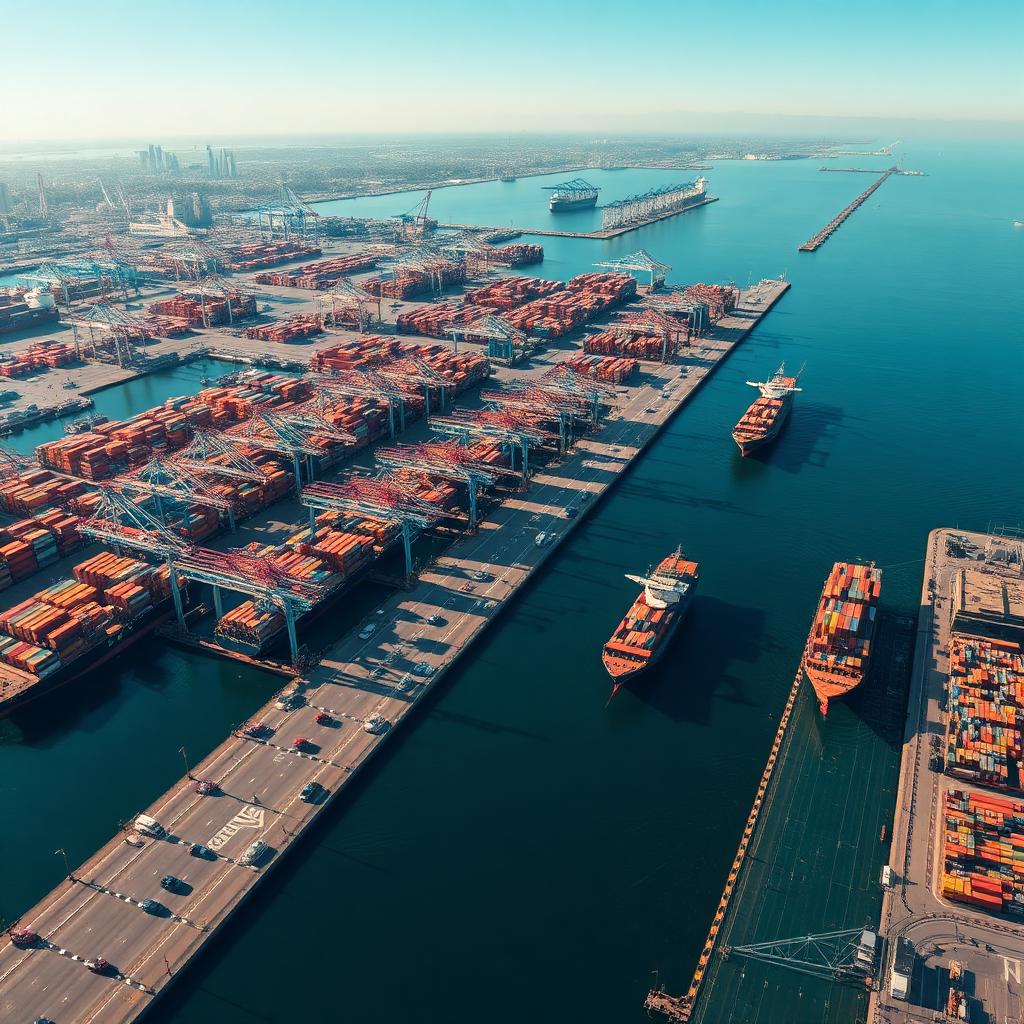
The Claim Under Test
Every ranking of freight AI agents you can find scores the same handful of things: accuracy, autonomy rate, loads covered, hours saved, ROI. And not one of those numbers has ever been measured by anyone other than the company selling the product. That is not a cynical framing. It is a finding. We went looking for an independent evaluation of AI agents in freight brokerage: a third-party benchmark, an academic study, an analyst test harness, a trade-association comparison. There is none. A site search of the largest trade publication in the sector for independent AI-agent evaluation returned nothing matching. The closest thing that exists is an industry award with no published methodology and no test set.
So this article does something different. It ranks ten products on attributes you can re-check yourself in an afternoon: who owns the company today, which integrations are named in public documentation, which security attestations are actually published and of which type, whether pricing is disclosed, whether the product is standalone or locked to a network. And it says out loud what it refused to score and why. If you want a number telling you which agent books more loads, no honest source can give you one. If you want to know which vendors will still exist under the same name at renewal, which will hand you a SOC 2 Type II report, and which one of them is not an agent at all, that is checkable, and this is that list.
Three things changed under this vertical in 2026, and each one breaks most of the rosters currently circulating. First, on 14 May 2026 the Supreme Court decided broker liability, unanimously, and the federal preemption defence that protected brokers from negligent-selection claims in several circuits is gone. Second, on 14 July 2026 project44 split into two companies, moving the entire broker and 3PL agent business into a new entity called LSP44. So a broker being pitched project44 today is being shown the wrong half. Third, four of the best-known names in freight tech have been acquired and all four still trade under their original brands, which is precisely why listicles keep ranking them as independent.
This piece sits inside a wider set of vertical rankings; the cross-industry view of how these products differ by market lives in our overview of the top AI agents across industries in 2026. What follows is the freight-specific version, written for a broker or a 3PL operations lead who has to sign something.
The one sentence this article hangs on: an AI agent can negotiate the rate, but it cannot absorb the liability for choosing the carrier, and since 14 May 2026 that liability is no longer shielded by federal preemption.
How We Ranked, and What We Refused to Rank On
We scored only attributes a buyer can independently re-check, and every one of them was checked on 23 August 2026. Nothing here is scored on performance, because no independent measurement of these products' performance exists. Where a vendor publishes a figure about itself we mark it as such and do not adopt it. Where a cell could not be verified, it says so in those words rather than being quietly filled in.
| What we scored | How you re-check it yourself |
|---|---|
| Documented public integrations | Open the vendor's integrations or API page and count the named systems. A named product is verifiable; "any TMS" is not. |
| Corporate status and ownership | Press releases, investor-relations pages, public filings. Who owns the roadmap decides the roadmap. |
| SOC 2 Type II / ISO 27001 status | The vendor's own trust page. A badge without a stated type is not an attestation. |
| Whether a DPA or trust portal is public | If the documentation is only available under NDA, that is a finding, not a formality. |
| Pricing transparency | A published price, a published structure, or "contact sales". We never estimate a price. |
| Standalone or locked to a suite | Product docs. An agent that only runs on its own network graph has a different exit cost. |
| Data residency and retention commitments | The DPA or trust page. Ask specifically whether your data trains models. |
| Whether any independent evaluation exists | In freight, as of 23 August 2026, the answer is none for every product in this table. |
And here is the list of things we refused to score, which is the more important half: accuracy, deflection, containment, resolution rate, autonomy rate, ROI, time saved, hours returned, loads covered per rep, and every variant of those. Not because they do not matter (they are the only things that matter operationally) but because every published figure in this market is a vendor marketing claim about itself, and printing it as neutral fact would make this article worse than useless to the person who has to defend the purchase internally.
Why we take that rule seriously: the one time a regulator audited a vendor's AI performance metrics
In January 2025 the SEC brought what is believed to be its first AI-washing enforcement action against a public company. In In the Matter of Presto Automation Inc., Securities Act Release No. 11352 (14 January 2025), the company had told investors that its drive-thru voice AI delivered over 94% accuracy even in noisy environments and 95%-99% automated order completion. The SEC found the product lacked the capability to take orders on their own and required substantial human involvement, with human order takers located abroad, primarily in the Philippines and India, who processed the vast majority of drive-thru orders. An internal message quoted in the order put it more plainly still: the company was telling investors the AI was running 95%+ accuracy without disclosing that the AI was doing none of the work.
Three framing points, because they matter and are routinely got wrong. Presto consented without admitting or denying the findings. The remedy was a cease-and-desist order with no civil penalty. It was not a fine. And the findings are against Presto alone; the order's Supplier A is a separate company against which the SEC made no findings whatsoever. This is not a story about a bad vendor. It is the one available data point on what happens when someone with subpoena power checks a published AI performance metric, and it is why we score what a buyer can verify instead.
The refusal: cargo theft is not a $35 billion problem
Cargo-theft totals in the tens of billions circulate constantly in freight-tech sales decks, and they do not survive contact with the primary research. The American Transportation Research Institute the trucking industry's own research arm, and therefore a source with every incentive to make the problem sound large rather than small, reported on 8 October 2025 that the annualized cargo theft cost to the industry is as high as $6.6 billion, or more than $18 million per day. The same research put average annual theft losses at more than $520,000 for motor carriers and more than $1.84 million for logistics service providers.
Measured data is smaller still. Verisk CargoNet was reported to have recorded roughly $121 million across 1,120 incidents in the first five months of 2026, a figure we hedge, because CargoNet's own pages were not reachable to us and the number came via trade press. CargoNet's data is drawn from insurance claims, so self-handled losses fall outside it, which is a stated and checkable limitation rather than a hidden one.
So where do the huge numbers come from? The mechanism is visible and documented. A FreightWaves analysis dated 20 April 2026 constructs a $40-60 billion figure by taking a reported baseline of roughly $6 billion and dividing it by an assumed 10-15% reporting rate, and concedes, in the same piece, that the assumed reporting rate is expert consensus that lacks specific attribution to empirical research. That is the entire trick: a real number divided by a guess, then republished as a real number. We print ATRI's figure, with its date, and we name the arithmetic behind the other one. We do not assert, as some coverage does, that a trade association publishes two irreconcilable totals; we could not document that from the association's own materials, so we do not claim it.
The driver-shortage premise, since half these products are sold on it
A common pitch in this category is that agents solve the driver shortage. That premise is contested and we do not adopt either side of it. The industry's trade association has published a driver-shortage figure for roughly two decades; Bureau of Labor Statistics analysis has argued that the truck-driver labour market behaves like a normal competitive market and that the real issue is pay, retention and churn rather than a supply of bodies. We could not fetch the BLS analysis directly (bls.gov returned 403 to us), so we neither name its authors nor quote it, and we do not print a shortage number. What we will say is that an argument for automation which rests on a contested labour-market premise is weaker than an argument that rests on your own measured call volume.
The independent benchmark question, stated precisely. No independent benchmark of these products exists. In several adjacent verticals there is at least some third-party evaluation to point at: benchmarks of underlying models, peer-reviewed trials of a modality, a published accuracy study of one channel. In freight brokerage there is nothing at all: no benchmark, no academic study, no analyst evaluation, no trade-association test. The nearest thing is an industry award with no published methodology, no test set and no reproducible measurement, which is a different kind of object entirely. That absence is the finding, and it is why the ranking below is ordered by verifiable surface area rather than by product quality, because product quality in this market is currently unmeasurable by anyone outside the vendors themselves.
The Comparison Table
Every cell below is either a citation to something you can open yourself or the literal words describing what could not be verified, checked on 23 August 2026. The ordering reflects how much of the buyer's checklist is publicly verifiable, not how well the product works, a distinction we will keep making because it is the honest one. Two of the ten entries are not agents at all, and they are in the table because a broker evaluating this category will be shown them anyway.
| Product | Corporate status (checked 2026-08-23) | What it actually is | Documented public integrations | SOC 2 / ISO / trust documentation | Published pricing |
|---|---|---|---|---|---|
| 1. Vooma | Independent; $16.6M raised across seed and Series A (Index, Craft Ventures) | Six named agents: Quote, Build, Schedule, Cover, Track, Collect. Mixed autonomy by design | Most complete public list in the roster: 6 TMS, 8 rating/pricing, 3 carrier-verification, 6 comms, 3 EDI (vooma.com/integrations, checked 2026-08-23) | AICPA SOC badge displayed; type not stated. No ISO 27001, no published DPA, residency or retention (vooma.com/security, checked 2026-08-23) | Not publicly disclosed |
| 2. FourKites (Loft) | Independent; fourkites.com now 301-redirects to fourkites.ai | Six named autonomous agents (Tracy, Sam, Alan, Cassie, Polly, Sophie) over a visibility and EDI/API data platform | Runs on FourKites' own network graph plus TMS and visibility integrations; not enumerated as a public directory | SOC 2 Type II, ISO 27001 and ISO 27017, with a public Trust Center and a data-security page (fourkites.ai, checked 2026-08-23) | Not publicly disclosed: site directs to an outcome advisor |
| 3. Augment (Augie) | Independent; approximately $110M total funding, company-published | One named autonomous agent across quoting, planning, scheduling, tracking, documents, AR, onboarding and dispatch, over voice, email and SMS | Six named on site: project44, DAT, Truckstop, Macropoint, Highway, Carrier411. "Any TMS" is a marketing claim, not a documented integration | SOC 2 Type II; AES-256 at rest, TLS 1.2+ in transit; Trust Center and /security page. ISO 27001 not claimed (goaugment.com, checked 2026-08-23) | Not publicly disclosed |
| 4. HappyRobot | Independent; $150M Series C at $1.2B post-money announced 2026-08-04, co-led by Prysm Capital and Eurazeo | Autonomous voice and email agents across carrier sales, track and trace, rebooking, collections, settlement, FNOL, onboarding | Not enumerated publicly; integrates outward rather than locking to a TMS | SOC 2 Type II claimed, plus GDPR, HIPAA, EU AI Act, NIST CSF and DORA alignment. ISO 27001 not claimed. Documentation available only under NDA: no public trust portal or DPA | Not publicly disclosed |
| 5. Loadsmart | Trading, and also a licensed freight broker: it competes with its own software customers | Platform plus an execution layer (Loadsmart AI), ShipperGuide TMS, OpenDock scheduling, CarrierGuide, loadboard | APIs, EDI and Model Context Protocol, with public developer documentation at developer.loadsmart.com | SOC 2 Type II, stated as confirmed by an independent auditor; AES-256-GCM at rest, TLS 1.2+ in transit. ISO 27001, GDPR posture, DPA, residency, retention and subprocessors not published | Not publicly disclosed |
| 6. Highway | Independent; strategic growth equity led by FTV Capital with Lead Edge Capital, August 2025 | Not an agent: carrier-identity infrastructure. Carrier Identity Engine, Load Lock, Know Your Driver, Secure Rate Con Delivery, Exclusion Intel | Fourteen named TMS and platform integrations including Tai, Mastery, TIA Watchdog, Alvys, McLeod, Turvo, Triumph, Revenova; also integrated by Vooma and Augment | None published: no SOC 2, ISO 27001 or trust page found on the site (checked 2026-08-23). Notable for an identity vendor | Not publicly disclosed |
| 7. LSP44 | New entity spun out of project44 on 2026-07-14; Jett McCandless is CEO of both companies | AI-native agent and API infrastructure aimed at 3PLs, forwarders and brokers: the half of project44 a broker should be looking at | Agent and carrier API infrastructure; not enumerated as a public directory six weeks after launch | Not verified. Do not assume any project44 attestation transfers to a separate legal entity. Ask for the paperwork | Not publicly disclosed |
| 8. Drumkit | Trading independently; live site and active publishing | Copilot first: an AI sidebar inside the email inbox with TMS write-back. Modules: Quick Quote, Builder, Capacity, Scheduler, Tracker, Metrics | TMS write-back, email and SMS, quoting, scheduling; a published joint piece with MyCarrierPortal. Specific TMS product names not enumerated on the site | None published: no security or compliance claim on the site at all (checked 2026-08-23) | Not publicly disclosed |
| 9. FleetWorks | Trading, confirmed by a dated SONAR partnership announcement 2026-08-10; $17M raised led by First Round Capital | Autonomous voice agent for carrier reps and dispatch; describes itself as an agentic marketplace | SONAR market-intelligence partnership confirmed; otherwise could not verify (checked 2026-08-23) | Could not verify: the site returned no fetchable body to us (checked 2026-08-23) | Not publicly disclosed / could not verify (checked 2026-08-23) |
| 10. Optimal Dynamics | Independent; $40M Series C led by Koch Disruptive Technologies announced 2025-05-12, $95M total raised | Not an LLM agent: stochastic optimisation for asset-based truckload carriers: load acceptance, driver and asset assignment, network planning | Not verified | Not verified: trust page not reached (checked 2026-08-23) | Not publicly disclosed |
There is a column we deliberately left out, because it would have been identical in all ten rows: independent evaluation. For every product above, as of 23 August 2026, the answer is none found. Rather than print a column of ten identical cells we say it here, once, plainly. If a vendor tells you they have been independently evaluated, ask who by, ask for the methodology, and ask whether the evaluator was paid by the vendor.
The second table is the one that usually decides the shortlist: not what a product does, but who it is for and who it is not for.
| Product | Standalone or suite | Who it fits | Who it does not fit |
|---|---|---|---|
| 1. Vooma | Standalone | Brokerages that want per-workflow control and a documented integration path into an existing TMS | Anyone who needs a named SOC 2 Type II attestation on day one |
| 2. FourKites (Loft) | Suite-leaning | Larger 3PLs and shippers already inside a visibility network, and buyers whose security review is the gate | A small brokerage that wants a bolt-on voice agent without adopting a network |
| 3. Augment (Augie) | Standalone | Brokerages wanting one agent across many workflows with a named carrier-vetting integration already in place | Teams that need every claimed TMS integration documented before signing |
| 4. HappyRobot | Standalone | Enterprise operations with the leverage to get security documentation under NDA and a real procurement function | Buyers who need public compliance artefacts, or who want a vendor concentrating solely on freight |
| 5. Loadsmart | Suite | Operators comfortable buying software from a company that also brokers freight, and teams that want MCP and public developer docs | Any brokerage that competes directly with Loadsmart's own brokerage and treats that as disqualifying |
| 6. Highway | Standalone infrastructure | Every brokerage that intends to let software choose carriers: this is the control that makes it survivable | Anyone expecting it to answer phones or quote loads. It does neither |
| 7. LSP44 | Standalone | 3PLs and brokers already running project44 infrastructure who need the correct post-split entity | Buyers who need a verified compliance posture today from a six-week-old company |
| 8. Drumkit | Email-sidebar copilot | Brokerages whose reps live in the inbox and who want assistance rather than autonomy | Anyone buying outbound autonomous voice: that is not what this is |
| 9. FleetWorks | Standalone | Carrier-sales teams specifically buying outbound voice automation, with diligence done directly with the company | Any buyer whose procurement requires verifiable public compliance documentation before a pilot |
| 10. Optimal Dynamics | Standalone | Asset-based truckload carriers and fleets making load-acceptance and assignment decisions | A brokerage looking for carrier-sales voice automation. Wrong product, wrong problem |
Notice how much of the useful signal in both tables is negative space. Four of the ten have no publicly verifiable compliance documentation at all; one displays a badge without stating its type; not a single product in the category publishes a price. That last point deserves saying without euphemism: in a market this active, universal price opacity is a market norm, not a coincidence, and it means every one of your comparisons will be built from quotes you cannot benchmark against anything. Plan the procurement accordingly: run at least three quotes on an identical, written workflow specification, and do not let a vendor scope your workflow for you.
The Names That Are Not What They Were
The single likeliest error in any 2026 freight-tech ranking is a stale roster, and the reason is structural: several of the best-known names in this market were acquired during 2025 and 2026, and every one of them still trades under its original brand. The brand continuity is not deceptive (retaining a well-known name after an acquisition is ordinary practice), but it means a writer relying on recognition rather than public record will rank a subsidiary as an independent company. Here is the corrected picture, all of it from primary corporate announcements.
| Name | Status | Owner today | The record |
|---|---|---|---|
| Greenscreens.ai | Acquired: not independent | Triumph Financial (NASDAQ: TFIN) | Completed 8 May 2025: $140M cash plus 256,984 TFIN shares. Folded into Triumph's Intelligence segment; now sold as Triumph (Greenscreens) |
| Parade | Acquired: not independent | Mudflap | Announced 15 April 2026, price undisclosed. The company's own line is that Parade stays Parade, which is exactly the trap |
| Denim | Acquired: not independent | Truckstop.com | Announced 19 August 2025, price undisclosed. Factoring and back-office payments folded into Truckstop's matching and carrier-identity products |
| Trucker Tools | Acquired: not independent | DAT Freight and Analytics | Announced 17 December 2024, from ASG (Alpine Investors), which had bought it for $65M in 2021. Price undisclosed |
| Convoy | Acquired: not a live independent product | DAT Freight and Analytics | Announced 28 July 2025, having previously been bought by Flexport in 2023 |
| Outgo | Acquired: not independent | DAT Freight and Analytics | Acquired 16 May 2025 |
| Transfix | No longer a broker | Independent, but repositioned | Sold its brokerage business to NFI on 5 June 2024 (~100 brokerage staff, 15,000+ carriers) and pivoted to software. Trades as a TMS vendor, not a brokerage |
| project44 | Independent, restructured | project44, Inc. (shipper side) | Split on 14 July 2026. The broker and 3PL agent business is now LSP44. Ranking project44 for brokers describes the wrong half of the company |
| Cargado | Not an AI agent | Independent | Cross-border US-Mexico load board and marketplace, invite-only with vetted carriers. A channel, not an agent. Chat and pricing features do not change the category |
| Aljex (Descartes) | Not an agent vendor | Descartes Systems Group (TSX/NASDAQ: DSGX) | A classic broker TMS with an ecosystem. It appears as a documented integration target on Vooma's list. We could not verify any Descartes AI-agent claim for Aljex and do not assert one |
Two observations for a buyer. The first is consolidation: DAT Freight and Analytics acquired Trucker Tools in December 2024, Outgo in May 2025 and Convoy in July 2025, so three separately branded products a broker might have shortlisted as alternatives to one another now sit inside a single company. That is not an argument against any of them. It is an argument for asking, at the diligence stage, which of your shortlisted vendors are commercially the same counterparty, because the negotiating leverage you think you have may not exist.
The second is the project44 split, which is the correction most likely to matter to you this quarter. On 14 July 2026 project44 separated into two businesses: project44 for enterprise shippers, and LSP44 for 3PLs, freight forwarders and brokers. Jett McCandless is chief executive of both, and LSP44 launched with its own sales, engineering and leadership. There was no merger with FourKites, a rumour we specifically checked and can report as false; the two remain separate competitors. If someone hands you a 2026 ranking that lists project44 as the broker agent product, you now know how recently it was researched.
The Ten Entries
Each entry follows the same shape: what it does, what is verifiable, what is not disclosed, who it fits, who it does not, and who owns it. Where a vendor publishes a performance figure about itself we name the figure as a vendor claim and refuse to adopt it, because that is the whole point of the exercise.

Vooma
the most completely documented integration surface in the category
What it does. Six named agents with an unusually clean decomposition: Quote handles email quoting against a pricing engine, Build extracts loads from email, PDF and spreadsheet into the TMS, Schedule books facility appointments by email, call or portal login, Cover books carriers including posting to DAT and Truckstop, Track monitors shipments with proactive driver contact, and Collect retrieves proofs of delivery.
Agent or copilot. Mixed, and Vooma is straightforward about it: Quote drafts email responses for a human to send, while Cover and Schedule act. Configurable per workflow is the accurate description. That is a feature for a brokerage that wants to move the autonomy line one workflow at a time rather than all at once.
What is verifiable. The public integrations directory is the most complete in the roster and is worth opening before any sales call: TMS integrations with Turvo, McLeod, Aljex, Tai, Revenova and 3PL Systems; rating and pricing with Triumph (Greenscreens), DAT RateView and Ratecast, Truckstop, Transfix, Bitfreighter, SONAR, AVRL and Tabi; carrier verification with Highway, Truckstop RMIS and MyCarrierPackets; communications with Front, Outlook, RingCentral, Slack, Microsoft Teams and Gmail; EDI with Cleo, Orderful and Atadex. Corporate record: founded 2023, $16.6 million raised across a $3.6 million seed led by Index Ventures and a $13 million Series A led by Craft Ventures.
What is not disclosed, and it is weaker than it looks. The security page displays an AICPA SOC badge but does not state whether the report is Type I or Type II. There is no ISO 27001 claim, no GDPR statement, no stated DPA availability, no data-residency commitment, no retention policy and no subprocessor list. Penetration testing and vulnerability assessment are claimed without naming a firm or a date. For a product with write access to your TMS, that gap is the first thing to raise. Pricing is not publicly disclosed. Vooma publishes customer-outcome figures: minutes saved per quote, revenue multiples, transaction-volume multiples, which are vendor self-reports and which we do not print as fact.
Fits a brokerage that wants per-workflow control and a documented integration path into an existing TMS. Does not fit a buyer whose security review requires a named SOC 2 Type II attestation before pilot. Owner: independent.

FourKites (Loft)
the strongest compliance posture in the roster
What it does. Loft is described as an operating system for AI agents in supply chain, running six named agents: Tracy for carrier operations with multi-channel outreach across email, WhatsApp, voice and SMS; Sam for supplier operations including email and PDF parsing; Alan for facility operations and ETA-driven appointment automation; Cassie for customer operations and where-is-my-order; Polly for compliance and documents, chasing and validating proofs of delivery; and Sophie, which converts natural-language process descriptions into production agent workflows.
Agent or copilot. Autonomous for the six named roles. But be clear-eyed about the layering. Underneath the agents sits what is historically a visibility platform built on EDI and API integrations. That plumbing is classic supply-chain integration with decades of precedent; the agents are the new layer on top of it. Both parts have value and they are different purchases.
What is verifiable. SOC 2 Type II, ISO 27001 and ISO 27017, with a public Trust Center and a separate data-security page. That is the strongest publicly verifiable compliance posture of any product here and it will matter disproportionately if your buyer-side security review is the gating item. Also verifiable and worth noting: fourkites.com now redirects to fourkites.ai, a rebrand signal consistent with the agent positioning. And to close a rumour: there was no merger with project44.
What is not disclosed. Pricing: the site directs you to an outcome advisor. FourKites also publishes a set of scale and outcome figures about itself: daily tracked events, loads analysed, autonomous actions per month, carrier and country counts, and a named-customer claim about carrier updates going from ninety minutes to seconds. Every one of those is FourKites publishing about FourKites and we do not adopt any of them.
Fits larger 3PLs and shippers already inside a visibility network, and any buyer whose security review is the gate. Does not fit a small brokerage that wants a bolt-on voice agent without adopting a network. Owner: independent.

Augment (Augie)
one agent, wide surface, named vetting integration
What it does. A single named agent, Augie, across an unusually wide workflow list: spot quoting and rate confirmations, shipment planning in the TMS, appointment scheduling, track and trace, POD and document collection, AR collections, carrier communications across email, voice and text, carrier onboarding and compliance verification, capacity planning and dispatch, case management, helpdesk, audit and claims support, and AP.
Agent or copilot. Autonomous across voice, email and SMS.
What is verifiable.Six named integrations on the site: project44, DAT, Truckstop, Macropoint, Highway and Carrier411. The Highway integration matters more than it looks: it means the carrier-vetting gate discussed later in this article has a documented path into the agent's workflow rather than being a manual step alongside it. Compliance: SOC 2 Type II, AES-256 at rest, TLS 1.2 or higher in transit, AWS with GuardDuty, role-based access control, a Trust Center and a security page. Approximately $110 million total funding and around 100 engineers in North America, company-published.
What is not disclosed. Pricing: the site describes a by-workflow and by-load structure but withholds the numbers pending a demo, so the honest cell is not publicly disclosed. ISO 27001 is not claimed. And the claim of integrating with any TMS, including custom-built systems, is a marketing statement rather than a documented integration; treat the six named ones as the verifiable set and get any others named in the contract.
Fits a brokerage that wants one agent spanning many workflows with the vetting integration already in place. Does not fit a team that needs every claimed integration documented before signature. Owner: independent.

HappyRobot
the best-capitalised, with its documentation behind an NDA
What it does. AI voice and email agents over freight operations, with named use cases on its own site covering carrier sales, track and trace, cargo rebooking, collections, settlement, first notice of loss, supplier onboarding, order status and appointment or dispatch workflows.
Agent or copilot.Autonomous. It places and answers phone calls and sends email without a human in the loop on each turn; human review is a configuration choice rather than an architectural property. If you buy this, the consent, identification and opt-out obligations discussed in the TCPA section below are yours to implement, not the vendor's to assume.
What is verifiable. The corporate record is the strongest in the roster: a $150 million Series C at a $1.2 billion post-money valuation announced 4 August 2026, co-led by Prysm Capital and Eurazeo with returning investors including Andreessen Horowitz, Y Combinator, Koch Disruptive Technologies and WaVe-X, bringing total funding to roughly $200 million. Founded 2022, Madrid. Its own security page claims SOC 2 Type II plus GDPR, HIPAA, EU AI Act, NIST CSF and DORA alignment, and makes two specific commitments worth quoting to your own counsel: that all data is encrypted with per-workflow retention policies that enforce automatic deletion, and that your data is never used to train models or shared across tenants. Regional deployments are offered where data cannot leave a country.
What is not disclosed. ISO 27001 is not claimed. The compliance documentation is stated as available to qualified customers under NDA, meaning there is no public trust portal and no public DPA. That is a defensible enterprise posture and it is still a finding: you will not be able to complete a security review from public materials, and you should factor the NDA into your evaluation timeline. Pricing is not publicly disclosed. The company also publishes growth metrics about itself which we do not adopt. One strategic note for the who-it-does-not-fit column: HappyRobot is publicly diversifying beyond freight into insurance, energy, telecoms, airlines and financial services, which is a reasonable corporate strategy and a legitimate question to raise about freight-specific roadmap priority.
Fits enterprise operations with a real procurement function and the leverage to get documentation under NDA. Does not fit buyers who need public compliance artefacts or a vendor concentrating solely on freight. Owner: independent.

Loadsmart
public developer docs, MCP, and a conflict you must be told about
What it does. Self-described as an AI-native logistics platform, spanning the Loadsmart Platform, Loadsmart AI, ShipperGuide (a TMS), OpenDock (dock, gate and yard appointment scheduling), CarrierGuide and a carrier loadboard, with services across brokerage, managed transportation, FTL, LTL, PTL, drayage and multimodal.
The disclosure a broker needs first.Loadsmart is both a licensed freight broker and a software vendor. It competes with its own customers. That does not make it a bad product (OpenDock in particular is a genuine standalone with its own market), but it is a material fact for a brokerage evaluating a platform, and it belongs in your data-sharing terms rather than in a footnote. Ask explicitly what visibility the vendor's brokerage side has into data generated by the software side, and get the answer in the contract.
What is verifiable. Integration posture is unusually open for this market: APIs, EDI and Model Context Protocol, with public developer documentation. It is one of the very few products in the roster naming MCP publicly, which matters if you intend to compose your own agents rather than buy a closed workflow: the practical mechanics of that decision are covered in our guide to integrating AI agents with legacy systems of record. Compliance: the security page states that an independent auditor has confirmed Loadsmart as a SOC 2 Type II compliant company, with AES-256-GCM at rest and TLS 1.2 or higher in transit on AWS.
What is not disclosed. ISO 27001, GDPR status, DPA availability, data residency, retention and subprocessors are not published. Pricing is not publicly disclosed. The site carries an enterprise logo wall which is marketing, not a reference.
Fits operators comfortable with the dual role and who want open integration primitives. Does not fit any brokerage that competes directly with Loadsmart's brokerage and treats that as disqualifying, a perfectly reasonable position. Owner: independent.

Highway
not an agent, and the reason the rest of this list is survivable
What it is. Carrier-identity infrastructure, and we want to be blunt about the category: Highway is not an AI agent and does not claim to answer phones or quote loads. Its products are the Carrier Identity Engine (Connect), Load Lock and Load Lock+, Know Your Driver, Trusted Freight Exchange, Secure Rate Con Delivery, Lane Intelligence, Exclusion Intel and a performance guarantee. The positioning is a replacement of one-time onboarding with continuous verification: identity, authority, capability, insurance and driver participation checked before, during and after every load.
Why it is in an agent ranking.Because it is the control that makes autonomous carrier booking defensible after 14 May 2026. If your agent selects carriers, the question a plaintiff's lawyer will ask is what verification happened at the moment of selection and what record exists of it. A continuous-verification system of record answers that question; a spreadsheet and a phone call do not. Two of the agent vendors above, Vooma and Augment, name Highway as a documented integration, which is the shape you want: the agent reads the vetting verdict and cannot write it.
What is verifiable. Fourteen named integrations on its own site including Tai Software, 3PL SaaS, Mastery, TIA Watchdog, Alvys, McLeod, Turvo, Triumph, Ascend, Transport Pro, Front, Sunnybrook TMS, Revenova and Gmail. Corporate: strategic growth equity led by FTV Capital with Lead Edge Capital in August 2025, a growth investment, not an acquisition; the company remains independent.
What is not disclosed, and it is genuinely notable. No SOC 2, ISO 27001 or trust page was found on the site as of 23 August 2026. For a vendor whose entire product is identity verification, the absence of published security attestations is the first question we would ask. Pricing is not publicly disclosed. Highway also publishes fraud-reduction percentages about itself, including one with a visible escape hatch in its own wording (when process is followed), and we do not adopt any of them. Its published fraud-scale figures, in the hundreds of millions, are interesting mainly because they come from a company that sells fraud prevention and are still an order of magnitude below the folklore numbers discussed earlier.
Fits any brokerage intending to let software choose carriers. Does not fit anyone expecting it to do agent work. Owner: independent.

LSP44
the correct entity, six weeks old
What it is. The 3PL, freight-forwarder and broker-facing half of project44, spun out as a separate company on 14 July 2026 and positioned as AI-native agent and API infrastructure. project44 retained the enterprise-shipper business as a Decision Intelligence Platform. Jett McCandless is chief executive of both, and LSP44 launched with its own sales, engineering and leadership.
Why it ranks here rather than higher or lower. The roster correction it represents is genuinely important (if you are a broker, this is the entity to evaluate and project44 is not), but almost nothing about it is independently verifiable yet, which is what the methodology of this article penalises. That is a statement about the age of the company, not about the quality of the technology.
What is not disclosed.Compliance posture is not verified for LSP44 as a separate legal entity, and we specifically decline to assert SOC 2 for it. Do not assume attestations transfer across a corporate separation; ask for the report in LSP44's name. Pricing is not publicly disclosed. The company's headline claim that nine of the world's ten largest logistics providers already run on it is the company's own marketing, as is its reported year-on-year ARR growth. We attribute both rather than adopting them.
Fits 3PLs and brokers already running project44 infrastructure. Does not fit a buyer who needs verified compliance today. Owner: separate company as of 14 July 2026.

Drumkit
an inbox copilot, and honest about the difference
What it does. An AI sidebar inside the email inbox with write-back into the TMS: the most distinctive positioning in the roster. Named modules are Quick Quote, Builder, Capacity, Scheduler, Tracker and Metrics. The workflows pull load context into the inbox, quote by email and bidding portal, build loads into the TMS, procure carriers, schedule appointments by email and portal, push tracking updates and escalate exceptions.
Agent or copilot. Copilot first, and this is the honest category distinction in the whole article. It assists a human rep inside the tool that rep already lives in, with automation layered on. Do not describe it (and do not let anyone sell it to you) as an autonomous voice agent, because it is not one. For a brokerage whose reps are effective and whose problem is throughput per rep rather than headcount, a copilot may well be the correct purchase; it is simply a different purchase with a different risk profile and a different price.
What is not disclosed.This is the sparsest compliance picture in the roster: no security or compliance claim appears on the site at all, and we found no trust page, as of 23 August 2026. For a product with write access into your TMS and read access to your inbox, that absence should be raised at the first call. Specific TMS product names are not enumerated on the site, which is materially weaker documentation than Vooma's. Pricing is not publicly disclosed. A published capacity-uplift range is a vendor claim we do not print.
Fits brokerages whose reps live in the inbox and who want assistance rather than autonomy. Does not fit anyone buying outbound autonomous voice. Owner: independent.

FleetWorks
trading and interesting, and we could not verify most of it
What it does. An AI carrier representative and dispatcher that automates the phone calls and emails brokers and carrier reps make, describing itself as an agentic marketplace matching brokers and carriers.
What is verifiable.That the company is trading, confirmed by a dated partnership announcement with SONAR on 10 August 2026 putting live market intelligence inside its marketplace. $17 million raised, led by First Round Capital with Y Combinator, Saga Ventures and LFX Venture Partners. Founded 2023, Brooklyn. It won the inaugural AI Excellence in Supply Chain award from the sector's largest trade publication, which, to repeat the point made earlier, is an award and not a benchmark: there is no published methodology, no test set and no reproducible measurement behind it.
What we could not verify, stated plainly.The company's site returned no fetchable body to us, so integrations, compliance posture and pricing are all unverified as of 23 August 2026. We do not assert SOC 2 for FleetWorks. If you shortlist it, those three cells are your first diligence questions and they should be answered in writing before a pilot. FleetWorks also publishes several performance and scale figures about itself: a phone-tree navigation success rate, a truck count, a month-on-month growth rate and a projected share of active US carriers, which are exactly the class of number this article exists to refuse, and we do not print them as fact.
Fits carrier-sales teams specifically buying outbound voice automation who will do their diligence directly with the company. Does not fit a buyer whose procurement requires public compliance documentation before a pilot. Owner: independent.

Optimal Dynamics
real AI, wrong category, and worth knowing why
What it is. Decision intelligence and planning for asset-based truckload carriers: load acceptance, driver and asset assignment, and network planning, built on operations-research work out of Princeton. It is not a language agent and does not pretend to be one.
Why the distinction matters. This is stochastic optimisation: the one product on this list that would have been called AI before 2023 and meant it in the technical sense. Lumping it in with voice agents is a category error that produces bad procurement: the evaluation criteria, the integration work, the failure modes and the human-oversight design are all different. If a consultant hands you a shortlist containing both an outbound voice agent and an optimisation engine without explaining the difference, that is a signal about the shortlist.
What is verifiable.A $40 million Series C led by Koch Disruptive Technologies announced 12 May 2025, taking total raised to $95 million across four rounds. New York, NY. Named customers reported include Uber Freight and Leonard's Express.
What is not disclosed. Compliance and pricing are both unverified (we did not reach a trust page), so both cells read not publicly disclosed.
Fits asset-based carriers and fleets. Does not fit a brokerage looking for carrier-sales voice automation: wrong product for that problem. Owner: independent.
One boundary entry that did not make the ten but that you will be shown: Aljex, the broker TMS owned by Descartes Systems Group. It is the useful reference point for a classic TMS with an ecosystem rather than an agent vendor, and it appears as a documented integration target on Vooma's list. We could not verify any Descartes AI-agent claim for Aljex and therefore do not assert one. Similarly, Cargado is a cross-border US-Mexico load board and marketplace, not an agent; adding chat and pricing features to a load board does not move it into this category, and a ranking that includes it as an agent has not drawn the line carefully.
The Binding Constraint: Montgomery, 14 May 2026
On 14 May 2026 the Supreme Court held, unanimously, that a negligent-hiring or negligent-selection claim against a transportation broker is not preempted by the FAAAA, because it falls within the statute's safety exception. The case is Montgomery v. Caribe Transport II, LLC, No. 24-1238. Certiorari was granted 3 October 2025, argument was heard 4 March 2026, and the decision came down 9-0 with the opinion written by Justice Barrett and a concurrence by Justice Kavanaugh joined by Justice Alito. If you read one paragraph in this article before signing anything, read this one: it is the reason autonomous carrier selection is now a liability question and not merely an efficiency one.
The statutory mechanics are short. 49 U.S.C. 14501(c)(1) provides that a State may not enact or enforce a law, regulation, or other provision having the force and effect of law related to a price, route, or service of any motor carrier. And the provision expressly reaches brokers and freight forwarders, which is why brokers had a preemption argument at all. Subsection (c)(2)(A) is the safety exception: paragraph (1) shall not restrict the safety regulatory authority of a State with respect to motor vehicles. The whole case turns on whether a state negligence claim about which carrier a broker picked is an exercise of that safety authority. The Court held that it is.
Requiring C.H. Robinson to exercise ordinary care in selecting a carrier therefore 'concerns' motor vehicles, most obviously, the trucks that will transport the goods.
Justice Barrett, writing for a unanimous Court in Montgomery v. Caribe Transport II, LLC, No. 24-1238 (U.S. May 14, 2026), Section II of the opinion
A note on that quotation, because it looks odd at first glance and the oddity has caused confusion elsewhere. The case caption names Caribe Transport II, but the opinion discusses C.H. Robinson throughout its reasoning, because Robinson is the broker-respondent inside the caption's et al. This is the body of Barrett's opinion, not the syllabus: a distinction that matters, because a Supreme Court syllabus carries the standard disclaimer that it forms no part of the opinion and should never be quoted as the holding. We cite Cornell's Legal Information Institute because supremecourt.gov and Justia both refuse automated requests; if you want the slip opinion PDF, pull it in a browser.
The reservation you must not skip. The Court expressly reserved the intrastate question at footnote 4. Subsection (b) of the same statute preempts intrastate broker regulation and contains no safety exception, and that question was not before the Court.
An article that tells you brokers are now liable full stop is wrong. Montgomery decides a preemption question about the interstate clause and its safety exception. It does not create a duty, it does not decide any case on the merits, and it does not resolve how the intrastate provision operates. Brokers still defend and win negligent-selection cases; what changed is that the federal shortcut out of the case is closed, so the fight now happens on the facts, which means on your vetting record.
Two adjacent developments get overstated in freight-tech content and both need status precision. In July 2026 a Dallas County jury returned a verdict of $604 million in a case arising from a 2021 Interstate 20 crash in Mississippi in which three people were killed and two injured, apportioning 23% to C.H. Robinson. The theories the jury accepted were vicarious liability (it found the driver a borrowed employee operating under the broker's control) and negligence in undertaking the responsibilities of a motor carrier. Notably, the jury did not find negligent carrier selection. Status matters here: that is a verdict, final judgment has not been entered, and the broker has announced an appeal. It is not settled law and should not be cited as if it were. Separately, a Texas Supreme Court decision the following day held that passive shippers owe no duty to the driving public merely for engaging a federally regulated carrier, a shipper-side holding that does not protect brokers, and should not be presented as broker-favourable.
There was a genuine circuit split on the preemption question before Montgomery: the Sixth Circuit ruled against a large brokerage on it in July 2025, and a certiorari petition followed. Reporting on the precise alignment of the other circuits is inconsistent enough that we will not print a circuit-by-circuit map. The accurate summary is that circuits disagreed, the Supreme Court resolved it 9-0, and the earlier decisions are now background rather than live law.
What this means for software, concretely: every autonomous carrier-booking decision your agent makes is a decision a jury may review under state negligence law, and you no longer have a federal argument for getting that review dismissed early. An agent that books a carrier without a recorded vetting step is not saving money. It is manufacturing uninsured liability, and it is doing so at machine speed and machine volume, which is the part that should concentrate the mind.
When the Agent Picks Up the Phone
If your agent dials carriers or drivers, assume it is inside the TCPA and build accordingly. In Declaratory Ruling 24-17, adopted unanimously and released on 8 February 2024, the FCC held that AI-generated voices are artificial voices for purposes of the Telephone Consumer Protection Act. The ruling expressly refuses any carve out of technologies that purport to provide the equivalent of a live agent, which is a direct answer to the argument every voice-AI vendor eventually makes. The practical obligations that follow are prior express consent, prior express written consent where the call is marketing, identification and disclosure of the party responsible for the call, and a working opt-out.
The error that would get you sued: writing that the TCPA got easier for AI callers. It did not.
In Insurance Marketing Coalition v. FCC, decided by the Eleventh Circuit on 24 January 2025, the court vacated only Part III.D of the 2023 Order (the one-to-one consent provision), and the court's own footnote states that the 2012 Order is not at issue. One narrow consent provision was vacated. The underlying written-consent regime and the artificial-voice classification both stand, and an AI voice agent sits squarely inside them. Status precision matters here: vacated as to Part III.D is not the same as the rest of the order, which is not the same as the 2012 Order. If a vendor summarises this as deregulation, they have not read it.
Freight has a specific wrinkle worth naming honestly: a great deal of check-call activity is business-to-business, placed to dispatchers and carrier reps, and some of it lands on a driver's personal mobile. We did not verify any business-to-business treatment of carrier dispatch calls in this pass and we are not going to imply one exists, because getting that wrong is precisely the kind of advice an operator could act on and be sued for. Take it to counsel with your actual call patterns in front of you. What we will say architecturally is that consent state should live outside the agent, in a system of record the agent reads and the dialer enforces, with suppression applied at dial time rather than by the model deciding whether to call. That design survives a compromised or confused agent. A consent rule written into a system prompt does not.
One more design note. Identification and disclosure are not a script the model improvises; they are a fixed opening the platform plays or asserts on every call, logged with a timestamp and a recording reference. When a complaint arrives eighteen months later, the artefact you need is a per-call record showing consent state at dial time, the disclosure delivered, and the opt-out honoured. Build that on day one. Retrofitting it into a running voice deployment is unpleasant and expensive.
A Worked Scenario: 900 Loads a Month
What follows is an illustrative scenario, not a client. We have invented the brokerage and its volumes to make the arithmetic concrete; every external figure inside it is sourced, and we mark clearly which numbers are assumptions we made up and which come from the record. We are doing it this way deliberately: an article that refuses an unsourceable industry statistic and then asserts an unverifiable client outcome has destroyed its own standing.
The scenario. Consider a 40-person brokerage moving 900 loads a month, mostly dry van truckload, with eight carrier reps and four track-and-trace coordinators. Assume, as an input we are inventing for the illustration, three status touches per load. That is 2,700 outbound contacts a month, or roughly 135 per working day, before exceptions. The brokerage is evaluating an outbound voice agent for check calls and appointment scheduling, and a separate question about letting the agent cover loads autonomously.
The savings arithmetic we refuse to do.We could multiply 2,700 contacts by a per-call minutes-saved figure and hand you a payback period. We will not, because every minutes-saved figure published in this market (five minutes per quote, ninety minutes to seconds, a capacity uplift band, a phone-tree success rate) is a vendor's claim about itself, and building your business case on a supplier's number means the supplier controls both sides of your ROI equation. The baseline you should use is yours and it takes a week to get: pull last month's call detail records, sample the durations, and time the workflow end to end for five working days. Then hold that number back from the vendor until after they have quoted.
The liability arithmetic we can do, because it is sourced. This is where the numbers are real and where they should change your design.
- The bond is not a shock absorber: Federal financial security for a property broker is $75,000, set in the statute itself at 49 U.S.C. 13906(b)(3) and unchanged. ATRI's October 2025 research puts average annual theft losses at more than $1.84 million for logistics service providers. The bond covers roughly four per cent of a single average year's theft exposure for an LSP. It was never designed as loss coverage, and no one should treat it as one.
- One verdict, against the bond: In the July 2026 Dallas County case, a jury apportioned 23% of a $604 million verdict to a broker. Twenty-three per cent of $604 million is $138.9 million, approximately 1,850 times the $75,000 federal financial-security requirement. That verdict is on appeal and final judgment has not been entered, so it is not a number to plan against as settled law. It is a number that tells you the shape of the tail.
- The exposure per bad tender: ATRI's survey work, as recounted in December 2025 congressional testimony, reported an average loss per incident of $29,108 for motor carriers and $95,351 for logistics companies. At 900 loads a month, a single fraudulent tender per quarter at the logistics-company average is roughly $381,000 a year in direct loss, before any liability claim and before the cost of the investigation. That figure is hedged (it comes via a testimony account rather than the report itself), but the order of magnitude is the point.
- What the vetting gate is worth: You cannot compute a fraud-reduction percentage honestly, because the only ones published come from vendors who sell fraud prevention and at least one of them carries the escape hatch 'when process is followed' inside the claim. What you can compute is the cost side: a single-workflow agent build with an enforced vetting gate falls in the $28k-$70k band. Compare that to one average logistics-company theft incident, and the comparison stops being close.
What we would actually build for this brokerage, in order. First, the check-call and appointment workflow, autonomous, with per-call consent state checked outside the model and a fixed disclosure. That is the reversible, high-volume, low-stakes surface and it is where a real baseline gets established. Second, POD chasing and document extraction into the TMS with idempotent writes and scheduled reconciliation, because that workflow pays for itself in dispute avoidance and produces the audit artefacts you want anyway. Third (and only third), carrier sourcing, with the agent permitted to source, quote and prepare a tender, and the tender blocked in code until the carrier-identity record returns a current pass. That third step is where the money is and it is also where Montgomery lives, which is why it goes last and behind a gate.
The build-or-buy question underneath this (whether to configure one of the ten products above or build the workflow yourself over your own TMS and rating stack) turns mostly on how unusual your workflow is and how much of the vetting logic is yours. We work through that decision in detail in our build versus buy analysis for AI agents. For most brokerages under a few thousand loads a month the answer is buy the voice layer and build the gate.
What Breaks First
Freight agents fail in six recognisable ways, and five of them are detectable before they become expensive if you instrument for them at build time. The sixth (vendor corporate change) is not detectable by monitoring and is handled contractually.
| Failure mode | What it looks like | Detection signal | Rollback and control |
|---|---|---|---|
| Carrier identity spoofing and double brokering | A tender goes to an entity that is not who it claims to be | Mismatch between the contact channel used to book and the carrier's verified contact of record; a new phone number or email on a load; payment remittance details changing after tender | Hard-block tender until identity, authority and insurance re-verify. Hold payment. Escalate to a human, not to a retry |
| Prompt injection through carrier email, rate cons and PODs | The agent follows instructions embedded in untrusted content | Actions outside the workflow's declared tool set; rate changes with no negotiation history; outbound messages to addresses not in the load record | Enforce the tool allowlist and rate ceiling outside the model. Alert on any out-of-policy action attempt and freeze the workflow, not just the message |
| Silent TMS write failures and duplicates | Loads, appointments or documents written twice, or not at all | Reconciliation drift between the agent's belief and the TMS record on a scheduled read-back | Idempotency keys derived from business intent, persisted before the call. Treat the TMS as truth and the agent's state as a hypothesis |
| Integration and schema drift | A partner API or EDI map changes and the agent starts failing quietly | Rising error rates on one integration, or a sudden fall in a workflow's completion count with no operational explanation | Per-integration health checks with alerting, and a budget line for drift maintenance rather than an incident process |
| Vendor corporate change | Your roadmap owner changes without your input | Acquisition or restructuring announcements; roadmap items quietly disappearing; support responsiveness changing | Contract for data export and portability at signing. Re-check ownership on the day you renew, not the day you researched |
| Consent and disclosure failures on outbound calling | Artificial-voice calls placed without the consent, identification or opt-out the TCPA requires | Complaints, opt-out requests that do not suppress, calls to numbers with no consent record | Consent state held outside the agent, checked before dial, with suppression enforced at the dialer rather than by the model |
Prompt injection deserves more than a table row, because freight is a hostile-input environment by default and the exposure here is worse than in most verticals. Your agent reads inbound carrier email, rate confirmations, bills of lading, proofs of delivery and load-board messages. A meaningful share of that content is written by parties actively attempting fraud: double-brokering operations, identity-spoofing rings, and people who make a living from the underground market in operating authority. This is not a hypothetical adversary who might one day try an injection attack. It is an adversary already sending you documents.
Prompt injection is unsolved, and it will not be solved by the model getting better. The honest framing is blast-radius reduction and nothing more. The controls that survive a compromised agent are structural rather than instructional: a vetting gate the agent physically cannot bypass because the block is enforced in the tendering system rather than in a prompt; a rate ceiling enforced in code; a payment hold requiring a second, independent signal; a tool allowlist the agent cannot expand at runtime; per-action audit logging that attributes every action to the agent and the human on whose behalf it acted; and a carrier-identity system of record the agent can read but never write. The control that does not survive is a well-written system prompt, no matter how carefully worded. If a vendor's answer to injection is that their model is careful, or that they detect ninety-something per cent of attacks, you have learned what you need to know: in security, ninety-something per cent is a failing grade against an adversary who only needs to succeed once.
The Human-in-the-Loop Boundary
Three tiers, and the bottom one is not negotiable after 14 May 2026. This table is the artefact we would put in front of a broker's counsel and insurer before a single line of agent code is written, because it is the document that says what the machine is allowed to decide.
| Action | Boundary | Why the line sits there |
|---|---|---|
| Status and check calls to carriers and drivers | May act alone | Reversible, low-stakes, and the record is the call log. Consent, identification and opt-out obligations still apply: see the TCPA section |
| ETA updates and proactive exception alerts | May act alone | Informational. The failure mode is a wrong ETA, not a binding commitment |
| Appointment booking against a known facility | May act alone | Bounded by the facility's own calendar. Cap the booking window and log every change |
| POD retrieval, validation and document extraction into the TMS | May act alone | Reversible. Require idempotent writes so a retry never creates a second record |
| First-pass quote drafting | May act alone | Drafting is not binding. The commit step is where the control belongs |
| Rate negotiation above a defined ceiling | Needs review before it binds | Enforce the ceiling outside the model, in code. A ceiling in a system prompt is a suggestion |
| Issuing the rate confirmation | Needs review before it binds | E-SIGN 7001(h) means this can bind you. Attribution, not automation, is the test |
| Accessorial approval and claims correspondence | Needs review before it binds | Money and admissions. Both belong to a person with authority to make them |
| Adding or reactivating a carrier in the vetting system of record | Must never act alone | The agent reads the carrier-identity record. It does not write it. Otherwise the control is self-certifying |
| Selecting and tendering to a carrier that has not cleared the vetting gate | Must never act alone | Post-Montgomery this is the decision a jury reviews under state negligence law, with no federal preemption defence available |
The shape of the rule is worth stating in one sentence, because it is the sentence that should survive being copied out of this article: an agent may prepare, source, quote and queue a tender; a person with your registered authority must approve the selection of any carrier that has not cleared a recorded, current vetting check. Everything above that line is workflow. Everything below it is the thing a jury reviews.
Two implementation notes that decide whether the boundary is real or decorative. First, the gate must be enforced at the tendering system, not in the agent's reasoning. If the block lives in the model's instructions, it is a preference; if it lives in the code path that issues the tender, it is a control, and only the second one is defensible in a deposition. Second, the vetting record must be immutable from the agent's side. An agent that can add a carrier to the approved list and then tender to it has a vetting gate in name only, and that arrangement is worse than having no gate at all, because it produces a document trail that looks like diligence and is not.
Cost and Timeline
These are Frenchy Digital's bands for building agent workflows, published so you can compare them against whatever a vendor or another agency quotes you. They are our pricing, not an industry benchmark, and you should read them exactly the way you read every other number in a procurement: as one firm's figure, from a named source, on a stated date.
| Engagement | Range | Timeline | What it covers in a freight context |
|---|---|---|---|
| Discovery and workflow audit | $9k-$22k | 2-4 weeks | Call and inbox baseline you measure yourself, workflow map, vetting-gate design, integration feasibility per system, build-or-buy recommendation |
| Single-workflow agent | $28k-$70k | 4-9 weeks | One workflow end to end (check calls, appointment scheduling or POD chasing) with audit logging, rollback and a human commit step where it binds |
| Multi-workflow platform with system integration | $70k-$180k | 9-16 weeks | Several workflows over a shared identity, policy and audit layer, wired into the TMS, the rating stack and the carrier-vetting system of record |
| Enterprise, multi-site or regulated build | $180k-$420k+ | 14-24 weeks | Multi-brand or multi-country operations, formal security review, data-residency requirements, and evidence packages that survive a legal hold |
Senior-led delivery is $150-$225 per hour. Ongoing retainers run $2,500-$9,500 per month. Every build carries a 30-day post-launch warranty, and full source-code and IP ownership transfers to you at completion, which matters more in this category than most, because a workflow encoding your carrier-vetting policy is a competitive asset and should not sit inside someone else's configuration console. We return a fixed-price phased proposal within 5 business days of the discovery call. Frenchy Digital is a senior-led, Black-owned agency in Los Angeles; you can reach us on +1 (424) 272-5601 or book directly at calendly.com/frenchydigital/discovery-call.
One budgeting point that gets missed and then hurts. Integration drift is an operating cost, not an incident. Rating APIs change, TMS schemas move, EDI maps get versioned, and carrier-vetting providers adjust their response payloads. Put a line in the annual budget for it rather than treating each occurrence as an emergency, and require per-integration health checks with alerting from day one so that drift shows up as a monitoring event rather than as a month of quietly failed loads.
Red Flags When Evaluating a Vendor
Ten things that should slow a purchase down, and what to ask instead. None of them means a vendor is bad. Each one means a specific question has not been answered yet.
| Red flag | What to ask instead |
|---|---|
| A published accuracy, containment or autonomy rate presented as neutral fact | There is no independent benchmark in this market. Every such number is the vendor measuring itself. Ask for the denominator, the date range and the definition of success, in writing |
| "Fully autonomous carrier booking" with no vetting gate in the architecture | After 14 May 2026 that is the exact decision a jury reviews with no federal preemption defence. Ask where the gate is enforced and whether the agent can bypass it |
| Compliance certifications shown as logos rather than attestations | A SOC badge with no stated type is not a SOC 2 Type II. Ask for the report, the type, the period and the auditor |
| Documentation "available under NDA" as the answer to every security question | Sometimes legitimate for an enterprise vendor. It is still a finding. Get the DPA, the retention policy, the subprocessor list and the training-data commitment before pilot, not after |
| A compliance module sold on the FMCSA 48-hour transparency requirement | That rule is proposed, not final, 21 months after publication. A product built on it is a bet, not a compliance control |
| A cargo-theft figure in the tens of billions in the pitch deck | The industry's own research institute put the ceiling at $6.6 billion in October 2025. A vendor using a five-times-inflated number to size your problem is telling you how they treat evidence |
| Named logos on the site with no reference call available | A logo wall is a marketing artefact. Ask for a customer at your size, in your mode, using the workflow you are buying, with the pilot end date |
| "Integrates with any TMS" | Ask which ones are documented, which are certified, and which were built once for one customer. The gap between those three is where a project slips |
| An unwillingness to name what the product is not | The most useful vendor conversation in this category is the one where they tell you which of the five categories they are: autonomous agent, mixed, copilot, infrastructure or optimisation |
| Prompt injection described as solved, mitigated or handled | It is none of those. The right answer is blast-radius reduction with named structural controls. Anything else is a tell |
The most useful question in this entire category is also the simplest, and we would open every vendor call with it: which of these five things are you: an autonomous agent, a mixed system where some workflows act and others draft, a copilot that assists a person, infrastructure that other products consume, or an optimisation engine? A vendor who answers that question crisply and then tells you which of the five they are not is a vendor worth spending an afternoon with. A vendor who treats the question as a framing exercise has told you something about how the rest of the diligence will go.
Limitations and What We Could Not Verify
The honest list. Everything below is a gap in what we could establish, stated so you know exactly where this article's confidence ends. Several of these gaps are the direct result of automated access restrictions rather than absent information, and we say which.
- No .gov page was read directly: fmcsa.dot.gov, bts.gov, supremecourt.gov, transportation.gov, ecfr.gov and gao.gov all returned HTTP 403 to our fetcher. Every agency-sourced claim here comes either through the Federal Register API and govinfo, which we did reach, or through trade press, which we mark as such. The Montgomery holding is corroborated by two independent sources that agree on every field, and the quoted sentence is confirmed as appearing in the body of the opinion rather than the syllabus, but the slip-opinion PDF itself was not opened by us.
- No SEC filing was read, so there is no broker-margin figure in this article: Attempts to reach C.H. Robinson investor materials returned rate-limit and gone responses. We therefore print no average-broker-margin number of any kind. If you need one, take it from a named 10-K or 10-Q for a named issuer and a named period, and note that a category average across truckload, LTL and managed transportation is close to meaningless even when sourced.
- No detention-hours figure appears here: We did not reach a DOT Inspector General or FMCSA detention study, so we print no detention average, including the widely repeated ones. Where detention matters to an agent workflow we describe the mechanism: the agent can log arrival and departure timestamps and generate the accessorial claim, without asserting an industry average.
- The cargo-theft refusal rests on ATRI, not on a trade-association contradiction: Some coverage refuses the inflated figure by asserting that a trade association publishes two irreconcilable totals differing roughly fivefold. We could not document that from the association's own materials and therefore do not assert it. The refusal here rests on ATRI's contrary primary research and on the visible arithmetic behind the larger number, which is stronger ground anyway.
- FleetWorks is ranked with three unverified cells: Its site returned no fetchable body to us, so integrations, compliance posture and pricing are all unverified as of 23 August 2026. We ranked it because trading status is confirmed by a dated third-party partnership announcement, and we marked every cell we could not fill.
- LSP44's compliance posture is unverified: The entity is six weeks old at the time of writing and has no separately fetched trust page. We specifically decline to assert SOC 2 for it, and you should decline to assume it.
- Two bill numbers are deliberately omitted: The anti-double-brokering Senate bill and the foreign-dispatcher House bill both reached us through trade press; congress.gov and govtrack returned 403. Rather than print a bill number we could not verify, we describe what each would do and tell you to look them up. A wrong bill number is worse than no bill number.
- No independent benchmark exists for this category: That is a finding, not a gap in our research. We searched for a third-party benchmark, academic study, analyst evaluation or trade-association test of AI agents in freight brokerage and found none. Every performance figure we encountered was published by a vendor about itself, and we have named them as such throughout rather than quietly omitting them.
None of this argues against buying. It argues for buying in the order the risk actually runs: establish your own baseline before anyone quotes you, put the reversible high-volume workflows in first, build the vetting gate as a system control rather than a model instruction, and keep carrier selection on the human side of the line until you can show a jury the record. The vendors on this list are, on the whole, doing real work. The category is not vapour. What it lacks is any external measurement, and until that exists the discipline has to come from the buyer.
And the sentence to keep, because everything above is downstream of it: an AI agent can negotiate the rate, but it cannot absorb the liability for choosing the carrier. Since 14 May 2026 that liability is no longer shielded by federal preemption, and the only thing standing between an autonomous booking decision and a jury is the quality of the record your system leaves behind.
Want an Honest Read on Freight Agent Automation?
Book a free 60-minute discovery call with Frenchy Digital, a senior-led Black-owned LA agency. You leave with a workflow map, a vetting-gate design that survives a deposition, an integration feasibility read per system, and a fixed-price phased proposal within 5 business days. Call +1 (424) 272-5601.
Want an Honest Read on Freight Agent Automation?
Book a free 60-minute discovery call. You leave with a workflow map, a vetting-gate design, an integration feasibility read per system, and a fixed-price phased proposal within 5 business days.
1517 S Bentley Ave Suite 204, Los Angeles CA 90025
Frequently Asked Questions
Sources & References
- 1Montgomery v. Caribe Transport II, LLC, No. 24-1238: opinion text (Cornell LII)↗
- 2Montgomery v. Caribe Transport II, LLC: case file and docket history (SCOTUSblog)↗
- 349 U.S.C. 14501: FAAAA preemption of State regulation and the safety exception↗
- 449 U.S.C. 13904: registration of brokers of property↗
- 549 U.S.C. 13906: security of motor carriers, brokers and freight forwarders ($75,000)↗
- 649 CFR 371.2: definitions of broker, brokerage service and bona fide agents↗
- 749 CFR 371.3: records to be kept by brokers (the rule actually in force)↗
- 815 U.S.C. 7001: E-SIGN, including subsection (h) on electronic agents↗
- 9Transparency in Property Broker Transactions: NPRM, 20 November 2024 (Federal Register)↗
- 10Transparency in Property Broker Transactions: NPRM full text (govinfo)↗
- 11Definitions of Broker and Bona Fide Agents: FMCSA final regulatory guidance, 16 June 2023↗
- 12English Language Proficiency; Out of Service Criteria: NPRM, 10 August 2026↗
- 13ATRI: The Fight Against Cargo Theft: Insights from the Trucking Industry, 8 October 2025↗
- 14FreightWaves: Is cargo theft costing $60 billion annually? What that number actually represents↗
- 15FCC Declaratory Ruling 24-17: AI-generated voices are artificial voices under the TCPA↗
- 16SEC: In the Matter of Presto Automation Inc., Securities Act Rel. 11352 (14 January 2025)↗
- 17Triumph Financial completes acquisition of Greenscreens.ai, 8 May 2025↗
- 18project44 creates two businesses and launches LSP44, 14 July 2026↗
- 19Parade has joined forces with Mudflap, 15 April 2026↗
- 20Truckstop acquires Denim, 19 August 2025↗
- 21NFI buys the brokerage business unit of Transfix, 5 June 2024↗
- 22FreightWaves: DAT acquires Trucker Tools, 17 December 2024↗
- 23Vooma: integrations directory (the most complete public list in the roster)↗
- 24HappyRobot: security and reliability page (vendor-published)↗
- 25Loadsmart: security page and SOC 2 Type II statement (vendor-published)↗