








Why Your Choice of App Developer Matters More Than the Technology
The single most important decision in any mobile app project is not the technology stack, the feature list, or even the budget: it is the development partner you choose. According to the Standish Group's 2026 CHAOS Report, 73% of mobile app projects go over budget and 42% ship late or not at all. The root cause is almost never bad code. It's the wrong partner.
Los Angeles has over 12,000 tech companies and hundreds of agencies claiming to build mobile apps. The range of quality is enormous, from elite shops with engineering alumni from Google, Meta, and Snapchat to freelancer collectives masquerading as agencies. Picking poorly costs you 6-12 months, $50K-$300K in wasted spend, and often your first-mover advantage in a crowded market.
- 73% of mobile app projects go over budget: wrong-partner risk, not wrong-tech risk
- 42% of projects ship late or never launch at all (Standish 2026 CHAOS Report)
- Average cost of switching agencies mid-project: $80K-$150K plus 3-5 months lost
- The top 10% of LA agencies deliver 2-3x faster than the median: velocity compounds
- Post-launch maintenance cost is 5x cheaper with a well-architected initial build
- Your agency choice determines 80% of your app's long-term trajectory
This guide gives you a field-tested framework for choosing well. It's the same process Frenchy Digital recommends when clients ask us how to evaluate us (and our competitors) objectively. Good agencies want you to vet them rigorously. Mediocre ones hope you don't.
Green Flags: What the Best LA Agencies Have in Common
After a decade of working with and against Los Angeles app development agencies, we've identified a consistent set of signals that separate top-tier shops from the rest. When you see most of these together, you're almost certainly dealing with a serious partner.
A Verifiable, Linkable Portfolio
Top agencies publish App Store and Google Play links for apps they built, not just mockups or "concept work." You can click through, install the app, check the developer account, and read real user reviews. If a portfolio is all dribbble-style screenshots and no live links, that's a yellow flag at best.
Transparent, Named Team Pages
Real engineers with real LinkedIn profiles. You should be able to see who will actually work on your project, not a generic "our talented team" page. Agencies that hide their team are usually hiding outsourcing arrangements, freelance networks, or a much smaller bench than advertised.
Discovery-First Sales Process
A quality agency will not quote a fixed price on the first call. They'll propose a paid discovery phase of 2-4 weeks to produce a detailed scope, wireframes, and architecture before committing. This protects both parties and is the single strongest predictor of on-time, on-budget delivery.
Published Case Studies with Metrics
Look for case studies that include measurable outcomes: retention lift, conversion rate, revenue impact, App Store ratings. Vague "we helped them grow" language is marketing filler. Real case studies name the client (with permission), show before/after metrics, and are specific about the agency's role.
Clear, Contract-Ready Engagement Models
Elite agencies have well-defined engagement models: fixed-price for well-scoped MVPs, time-and-materials for exploratory builds, dedicated team for ongoing product work. They can explain when each is appropriate and why. Agencies that offer only one model usually force-fit your project into their comfort zone.
Same-Timezone Communication & LA Presence
For Los Angeles businesses, a local or same-timezone team matters more than most first-time buyers realize. Async communication with a 12-hour delay compounds into weeks of lost velocity over a 6-month project. Top LA agencies have physical offices in Hollywood, Santa Monica, or Culver City, and they invite you in.
Red Flags: Signals That Should End the Conversation Immediately
Some red flags are obvious (no portfolio, no reviews, $5/hour pricing). The more dangerous ones are subtle: agencies that look polished on the surface but exhibit one or more of the following patterns. Treat any of these as a serious reason to walk away.
| Red Flag | What It Usually Means | What to Do |
|---|---|---|
| Fixed quote in 24 hours, no discovery | They'll cut scope or pad hidden costs mid-build | Ask for a paid discovery phase instead: walk if refused |
| Vague or missing portfolio links | Claimed work may not be theirs, or doesn't exist | Require 3 live App Store / Play Store links before proceeding |
| Agency owns your source code | You're locked in forever: classic hostage play | Demand IP assignment and source code delivery per milestone |
| 100% payment upfront | No incentive to finish, high abandonment risk | Insist on milestone-based payments, 20-30% upfront max |
| No named team, no LinkedIn profiles | Likely outsourced to offshore freelancers | Ask to meet the actual engineers before signing |
| Pressure tactics / exploding offers | Sales-driven agency, not engineering-driven | Quality agencies give you time: they don't need the panic sale |
| Refuses references | Recent clients are unhappy or don't exist | Always call 2-3 references before signing any contract |
| Can't explain their process clearly | They don't have one, or it's ad hoc chaos | Ask to see a sample project plan from a past engagement |
The most expensive agency mistake we've seen a client make cost them $240,000 and 14 months. The warning signs were all present at signing: no discovery phase, no named team, no source code clause. They ignored every one of them because the quote was 40% lower than ours. It ended in litigation.
Frenchy Digital Leadership Team
The pattern is consistent: red flags almost never resolve themselves. If an agency exhibits two or more of the above, no amount of charm from the sales lead will change the underlying structural problems. Move on to the next shortlist candidate.
The 5-Point Evaluation Framework: Portfolio, Process, Team, Communication, Pricing
Score every shortlisted agency on the same five dimensions. Use a 1-5 scale per dimension and require a minimum total of 18/25 to stay in consideration. This prevents charisma bias: an agency with a smooth-talking sales lead but a weak engineering bench will get exposed by the rubric.
| Dimension | Weight | What to Evaluate | 5/5 Benchmark |
|---|---|---|---|
| Portfolio | 25% | Live apps, relevant domain, outcomes achieved | 5+ live apps in your industry with measurable results |
| Process | 25% | Discovery depth, sprint cadence, QA rigor | Paid 2-4 week discovery, 2-week sprints, automated testing |
| Team | 20% | Seniority, specialization, stability | Named senior engineers, <10% annual turnover, domain experts |
| Communication | 15% | Responsiveness, clarity, cultural fit | Same timezone, weekly demos, clear written updates |
| Pricing | 15% | Transparency, milestones, TCO realism | Itemized proposal, milestone-based payments, 2-3 year TCO |
Portfolio Review Checklist (25 points)
- At least 3 live App Store and Google Play links you can install right now
- Work in your industry or an adjacent one (healthcare, fintech, e-commerce, etc.)
- Apps with 4.5+ star ratings and 100+ reviews: proof of real-world quality
- Case studies with specific metrics (retention, conversion, revenue)
- Range of complexity shown: both MVPs and enterprise-scale builds
- Recent work (last 12-18 months) using modern stacks (React Native, Swift, Kotlin)
Process Review Checklist (25 points)
- Explicit discovery phase of 2-4 weeks before fixed scope is committed
- Documented sprint cadence (typically 2-week sprints with demos)
- Written QA plan including unit tests, integration tests, device matrix
- Change-order process defined in writing with clear rates
- Acceptance criteria per milestone, not just 'ship it and we'll see'
- Post-launch support and maintenance model clearly articulated
Team Structure Analysis (20 points)
- Named senior engineers (staff+) who will actually work on your project
- A dedicated project lead, not a revolving door of account managers
- Specialist coverage: iOS, Android, backend, DevOps, QA, design
- Stable core team with >2 years tenure at the agency (check LinkedIn)
- Access to senior leadership (CTO or founder) for escalation
- In-house talent vs subcontractors, confirmed in writing
Communication Standards (15 points)
- Same or adjacent timezone (Pacific for LA, avoid >4 hour gaps)
- Weekly demo cadence with screen-recorded updates for async stakeholders
- Slack or Teams channel with engineering team, not just an account manager
- Written meeting notes and decision log maintained throughout
- Clear escalation path for blockers or scope disagreements
- In-person workshop option for kickoff and major milestones
Pricing Transparency (15 points)
- Itemized proposal breaking down design, development, QA, PM, DevOps
- Milestone-based payment schedule (20-30% upfront, rest on delivery)
- Hourly rates published for change orders and time-and-materials work
- Realistic 2-3 year total cost of ownership including maintenance
- No hidden fees for source code delivery, deployment, or handover
- Written warranty period of 30-90 days for post-launch bug fixes
Questions to Ask Every Agency on Your Shortlist
Use the same script for every agency interview. This creates a fair, comparable dataset. Don't telegraph the "right" answers. Let the agency reveal their actual process. Below are the questions that surface the most signal with the least time investment.
Discovery & Scoping Questions
- Walk me through your discovery process for a project of our size: what do you produce in weeks 1-4?
- At what point do you commit to a fixed price, and what can change after that?
- Have you ever recommended a client NOT build something? Tell me about that conversation.
- What does your typical project kickoff look like: who attends and what's the agenda?
- How do you handle scope disagreements mid-project?
Team & Capability Questions
- Which specific engineers will work on my project? Can I see their LinkedIn profiles?
- What's your annual team turnover rate? How long has the core team been together?
- Which parts of the work (if any) do you subcontract, and to whom?
- Who is my day-to-day point of contact, and who is the engineering lead?
- If a key team member leaves mid-project, what's your continuity plan?
Process & Quality Questions
- Describe a project that went poorly and what you learned from it.
- What's your automated testing coverage target? How do you measure it?
- Walk me through your code review and deployment process.
- How do you handle App Store and Google Play submission? What's your rejection track record?
- What does post-launch support look like in months 1, 3, and 12?
Commercial & Legal Questions
- Will I own the source code, designs, and IP in full at each milestone?
- What's your payment schedule, and what's the maximum upfront percentage?
- What's your warranty period and what does it cover?
- What's your change-order rate, and how are hours estimated?
- Can you provide two references from clients in my industry or size bracket?
The single best question we're asked by sophisticated clients is: "Tell me about a project that went badly." Any agency that claims they've never had a difficult project is either lying or hasn't done enough work to matter. How they describe the recovery tells you everything about how they'll handle your rough patches.
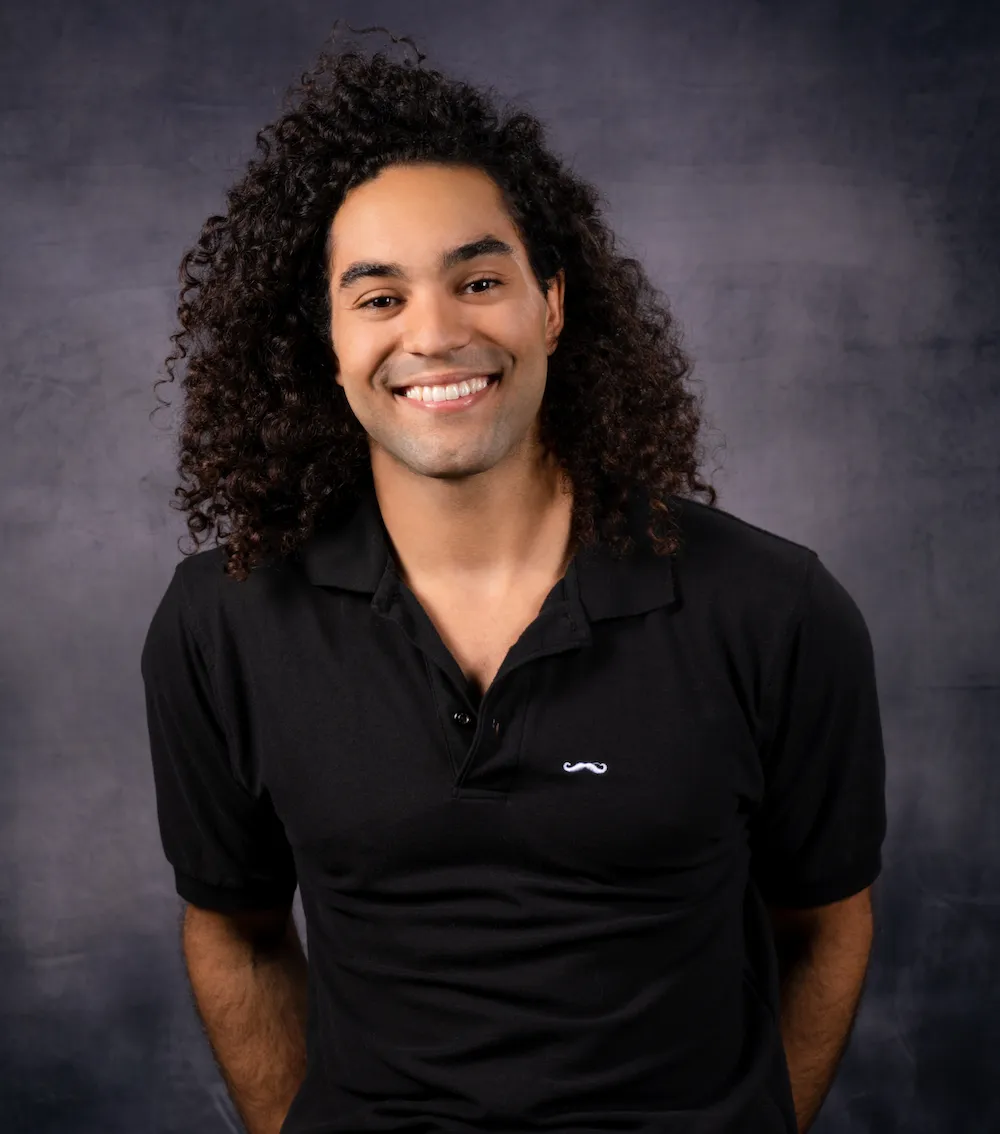
Chris Machetto, Founder, Frenchy Digital
Contract Essentials: What Must Be in Writing Before You Sign
A handshake is not a contract, and a good contract protects both parties. The clauses below are non-negotiable for any serious LA app development engagement. If an agency resists any of them, that is itself a decision-making signal.
| Clause | Why It Matters | Recommended Language |
|---|---|---|
| Scope Definition | Prevents endless scope creep and billing disputes | Detailed feature list, explicit exclusions, linked to wireframes |
| IP Assignment | Ensures you own what you paid for | All work-for-hire, IP transfers on payment of each milestone |
| Source Code Delivery | Prevents hostage situations | Full repository access from day 1, delivered in your GitHub/GitLab |
| Payment Schedule | Aligns incentives to finish | 20-30% upfront, rest milestone-based, final 10-15% at launch |
| Change Orders | Controls cost overruns | Written request, hour estimate, signed approval before work begins |
| Warranty Period | Covers post-launch bugs on agency's dime | 30-90 days post-launch, defects fixed at no additional cost |
| Confidentiality (NDA) | Protects your product strategy | Mutual NDA signed before discovery, survives termination |
| Termination | Lets you exit a failing engagement | 30-day notice, pro-rated refund of unearned milestones, full code handover |
- Never sign a contract where the agency retains ownership of your source code: this is the #1 predatory clause in the industry
- Never pay more than 30% upfront: aligned incentives require the agency to have skin in the game through launch
- Always require a detailed Statement of Work (SOW) as an exhibit: the contract references the SOW for scope
- Include an explicit 'no subcontracting without written consent' clause if team identity matters to you
- Ensure the acceptance criteria per milestone are objective and measurable, not subjective
- Add a liquidated damages clause for late delivery only if you have hard external deadlines: otherwise it distorts incentives
For contracts above $100K, have your attorney review the agreement before signing. The $2,000-$5,000 in legal fees is trivial insurance against six-figure disputes. Any reputable LA agency has seen dozens of attorney redlines and will negotiate in good faith. Resistance to legal review is itself a red flag.
Frenchy Digital vs Typical LA Competitors: An Honest Comparison
We include this section not as self-promotion but as a worked example of how to compare agencies concretely. Apply the same rubric to every agency you interview, Frenchy Digital included. An honest agency gives you the data to evaluate them objectively.
| Dimension | Frenchy Digital | Typical LA Boutique | Offshore Outsourcer | Large Consultancy |
|---|---|---|---|---|
| Team Size | 49 engineers, LA + Paris + Geneva | 5-15 people, single office | 50-500, mostly offshore | 500-5000, matrixed |
| Engineering Pedigree | Google, Meta, YouTube, Snapchat alumni | Mixed, varies widely | Junior-heavy, high turnover | Mixed, rotating staff |
| Discovery Phase | Paid 2-4 week discovery standard | Sometimes, often skipped for speed | Rare, quote from RFP only | Yes, but often 8-12 weeks |
| Portfolio Verifiability | 50+ live App Store apps | 10-30 live apps typical | Hard to verify own work | Reference names vs live apps |
| Pricing Model | Milestone-based, transparent itemization | Fixed or T&M, varies | Fixed, often under-scoped | T&M, premium rates |
| Source Code Ownership | Yours from day 1, your repo | Usually yes, ask explicitly | Often contested | Yours, but complex handover |
| Same-Timezone Coverage | Pacific, same-day response | Pacific, same-day response | 8-12 hour offset typical | Mixed, depends on team |
| Typical MVP Cost | $45K-$85K (3-4 months) | $40K-$120K (varies) | $15K-$50K (risk-laden) | $150K-$400K (overhead heavy) |
| Post-Launch Support | Dedicated maintenance tier | Ad hoc, depends on capacity | Often separate contract | Formal SLA, premium priced |
Where Frenchy Digital is the Right Choice
- Projects where engineering quality matters: AI integration, real-time systems, HIPAA/PCI compliance
- Businesses that need both speed and craftsmanship: Silicon Valley engineering meets Hollywood creative
- Clients who value same-timezone collaboration and in-person workshops in LA
- Bilingual (English/French) needs, useful for European expansion or Quebec markets
- Diverse-owned business priorities: Frenchy Digital is Black-owned with offices in LA, Paris, Geneva
- Long-term product partnerships rather than one-off builds
Where Another Agency May Be a Better Fit
- Sub-$25K MVPs where a solo freelancer or very small boutique is economically appropriate
- Pure staff-augmentation where you have your own PM and just need engineering hands
- Highly specialized domains (AR/VR-first studios, hardcore game development) where a specialist shop dominates
- Projects requiring 24/7 follow-the-sun development where a large offshore team is the right model
The best agency for your project is the one that matches your specific needs, not the largest, cheapest, or most famous. Our case studies and team page give you the raw data to decide whether Frenchy Digital fits. If we're not the right match, we'll tell you and often recommend a better one.
The Final Decision Checklist: 20 Points Before You Sign
You've done the shortlisting, the interviews, and the proposal review. Before you sign a contract, run through this final checklist. If you can't confidently check every box, pause and resolve the gap before committing.
Due Diligence Checklist (10 points)
- I have clicked through to at least 3 live App Store / Play Store apps they built
- I have spoken to 2-3 client references by phone and asked about what went wrong
- I have met the named engineering lead who will work on my project
- I have read their discovery deliverable template or an example from a past project
- I have independently verified the agency's LinkedIn team size and tenure
- I have checked Clutch, Google, and G2 reviews for patterns of complaints
- I have confirmed the agency's office address exists and visited if possible
- I have seen a redacted example of a past project's SOW and milestone plan
- I have understood exactly who (named individuals) will staff my project
- I have tested their responsiveness during the sales process (24h reply baseline)
Contract & Commercial Checklist (10 points)
- Source code ownership transfers to me at each milestone, in my repository
- IP assignment clause covers all code, designs, content, and documentation
- Payment schedule is milestone-based with no more than 30% upfront
- Change-order process is defined in writing with agreed hourly rates
- Warranty period of at least 30 days post-launch is included at no extra cost
- Termination clause allows me to exit with code and pro-rated refunds
- NDA covers both parties and survives termination
- Scope document is detailed, exhibit-attached, and referenced by the main contract
- Acceptance criteria per milestone are objective and measurable
- An attorney has reviewed the contract (for deals above $100K)
- Perfect score (20/20): Proceed with confidence, rare but ideal
- 18-19/20: Proceed, note gaps and address in writing before kickoff
- 15-17/20: Pause, resolve gaps or consider alternative agencies
- Below 15/20: Do not sign, fundamental risks remain
Choosing the right app development company in Los Angeles is a 40-hour investment that can save you 400 hours of rework and $100K+ in avoided waste. Take the time. Use the framework. Ask the hard questions. The best agencies will welcome the rigor, and the ones who resist it are answering your biggest question for free.
The right agency makes your product better than you imagined. The wrong one makes your board presentation worse than you feared. Choose as if the next two years of your company depend on it, because they do.
Frenchy Digital, Los Angeles
Ready to Vet Frenchy Digital Against Our Competitors?
Book a free 45-minute discovery call. We'll walk you through our portfolio, process, team, and pricing, and help you evaluate any other LA agency you're considering.
Vetting App Development Agencies in LA?
Frenchy Digital's 49-person team (Google, Meta, and Snapchat alumni) has delivered 50+ apps for Los Angeles businesses. Get a free discovery call and honest assessment of your project.
1517 S Bentley Ave Apt 204, Los Angeles CA 90025
Frequently Asked Questions
Sources & References
Related Articles You May Find Helpful
- Best App Developers in Los Angeles: Expert Comparison Guide
- Mobile App Development in Los Angeles: Complete Guide 2026
- App Development Cost in Los Angeles 2026
- Mobile App Development Process Guide 2026
- iOS App Development in Los Angeles 2026
- React Native Development in Los Angeles 2026
- How to Vet a Los Angeles App Development Agency: 10 Questions