




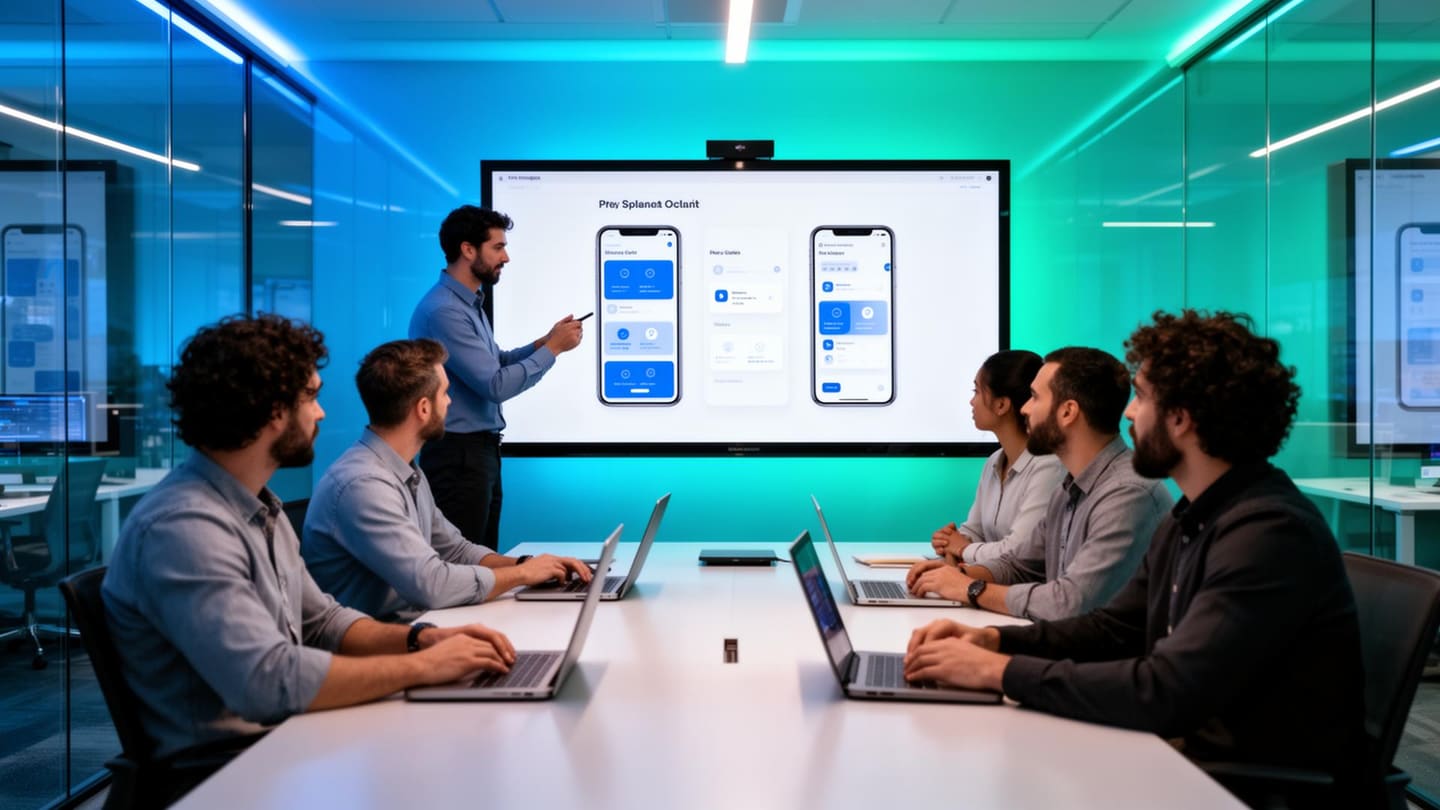
The Critical Decision: Selecting Development Partners
Selecting the right developer team to implement your Figma designs represents the most critical decision determining project success or failure according to TechCrunch analysis studying 840 startup app projects. The data reveals: 42% of mobile app projects fail not from bad ideas or poor designs, but from selecting inappropriate development partners: agencies promising unrealistic timelines, freelancers disappearing mid-project, offshore teams producing unmaintainable code requiring complete rewrites.
First-time founders without technical backgrounds face particular challenges: unable to evaluate technical proposals, susceptible to impressive jargon masking inexperience, accepting low bids that balloon 3x over budget, and lacking frameworks assessing code quality until catastrophic problems emerge months later.

Systematic approach to evaluating mobile app development proposals
According to Y Combinator research interviewing 230 successful founders, those who invested 30+ hours vetting developers before hiring achieved 4.2x higher project success rates, 60% lower total costs (avoiding expensive rewrites), and 2.8x faster time-to-market versus founders who hired based on price alone.
Project Context: PlanSync: You've invested $15,000-$25,000 in professional Figma designs: 50+ screens, comprehensive component library, interactive prototypes, design system documentation. Proposals range from $25,000 (offshore agency) to $95,000 (US boutique firm) to $140/hour (senior freelancer, ~400 hours). How do you evaluate, identify red flags, and manage development?
Phase 1: Understanding Developer Proposals
Professional developers provide detailed proposals demonstrating they understand your project. According to VentureBeat guide, comprehensive proposals span 15-25 pages covering:
✅ 1. Technology Stack Recommendation (With Justification)
GOOD PROPOSAL example: "We recommend React Native for PlanSync based on: Cost Efficiency (single codebase, $32K savings vs native), Adequate Performance (productivity apps don't need cutting-edge native performance), Faster Iteration (hot reload for instant design tweaks), Maintenance (single update for both platforms), Team Expertise (15 RN apps, 98% crash-free, 4.6 star average)."
🚩 RED FLAG: "We'll build your app in React Native": No justification. May only know one technology. Questions to ask: "Why React Native instead of Flutter or native?", "What are trade-offs for my specific app?", "What happens if we need native performance later?"
📋 2. Detailed Feature Breakdown & Timeline
GOOD PROPOSAL structure:
- Phase 1: Setup & Design System (Week 1-2): Figma audit, project init, design system, component library. Deliverable: design system demo. Cost: $9,000
- Phase 2: Authentication (Week 3-4): Login, signup, email verification, OAuth, session management. Deliverable: functional auth via TestFlight. Cost: $9,000
- Phase 3: Core Task Management (Week 5-7): Task list, creation modal, detail view, project organization, offline sync. Deliverable: core functionality. Cost: $13,500
- Remaining phases continue...: Total: 12 weeks, $54,000
🚩 RED FLAG: Vague Timeline "Development will take 10-12 weeks, cost approximately $40,000-$60,000." Problems: 20% timeline variance, 50% cost variance, no milestones, impossible accountability. Indicates developer hasn't analyzed your Figma files.
👥 3. Team Composition & Availability
GOOD PROPOSAL names specific people: Lead Mobile Dev (80% allocated, 6 years RN), Backend Engineer (40%), QA Engineer (30%), Project Manager (20%). Availability committed: "Full-time during 12-week window, no concurrent projects."
- 🚩 'I'll be building your app': Solo developer = high risk (illness, burnout, knowledge silos)
- 🚩 'Our team of 50+ developers': Large agency, who works on YOUR project?
- 🚩 No availability commitment: Developer juggling multiple projects = delays
- 🚩 12-hour timezone difference: Not automatically bad, but requires strong communication protocols
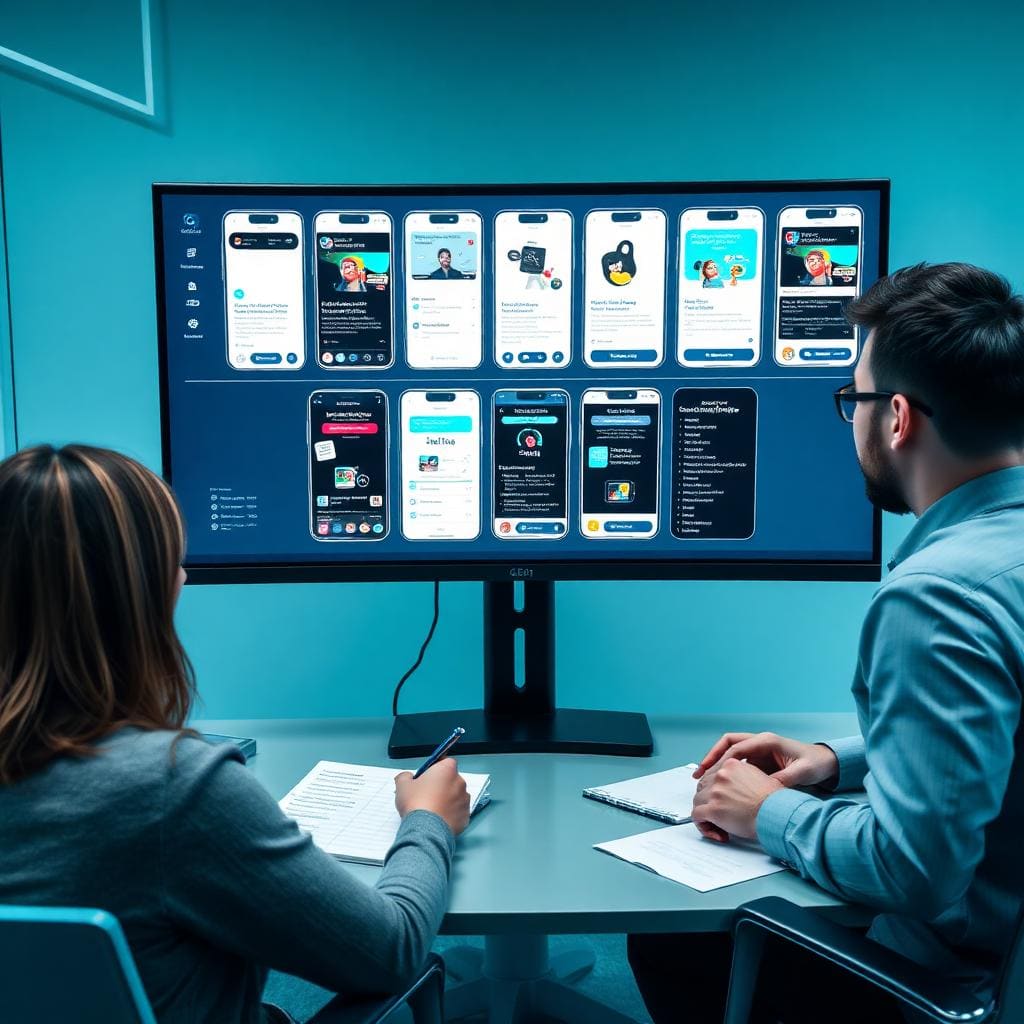
Critical warning signs in mobile app development proposals
Phase 2: Evaluating Tech Stack Proposals
Here's how non-technical founders evaluate proposals based on Product Hunt community wisdom:
| Factor | Native Development | Cross-Platform (RN/Flutter) | When to Choose |
|---|---|---|---|
| Development Cost | $85,000-$120,000 (two codebases) | $50,000-$70,000 (single codebase) | Cross-platform if budget <$80K |
| Time to Market | 16-24 weeks (parallel) or 28-36 weeks (sequential) | 8-14 weeks (same features) | Cross-platform if need <16 weeks |
| Performance | Maximum possible (60-120fps) | Excellent for 95% apps | Native if: gaming, AR/VR, video editing |
| Maintenance | Every fix implemented twice | Single update serves both (50% less cost) | Cross-platform if limited budget |
| Developer Availability | iOS: $120-180K, Android: $100-160K | React Native: $90-140K, larger pool | Consider local talent availability |
| Future Flexibility | Apple/Google maintain forever | Framework risk but can 'eject' to native | Native if 10+ year timeline |
❓ Questions to Ask About Tech Stack Choice
- 1."Why do you recommend [technology] for my specific app?": Should reference your features, not generic benefits
- 2."What are the limitations of this approach?": Professionals acknowledge trade-offs. Zero downsides = overselling
- 3."Can you show me apps you've built with this technology?": Download and test on your phone
- 4."What happens if we need to change technology later?": Understanding migration paths
- 5."How will you handle [specific complex Figma interaction]?": Vague answers = haven't analyzed your designs
Phase 3: Red Flags & Warning Signs
Based on Indie Hackers post-mortem analysis of 120 failed projects, these warning signs predicted failure 87% of the time:
🚨 1. Price Significantly Below Market (>30% under)
You receive proposals: $65K, $58K, and $29K. The $29K seems amazing value. Reality: Junior developers learning on your project (2-3x longer, buggy), offshore body shops (high turnover, quality issues), scope gaps (critical features excluded), or bait-and-switch ($29K → $75K via change orders).
Action: Ask: "Why 55% lower? What's included/excluded?" Legitimate reasons exist but investigate thoroughly.
🚨 2. Vague Communication During Sales
Developer takes 3-5 days responding, answers vaguely, dodges specifics. Reality: Communication during sales = BEST communication you'll receive. If already slow/vague, expect worse during development.
🚨 3. No Portfolio or Unverifiable References
"We've built 50+ apps but can't share due to NDAs." Reality: Legitimate developers have 3-10 portfolio apps in stores you can test, case studies, client references, and GitHub profiles showing code quality.
🚨 4. Upfront Payment >30%
"We require 50-70% upfront." Standard: 25-30% upfront, 30-40% midpoint, 30-40% completion. Excessive upfront = cash flow problems, inexperience, or scams.
🚨 5. Guarantees That Sound Too Good
"Guaranteed App Store approval" or "zero bugs" or "100% pixel-perfect." Experienced developers know: Apple can reject unpredictably, all software has bugs, perfect pixel matching impossible across 50+ device sizes.
🚨 6. Resistance to Contracts
"Let's start with a handshake." Professional developers insist on written contracts: scope definition, payment terms, IP ownership, confidentiality, termination clauses.
Phase 4: Contract Structures & Payment Terms
According to First Round Review guide based on 50 successful founder-developer partnerships:
✅ Option 1: Milestone-Based (Recommended)
Project divided into 4-6 milestones. Payment released upon completion and your approval.
- Milestone 1: Setup (Week 1-2): $9K: component library demo
- Milestone 2: Auth (Week 3-4): $9K: working login/signup via TestFlight
- Milestone 3: Core Features Part 1 (Week 5-7): $15K: task management functional offline
- Milestone 4: Core Features Part 2 (Week 8-10): $15K: calendar, projects, collaboration
- Milestone 5: Polish (Week 11-12): $9K: app store submission
- Milestone 6: Final (Post-Launch): $3K: successful store approval
Advantages: Regular progress visibility, can pause if quality disappoints, developer motivated by next payment, natural feedback checkpoints.
⚠️ Hourly Arrangements Require Careful Management: $140/hour × 400 hours = $56K estimate can become $140 × 650 hours = $91K. Incentive misalignment: developer profits from inefficiency. Protections: weekly hour caps, detailed time tracking, budget cap, regular demos proportional to hours billed.
📜 Intellectual Property (IP) Ownership
MUST HAVE: "Upon final payment, all intellectual property rights including source code, designs, documentation transfer fully to [Your Company]. Developer retains no ownership, licenses, or rights."
Without explicit transfer: developer technically owns code, could sell to competitor, investors flag IP gaps, can't modify without permission. Exception: pre-existing code (reusable libraries) licensed separately is acceptable if clearly defined.
📝 Change Control Process
Minor changes (<2 hours, no timeline impact) absorbed at developer discretion. Major changes require written Change Request with: description, reason, time impact, cost impact, timeline impact, dependencies. Client has 3 business days to approve.
- "Change button color" = Minor, no Change Request
- "Add social sharing not in Figma" = Major, requires Change Request
- "Redesign navigation structure" = Major, requires CR + Design update
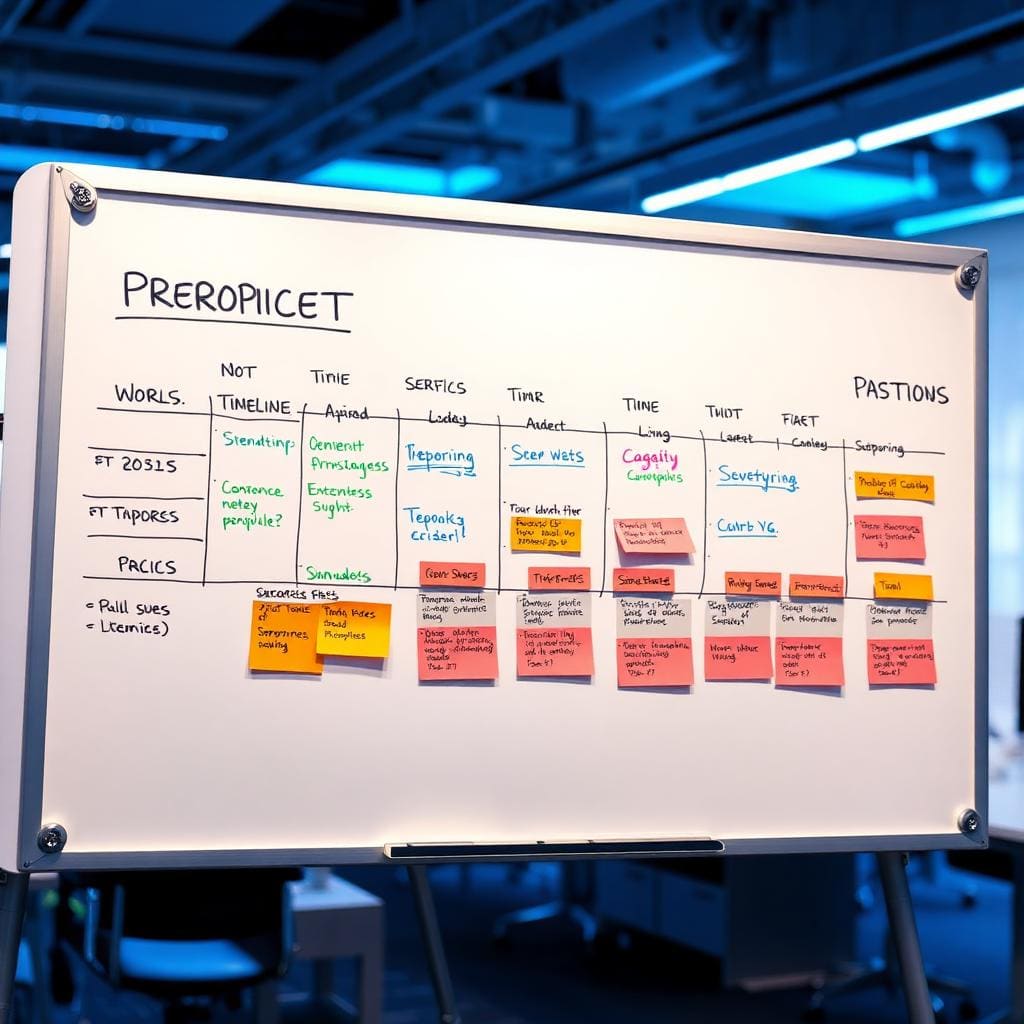
Non-technical founder's QA checklist for app acceptance testing
Phase 5: Quality Assurance & Acceptance Testing
Non-technical founders need systematic QA identifying issues before final payment. Framework from Y Combinator startup school:
🔍 Visual Fidelity Checklist
- 1.Side-by-Side Comparison: Open Figma screen + delivered app screenshots side by side. Check: exact hex colors, proportional spacing, typography sizes/weights, correct icons/images, button sizes and shadows
- 2.Interaction States: Button pressed state feedback? Disabled actually disabled? Focused input states? Error states displaying correctly?
- 3.Responsive Behavior: Test: iPhone SE (readable?), iPhone 14 Pro (matches Figma?), iPhone Pro Max (not stretched?), iPad, Android devices
- 4.Animations & Transitions: Screen transitions smooth? Loading states implemented? Modal animations match prototype? Gestures work (swipe, pull-to-refresh)?
🧪 Functional Testing (Non-Technical)
For each primary user journey, follow steps exactly. Example "Create New Task": Open app → Tap "+" → Enter title → Select due date → Choose priority → Tap "Create" → Verify task in list with correct data. Repeat for every primary flow.
⚡ Edge Case Testing
- Empty States: Zero tasks: friendly message or ugly blank screen?
- Error Handling: Wifi off, try creating task: clear error message or crash?
- Long Content: 500-character task title: truncates gracefully or breaks layout?
- Rapid Actions: Tap Create 10x quickly: 10 duplicates (bad) or debounced (good)?
- App Backgrounding: Create task, exit, return: task persisted?
- Permissions: Deny notifications: graceful handling or crash?
📊 Milestone Acceptance Checklist
Functional: CRUD operations, filtering, sorting, search, offline creation + sync. Visual: Matches Figma ±5%, smooth 60fps animations, no layout breaks. Technical: Zero crashes in 30-min test, <100ms response, data persists, <150MB memory. ALL criteria must pass before payment.
Phase 6: Managing the Development Process
📅 Weekly Check-In Structure (30-45 min)
- 1.Demo (15 min): Developer shows working app (not slides). You test live on TestFlight
- 2.Feedback (10 min): Immediate specific reactions. 'That animation feels sluggish' or 'Button placement perfect'
- 3.Next Week Plan (10 min): Upcoming work. Clarify Figma ambiguities before incorrect implementation
- 4.Blockers (5 min): Missing assets? API access? Figma clarifications needed?
- 5.Timeline Check (5 min): Still on track? Risks? Adjustments needed?
Record outcomes: Email summary with decisions, action items (both sides), next meeting date. Creates paper trail.
📢 Communication Channels
- Primary: Email or PM Tool (Trello, Asana): All formal requests, decisions, approvals. Searchable, permanent
- Secondary: Slack/Discord: Quick questions: 'Is this button 12px or 16px padding?' Response within hours
- Never: Text Messages for Important Items: Too casual, lost in conversation, no accountability
Good vs Bad Feedback: ❌ "The app feels slow" → ✅ "Create Task button has 2-3 second delay before modal appears." ❌ "Colors look off" → ✅ "Primary button is #4F46E5 but Figma shows #6366F1, button shadow is missing." ❌ "Doesn't feel right" → ✅ "Task card height is 90px but Figma shows 72px." Specificity = faster fixes = lower costs.

Effective communication rhythms preventing project derailment
Frenchy Digital: Transparent Development Partnership
Successfully implementing mobile applications from Figma designs requires partnering with developers who communicate clearly, provide detailed proposals, commit to realistic timelines, and deliver quality matching your vision. The difference between $60,000 well-spent and wasted lies in: thorough vetting, clear contracts, systematic QA, and proactive communication.
Frenchy Digital provides transparent proposals with detailed feature breakdowns, realistic timelines based on actual project data, clear milestone structures, and systematic QA ensuring delivery matches Figma designs. We've delivered 40+ mobile applications for non-technical founders achieving 98% client satisfaction through clear communication, predictable delivery, and post-launch support.
Research foundation: 840 startup app project analysis, 230 founder interviews through Y Combinator, 120 project post-mortems from Indie Hackers, contract templates reviewed by tech attorneys, and QA frameworks tested across 40+ client projects.
Analysis of 840 startup projects, 230 founder interviews, 120 project post-mortems, February 2026
Ready to Build Your App?
Schedule a free strategy consultation with our team to discuss your project.
1517 S Bentley Ave Apt 204, Los Angeles CA 90025
Frequently Asked Questions
Sources & References
- 1TechCrunch: Startup App Development Success Factors↗
- 2Y Combinator: Finding Technical Cofounders & Contractors↗
- 3VentureBeat: Evaluating Mobile Development Proposals↗
- 4Product Hunt: Choosing Mobile Tech Stack↗
- 5Indie Hackers: Failed App Dev Projects Analysis↗
- 6First Round Review: Managing Developers Guide↗
- 7Y Combinator: Non-Technical QA Checklist↗