



What Is Hybrid App Development?
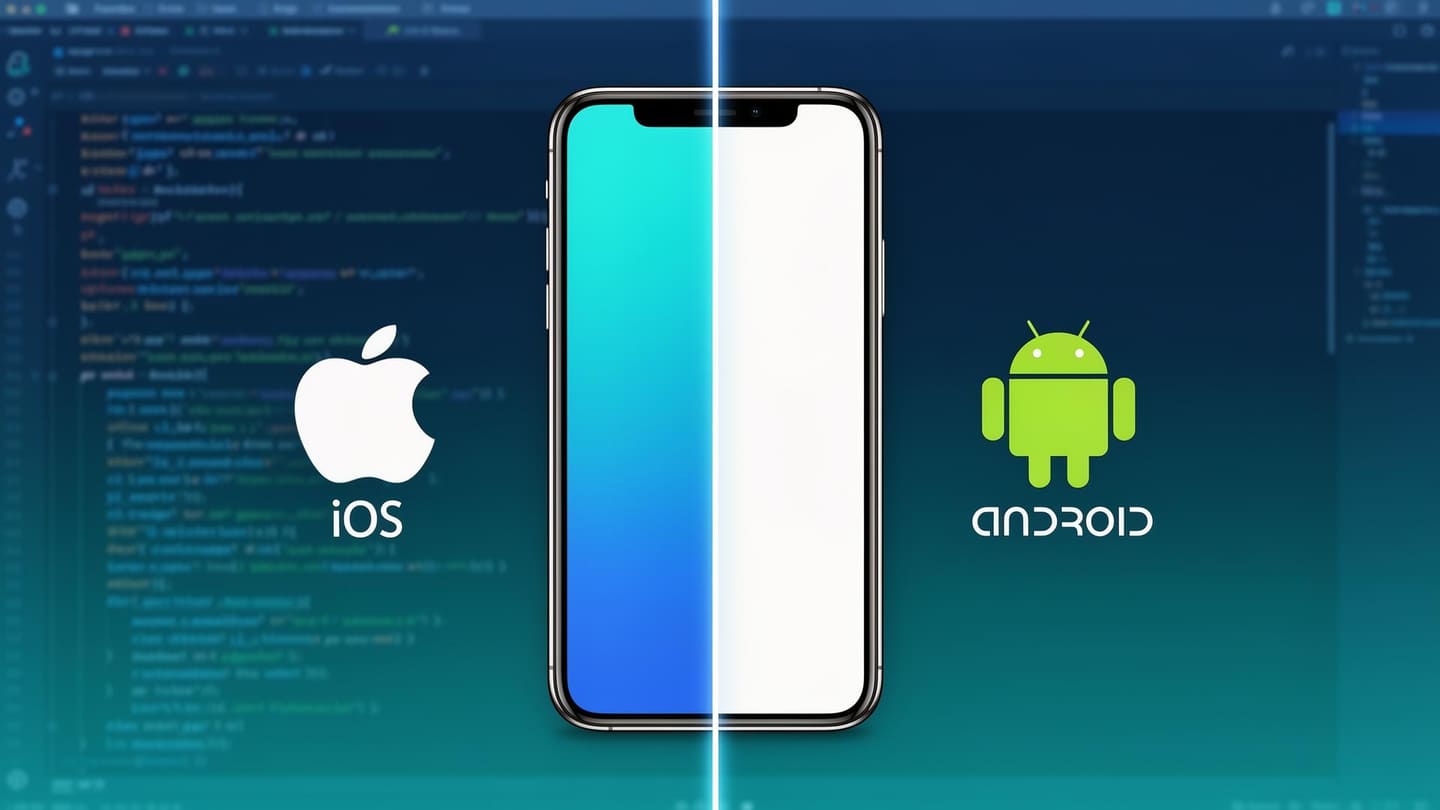
Building separate native apps for iOS and Android in 2026 is, for most businesses, an expensive decision that doubles your development cost, doubles your maintenance burden, and doubles the time it takes to reach your users. Hybrid app development solves this problem by letting you build one application that runs beautifully on both platforms, and in many cases, on web and desktop too.
The hybrid approach has matured dramatically. Frameworks like React Native and Flutter now deliver performance so close to native that the vast majority of users cannot tell the difference. Companies like Meta, Microsoft, Tesla, Pinterest, BMW, and Alibaba rely on hybrid frameworks for their flagship mobile applications: proof that this is not a budget shortcut but a legitimate engineering strategy used by the world's most demanding tech organizations.
Hybrid app development is the process of building a mobile application using a single shared codebase that deploys to multiple platforms simultaneously. Instead of hiring separate iOS developers writing Swift and Android developers writing Kotlin, you hire one team that writes one application. The resulting app installs from the Apple App Store and Google Play Store just like native apps, accesses all device hardware features, and performs at near-native speed.
WebView-Based Hybrid Apps
These apps use web technologies (HTML, CSS, JavaScript) rendered inside a native shell through a WebView component. Frameworks like Ionic with Capacitor follow this approach. The advantage is that web developers can build mobile apps using familiar tools. The trade-off is that performance depends on the WebView engine, which adds a layer between your code and the device hardware. For content-driven apps, internal business tools, and simpler interfaces, WebView-based hybrid development remains viable.
Native-Rendered Cross-Platform Apps
This is where hybrid development has truly revolutionized in 2026. React Native renders actual native UI components through a bridge architecture, meaning your app uses the same interface elements as a pure Swift or Kotlin app. Flutter takes an even more aggressive approach: it compiles directly to native machine code and renders its own pixels using the Impeller engine, bypassing platform UI components entirely for complete visual control.
Hybrid vs. Native vs. PWA: Making the Right Choice
The first strategic decision in any mobile app development project is choosing your development approach. Each has distinct advantages, and the right choice depends on your specific requirements, budget, timeline, and target audience.
| Factor | Native (Swift/Kotlin) | Hybrid (React Native/Flutter) | PWA (Web-Based) |
|---|---|---|---|
| Development Cost | $120K-$300K+ (2 separate apps) | $60K-$150K+ (1 shared codebase) | $30K-$80K (web only) |
| Time to Market | 6-12 months | 3-6 months | 2-4 months |
| Performance | Maximum (100%) | Near-native (95-99%) | Good (80-90%) |
| Hardware Access | Full, unrestricted | Full for common features; native modules for specialized APIs | Limited (no Bluetooth, NFC, advanced camera) |
| App Store Presence | Yes | Yes | No (installable from browser) |
| Maintenance Cost | High (2 codebases) | Low-Medium (1 codebase) | Low (1 codebase) |
| Best For | 3D games, heavy AR, specialized hardware | 95% of business applications | Content sites, simple tools |
Building separate native iOS and Android apps means paying for two full development cycles, two testing cycles, and ongoing dual maintenance. Hybrid development eliminates this duplication, which is why cross-platform approaches now dominate the enterprise and startup development landscape in 2026.
The decision matrix is straightforward. If you are building a AAA mobile game, a complex AR/VR experience, or an application that requires direct access to highly specialized hardware APIs, native development is the right choice. For virtually everything else, and this includes healthcare apps, fintech platforms, e-commerce stores, fitness trackers, enterprise tools, social networks, and AI-powered applications, hybrid development delivers equivalent results at significantly lower cost and faster timelines.
Top Hybrid Frameworks for 2026
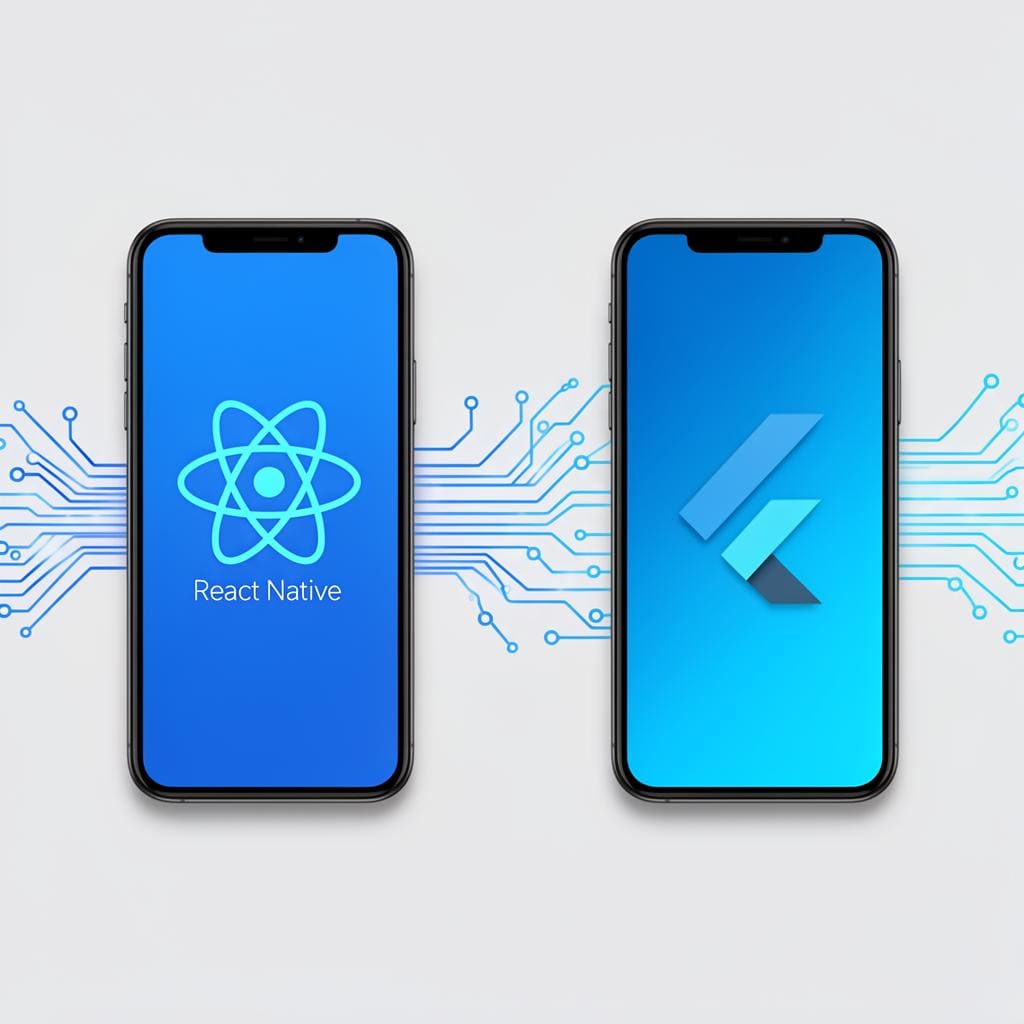
React Native and Flutter dominate the 2026 hybrid framework landscape, each serving distinct use cases and development philosophies.
The hybrid framework landscape has consolidated around a few dominant players. Each serves different use cases, and choosing the right one impacts everything from development speed to long-term maintenance costs.
React Native: Meta
React Native remains the most widely adopted cross-platform framework in 2026. It uses JavaScript and React, the most popular web development technologies in the world, which means the talent pool is enormous. The framework renders native UI components, giving apps a truly platform-authentic feel. Major applications: Facebook, Instagram, Microsoft Office, Skype, Discord, Pinterest, Tesla, and Walmart.
React Native's New Architecture (Fabric) has significantly improved performance by replacing the old bridge with a direct JavaScript-to-native communication layer. Combined with over-the-air (OTA) updates through CodePush, which lets developers push changes directly to users without app store review, React Native offers the most complete development and deployment ecosystem available.
Flutter: Google
Google's Flutter framework takes a different architectural approach. Instead of rendering native platform components, Flutter draws its own UI using the Impeller rendering engine, compiling directly to native ARM machine code. This gives developers pixel-level control over every visual element, which is why Flutter excels at applications where custom design is a primary differentiator. Major applications: Google Pay, BMW, Alibaba, eBay, and Toyota.
Flutter uses the Dart programming language, which has a smaller developer community than JavaScript but offers strong type safety and compile-time error detection. The framework supports mobile, web, desktop (macOS, Windows, Linux), and embedded platforms from a single codebase.
Kotlin Multiplatform (KMP)
The rising star for 2026, Kotlin Multiplatform allows teams to share business logic across platforms while keeping the UI layer fully native. This means your iOS interface uses SwiftUI and your Android interface uses Jetpack Compose, but the underlying data models, networking, and business rules are shared Kotlin code. KMP is ideal for teams that want shared logic without compromising on platform-specific UI conventions.
Ionic with Capacitor
Ionic remains the leading WebView-based framework, now powered by the Capacitor runtime for native device access. It is the most budget-friendly hybrid option, leveraging standard HTML, CSS, and JavaScript. Best suited for content-driven apps, internal enterprise tools, and MVPs where time-to-market is the priority over maximum performance.
.NET MAUI: Microsoft
Microsoft's .NET Multi-platform App UI is the successor to Xamarin, targeting organizations already invested in the Microsoft ecosystem. Using C# and .NET, MAUI provides cross-platform development with strong enterprise integration capabilities, particularly for companies using Azure, SQL Server, and Active Directory.
React Native vs. Flutter: The Definitive 2026 Comparison
Since React Native and Flutter dominate the hybrid app development conversation, businesses need a clear understanding of how they differ. This is the most common question we hear during initial consulting conversations at Frenchy Digital.
| Criteria | React Native | Flutter |
|---|---|---|
| Language | JavaScript / TypeScript | Dart |
| Backed By | Meta (Facebook) | |
| UI Rendering | Native platform components | Custom rendering engine (Impeller) |
| Developer Talent Pool | Very large (JavaScript is #1 globally) | Growing but smaller (Dart is niche) |
| Ecosystem / Libraries | Massive (full npm ecosystem) | Strong and growing (pub.dev) |
| OTA Updates | Yes (CodePush): bypass app store review | Limited (requires app store submission) |
| Hot Reload | Yes | Yes (faster) |
| App Size | Smaller baseline | Larger baseline (~15-20MB overhead) |
| Animation Performance | Good (requires optimization for complex) | Excellent (built-in animation engine) |
| Web Support | Experimental | Production-ready |
| Desktop Support | Limited | macOS, Windows, Linux |
| Cost (LA Market) | $60K-$150K+ | $70K-$160K+ |
| Best For | Business apps, e-commerce, social, enterprise | Brand-heavy UI, multi-platform (mobile + web + desktop) |
That said, we recommend Flutter when a client's primary differentiator is custom visual design and they need a single codebase covering mobile, web, and desktop platforms. The framework selection always starts with your requirements, not our preferences.
Who Should Build a Hybrid App?
Hybrid app development is the right choice for a remarkably wide range of businesses and use cases in 2026:
Startups and MVPs
When you are validating a product concept, speed and cost efficiency are everything. Hybrid development gets your product into users' hands faster and preserves capital for marketing and iteration. Frenchy Digital's structured approach ($5,000 research, $13,000 prototype, then development) is specifically designed for startups who need to validate before they invest heavily.
SMBs Expanding to Mobile
Small and medium businesses with existing web platforms can extend their reach to mobile without the $200K+ investment of dual native development. React Native's JavaScript foundation means your existing web developers can contribute to the mobile project, further reducing costs.
Enterprise Applications
Internal tools, field service apps, CRM mobile extensions, and employee-facing platforms are ideal hybrid candidates. The single codebase simplifies IT management, and hybrid frameworks integrate well with enterprise backends and authentication systems.
Healthcare and Compliance-Sensitive Apps
Contrary to outdated assumptions, hybrid apps achieve full HIPAA compliance. React Native supports encrypted storage, biometric authentication, certificate pinning, and all the security features required for healthcare, fintech, and enterprise applications.
E-commerce and Marketplace Platforms
Product catalogs, shopping carts, payment processing, order tracking, and customer reviews: all standard e-commerce features work flawlessly in hybrid frameworks with excellent performance.
AI-Powered Applications
Hybrid apps connect to AI APIs (OpenAI, Claude AI, TensorFlow) identically to native apps. The AI processing happens server-side or through on-device inference libraries, making the framework choice irrelevant to AI capability. Explore our AI integration services.
Modern Hybrid App Architecture

A well-architected hybrid application follows patterns that maximize performance, maintainability, and scalability across both platforms.
Frontend: React Native with TypeScript
TypeScript adds static typing to JavaScript, catching errors at compile time rather than in production. Combined with React Native's component-based architecture, this creates a frontend that is both robust and maintainable. The Apple Human Interface Guidelines and Material Design guidelines are followed for platform-appropriate UI patterns.
State Management
For complex applications, state management libraries like Redux, Zustand, or MobX handle data flow between components. The choice depends on application complexity: simpler apps use React's built-in Context API, while enterprise applications with complex data dependencies benefit from more structured solutions.
Backend: Node.js / Express or Firebase
The backend handles authentication, business logic, database operations, and third-party integrations. Node.js shares JavaScript with React Native, allowing code sharing between frontend and backend. Firebase provides a serverless alternative with real-time database, authentication, cloud functions, and analytics, ideal for MVPs.
Native Modules
When a hybrid app needs functionality not available through cross-platform libraries (specialized Bluetooth protocols, advanced camera processing, or platform-specific accessibility features), developers write native modules in Swift or Kotlin that integrate seamlessly with the React Native JavaScript layer. This "native escape hatch" ensures hybrid apps are never limited by framework constraints.
AI and Machine Learning in Hybrid Apps

AI capabilities integrate identically in hybrid and native apps: the framework choice has zero impact on AI performance.
One of the most common misconceptions about hybrid development is that it limits AI capabilities. This is categorically false. In 2026, hybrid apps integrate AI and machine learning identically to native applications because AI processing follows two patterns, both of which are framework-agnostic:
Cloud-Based AI (API Integration)
The app sends data to cloud AI services (OpenAI GPT-4, Claude AI, Google Vertex AI, or custom models hosted on AWS SageMaker) and receives results via REST or WebSocket APIs. The framework does not matter because the AI runs on remote servers. This is the approach for chatbots, content generation, complex NLP, and large-scale recommendation engines.
On-Device AI (Edge Inference)
For real-time processing where latency matters (image recognition, voice commands, pose detection), TensorFlow Lite and CoreML models run directly on the device. React Native and Flutter both support on-device inference through native modules, delivering real-time AI performance without network dependency.
Hybrid App Development Costs in Los Angeles
Understanding the true cost of hybrid app development is essential for budget planning. Here is what Los Angeles businesses should expect in 2026:
| App Complexity | Features | Hybrid Cost (LA) | Native Equivalent (iOS + Android) |
|---|---|---|---|
| Simple MVP | 5-8 screens, basic auth, API integration | $20,000: $50,000 | $40,000: $100,000 |
| Moderate Business App | 15-25 screens, payments, push notifications, analytics | $60,000: $120,000 | $120,000: $240,000 |
| Complex Enterprise App | 30+ screens, AI integration, real-time data, compliance | $120,000: $200,000+ | $240,000: $400,000+ |
| Healthcare / HIPAA App | EHR integration, telehealth, secure messaging, compliance | $100,000: $180,000 | $200,000: $360,000 |
Research Phase: $5,000
Market research, competitive analysis, requirements documentation, technology recommendation, and project roadmap. This two-week phase ensures you invest development dollars in the right features.
Interactive Prototype: $13,000
Clickable prototype with user testing, stakeholder feedback, and design validation before committing to full development. This 3-4 week phase prevents expensive pivots during development.
Development: Starting at $80,000
Full React Native development with iOS and Android deployment, backend integration, testing, and app store submission. Review our complete cost guide for detailed breakdowns.
Maintenance: Starting at $11,000/year
Ongoing maintenance and support including OS updates, bug fixes, performance optimization, and feature enhancements.
Security and Compliance in Hybrid Apps
Security is not a framework limitation. It is an implementation choice. A well-built hybrid app is equally secure as a native app because the same security primitives are available in both approaches:
- Data Encryption: AES-256 encryption at rest and TLS 1.3 encryption in transit. React Native accesses iOS Keychain and Android Keystore through native modules for hardware-backed secure storage.
- Authentication: Biometric authentication (Face ID, Touch ID, fingerprint), multi-factor authentication (MFA), OAuth 2.0, and JWT token management work identically in hybrid and native applications.
- HIPAA Compliance: Healthcare applications built with React Native achieve full HIPAA compliance when properly architected: encrypted PHI storage, access logging, session management, and BAA-compliant hosting.
- PCI-DSS Compliance: Financial applications handle payment card data securely through certified payment SDKs (Stripe, Braintree) that tokenize card information.
- Certificate Pinning: Prevents man-in-the-middle attacks by ensuring the app only communicates with authenticated servers, even on compromised Wi-Fi networks.
The Los Angeles Hybrid Development Ecosystem

Los Angeles combines entertainment industry innovation, healthcare technology, and startup culture to create a uniquely advantageous hybrid development ecosystem.
Los Angeles offers a uniquely advantageous environment for hybrid app development. The city's tech ecosystem, concentrated in Silicon Beach (Santa Monica, Venice, Playa Vista) and expanding through Downtown LA, Hollywood, and Beverly Hills, combines entertainment industry innovation, healthcare technology from major medical centers, and a startup culture fueled by proximity to top universities and venture capital.
According to the Los Angeles Economic Development Corporation, the LA tech sector is one of the fastest-growing employment categories in the region. Built In LA reports thousands of active technology companies, creating a dense network of development talent, design studios, and technology partners.
Frenchy Digital's presence in Beverly Hills, Brentwood, and Downtown LA means we are embedded in the communities we serve. Our additional offices in Paris and Évian-les-Bains, France extend this capability to clients targeting European and French-speaking markets, a unique advantage for businesses planning international hybrid app launches.
Frenchy Digital's Hybrid Development Process
Over 100+ launched applications, we have refined a hybrid development process that eliminates guesswork and delivers predictable results:
Phase 1: Strategic Discovery (2 Weeks)
We analyze your market, competitors, and user needs. We recommend the optimal hybrid framework (React Native in most cases), define your MVP feature set, and create a detailed project roadmap. Deliverables: product requirements document, technical architecture plan, and accurate budget breakdown.
Phase 2: Design and Prototype (3-4 Weeks)
Our design team creates wireframes and interactive prototypes that let you test the user experience before writing production code. User testing with real participants validates design decisions and identifies friction points early.
Phase 3: Agile Development (8-16 Weeks)
Development proceeds in two-week sprints with regular demos and client feedback. Our React Native team builds shared components first, then optimizes platform-specific behaviors for iOS and Android. Continuous integration and automated testing catch issues before they reach production.
Phase 4: Quality Assurance (2-3 Weeks)
Comprehensive testing across devices, screen sizes, OS versions, and network conditions. Performance profiling ensures smooth animations and fast load times. Security audits validate encryption, authentication, and data handling practices.
Phase 5: Launch and Growth
We handle app store submissions, app store optimization (ASO), and initial marketing support. Post-launch maintenance includes OS compatibility updates, performance monitoring, bug fixes, and feature enhancements.
Real-World Hybrid App Success Stories
The world's most successful mobile applications prove that hybrid development delivers at the highest level:
Instagram: React Native
Meta migrated significant portions of Instagram to React Native, enabling faster feature development and consistent experiences across platforms. The app serves over 2 billion monthly active users: proof that React Native handles massive scale.
Microsoft Office Suite: React Native
Word, Excel, PowerPoint, and Outlook all use React Native components, demonstrating that even the most complex productivity applications can leverage cross-platform frameworks for enterprise-grade functionality.
BMW: Flutter
BMW's My BMW app, built with Flutter, provides remote vehicle control, charging management, and connected services across iOS and Android with a premium, custom design language that reflects the brand's luxury positioning.
Google Pay: Flutter
Google's own payment application uses Flutter for its mobile interface, validating the framework's ability to handle sensitive financial transactions at massive scale with the security standards required by the payments industry.
Common Hybrid Development Mistakes
Based on years of experience, including rescuing projects from other development teams, here are the mistakes that derail hybrid app projects:
- Choosing the wrong framework: Selecting Flutter because it's 'trending' when your team has JavaScript expertise wastes time on learning curve. Framework selection must match your team's skills and project requirements.
- Over-relying on third-party libraries: The npm ecosystem is vast, but not every library is maintained. Using unmaintained packages creates security vulnerabilities and compatibility issues when React Native releases major updates.
- Ignoring platform-specific design patterns: iOS users expect certain navigation patterns. Android users expect others. A hybrid app that looks identical on both platforms feels 'wrong' on both.
- Skipping performance profiling: Memory leaks, unnecessary re-renders, unoptimized images, and chatty API calls must be profiled and resolved before launch.
- Not planning for native module needs: Most hybrid apps need native modules for specialized device access. If your team can't write Swift and Kotlin when needed, they'll hit walls.
- Underestimating testing requirements: Hybrid apps must be tested across both platforms, multiple OS versions, various screen sizes, and different device capabilities. The testing matrix is larger than single-platform development.
The Future of Hybrid Development
Several converging trends will shape hybrid app development beyond 2026:
AI-Augmented Development
AI coding assistants are already accelerating React Native and Flutter development. Developers use AI to generate boilerplate components, write tests, debug issues, and optimize performance, reducing development timelines by an estimated 20-30% according to McKinsey Digital.
Super App Architectures
Western markets are adopting the super app model where a single application hosts multiple services (messaging, payments, commerce, and utilities) through modular micro-frontends. Hybrid frameworks are ideally suited for this architecture because they support dynamic module loading and shared authentication layers.
Wearable and IoT Expansion
As Apple Watch, Android Wear, and wearable ecosystems expand, hybrid frameworks are extending support for wearable interfaces. React Native already supports Apple Watch extensions, and Flutter supports Wear OS, enabling a single team to build phone, tablet, and wearable experiences.
Edge Computing Integration
5G networks and edge computing enable hybrid apps to process data closer to the user, reducing latency for real-time features like AR overlays, live video processing, and IoT device management.
Conclusion: Hybrid Is the Smart Default for 2026
The hybrid versus native debate is effectively settled for business applications. With React Native and Flutter delivering 95-99% native performance at 30-50% lower cost and 30-50% faster timelines, the question is no longer whether to build hybrid: it is which framework and which partner to choose.
Frenchy Digital has built its entire development practice around this approach. Our React Native expertise, combined with deep experience in AI integration, healthcare compliance, and enterprise architecture, delivers Los Angeles businesses and international clients a proven path from concept to app store success.
Whether you are a Los Angeles startup validating your first product, an enterprise modernizing legacy applications, or an international business launching into the US and European markets, hybrid development is the strategy that maximizes your investment while minimizing your risk.
Frenchy Digital is a Black-owned mobile app development company based in Los Angeles with offices in Beverly Hills, Brentwood, Paris, and Évian-les-Bains, France. Founded in 2019, we specialize in React Native cross-platform development, AI/OpenAI integration, and HIPAA-compliant healthcare solutions. 100+ launched applications. 5.0-star Clutch rating.
Ready to Build Your Hybrid App?
Frenchy Digital delivers both iOS and Android from a single codebase: saving you 40-50% while matching native quality. 50+ apps launched. 5.0-star Clutch rating.
1517 S Bentley Ave Suite 204, Los Angeles CA 90025
Frequently Asked Questions
Sources & References
- 1React Native: Official Documentation↗
- 2Flutter: Official Documentation↗
- 3Apple Developer: Human Interface Guidelines↗
- 4Android Developers: Material Design↗
- 5Clutch: Frenchy Digital Profile↗
- 6McKinsey Digital: AI in Software Development↗
- 7AWS: Mobile Application Development↗
- 8Firebase: App Development Platform↗
- 9LAEDC: Los Angeles Economic Development↗
- 10Built In LA: Tech Companies↗
Related Articles You May Find Helpful
- Top 10 Swiss Cross-Platform Developers 2026
- 10 Best Hybrid App Frameworks in 2026, Ranked
- React Native vs Native App Development 2026
- Cross-Platform App Development 2026
- Mobile App Development Cost Guide LA
- AI-Powered App Development 2026
- Healthcare App Development 2026
- Mobile App Development Los Angeles 2026