










The Luxury Multifamily Market in Los Angeles
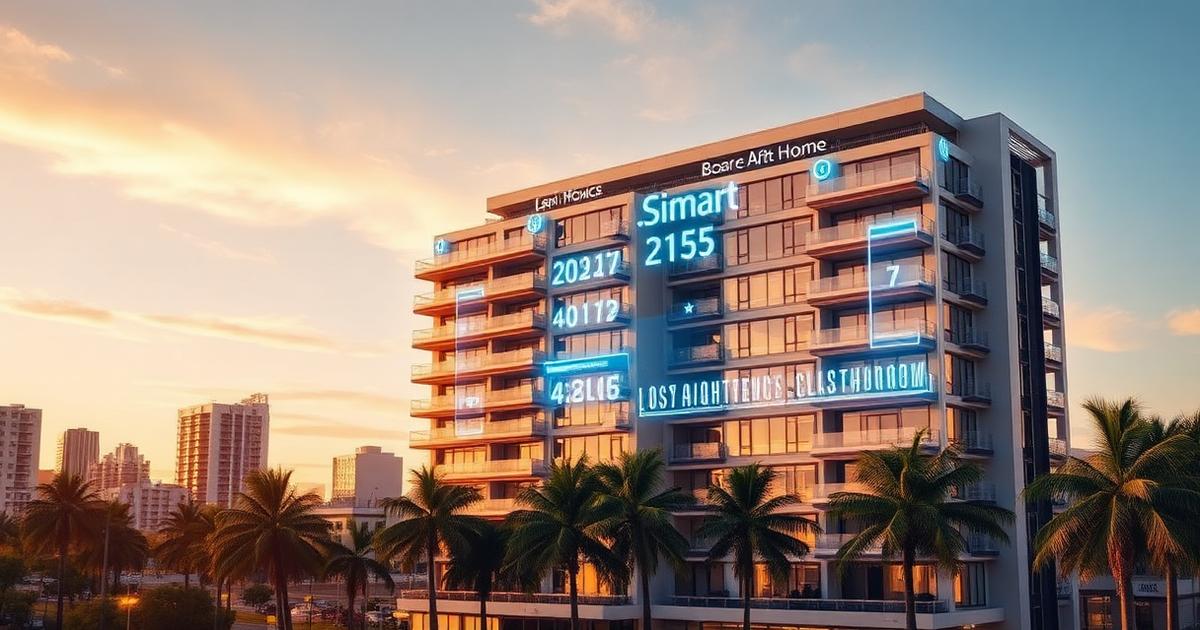
Los Angeles' luxury apartment market is concentrated in a handful of dense, high-demand submarkets (Century City, Beverly Hills, West Hollywood, Downtown LA, and Marina del Rey) where new Class A towers compete directly against each other within a few blocks. In Century City specifically, the average rent across all unit types sits around $2,076, while luxury-tier units in the same submarket average roughly $3,504, with larger three-bedroom luxury layouts commonly listing between $5,095 and $5,295. Beverly Hills runs slightly higher still, with an average rent around $3,737 across the market. At these price points, renters aren't just choosing a unit: they're choosing between several comparable buildings within walking distance, which pushes amenities and technology into the center of the leasing pitch.
This is the backdrop that makes resident-facing technology a real investment decision rather than a nice-to-have. The global PropTech market (software and technology built for real estate) was valued at roughly $45.1 billion in 2025, with the residential segment representing more than half of that market. Multifamily operators are pouring a meaningful share of that spend into resident experience: connectivity, package management, amenity booking, and access control now show up in renter surveys as top-tier expectations, not luxury extras. For a Los Angeles trophy asset trying to justify a rent premium over the building next door, a polished, branded resident app is increasingly part of how that premium gets earned and defended.
At the luxury end of the LA rental market, the building isn't just competing on square footage and finishes anymore: it's competing on how frictionless it feels to actually live there day to day.
What a Resident Experience App Actually Does
"Resident experience app" is a broad label that covers a fairly specific, well-understood set of features across the multifamily industry. Whether it's an off-the-shelf platform or a fully custom build, the job is the same: give residents one branded, mobile-first place to handle everything they'd otherwise have to call the leasing office, email the property manager, or download a separate vendor app for.
Core Resident App Feature Set
- Digital leasing & payments: Online lease signing, autopay, rent payment history, and fee breakdowns, typically synced to the property management system so the leasing office's records stay accurate.
- Amenity reservations: Booking calendars for the pool, gym, rooftop deck, coworking lounge, private dining room, or EV charging spot, often with capacity limits and time-slot rules the building sets.
- Maintenance requests: Ticketing with photo or video attachments, status tracking, and direct routing to the on-site maintenance team, replacing phone tag and paper request forms.
- Package & delivery management: Notifications when packages arrive, smart locker or package room access codes, and pickup confirmation, especially important in high-rise buildings with heavy delivery volume.
- Community & concierge messaging: Building-wide announcements, event calendars, and a direct channel to concierge or front-desk staff for service requests.
- Building & unit access: Where integrated with smart locks and intercoms, mobile credential entry for the front door, elevators, amenity spaces, and the resident's own unit.
The features above are largely consistent across the industry: what varies is depth and polish. A basic version might just wrap a payment portal and a maintenance form. A luxury build layers in real-time amenity availability, concierge-style messaging with actual staff response SLAs, a curated events calendar, and a visual design language that matches the building's brand rather than a generic template look. That last point matters more than it sounds: at the price points found in Century City or Beverly Hills, residents are used to consumer apps with real design quality, and a clunky, off-brand interface undercuts the premium the building is charging.
Smart Home & IoT Integration
Smart home integration is where a resident app moves from "nice interface on top of the PMS" to genuinely operational technology. The global smart apartments market (buildings equipped with connected locks, thermostats, sensors, and access systems) reached an estimated $4.16 billion in 2025 and is projected to keep growing at a double-digit rate through the rest of the decade. Renter demand backs this up directly: NMHC and Grace Hill's 2024 Renter Preferences Survey, drawing on responses from over 172,000 renters across more than 4,200 communities, found that 59% of renters were interested in keyless smart locks and were willing to pay an average of $36.72 more per month for that convenience, while 71% expressed interest in controlled building and amenity access overall.
Most luxury multifamily buildings handle physical access through dedicated hardware and software vendors rather than building lock control from scratch. ButterflyMX is one of the most widely deployed smartphone-based access control platforms in multifamily, serving property entry, unit access, and self-guided tours across a large base of properties. Latch and SmartRent are similarly established players focused on smart locks and building-wide device automation for multifamily and single-family rental portfolios, and both integrate through published APIs a custom resident app can call directly. On the interoperability side, Matter (the cross-vendor smart home standard maintained by the Connectivity Standards Alliance) is increasingly relevant for multifamily specifically, since Matter-compatible locks and thermostats can be reset and re-commissioned through a standard app during unit turnover, rather than requiring the proprietary app or credentials left behind by the previous resident.
| Integration Layer | What It Enables | Typical Vendors / Standards |
|---|---|---|
| Building & unit access | Mobile-credential entry to the front door, elevators, amenity spaces, and the resident's own unit | ButterflyMX, Latch, SmartRent |
| In-unit climate & lighting | Remote thermostat and lighting control, energy usage visibility, faster unit turnover between leases | Matter-compatible thermostats and lighting |
| Environmental monitoring | Leak detection, HVAC fault alerts, and preventative maintenance flags routed to the on-site team | IoT sensor platforms integrated via API |
| Package & delivery | Automated locker access codes and pickup notifications tied to the resident's profile | Smart locker systems integrated via API |
The technical work here is less about the individual devices and more about the integration layer: authenticating a resident's identity once inside the app, then safely passing that authentication through to each hardware vendor's API to trigger an unlock or read a device's status, without exposing raw device credentials to the client app. This is the same category of work covered in our IoT app development guide, and it's usually the single most technically demanding part of a luxury resident app build.
Integrating with Property Management Systems
Every established apartment community already runs on a property management system (PMS) that serves as the system of record for leases, rent rolls, and accounting. A resident app that doesn't talk to that system creates duplicate data entry and, eventually, records that drift out of sync: a rent payment logged in the app that the leasing office never sees, or a maintenance ticket the PMS doesn't know exists. Getting this integration right is usually the difference between a resident app the property management staff actually relies on and one they quietly work around.
| Platform | Typical Fit | Integration Notes |
|---|---|---|
| Yardi Voyager | Large operators, REITs, and portfolios with complex accounting or compliance needs | Established, well-documented integration layer; common in institutional-grade luxury assets |
| RealPage | Large multifamily portfolios focused on data-driven operations and revenue management | Broad ecosystem of integration partners across leasing, payments, and resident engagement |
| Entrata | Full lifecycle platform from leasing through resident management, strong UX focus | API-first design with growing AI-driven automation features |
| AppFolio | Small to mid-size portfolios prioritizing ease of use | Lighter-weight integration surface, well suited to leaner property teams |
In practice, a resident app's integration with the PMS covers a fairly consistent set of data flows: resident and lease profile sync, rent payment status and history, maintenance work order creation and updates, and amenity or unit availability where relevant. Building this correctly means respecting the PMS as the source of truth, handling its rate limits and webhook or polling patterns reliably, and designing the app so a temporary PMS outage degrades gracefully instead of breaking resident-facing features outright. This integration work is also where most of the custom development timeline and budget goes, more so than the visible UI, which is worth understanding before comparing quotes across development partners.
Build vs. Buy: Off-the-Shelf Platforms vs. Custom Development
Most multifamily properties don't need a custom-built app, and it's worth saying that plainly before making the case for when they do. Platforms like Livly, RealPage's ActiveBuilding, Entrata's resident app, and Yardi's RENTCafe already cover the core resident feature set (payments, amenity booking, maintenance requests, community messaging) with mature PMS integrations built in, at a fraction of the cost and timeline of a custom build. For a standard Class A or B community, one of these platforms, configured and branded reasonably well, is usually the right call.
- Choose an off-the-shelf platform when: The property has a standard amenity set, needs to launch quickly, and the management company already runs the same platform across other properties in its portfolio.
- Choose custom development when: The property is a single trophy or ultra-luxury asset that needs a fully distinct brand experience, the portfolio needs one consistent app across multiple buildings instead of fragmented white-label instances, or the amenity set includes something no template product supports: a private members' club floor, in-house valet dispatch, curated concierge services, or a bespoke events program.
- Consider a hybrid approach when: The core resident features (payments, maintenance, amenities) can run on an established platform via its API, while a thin custom layer handles the property's unique branding and any features the platform genuinely can't support.
The hybrid path is worth taking seriously for luxury properties that want differentiation without rebuilding commodity functionality from scratch. Several established platforms expose APIs precisely so a custom front-end can sit on top of their payments and maintenance infrastructure while presenting a fully bespoke interface. This is a similar build-vs-buy calculus to what we cover for other verticals in our enterprise app solutions guide and our custom mobile app development guide the underlying question is always whether the differentiation is worth the added engineering cost, and for a handful of true trophy assets in markets like Century City or Beverly Hills, it usually is.
What It Costs to Build a Luxury Resident Experience App in 2026
Development cost for a luxury apartment resident app scales primarily with how many third-party systems it needs to integrate with, not with the visible complexity of the UI. A simple, well-designed app with shallow integrations can still cost less than a plain-looking app that has to reliably sync with a PMS, three smart-lock vendors, and a video intercom system. As a general framework based on the scope categories we see most often:
| Tier | Typical Cost | What's Included |
|---|---|---|
| Focused MVP | $60,000-$150,000 | Digital payments, amenity booking, maintenance ticketing, community messaging, branded native or cross-platform app, basic PMS data sync |
| Full Resident Experience Platform | $150,000-$350,000 | Everything in the MVP tier, plus smart-lock and IoT device integration, live two-way PMS sync, concierge messaging, and a custom admin dashboard for property staff |
| Enterprise Multi-Property Platform | $350,000-$500,000+ | Everything above, built to roll out across a multi-property portfolio: multi-tenant architecture, support for multiple PMS instances, portfolio-level admin tooling, and white-label branding per property |
Timelines track roughly with these tiers: a focused MVP typically takes 10-14 weeks, a full resident experience platform with smart-home and PMS integration typically takes 4-7 months, and an enterprise multi-property rollout commonly runs 6-9 months or longer. On top of the initial build, most operators budget an ongoing maintenance retainer to keep pace with PMS API changes, smart-lock vendor SDK updates, and OS-level app store requirements, treating launch as the start of the technology's lifecycle rather than the finish line. Our MVP development service and startup consulting practice both work with property teams to scope which tier actually fits a given building or portfolio before committing to a number.
Security, Privacy & Compliance
A resident app sits on top of a genuinely sensitive category of data: home addresses, payment information, access logs showing exactly when someone entered a building or unit, and in buildings with video intercoms, footage of who came and went. For a Los Angeles property, two areas of California law are directly relevant. The California Consumer Privacy Act (CCPA) gives California residents rights over the personal information collected about them, including the right to know what's collected and, in many cases, to request its deletion, which applies squarely to resident profiles, payment data, and access history stored by the app. Separately, California's IoT security law requires manufacturers of connected devices sold in the state to equip them with "reasonable security features," a standard directly relevant to the smart locks, cameras, and intercoms a resident app connects to.
Beyond the regulatory baseline, the practical security posture of a resident app matters because of what a failure actually costs: a misconfigured access-control integration doesn't just leak data, it can potentially let the wrong person into a building or unit. That raises the bar meaningfully above a typical consumer app. Sound practice includes role-based access control so property staff only see the data relevant to their role, encrypted storage and transmission of access credentials, short-lived tokens rather than long-lived API keys passed to hardware vendors, and a professional security audit before the app goes live with real resident data and physical access tied to it, not after an incident forces the issue.
ROI: Retention, Reputation & Rent Premiums
The return on a resident app is harder to isolate as a single number than a marketing campaign's cost-per-lead, but the underlying mechanics are well established in multifamily operations. Renewal decisions are shaped heavily by day-to-day friction (how easy it is to pay rent, get a maintenance issue resolved, or book the amenity space for a gathering), and negative experiences in those areas show up directly in online reviews. J Turner Research's ORA score, tracked across more than 150,000 properties nationally, quantifies exactly this: it aggregates a property's ratings across major review sites and ILS platforms into a single reputation benchmark, and properties with stronger reputations consistently convert better in leasing. Some resident engagement vendors have reported renewal gains as high as 25% in specific deployments tied to improved communication and community engagement features, though results of that magnitude vary significantly by property and shouldn't be treated as a guaranteed outcome.
At the luxury end of the LA market specifically, the ROI case has an additional layer: rent itself. When comparable buildings in Century City or Beverly Hills are separated by a few hundred dollars a month and walking distance from each other, the deciding factor for a prospective resident is frequently the experience of actually living there: how the building feels to move into, how quickly a maintenance issue gets resolved, whether booking the rooftop for a birthday takes one tap or three phone calls. A resident app doesn't create that experience by itself, but it's the layer that makes a well-run building's operational quality visible and convenient to residents, which is precisely what supports the rent premium a Class A asset is trying to hold.
Why Frenchy Digital for Luxury Apartment App Development
Frenchy Digital builds custom resident experience apps and mobile products that integrate with the property management systems, smart-lock platforms, and IoT devices covered throughout this guide, from a focused MVP for a single Century City tower to an enterprise multi-property platform for a portfolio spanning several LA submarkets. That work spans full mobile app development, PMS and smart-home API integration, and the security review needed before real resident access data goes live, backed by our security audit and ongoing technical support services for the maintenance retainer every resident app eventually needs.
Frenchy Digital is headquartered in Los Angeles, with international teams in Geneva, Switzerland and Paris, France, giving property groups and management companies a development partner who understands the LA luxury market directly, alongside the engineering bandwidth to support multi-property rollouts on a compressed timeline. Whether the goal is a single differentiated app for a trophy asset or a standardized platform across a growing portfolio, our startup consulting and MVP development teams can scope the right tier before a single line of code gets written.
Frenchy Digital Multifamily App Capabilities
- Custom resident experience apps: payments, amenity booking, maintenance ticketing, and concierge messaging, branded to the property.
- Smart-home & IoT integration: mobile-credential access control, in-unit climate control, and environmental sensors via vendor APIs.
- Property management system integration: live, two-way sync with Yardi, RealPage, Entrata, AppFolio, and similar platforms.
- Security audits: review of access-control integrations, data handling, and CCPA-relevant privacy practices before launch.
- Ongoing technical support: a maintenance retainer covering PMS API changes, IoT vendor SDK updates, and app store compliance.
Ready to give your property a resident experience that matches its rent roll? Schedule your free discovery call and get a clear, scoped plan for the resident app, smart-home integration, or PMS connection your building actually needs.
Ready to Give Your Property a Resident App That Fits Its Brand?
Get a scoped plan covering resident features, smart-home integration, and PMS connectivity, tailored to your building and budget.
1517 S Bentley Ave Suite 204, Los Angeles CA 90025
Frequently Asked Questions
Sources & References
- 1PropTech Market Size, Share & Trends Report↗
- 2NMHC & Grace Hill 2024 Renter Preferences Survey Report↗
- 3Average Rent in Century City, CA: RentCafe↗
- 4Smart Apartments Global Market Report↗
- 5ButterflyMX: Smart Access Control for Multifamily↗
- 6J Turner Research: ORA Online Reputation Score↗
- 7Connectivity Standards Alliance: Matter Standard↗
- 8California Consumer Privacy Act (CCPA): CA Attorney General↗