









Zurich Luxury Hospitality: Where Swiss Precision Meets Digital Excellence
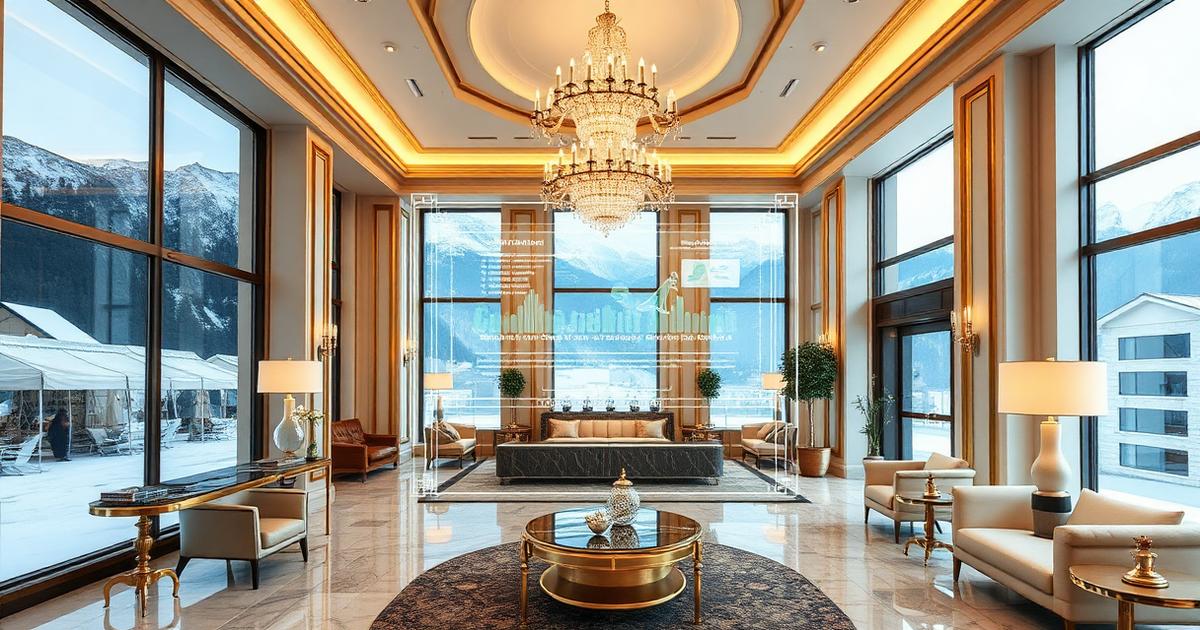
Zurich's luxury hotel landscape represents the pinnacle of Swiss hospitality: legendary properties like Baur au Lac (since 1844), The Dolder Grand, and Widder Hotel have set global standards for service excellence. Now, these icons face a new imperative: delivering digital experiences that match their impeccable physical standards.
Swiss travelers and Zurich's international business guests (executives, private bankers, and global elite) expect technology that enhances rather than intrudes. They don't want gadgets; they want invisible sophistication. The challenge for app developers is creating digital experiences that feel as natural and refined as a perfectly pressed linen napkin.
"Swiss luxury hotels must embrace digital transformation while preserving the personal touch that defines our hospitality tradition. The best guest apps feel like a digital extension of our legendary concierge service."
Claude Meier, hotelleriesuisse Director
Zurich Luxury Hotel Market Overview
- 12 five-star hotels in Zurich with 2,500+ luxury rooms
- Average daily rate (ADR) of CHF 650-1,500 for top-tier properties
- 68% of luxury guests prefer mobile check-in options
- 42% increase in in-app ancillary spend over front desk transactions
- 85% of guests expect smart room controls in luxury properties
- CHF 3.2 billion annual luxury hospitality market in Greater Zurich
The competitive landscape is intensifying. International brands like Four Seasons, Mandarin Oriental, and Aman are bringing sophisticated digital platforms to new Zurich properties. Heritage Swiss hotels must respond with technology that honors their legacy while meeting contemporary expectations. According to hotelleriesuisse, digital transformation is now a top priority for Swiss luxury properties.
Leading Zurich Luxury Hotels
| Property | Rooms | Category | Digital Priorities |
|---|---|---|---|
| Baur au Lac | 119 | Palace/Historic | Heritage storytelling, personal concierge |
| The Dolder Grand | 175 | Resort/Spa | Wellness integration, smart room control |
| Widder Hotel | 49 | Design/Boutique | Art collection, bespoke experiences |
| Park Hyatt Zurich | 142 | International Luxury | Loyalty integration, seamless check-in |
| Savoy Baur en Ville | 104 | Business/Historic | Executive services, meeting room booking |
| Storchen Zurich | 66 | Boutique/Historic | Limmat experience, local recommendations |
This guide provides the comprehensive framework for building guest experience platforms that meet the exacting standards of Zurich's luxury hospitality sector, from AI-powered personalization to smart room control that delights without overwhelming.
Guest Experience Platform Design
Designing guest experience platforms for luxury hotels requires restraint and intentionality. Every screen, interaction, and notification must justify its existence. The goal is not feature maximization but experience optimization: fewer taps, more delight.
Core Platform Features
- Pre-Arrival Journey: Registration, preferences, arrival time, transportation coordination
- Mobile Check-in/Key: Express arrival with room assignment and digital key activation
- Room Control: Climate, lighting, drapes, TV, and service requests from single interface
- Dining & Culinary: Restaurant reservations, in-room dining, minibar, dietary profiles
- Spa & Wellness: Treatment booking, fitness classes, pool reservations, wellness journey
- Concierge: AI-assisted recommendations, bookings, arrangements, local discovery
- Folio & Checkout: Real-time charges, express checkout, digital receipt
- Loyalty & Recognition: Status display, points, exclusive offers, VIP recognition
The user interface must reflect the hotel's brand identity: understated luxury, not flashy technology. Typography, color palette, and animation timing should mirror the property's physical design language. A Bauhaus-influenced property requires different treatment than a Belle Époque palace.
Design Principles for Luxury Hotel Apps
- Generous white space and refined typography reflecting Swiss design heritage
- Photography-forward design showcasing property and destination beauty
- Subtle animations that feel premium, never playful or attention-seeking
- One-hand operation for common tasks (room controls, service requests)
- Dark mode that matches evening ambiance and reduces eye strain
- Accessibility compliance without compromising aesthetic integrity
The guest journey through the app should mirror their physical journey through the hotel. Pre-arrival surfaces planning and anticipation. During stay, room controls and services dominate. Post-stay focuses on memory, feedback, and return visit planning.
Journey-Based Navigation
| Journey Phase | Primary Features | Emotional Goal |
|---|---|---|
| Pre-Arrival (1-7 days) | Preferences, transport, itinerary | Anticipation, confidence |
| Arrival Day | Check-in, key, room orientation | Welcome, seamlessness |
| During Stay | Room control, dining, concierge | Comfort, delight |
| Departure | Checkout, folio, transportation | Ease, appreciation |
| Post-Stay | Feedback, memories, next visit | Loyalty, connection |
Onboarding should be minimal: guests downloading the app during arrival shouldn't face lengthy setup. Pre-populated data from reservations, smart defaults, and progressive disclosure of advanced features ensure immediate utility.
Mobile Key & Smart Access Integration
Mobile key has evolved from novelty to expectation in luxury hospitality. Guests want their smartphone to open their room, call the elevator to their floor, access the spa, and open the parking garage, all without carrying physical cards.
Mobile Key Vendor Landscape
| Vendor | Technology | Strengths | Typical Properties |
|---|---|---|---|
| ASSA ABLOY | BLE + NFC | Market leader, extensive integration | Major chains, palace hotels |
| Salto | BLE | Hospitality focus, cloud platform | Boutique, design hotels |
| dormakaba | BLE + RFID | Strong in DACH region, enterprise | European luxury properties |
| Vingcard (ASSA) | BLE | Heritage hospitality brand | Established luxury hotels |
| OpenKey | BLE | Platform-agnostic | Independent properties |
BLE (Bluetooth Low Energy) provides the optimal balance of security, reliability, and user experience. The guest's phone communicates with lock hardware within 2-3 meters, enabling unlock with a tap or even hands-free entry when approaching the door.
Mobile Key Implementation Best Practices
- Pre-provision credentials during check-in for immediate room access
- Implement elevator integration for floor access control
- Enable spa, fitness, and pool access through same credential system
- Create guest access sharing for traveling companions
- Build fallback mechanisms for Bluetooth/battery failures
- Design intuitive unlock gestures (tap, swipe, proximity-based)
Security considerations for luxury hotels extend beyond standard protocols. VIP guests may require enhanced privacy features: credential audit trails visible only to the guest, notification of any access attempts, and integration with personal security teams.
Access Control Points
- Room Entry: Primary lock with tap or proximity unlock, audit logging
- Elevator: Floor authorization integrated with room assignment
- Spa & Wellness: Treatment room and changing area access during booking window
- Fitness Center: 24/7 access for hotel guests with automatic check-in
- Pool & Rooftop: Capacity management with real-time availability display
- Parking: Gate and elevator access for registered vehicles
Integration with hotel operations is essential. When a guest uses mobile key for room entry, housekeeping systems should update room status. Late-night returns might trigger next-morning late checkout offers. This ambient intelligence elevates experience while respecting privacy.
Smart Room Control Integration
Smart room control transforms the guest room from static space to responsive environment. Through the app, guests control climate, lighting, drapes, entertainment, and services, creating personalized comfort without learning multiple device interfaces.
Smart Room Control Categories
| Category | Controls | Integration Platform | Guest Benefit |
|---|---|---|---|
| Climate | Temperature, fan speed, mode | Crestron, Control4, Siemens | Personal comfort, energy |
| Lighting | Brightness, scenes, color temp | Lutron, Philips, KNX | Ambiance, convenience |
| Window Treatments | Drapes, blinds, shades | Somfy, Lutron, Hunter Douglas | Privacy, light control |
| Entertainment | TV, streaming, casting | SONIFI, Enseo, custom | Content access, personalization |
| Services | DND, MUR, housekeeping | PMS integration | Privacy, service timing |
| Voice | Alexa, Google, custom | Voice platform integration | Hands-free control |
The app interface must unify disparate systems into a coherent experience. Guests shouldn't know (or care) that lighting comes from Lutron, climate from Siemens, and drapes from Somfy. They see a single "Room" screen with intuitive controls.
Room Control UX Principles
- Quick access to most common controls (temperature, lights) on room home screen
- Pre-defined scenes for common situations (Sleep, Wake, Work, Relax)
- Granular controls available for guests who want detailed adjustment
- Remember preferences for return visits (preferred temperature, wake-up lighting)
- Offline functionality for core controls (don't depend on connectivity)
- Physical controls remain functional: app enhances but doesn't replace
Scene management is particularly powerful for luxury properties. A "Sleep" scene might dim lights gradually, close drapes, lower temperature, and enable do-not-disturb. "Morning" raises drapes, brightens lights, and adjusts climate, all triggered by time or guest action.
Pre-Configured Scenes
- Welcome: Lights at 70%, drapes open, comfortable temperature, TV to welcome screen
- Relax: Warm lighting at 40%, spa music optional, temperature slightly cooler
- Work: Bright task lighting, do-not-disturb enabled, temperature for alertness
- Dining: Ambient lighting, drapes adjusted for view, in-room dining menu displayed
- Sleep: All lights off, drapes closed, temperature lowered, nightlight path enabled
- Wake: Gradual light increase, drapes open, temperature raised, news or weather
Voice assistant integration adds hands-free convenience but requires careful implementation. Privacy-conscious guests should be able to disable in-room voice features. When enabled, voice should complement rather than replace app controls.
AI-Powered Personalization
AI transforms hotel apps from transactional tools to personalized companions. By learning guest preferences across stays, AI enables anticipatory service: the room set to preferred temperature before arrival, favorite wine waiting in the room, spa treatments pre-booked at preferred times.
AI Personalization Categories
- Environmental Preferences: Room temperature, lighting preferences, pillow and bedding choices
- Dining Patterns: Favorite cuisines, dietary restrictions, preferred dining times, wine preferences
- Wellness Habits: Spa treatment preferences, fitness routine, pool usage patterns
- Service Preferences: Communication style, tipping habits, housekeeping timing
- Travel Context: Business vs. leisure, traveling companions, purpose of visit
- Local Discovery: Interest areas, activity level, cultural preferences
The AI concierge chatbot provides natural language interaction for guest requests. Unlike basic FAQ bots, luxury hotel AI must understand nuance, context, and tone. "I'd like something special for my wife's birthday dinner" requires sophisticated interpretation and personalized recommendations.
AI Concierge Capabilities
- Natural language understanding in 7+ languages with cultural context
- Access to guest profile and preference history for personalized responses
- Integration with booking systems for immediate reservation confirmation
- Escalation to human concierge for complex or sensitive requests
- Sentiment analysis to detect frustration and trigger proactive service
- Recommendation engine based on guest profile and local expertise
Predictive personalization anticipates needs before guests express them. If a guest always orders coffee at 7am, the app might offer one-tap ordering the night before. If they typically book spa treatments on the second day of stay, a personalized offer surfaces at the right moment.
Predictive Personalization Examples
| Signal | Prediction | Proactive Action |
|---|---|---|
| Past stays show 7am coffee | Will want coffee tomorrow | Pre-order prompt evening before |
| Business travel pattern | Needs early checkout | Express checkout offer |
| Anniversary trip noted | Wants special touches | Champagne and flowers recommendation |
| Spa booking on past stays | Interested in wellness | Personalized treatment suggestion |
| Late check-in pattern | May want late checkout | Late departure offer |
| Preferred restaurant type | Looking for dining | Curated local recommendations |
Privacy and consent are paramount for AI personalization. Guests must understand what data is collected, how it's used, and have easy controls to adjust preferences or delete their profile. Swiss privacy expectations are particularly high: transparency and control are non-negotiable.
Dining, Spa & Wellness Features
Dining and wellness represent significant ancillary revenue opportunities, and areas where app experiences can dramatically enhance guest satisfaction. In-app ordering typically increases food and beverage revenue by 15-25% while improving guest convenience.
Dining Feature Set
- Restaurant Reservations: Table booking with preferences (view, quiet area, accessibility)
- In-Room Dining: Full menu with photos, customization, estimated delivery time
- Dietary Profiles: Allergies, restrictions, preferences saved and applied hotel-wide
- Minibar Management: Real-time tracking, restocking requests, preference-based stocking
- External Restaurants: Concierge-curated local recommendations with reservation assistance
- Special Occasions: Birthday cakes, anniversary champagne, celebration arrangements
Spa and wellness booking deserves particular attention in Zurich's wellness-oriented market. The Dolder Grand's 4,000m² spa and many hotel wellness facilities are major draws. App booking must handle complex availability, therapist preferences, and treatment customization.
Spa & Wellness Features
- Treatment menu with descriptions, durations, and availability
- Therapist profiles and preference selection for repeat guests
- Wellness class scheduling (yoga, meditation, aqua fitness)
- Pool and sauna capacity management with real-time availability
- Health questionnaire for personalized treatment recommendations
- Post-treatment follow-up with product recommendations
Integration with fitness and health platforms (Apple Health, Strava, etc.) enables personalized wellness recommendations. A guest completing a marathon might receive recovery-focused spa suggestions; a frequent yoga practitioner sees relevant class offerings.
Wellness Journey Integration
| Touch Point | Data Source | Personalization Example |
|---|---|---|
| Pre-arrival | Booking notes, profile | Pre-book preferred treatments |
| Check-in | Travel duration, time zone | Jet lag recovery package offer |
| Morning | Wake-up patterns | Yoga class at preferred time |
| Post-workout | Fitness activity | Recovery treatment suggestion |
| Evening | Day's activities | Relaxation-focused recommendation |
| Departure | Stay activities | Take-home products from treatments |
PMS & Backend Integration
The guest app's power depends on deep integration with hotel operational systems: Property Management System (PMS), Point of Sale (POS), spa management, and housekeeping. Real-time data sync ensures guests see accurate availability, charges post correctly, and requests reach the right teams.
Core System Integrations
| System | Primary Functions | Integration Method | Key Data |
|---|---|---|---|
| PMS (Opera, Mews) | Reservations, profiles, folios | API (HTNG, custom) | Stay details, charges, history |
| POS (Micros, Simphony) | F&B transactions, menus | API | Menu items, pricing, orders |
| Spa (Book4Time, SpaSoft) | Treatments, availability | API | Services, therapists, bookings |
| Housekeeping (Optii, Alice) | Room status, requests | API/webhook | Cleaning status, requests |
| Lock System | Access credentials | Vendor SDK | Room assignments, access rights |
| Room Control | IoT devices | Local hub + cloud | Device states, commands |
Oracle Opera remains the dominant PMS for luxury hotels. Integration uses Oracle's HTNG (Hospitality Technology Next Generation) standard or direct API access. Mews and Infor HMS offer more modern API architectures but have smaller market share in established luxury properties.
Integration Architecture Patterns
- Middleware layer (Hapi, Stay) to abstract PMS-specific complexity
- Event-driven updates for real-time folio and status changes
- Caching strategy for performance without stale data risks
- Fallback mechanisms when backend systems are unavailable
- Audit logging for compliance and troubleshooting
- Testing environments that mirror production integrations
Data synchronization timing requires careful balance. Folio updates should be near-real-time so guests see charges immediately. Preference sync can be eventual consistency. Room status must be current when affecting access decisions.
Data Sync Requirements
- Reservation Details: Daily batch + event-driven updates for changes
- Room Status: Real-time via webhook or polling (30-second max delay)
- Folio Charges: Near-real-time (under 2 minutes) for guest confidence
- Guest Profile: Sync on check-in and check-out for latest data
- Loyalty Points: Real-time for earning, near-real-time for redemption
- Access Credentials: Immediate on room assignment or change
Investment Analysis & ROI
Luxury hotel guest app development represents a significant investment with compelling returns. The investment ranges from CHF 300K for single-property apps to CHF 1M+ for multi-property platforms with comprehensive feature sets.
Development Cost Breakdown
| Component | Single Property | Multi-Property | Enterprise |
|---|---|---|---|
| Discovery & Design | CHF 40,000 | CHF 75,000 | CHF 120,000 |
| Core App (iOS + Android) | CHF 100,000 | CHF 175,000 | CHF 300,000 |
| Smart Room Integration | CHF 40,000 | CHF 80,000 | CHF 150,000 |
| Mobile Key Integration | CHF 30,000 | CHF 60,000 | CHF 100,000 |
| PMS Integration | CHF 40,000 | CHF 80,000 | CHF 150,000 |
| AI Personalization | CHF 25,000 | CHF 60,000 | CHF 120,000 |
| Testing & Training | CHF 25,000 | CHF 50,000 | CHF 80,000 |
| TOTAL | CHF 300,000 | CHF 580,000 | CHF 1,020,000 |
Annual maintenance and evolution costs typically run 20-25% of initial development. This covers OS updates, security patches, feature enhancements, and integration maintenance as hotel systems evolve.
ROI Model: 150-Room Luxury Hotel
| Revenue/Savings Impact | Monthly | Annual |
|---|---|---|
| Increased F&B Revenue (+20%) | CHF 15,000 | CHF 180,000 |
| Increased Spa Revenue (+18%) | CHF 8,000 | CHF 96,000 |
| Front Desk Labor Savings | CHF 6,000 | CHF 72,000 |
| Higher Direct Booking Rate | CHF 10,000 | CHF 120,000 |
| Improved Loyalty/Retention | CHF 5,000 | CHF 60,000 |
| TOTAL ANNUAL BENEFIT | CHF 528,000 |
With CHF 528K annual benefit against CHF 300K development investment, payback occurs within the first year. The ongoing CHF 75K annual maintenance costs still yield CHF 450K+ net annual benefit, a compelling ROI for luxury hospitality technology.
Swiss Privacy & Compliance
Swiss data protection law (nDSG, effective September 2023) aligns with GDPR while maintaining Swiss-specific requirements. For luxury hotels serving international guests, compliance with both Swiss and EU regulations is essential.
Privacy Compliance Requirements
| Requirement | nDSG (Swiss) | GDPR (EU) | Implementation |
|---|---|---|---|
| Consent | Explicit for sensitive data | Explicit for all personal data | Granular consent management |
| Right to Access | Required | Required | In-app data export |
| Right to Deletion | Required | Required | Account deletion flow |
| Data Portability | Not explicit | Required | Export in standard format |
| DPO Appointment | Large-scale processing | Certain conditions | Designate responsible party |
| Cross-border Transfer | Adequate protection required | Adequacy or SCCs | Swiss/EU hosting preferred |
VIP guest privacy requires additional consideration. High-profile guests may request enhanced discretion measures: limiting staff access to reservation details, anonymizing their presence in loyalty systems, and ensuring no location data leakage.
VIP Privacy Features
- Incognito mode that masks identity in operational systems
- Limited staff visibility into reservation and folio details
- Disabled location tracking and room occupancy signals
- End-to-end encryption for all concierge communications
- Automatic data deletion after checkout (if requested)
- Audit trail visible only to guest and designated contacts
Data storage and hosting should prioritize Swiss or EU data centers. Major cloud providers (AWS, Azure, Google Cloud) offer Swiss regions, enabling compliance with data localization preferences while maintaining enterprise reliability.
Implementation Roadmap
Luxury hotel guest app development requires 9-15 months from discovery to launch. The timeline extends beyond typical mobile projects due to complex integration requirements with legacy hotel systems and the need for thorough staff training.
12-Month Development Timeline
| Phase | Duration | Key Deliverables |
|---|---|---|
| Discovery & Planning | Months 1-2 | Requirements, architecture, vendor selection |
| Design | Months 2-3 | Brand-aligned UI/UX, prototypes, validation |
| Core Development | Months 3-7 | App development, backend, basic integrations |
| Advanced Integration | Months 7-10 | Smart room, mobile key, AI features |
| Testing & Training | Months 10-12 | QA, security audit, staff training |
| Launch & Optimization | Month 12+ | Rollout, monitoring, iteration |
Staff training is essential for luxury properties where service excellence is paramount. Concierge, front desk, housekeeping, and management teams must understand the app's capabilities to guide guests and leverage technology for enhanced service.
Recommended Team Structure
- Project Manager: Hospitality technology experience essential
- iOS/Android Developers (2-3): React Native or native expertise
- Backend Developer (1-2): Node.js, integrations, real-time systems
- UX/UI Designer: Luxury brand and hospitality portfolio
- Integration Specialist: PMS, lock systems, room control
- QA Engineer: Mobile testing, integration validation
Post-launch optimization should focus on adoption metrics, guest feedback, and feature usage patterns. A/B testing of UI variations, onboarding flows, and notification strategies drives continuous improvement in guest engagement.
Ready to Build Your Luxury Hotel Guest Platform?
Whether you're developing for a historic palace hotel or a contemporary design property, our team combines Swiss hospitality standards with enterprise mobile development.
1517 S Bentley Ave Apt 204, Los Angeles CA 90025
Frequently Asked Questions
Sources & References
- 1Baur au Lac: Zurich's Premier Luxury Hotel↗
- 2The Dolder Grand: Luxury Resort Zurich↗
- 3Swiss Hotel Association (hotelleriesuisse)↗
- 4Oracle Hospitality: Opera Cloud↗
- 5ASSA ABLOY: Mobile Access Solutions↗
- 6McKinsey: Future of Hospitality↗
- 7Hotel Tech Report: Guest Experience↗
- 8Swiss Federal Data Protection (FDPIC)↗