





LA Luxury Multifamily: Technology as a Competitive Advantage
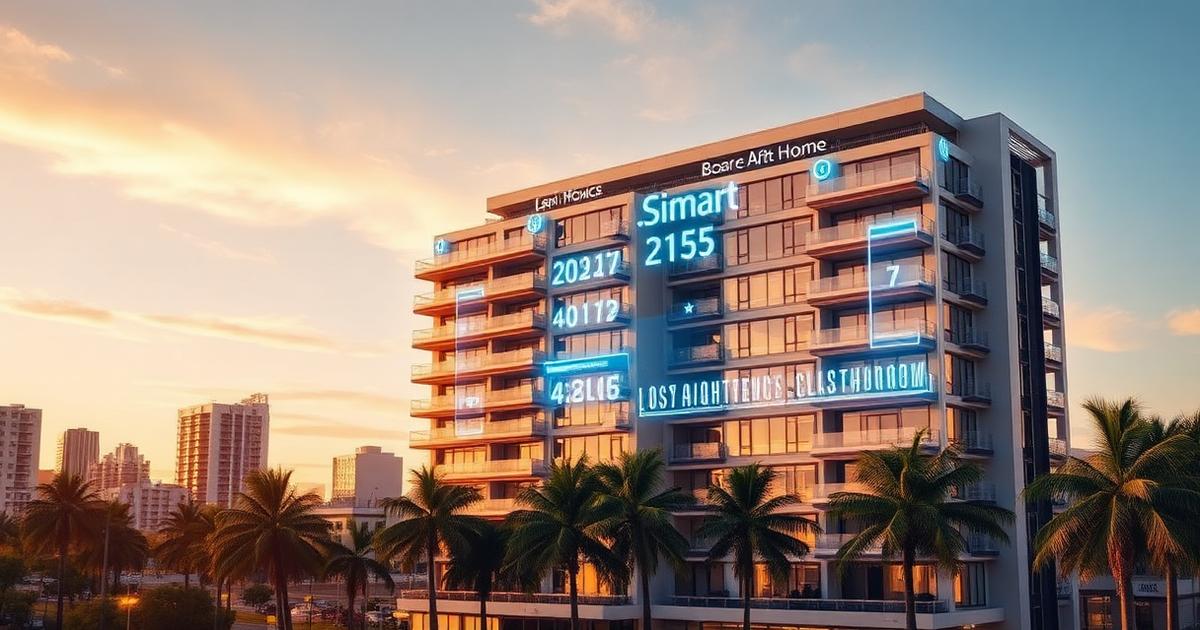
Los Angeles' luxury apartment market represents one of the most competitive rental environments in the United States. According to JLL Research, Class A properties in Century City, Beverly Hills, and the Arts District command $4,000-$15,000+ monthly rents. NMHC reports that 78% of luxury renters consider technology in leasing decisions, while Gartner projects the PropTech market to exceed $86 billion by 2028.
The convergence of smart home technology, on-demand services, and post-pandemic expectations has created a new standard for luxury living. Property-level platforms like SmartRent provide unified APIs for IoT device control, while property management systems from Yardi and RealPage handle lease and payment integration. Access control from HID Global enables mobile credentials, and Apple HomeKit integration allows residents to control devices through Siri. Deloitte reports that properties with comprehensive smart home features achieve 25% rent premiums.
"Technology is no longer optional for luxury multifamily. Our residents expect to control their home, book amenities, and communicate with management through a single, beautifully designed app. Properties that deliver this experience see 20%+ higher retention."
David Schwartz, Waterton CEO
LA Luxury Multifamily Market by the Numbers
- 120,000+ luxury apartment units in Greater Los Angeles
- $4,000-$15,000+ monthly rents for Class A properties
- 78% of luxury renters consider technology in leasing decisions
- 25% rent premium for properties with comprehensive smart home features
- 35% reduction in move-outs at properties with high-rated resident apps
- 42% of maintenance requests now submitted via mobile apps
Key LA submarkets have distinct characteristics that influence app requirements. Century City high-rises serve entertainment executives who demand privacy and seamless service. Arts District lofts attract creative professionals who value community features. Beverly Hills boutique buildings cater to international residents requiring multilingual support.
LA Luxury Submarket Comparison
| Submarket | Typical Rent | Resident Profile | Key App Features |
|---|---|---|---|
| Century City | $6,000-$15,000+ | Entertainment executives, lawyers | Privacy, valet, concierge |
| Beverly Hills | $5,000-$12,000 | International UHNW, retirees | Multilingual, white-glove service |
| Arts District | $3,500-$6,000 | Creative professionals, tech | Community, events, pet features |
| Santa Monica | $4,000-$8,000 | Tech workers, wellness focus | Fitness, beach access, EV charging |
| Hollywood Hills | $4,500-$10,000 | Entertainment industry | Security, guest management |
| Marina del Rey | $3,500-$7,000 | Young professionals, boaters | Marina integration, social features |
This guide provides the comprehensive framework for building resident experience platforms that meet the exacting standards of LA's luxury multifamily market, from smart home integration to concierge services that rival five-star hotels.
Resident Experience Platform Design
Effective resident experience platforms balance comprehensive functionality with intuitive design. Residents use the app daily for diverse tasks, from unlocking their door to booking a pool cabana to paying rent. The UX must accommodate frequent quick actions while providing depth for complex workflows.
Core Platform Features
- Smart Access: Mobile key for unit, building, amenities, and parking with guest credential sharing
- Home Control: In-unit thermostat, lighting, blinds, and lock control with scenes and schedules
- Maintenance: Work order submission with photo/video, status tracking, and scheduled appointments
- Payments: Rent payment, utility billing, parking fees, and amenity charges with autopay
- Amenity Booking: Reserve spaces, schedule classes, and book services with calendar integration
- Package Management: Delivery notifications, locker access, and scheduled pickup
- Communication: Building announcements, direct messaging with staff, and community forums
- Concierge: Service requests, reservations, and lifestyle assistance for premium properties
The home screen design is critical: residents should accomplish their most frequent actions (unlock door, check packages, submit maintenance) in under 3 taps. Personalization based on resident behavior and preferences surfaces the most relevant content and actions.
UX Design Principles for Luxury Resident Apps
- Quick actions on home screen for door unlock, package check, and maintenance
- Personalized dashboard based on resident preferences and usage patterns
- Premium visual design that reflects building's brand and positioning
- Offline functionality for access control and essential features
- Accessibility compliance for diverse resident populations
- Dark mode and display customization for personal preference
Onboarding flows must be smooth and comprehensive. During move-in, residents set up access credentials, configure smart home devices, learn building amenities, and establish payment methods. A great onboarding experience sets expectations and drives adoption.
Onboarding Flow Components
| Step | Activities | Completion Target |
|---|---|---|
| Account Creation | Email verification, identity confirmation | Day 0 |
| Access Setup | Mobile key provisioning, biometric enrollment | Day 0 |
| Smart Home Pairing | Thermostat, lights, lock connection | Day 0-1 |
| Payment Methods | Bank account or card for rent autopay | Day 0-1 |
| Amenity Tour | Virtual tour of bookable spaces and services | Day 1-3 |
| Community Intro | Resident directory opt-in, interest groups | Week 1 |
| Concierge Demo | Introduction to available lifestyle services | Week 1 |
Smart Home & IoT Integration
Smart home integration is the feature that most clearly differentiates luxury apartment apps. Residents expect to control their unit's environment (temperature, lighting, locks, and blinds) from their phone whether at home or away. This requires careful integration with property-level IoT infrastructure.
Smart Home Device Categories
| Category | Common Devices | Integration Approach | Priority |
|---|---|---|---|
| Thermostats | Nest, ecobee, Honeywell | Direct API or SmartRent | Critical |
| Smart Locks | Yale, Schlage, Level | Access control platform | Critical |
| Lighting | Lutron, Philips Hue, Leviton | Bridge API integration | High |
| Blinds/Shades | Lutron, Hunter Douglas | Bridge API integration | Medium |
| Outlets/Switches | Leviton, GE | Hub integration | Low-Medium |
| Voice Assistants | Alexa, Google Home | Skill/Action development | Medium |
Property-level smart home platforms like SmartRent, Dwelo, or PointCentral provide unified APIs for controlling multiple device types. These platforms also enable vacant unit management: adjusting thermostats and monitoring for leaks when units are unoccupied between residents.
SmartRent Integration Features
- Unified API for thermostat, lock, light, and sensor control
- Vacant unit automation for energy savings and leak detection
- Self-guided tour access for prospective residents
- Maintenance access logs for work order verification
- Energy usage monitoring and resident reporting
- Integration with property management systems for lease-based provisioning
Scene and schedule functionality enables residents to create automated routines. "Leaving Home" might lock the door, set the thermostat to away mode, and turn off lights. "Bedtime" dims lights, adjusts temperature, and locks the door. These automations increase convenience and energy efficiency.
Scene Configuration Examples
- Wake Up: Gradual light increase, thermostat to comfortable temp, blinds open
- Leaving Home: Lights off, thermostat to away, door locked, leak sensors armed
- Coming Home: Lights to welcome level, thermostat to preferred temp, unlock door
- Movie Night: Dim lights, close blinds, set comfortable temperature
- Bedtime: Lights off, thermostat to sleep temp, lock verified, blinds closed
- Away (Vacation): Minimal energy use, random lighting, enhanced monitoring
Energy monitoring and reporting helps residents understand and reduce their usage. Some properties offer incentive programs for residents who achieve energy reduction targets, gamifying sustainability and reducing building operating costs.
Access Control & Security
Mobile access control has become the standard for luxury apartment communities. Residents expect to use their phones for building entry, unit access, elevator control, and parking, eliminating the need for physical keys or fobs while enabling sophisticated guest management.
Access Control Integration Points
| Location | Access Type | Technology | Credential Management |
|---|---|---|---|
| Building Entry | Main lobby, side doors | BLE reader + app | Resident + guest |
| Unit Door | Smart lock | BLE or app unlock | Resident + guest + maintenance |
| Elevator | Floor access control | BLE reader | Resident floors + amenity |
| Parking Gate | Vehicle entry/exit | BLE or LPR | Resident + guest vehicles |
| Amenity Spaces | Pool, gym, lounge | BLE reader | Resident + reservation |
| Package Locker | Parcel retrieval | App code or BLE | Resident + delivery |
BLE (Bluetooth Low Energy) credentials stored in the app communicate with readers at access points. Leading vendors include HID (Mobile Access), ASSA ABLOY (Aperio), and Brivo. The app must maintain credential security while enabling convenient, reliable access.
Guest Access Management Features
- Create time-limited credentials for guests (hours, days, recurring)
- Share access via SMS, email, or in-app invitation
- Building entry, unit access, and parking in single credential
- Real-time revocation for security concerns
- Access log for resident visibility into guest entries
- Integration with guest parking reservation system
Security features must balance convenience with protection. Biometric authentication (Face ID, Touch ID) should be required for sensitive actions like creating guest credentials or viewing access logs. Anomaly detection can flag unusual access patterns for security review.
Security Features for Luxury Buildings
- Biometric Lock: Face ID or Touch ID required to open app and access credentials
- Access Logs: Complete history of door access for resident review
- Anomaly Alerts: Notification of unusual access patterns or failed attempts
- Emergency Lockdown: Ability to remotely lock unit and revoke all guest access
- Panic Button: One-tap emergency contact with location sharing to security
- Credential Timeout: Automatic credential refresh to prevent long-term exposure
Amenity Booking & Management
Luxury apartment communities offer extensive amenity packages: rooftop pools, screening rooms, fitness centers, pet spas, and more. The resident app must enable easy discovery, booking, and management of these spaces while helping property managers optimize utilization.
Amenity Categories and Booking Types
| Amenity | Booking Type | Duration Options | Capacity/Rules |
|---|---|---|---|
| Pool/Deck | Cabana reservation | 2-4 hour slots | Max guests, no glass |
| Screening Room | Full room booking | 2-3 hour slots | Max 12 guests, content rules |
| Conference Room | Hourly booking | 1-4 hours | Max 8-10 guests, AV available |
| Fitness Classes | Per-class signup | 45-60 min classes | Class capacity limits |
| Pet Spa | Appointment slot | 30-60 min slots | One pet per slot |
| Guest Suite | Nightly booking | 1-7 nights | Guest verification required |
Booking rules and policies prevent abuse while ensuring fair access. Common policies include maximum bookings per week, cancellation windows, no-show penalties, and guest limits. The app should clearly communicate rules and enforce them automatically.
Amenity Booking Feature Set
- Visual calendar with availability across all amenity spaces
- Recurring booking for regular activities (weekly yoga, daily gym)
- Guest addition with count limits and access credential generation
- Calendar integration (Google, Apple, Outlook) for booking sync
- Waitlist functionality for popular time slots
- Payment integration for premium amenities and guest fees
Fitness class booking with instructor profiles, class descriptions, and intensity levels helps residents find activities matching their interests. Integration with fitness tracking apps (Apple Health, Garmin) enables workout logging and progress tracking.
Fitness & Wellness Features
- Class Schedule: Browse and book fitness classes by type, time, instructor
- Instructor Profiles: Bio, certifications, class style, and resident reviews
- Equipment Reservation: Book specific equipment (Peloton, rower) during busy times
- Personal Training: Request and schedule sessions with building trainers
- Wellness Services: Book in-home massage, nutrition consultations, wellness coaching
- Activity Tracking: Log workouts, track progress, compete with community
Property Management System Integration
Integration with property management systems (PMS) is essential for a seamless resident experience. Yardi Voyager, RealPage, Entrata, and AppFolio power most luxury multifamily operations. The resident app must sync bidirectionally with these systems for rent, leases, and maintenance.
PMS Integration Points
| Function | Data Flow | Sync Frequency | Integration Method |
|---|---|---|---|
| Rent Payment | App → PMS | Real-time | Payment API |
| Lease Data | PMS → App | Daily | Resident API |
| Maintenance | Bidirectional | Real-time | Work Order API |
| Move-in/out | PMS → App | Event-driven | Resident lifecycle API |
| Charges/Credits | PMS → App | Daily | Ledger API |
| Documents | Bidirectional | On-demand | Document API |
Rent payment through the app should be seamless: residents set up ACH or card payment, enable autopay, and receive confirmation. Integration with the PMS ensures payments post correctly and ledger balances stay synchronized.
Maintenance Request Workflow
- Resident submits request with category, description, and photos/video
- Request syncs to PMS and creates work order
- Staff reviews and schedules with preferred access times
- Resident receives notification with technician and time window
- Technician completes work, updates status, adds notes
- Resident receives completion notification and satisfaction survey
Lease management features enable digital lease signing, renewal offers, and move-out scheduling. Residents can view their lease terms, request early termination quotes, and initiate renewal conversations through the app.
Lease & Document Management
- Lease Viewing: Access current lease terms, move-in date, and renewal date
- Digital Signing: Sign renewals, addendums, and notices electronically
- Renewal Offers: Receive and respond to renewal offers with rate options
- Move-out Notice: Submit move-out notice and schedule final walkthrough
- Document Storage: Access move-in inspection, insurance, and other documents
- Insurance Verification: Upload and update renter's insurance documentation
Investment Analysis & ROI
Luxury resident app development represents a significant investment with strong returns through rent premiums, operational efficiency, and resident retention. The investment ranges from $150K for basic platforms to $500K+ for comprehensive solutions.
Development Cost Breakdown
| Component | Basic | Standard | Premium |
|---|---|---|---|
| Discovery & Design | $20,000 | $40,000 | $75,000 |
| Core App (iOS + Android) | $50,000 | $100,000 | $175,000 |
| Smart Home Integration | $15,000 | $40,000 | $75,000 |
| Access Control | $20,000 | $40,000 | $60,000 |
| PMS Integration | $15,000 | $30,000 | $50,000 |
| Backend & Infrastructure | $20,000 | $40,000 | $75,000 |
| Testing & QA | $10,000 | $20,000 | $35,000 |
| TOTAL | $150,000 | $310,000 | $545,000 |
Alternative to custom development, white-label platforms like SmartRent, Entrata, or Zego offer per-unit monthly pricing ($3-$10/unit/month). These provide faster deployment but less customization and ongoing fees that accumulate over time.
ROI Model: 200-Unit Luxury Building
| Revenue/Savings | Monthly Impact | Annual Impact |
|---|---|---|
| Rent Premium ($75/unit) | $15,000 | $180,000 |
| Staff Efficiency (0.5 FTE) | $4,000 | $48,000 |
| Retention Improvement | $5,000 | $60,000 |
| Marketing Savings | $2,000 | $24,000 |
| Energy Savings | $1,500 | $18,000 |
| TOTAL BENEFIT | $27,500 | $330,000 |
At $330K annual benefit against a $300K development investment, payback occurs within the first year. Ongoing maintenance costs of $40-60K annually still yield $270K+ net annual benefit. Custom development avoids the $7,200-24,000 annual per-unit fees of white-label platforms.
Concierge & Lifestyle Services
Concierge services differentiate truly luxury buildings from merely upscale ones. Digital concierge through the resident app extends the human touch of dedicated staff with 24/7 availability and seamless service booking.
Concierge Service Categories
| Category | Services | Integration Type |
|---|---|---|
| Automotive | Valet, car wash, detailing, EV charging | Appointment booking |
| Household | Dry cleaning, housekeeping, plant care | Pickup/delivery scheduling |
| Dining | Restaurant reservations, catering, grocery | OpenTable, Instacart APIs |
| Wellness | Massage, personal training, meditation | Service provider scheduling |
| Pet Care | Dog walking, grooming, sitting | Provider marketplace |
| Entertainment | Event tickets, theater, sports | Ticketing APIs |
Direct messaging with dedicated concierge staff enables residents to make complex requests that don't fit standard booking flows. Staff can handle restaurant recommendations, travel planning, and personalized requests through in-app chat.
Automotive Services Integration
- Valet request with real-time vehicle location and ETA
- Car wash and detailing scheduling with service levels
- EV charging station reservation and session management
- Guest parking reservation with space assignment
- Vehicle registration for license plate recognition
- Service reminders for maintenance and registration
Package management has become increasingly sophisticated. Integration with smart lockers (Luxer One, Parcel Pending, Amazon Hub) provides secure delivery while cold storage lockers accommodate grocery and meal kit deliveries.
Package Management Features
- Delivery Notifications: Push notification when package delivered with photo
- Locker Integration: Retrieve locker code and location from app
- Cold Storage: Refrigerated locker assignment for grocery deliveries
- Oversized Packages: Notification with package room location and hours
- Delivery Instructions: Set preferences for where packages should go
- Return Scheduling: Arrange carrier pickup for outbound packages
Community & Social Features
Community features foster connection among residents while respecting the privacy expectations of high-net-worth individuals. The right balance creates vibrant communities without feeling intrusive or revealing personal information inappropriately.
Community Feature Categories
- Events Calendar: Building events, resident-hosted gatherings, local happenings
- Resident Directory: Opt-in profiles with name, floor, and interests
- Interest Groups: Wine club, book club, running group, dog owners
- Marketplace: Resident-to-resident services and item sales
- Forums: Moderated discussions for building topics and recommendations
- Neighbor Introduction: Welcome new residents with opt-in introductions
Privacy controls must be granular and clear. Residents should control exactly what information appears in the directory, who can message them, and whether they receive group notifications. Default settings should be conservative.
Privacy Control Options
- Directory opt-in: Choose whether to appear in resident directory
- Visibility levels: Name only, name + floor, full profile with interests
- Messaging permissions: Accept all, directory only, or none
- Group notifications: Per-group control over notifications
- Activity visibility: Hide activity status and 'last seen'
- Profile photo: Optional, can use initials instead
Building events drive community engagement and retention. The app should support event creation, RSVP management, capacity limits, and post-event photo sharing. Property managers can track attendance and measure community engagement metrics.
Implementation Roadmap
Luxury resident app development typically requires 6-12 months from discovery to launch. The timeline depends on integration complexity, particularly access control and property management systems which often require vendor coordination.
9-Month Development Timeline
| Phase | Duration | Deliverables |
|---|---|---|
| Discovery | Months 1-2 | Requirements, architecture, vendor selection |
| Design | Month 2-3 | UI/UX design, brand integration, prototypes |
| Core Development | Months 3-6 | App development, backend, core integrations |
| Integration | Months 6-8 | Access control, PMS, smart home systems |
| Testing | Month 8-9 | QA, UAT, performance, security testing |
| Launch | Month 9 | App store submission, rollout, training |
Resident rollout strategy affects adoption. Phased rollout, starting with tech-forward residents who volunteer for early access, identifies issues before building-wide launch. Training sessions, move-in onboarding, and ongoing support drive adoption.
Recommended Team Structure
- Project Manager: PropTech or multifamily experience
- iOS/Android Developers (2-3): React Native or native expertise
- Backend Developer (1-2): Node.js, integrations experience
- UX/UI Designer: Luxury brand and app experience
- QA Engineer: Mobile testing, device coverage
- Integration Specialist: Access control and PMS systems
Post-launch support and evolution are essential for long-term success. Plan for ongoing maintenance, OS updates, feature enhancements based on resident feedback, and integration updates as property systems evolve.
Ready to Build Your Resident Experience Platform?
Whether you're developing for a new luxury high-rise or upgrading an existing community, our team combines PropTech expertise with enterprise mobile development.
1517 S Bentley Ave Apt 204, Los Angeles CA 90025
Frequently Asked Questions
Sources & References
- 1National Multifamily Housing Council (NMHC)↗
- 2SmartRent: Multifamily Smart Home Technology↗
- 3Yardi Systems: Property Management Software↗
- 4RealPage: Real Estate Technology↗
- 5ASSA ABLOY: Access Control Solutions↗
- 6McKinsey: Future of Real Estate Technology↗
- 7Apartment Association of Greater Los Angeles↗
- 8Statista: US Multifamily Market↗