










Zurich's Luxury Hospitality Landscape in 2026
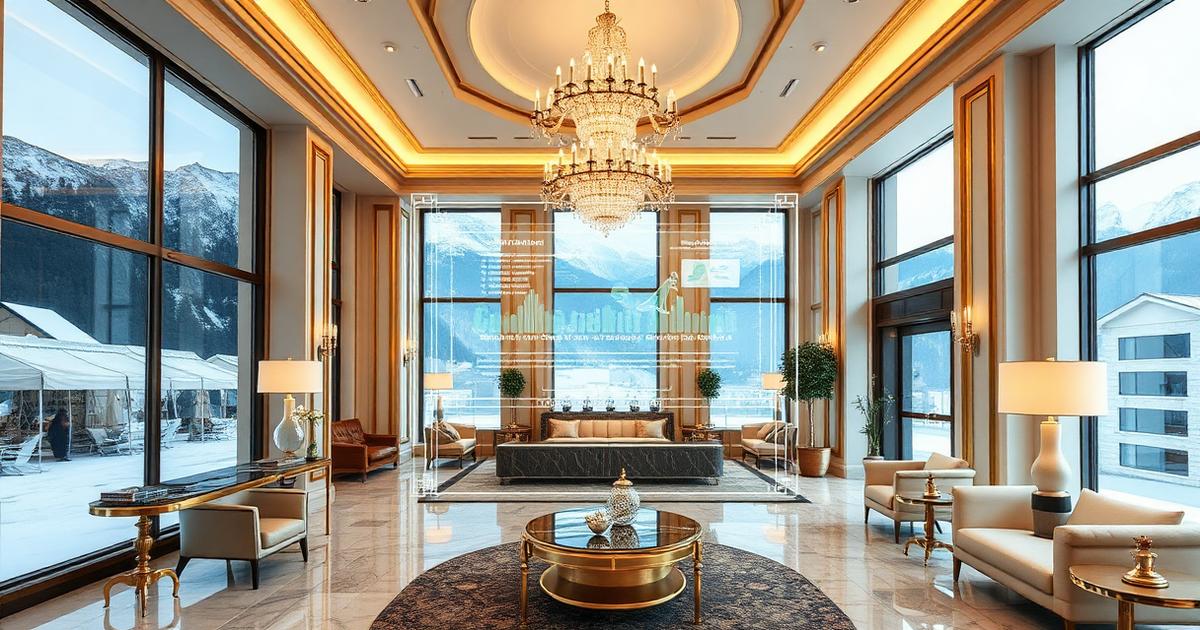
Zurich is Switzerland's financial capital and its densest concentration of independently minded, five-star hospitality: a market defined less by international chain uniformity than by family-run heritage properties competing on discretion, craft, and precision. The city's luxury segment sits within the Swiss Deluxe Hotels association, founded in 1934 and comprising 39 of Switzerland's most prestigious five-star properties, several of them in Zurich itself: the Baur au Lac, open since 1844 and now in its seventh generation of family management with 119 rooms and suites; the Dolder Grand, whose spa and wellness area spans roughly 43,000 square feet; Park Hyatt Zurich, the American brand's first Swiss property, in the city's financial district; the boutique Widder Hotel in the Old Town, steps from Bahnhofstrasse; and the Storchen, a traditional first-class house of 66 rooms directly on the Limmat river.
The market backdrop for this segment strengthened through 2025. The Zurich tourism region recorded roughly 7.6 million overnight stays for the year, its highest total in over three decades and growth of 3.5% over 2024, while the Swiss Federal Statistical Office reported a net hotel room occupancy rate of 56.8% for Zurich, surpassing the previous 2019 record. Swiss guests made up the largest single visitor group at roughly 39% of stays, with the remainder split fairly evenly between nearby European markets and long-haul international travelers, a guest mix that, in the five-star segment specifically, skews toward business travelers, private banking clients, and international leisure guests who routinely stay at comparable properties in London, New York, or Singapore and arrive with those cities' digital expectations already set.
Swiss luxury hospitality has always been defined by what guests don't have to ask for twice. The technical challenge of a 2026 guest app is translating that same anticipatory, discreet standard of service into software, without it ever feeling like software.
What Today's Luxury Guest Expects From an App
The affluent international traveler booking a Zurich five-star property in 2026 is not necessarily younger or more "digital native" than a decade ago, but they are more consistently exposed to well-built consumer software everywhere else in their life (private banking apps, first-class airline apps, members-only concierge services), and they measure a hotel's app against that bar, not against other hotels. Industry research bears this out at scale: in a joint study by Oracle Hospitality and Skift, nearly three-quarters of travelers (73%) said they want to manage their entire hotel stay from a mobile device, including check-in and check-out, payment, and ordering food, rather than working through front-desk staff for routine tasks.
What Luxury Guests Expect, Specifically
- Pre-arrival personalization: Room preferences, dietary notes, and prior-stay history already reflected before the guest checks in, not requested again at the desk.
- Keyless, frictionless entry: A mobile or wearable room key that works the moment they land, without a queue at reception to collect a physical card.
- A real concierge channel: In-app messaging that reaches an actual staff member for restaurant bookings, transport, or special requests, not a scripted chatbot with no escalation path.
- Discretion by default: Minimal visible data collection, clear control over what's shared, and no intrusive notifications or upsell pressure that would feel out of place at a five-star property.
- Effortless checkout: Folio review and payment settled from the room or car, with no requirement to stop at the desk unless the guest wants to.
What distinguishes the luxury segment from mainstream hospitality tech isn't the feature list (most three- and four-star chains now offer some version of mobile check-in and messaging), it's the execution bar. A five-star guest who hits a clunky flow, a delayed concierge response, or a generic-feeling interface reads it as a lapse in service quality, the same way they would a slow elevator or a scuffed lobby floor. The app is now part of the physical property's standard of care, not a separate, optional convenience layered on top of it.
Core Features of a Guest Experience App
A production-grade luxury hotel guest app is a coordination layer across several distinct systems, not a single standalone product. The table below outlines the feature areas that typically define scope for a Zurich five-star build, roughly in the order a guest encounters them across a stay.
| Feature Area | What It Covers |
|---|---|
| Pre-Arrival & Booking | Direct booking or reservation sync, room preference capture, arrival time and transport coordination, pre-stay upsells (suite upgrades, spa packages). |
| Smart Key & Room Access | Mobile and wearable room entry, Apple Wallet / Google Wallet key provisioning, offline fallback, remote key revocation. |
| In-Stay Concierge Messaging | Two-way chat with front desk and concierge staff, request tracking (housekeeping, amenities, transport), AI-assisted triage of routine requests. |
| Personalization Engine | Guest profile built from stay history, stated preferences, and loyalty data, used to tailor suggestions and pre-fill requests. |
| Dining & Spa Reservations | In-app booking for the property's restaurants, bar, and spa, with real-time availability synced to the relevant reservation system. |
| In-Room Controls | Where the property has smart-room infrastructure: lighting, climate, blinds, and do-not-disturb status controlled from the app. |
| Loyalty & CRM Sync | Two-way sync with the hotel's or group's CRM and loyalty program so preferences and history persist across stays and, for groups, across properties. |
| Checkout & Billing | Folio review, express or mobile checkout, itemized billing, and receipt delivery without a mandatory desk stop. |
Not every property needs every row on day one. Independent boutique hotels like the Widder or the Storchen tend to prioritize the concierge messaging and smart key layers first, since their guest volume makes a heavily automated personalization engine less immediately valuable than a fast, reliable line to staff. Larger properties with more room inventory and a broader amenity mix (spa, multiple restaurants, event space) get proportionally more value from the personalization and reservation-sync layers earlier, simply because there's more for a guest to coordinate.
Smart Key Access: Mobile and Wearable Entry
Mobile key access is the single feature most likely to define whether a guest experiences the app as genuinely useful or purely cosmetic, because it replaces a physical friction point (the front-desk queue for a keycard) with something that works the moment a guest's flight lands. The underlying hardware side of this is dominated by a small number of specialist lock manufacturers. dormakaba, headquartered in Rumlang near Zurich Airport, is one of the largest access-solutions companies globally and manufactures RFID locks compatible with Bluetooth Low Energy (BLE), iOS, and Android, letting guests unlock a door with a phone or an Apple Watch as an alternative to a classic keycard. Salto and Vingcard (part of ASSA ABLOY) are the other two lock platforms most commonly found in this segment.
Since 2023, this category has extended beyond hotel-specific apps into the device's native wallet. Apple Wallet can hold a hotel room key directly: a guest adds it through the hotel's own app, then unlocks the door by holding an iPhone or Apple Watch near an NFC-enabled lock, with Express Mode allowing entry without unlocking the device and Power Reserve keeping the key functional even at very low battery. The key itself is protected by the device's Face ID or Touch ID and can be remotely deactivated if the phone is lost or stolen. Google Wallet offers an equivalent capability for Android guests. Building this into a property's app means integrating both the hotel's own mobile access layer and the specific lock vendor's wallet-provisioning SDK: dormakaba, Salto, and Vingcard each expose this slightly differently.
- Encryption and device binding: Each mobile key is cryptographically tied to a specific device and reservation, not a reusable code, which is what makes it revocable and generally regarded as at least as secure as a keycard.
- Offline fallback: Locks need to function correctly on battery power and without live network connectivity, since a Bluetooth handshake at the door can't depend on hotel Wi-Fi being available.
- Instant revocation: Checkout, an early departure, or a reported lost phone all need to immediately invalidate the associated mobile key without requiring a physical re-key of the lock.
- Physical key opt-out: A meaningful share of luxury guests, particularly older or privacy-conscious travelers, still prefer a physical keycard, and the front desk needs to issue one without friction or awkwardness.
- Staff master key auditing: Housekeeping and maintenance master access needs its own audit trail, separate from guest keys, so that room entry logs remain meaningful for security and liability purposes.
AI Personalization and Concierge Systems
The temptation in AI-driven hospitality projects is to aim for a fully automated concierge that answers everything. For the luxury segment specifically, that's usually the wrong target: guests are paying, in part, for human judgment and discretion, and a chatbot that pretends to replace the concierge team tends to erode trust faster than it saves staff time. The more durable pattern splits work by type: AI handles pattern-matched, low-ambiguity requests (room temperature preference, a standing dinner reservation, a reminder about a spa appointment), and immediately routes anything requiring judgment, negotiation, or genuine hospitality (a last-minute private dining request, a complaint, a special occasion) to a real staff member, with the AI's context passed along so the guest never has to repeat themselves.
Practically, the personalization layer draws on stay history and stated preferences (room temperature, pillow type, dietary restrictions, past spa or dining choices), synced from the hotel's PMS and CRM, and uses it in two ways: pre-filling an arrival profile so returning guests aren't asked the same questions twice, and surfacing timely, relevant suggestions (a spa slot opening up, a table at the guest's preferred restaurant) rather than generic promotional pushes. Given Zurich's guest mix, multilingual support matters here specifically: the app's concierge chat needs to function credibly in German, French, and Italian (Switzerland's three most widely used national languages), alongside English as the default for the international business and leisure travelers who make up most of the five-star clientele.
- Augment, don't replace: AI should compress the time staff spend on repetitive requests, freeing them for the higher-touch interactions that define a five-star stay, not attempt to eliminate the human concierge role.
- Context, not just answers: When AI escalates a request to staff, it should hand off the guest's history and stated preference, not just the raw message, so the human response feels as informed as the automated one.
- Explicit, revisable consent: Guests should be able to see and adjust what preference data the app is using, particularly for anything derived from past-stay behavior rather than something they typed in directly.
Technical Architecture and System Integrations
The engineering difficulty in this category rarely comes from the guest-facing app itself. A polished booking, messaging, and key screen is well-understood mobile development. It comes from the integration surface behind it, where the app has to talk reliably to systems the hotel already runs and, in most cases, cannot replace. Oracle Hospitality's OPERA Cloud remains one of the most widely deployed property management systems (PMS) among large full-service and luxury hotels, handling reservations, folio, and housekeeping status, while Mews, a cloud-native PMS platform popular with boutique and lifestyle-luxury properties, has gained meaningful ground among independent Swiss and European hotels that value a more modern, API-first system. Either PMS choice shapes what's realistic to build, since the app's booking sync, room status, and billing features are only as good as the data the PMS exposes.
| System Type | Common Vendors | Integration Purpose |
|---|---|---|
| Property Management System (PMS) | Oracle OPERA Cloud, Mews | Reservations, folio and billing, room and housekeeping status, guest profile data. |
| Lock / Access Control | dormakaba, Salto, Vingcard (ASSA ABLOY) | Mobile key issuance and revocation, Apple/Google Wallet provisioning, access audit logs. |
| Point of Sale (POS) | Property-specific restaurant and bar POS systems | In-app dining charges, room-charge posting back to the guest folio. |
| Spa / Activity Booking | Property-specific or third-party spa management software | Real-time availability and reservation sync for spa and wellness bookings. |
| CRM / Loyalty | Property or group-level CRM platform | Persisting guest preferences and history across stays, and across properties for groups. |
| Payment Gateway | PCI DSS-compliant payment processor | Card tokenization, mobile checkout, and refund handling without the app storing raw card data. |
The practical implication for scoping a project honestly: the first working conversation with a hotel client should map exactly which PMS, lock platform, and POS the property already runs and what each one's API actually exposes, before committing to a feature list or a timeline. Two properties that want an identical guest app can require meaningfully different engineering effort purely because one runs a modern, well-documented PMS and the other runs a legacy system with a thin or poorly documented integration layer.
Data Privacy: nFADP, GDPR, and PCI DSS
A Zurich hotel guest app sits at the intersection of two data protection regimes, and building for only one is a common and costly mistake. Switzerland's revised Federal Act on Data Protection (nFADP), which entered into force on September 1, 2023, was written to align closely with the EU's approach but remains its own law: it expanded the categories of sensitive personal data to include genetic and biometric information, and it requires foreign controllers or processors that target Swiss residents to appoint a Swiss representative. Given that mobile key systems and, increasingly, facial-recognition-assisted check-in touch biometric data directly, this classification matters in practice: it raises the bar for consent, storage, and disclosure requirements on exactly the feature set this article covers.
At the same time, the EU's GDPR applies extraterritorially to any organization processing the personal data of people located in the EU in connection with offering them goods or services, regardless of where the organization itself is based. Because the large majority of guests at Zurich's five-star properties are international, with a substantial share from EU member states, a guest app collecting names, payment details, passport information, dietary preferences, and stay history from those guests falls under GDPR even though the hotel itself is Swiss. In practice, this means the app's data handling (consent flows, retention periods, right-to-access and right-to-erasure mechanisms, and breach notification processes) needs to satisfy both nFADP and GDPR simultaneously, which is a stricter combined bar than either law alone.
Payment data adds a third, narrower requirement: PCI DSS compliance for any part of the app that touches card data, typically satisfied by tokenizing payments through a compliant processor rather than having the app itself store or transmit raw card numbers. None of this is exotic from an engineering standpoint (it's a well-established pattern), but it needs to be designed in from the start rather than retrofitted, particularly around biometric data tied to mobile key issuance, which is exactly the kind of sensitive category both nFADP and GDPR now scrutinize most closely. A property evaluating a build partner should ask directly how consent, data residency, and retention are handled before development starts; Frenchy Digital's security audit service is built around exactly this kind of pre-launch and post-launch review.
Development Cost and Timeline
Cost for a project in this category depends heavily on scope, and the honest way to frame it is as a phased range rather than a single number. For a single Zurich five-star property, Frenchy Digital's typical estimate runs roughly CHF 300,000 to CHF 1,000,000 or more, depending on how much of the feature set from the earlier sections is in scope and how complex the property's existing PMS and lock integrations turn out to be.
| Tier | Scope | Typical Cost (CHF) |
|---|---|---|
| MVP | Booking sync, in-stay concierge messaging, mobile key access for a single lock vendor | 300,000-450,000 |
| Mid-Tier | MVP scope plus AI personalization layer, deeper PMS/lock integration, multilingual support (DE/FR/IT/EN) | 450,000-700,000 |
| Enterprise | Multi-property platform, IoT in-room controls, wearable key support, group-level CRM and loyalty sync | 700,000-1,000,000+ |
Timeline follows a similar phased logic. Discovery and UX research, including mapping the property's existing PMS, lock vendor, and POS systems, typically runs 3-5 weeks. The core app (booking, messaging, and PMS integration) takes 8-12 weeks. Smart key and lock integration adds 6-10 weeks, and can run partly in parallel with core app development once the lock vendor's SDK access is confirmed. An AI personalization layer adds a further 6-8 weeks. Compliance review (nFADP, GDPR, PCI DSS), testing, and launch typically require 4-6 weeks. Altogether, a full-featured single-property build runs 20-30 weeks end to end; a focused MVP without the AI layer or multi-property support can reach launch meaningfully faster. Properties earlier in this decision often start with Frenchy Digital's MVP development track to validate the core booking, messaging, and key-access flow before committing to the larger personalization and enterprise scope.
Why Frenchy Digital
Frenchy Digital builds mobile and web guest-experience platforms for hospitality clients, including PMS and door-lock integrations, mobile key provisioning through Apple Wallet and Google Wallet, AI-assisted concierge messaging, and the nFADP/GDPR-aware data handling a Zurich five-star property needs from day one. That work spans the full path from a scoped MVP through a full multi-property enterprise platform, and it's paired with a security audit service specifically for the biometric and payment data these apps handle.
Frenchy Digital is headquartered in Los Angeles, with international teams in Geneva, Switzerland and Paris, France, giving hospitality clients in Zurich and across Switzerland and Europe a build partner working in their own time zone and, where it matters, in German and French as well as English.
Ready to build your hotel's guest experience platform? Schedule your free discovery call and get a scoped plan for your property's app, smart key integration, and PMS connections.
Ready to Build Your Hotel's Guest Experience Platform?
Get a scoped plan and cost estimate for your property's guest app, smart key integration, and PMS connections in a free discovery call.
1517 S Bentley Ave Suite 204, Los Angeles CA 90025
Frequently Asked Questions
Sources & References
- 1Swiss Deluxe Hotels: Official Association of Switzerland's Five-Star Hotels↗
- 2dormakaba: Mobile Access Solutions for Hotels↗
- 3Apple Support: Add a Hotel Room Key to Apple Wallet↗
- 4Federal Statistical Office of Switzerland: Tourist Accommodation 2025↗
- 5Oracle Hospitality & Skift: "Hospitality in 2025" Consumer Research↗
- 6European Commission: Data Protection Under GDPR↗
- 7Usercentrics: Switzerland's Revised Federal Act on Data Protection (FADP)↗