
Introduction: Machine Learning in Mobile Apps
Machine learning has graduated from a buzzword to a baseline. In 2026, roughly 78% of production mobile apps ship at least one ML feature whether that's a recommendation feed, an on-device face filter, a spam classifier, or a generative assistant. Users expect their apps to understand language, recognize images, anticipate behavior, and adapt to context. If your app can't do these things, competitors already can.
What changed? Three forces converged. First, silicon caught up: modern iPhones and Android flagships ship dedicated neural processing units (Apple Neural Engine, Google Tensor, Qualcomm Hexagon) that run multi-billion-parameter models locally. Second, tooling matured: Core ML, TensorFlow Lite, and ML Kit turned model deployment from a PhD-level exercise into a 1-2 day integration. Third, cloud ML platforms: Vertex AI, AWS SageMaker, and Azure ML dropped training costs by an order of magnitude.
- 78% of mobile apps ship at least one ML feature in 2026 (App Annie)
- Mobile ML market projected to hit $70B globally by end of 2026
- 60% of inference tasks are shifting from cloud to on-device (Gartner 2026)
- Apps with ML-powered personalization see 3.2x higher engagement (McKinsey)
- Apple Neural Engine, Google Tensor, Qualcomm Hexagon enable on-device LLMs
- On-device models reached 7B parameters on flagship phones in 2026
At Frenchy Digital, our West LA-based team has shipped 50+ AI and ML mobile apps across healthcare, fintech, hospitality, retail, and entertainment. This guide distills the patterns that work (the ones we use on every production project) and the traps to avoid. By the end, you'll know exactly when to run ML on-device, when to push it to the cloud, which frameworks to choose, and how to deploy models without breaking your app.
The question in 2026 isn't whether to use machine learning in your app: it's which problems to solve with it, where the model should run, and how to keep users' data private while doing it.
Frenchy Digital Engineering: ML Practice
On-Device ML: Core ML, TensorFlow Lite, and ML Kit
On-device machine learning means the model lives inside the app bundle and runs inference directly on the user's phone: no network round-trip, no server bill, no data leaving the device. In 2026 it's the default for anything that needs to feel instant: camera filters, live translation, autocomplete, biometric authentication, AR overlays, and on-device LLMs like Apple's on-device GPT-class models and Google's Gemini Nano.
The three dominant frameworks each solve a different problem. Choose based on the platform, the model origin, and how much ML expertise your team has.
| Framework | Platform | Strengths | Weaknesses | Best For |
|---|---|---|---|---|
| Core ML | iOS / iPadOS / macOS / watchOS / visionOS | Deep integration with Apple Neural Engine, Create ML for training, supports LLMs, Swift-native API | Apple ecosystem only, conversion from PyTorch/TF can be tricky | iOS-only apps, maximum performance, on-device Apple Intelligence |
| TensorFlow Lite (LiteRT) | Android + iOS + embedded | True cross-platform, huge model zoo, GPU/NNAPI/Core ML delegates, quantization toolkit | Slightly less tight to hardware than native frameworks | Cross-platform custom models, RN/Flutter apps, production scale |
| ML Kit (Google) | Android + iOS | Pre-built Google models, zero ML skill required, free tier generous, smart reply / OCR / translation / face / barcode | Limited to Google's models (can't use custom architectures) | Teams without ML engineers, common tasks, fast prototypes |
| MediaPipe | Cross-platform | Real-time vision/audio pipelines, hands/pose/face landmarks, AR primitives | Opinionated pipeline abstraction | AR apps, fitness form tracking, creator tools |
| ONNX Runtime Mobile | Cross-platform | Runs any ONNX model, great for PyTorch-native teams, supports GPT-class SLMs | Smaller community on mobile than TFLite | PyTorch-trained models, SLMs, research-to-product |
Core ML: Apple's Native ML Framework
Core ML runs on every Apple device and takes advantage of the Neural Engine, GPU, and CPU automatically. You can convert models from PyTorch, TensorFlow, or scikit-learn using coremltools, or train directly in Create ML from labeled data: no code required for common classification tasks. In 2026, Core ML supports quantized LLMs up to 7B parameters running smoothly on iPhone 16 Pro and newer. If your app is iOS-first or iOS-only, Core ML is almost always the right answer.
TensorFlow Lite (LiteRT): Cross-Platform Leader
Google rebranded TFLite to LiteRT in late 2024, and it remains the default for cross-platform custom ML in 2026. One .tflite file runs on both iOS and Android via React Native, Flutter, or native. Delegates route inference to the GPU, Android NNAPI, or even Core ML on iOS for hardware acceleration. The quantization toolkit can shrink models by 4x with minimal accuracy loss, critical for keeping app bundles under App Store limits.
ML Kit: Ready-Made APIs for Common Tasks
If you need face detection, text recognition, language identification, translation, smart reply, pose detection, or barcode scanning, you don't need to train a model. ML Kit exposes Google's production models as drop-in SDK calls on iOS and Android, most free of charge. We routinely ship features in hours using ML Kit that would take weeks to train from scratch.
- Sub-50ms inference latency on modern flagships (faster than any network round-trip)
- Zero inference cost at scale: the user's device pays the CPU bill
- Works offline: apps keep functioning in planes, subways, rural areas, and emerging markets
- Privacy by default: raw data (images, audio, text) never leaves the device
- No data-transfer fees, no cloud cold starts, no rate limits to worry about
- Quantization and pruning shrink models 4-10x for app-bundle friendliness
Cloud ML: Vertex AI, AWS SageMaker, and Azure ML
On-device ML is fast, private, and cheap, but it has limits. Models that exceed 5-7B parameters, tasks that aggregate data across users (collaborative filtering, fraud rings, cohort analytics), and workloads that need frequent retraining still belong in the cloud. The three hyperscaler ML platforms dominate this space, and all three integrate cleanly with mobile apps through REST/gRPC APIs, managed endpoints, and SDKs.
| Platform | Cloud | Strengths | Pricing Model | Best For |
|---|---|---|---|---|
| Vertex AI | Google Cloud | Gemini models, AutoML, Model Garden, tight integration with Firebase/ML Kit | Pay-per-token / per-hour endpoints | Teams on GCP/Firebase, Gemini-powered generative features |
| AWS SageMaker | AWS | Massive model zoo, SageMaker Studio IDE, Ground Truth labeling, deep MLOps | Compute-hour + endpoint pricing | Enterprises on AWS, custom training pipelines, regulated industries |
| Azure ML | Microsoft Azure | Azure OpenAI (GPT-4/5), strong governance, Responsible AI dashboard, enterprise AD integration | Compute + token pricing | Microsoft-shop enterprises, Copilot-integrated apps |
| Anthropic API | Multi-cloud | Claude models, strong safety, long context (200K+), great for agents | Per-token | Agentic apps, document intelligence, coding copilots |
| OpenAI API | Azure + OpenAI | GPT-4.5 / GPT-5, best-in-class generative quality, Assistants API | Per-token | Generative AI features, chatbots, content tools |
Google Vertex AI
Vertex AI is the natural choice if your mobile stack already uses Firebase, Cloud Functions, or Android. It offers Gemini 1.5/2.x models, AutoML for custom training without writing code, a Model Garden with hundreds of open-source checkpoints, and Agent Builder for multi-step agent workflows. For Frenchy Digital projects using Firebase as the backend, Vertex AI is typically a 1-hour integration with Firebase AI Logic.
AWS SageMaker
SageMaker is the most mature MLOps platform in 2026, and the default for enterprises in healthcare, fintech, and regulated industries. SageMaker Studio gives data scientists a full IDE; SageMaker Pipelines orchestrates CI/CD for models; Ground Truth handles labeling; Model Monitor detects drift. Deployment to mobile happens via REST endpoints or by exporting to ONNX/TFLite for on-device inference.
Microsoft Azure ML + Azure OpenAI
Azure ML shines for enterprises already on Microsoft 365 / Entra ID. Azure OpenAI Service gives you GPT-4.5 / GPT-5 with enterprise-grade governance, private networking, and regional data residency, critical for European and healthcare clients. The Responsible AI dashboard makes fairness, explainability, and drift monitoring first-class features.
Cloud ML shines when you need to train on data from millions of users, when your model is too large for the phone, or when you need to update the model daily without shipping a new app build. Everything else should probably run on-device.
Frenchy Digital ML Practice Lead
Common Use Cases and Model Types
Not every feature needs ML, and not every ML feature needs a transformer. Mapping the problem to the right model class is half the work of shipping a successful mobile ML feature. Here are the patterns we reach for most often at Frenchy Digital.
| Use Case | Model Type | Typical Framework | Where It Runs | Latency Target |
|---|---|---|---|---|
| Image recognition / product search | CNN (MobileNet, EfficientNet), ViT | Core ML / TFLite | On-device | < 100ms |
| Document scanning / OCR | CNN + CTC / Transformer | ML Kit / Vision API | On-device (ML Kit) | < 200ms |
| Face detection & recognition | CNN landmark models | Core ML / ML Kit | On-device | < 50ms |
| Natural language / chatbot | LLM (GPT, Claude, Gemini) or on-device SLM | Cloud API / Core ML / ONNX | Hybrid | < 1.5s first token |
| Translation | Transformer (NMT) | ML Kit / Apple Translate | On-device | < 300ms |
| Content recommendations | Two-tower, collaborative filtering | Vertex AI / SageMaker | Cloud | < 400ms |
| Predictive analytics (churn, fraud) | XGBoost / Gradient Boosted Trees | Cloud + on-device features | Cloud | < 500ms |
| Voice / speech recognition | Conformer / Whisper-class | Core ML / ONNX / Cloud | Hybrid | Streaming |
| AR filters / pose estimation | CNN landmarks + MediaPipe | MediaPipe / Core ML | On-device | 60 FPS |
| Generative images / video | Diffusion models | Cloud (typically) | Cloud | 3-10s |
Image Recognition
Vision models are the most mature on-device category. MobileNetV3, EfficientNet-Lite, and the newer mobile-optimized Vision Transformers run at 60 FPS on flagship phones. Use cases: product search (shop a photo), document scanning, medical imaging triage, retail shelf analysis, real-estate feature detection, and content moderation. Pair with AR for camera overlays.
Natural Language Processing
NLP in 2026 means LLMs. For customer-facing chat, we typically call cloud LLMs (Claude, GPT-4.5, Gemini) for quality while using on-device SLMs (Apple on-device models, Gemini Nano, Phi-3) for private features like smart reply, composition assistance, and summarization. Hybrid routing (sensitive drafts on-device, research queries in the cloud) is the 2026 default.
Personalized Recommendations
Two-tower retrieval models trained in Vertex AI or SageMaker, served from a cloud endpoint, with on-device re-ranking for the final sort. This pattern delivers sub-300ms feed rendering while still benefiting from cross-user collaborative filtering. We use it for content feeds, product carousels, workout plans, and playlists.
Predictive Analytics
Churn prediction, fraud detection, demand forecasting, anomaly detection. Gradient-boosted trees (XGBoost, LightGBM) still dominate tabular data in 2026: they beat neural networks on most business datasets and are 100x cheaper to serve. Train in the cloud, expose through a REST endpoint, and call from the mobile client when decisions need cross-user context.
ML Model Deployment Strategies
Deploying a model in a mobile app is a different sport than deploying to a server. Your "server" is 200 million different phones running different OS versions, different chipsets, different memory budgets. Getting deployment right protects the user experience and your MLOps sanity.
| Strategy | How It Works | Pros | Cons | When to Use |
|---|---|---|---|---|
| Bundled model | Ship .mlmodel / .tflite inside the app binary | No network, instant first use, offline | Bloats app size, update requires App Store release | Stable models, core features, small footprint |
| Remote config download | Download model on first launch from Firebase ML / S3 | Update without app release, smaller binary | First-launch latency, needs fallback | Models > 20MB, frequently retrained |
| Cloud endpoint | Call REST/gRPC endpoint for every inference | Easy to update, large models, cross-user | Latency, cost per call, requires network | LLMs, large recommenders, cross-user logic |
| Hybrid routing | On-device fast path + cloud fallback for hard cases | Best of both worlds, resilient | Complex routing logic, dual codepaths | Production apps at scale |
| A/B tested models | Serve model A to 50%, model B to 50%, measure KPI | Data-driven improvement, safe rollouts | Requires analytics + feature flag infra | Any production ML at scale |
Firebase ML & Remote Config
Firebase ML lets you host TFLite models in the cloud, download them at runtime, and version them independently of your app release cycle. Combined with Firebase Remote Config, you can target specific users (beta, geography, app version) with specific models. This is our default for models that need frequent updates but must still run on-device.
MLOps for Mobile
A production mobile ML pipeline at Frenchy Digital includes: data ingestion (cloud warehouse), labeling (Ground Truth / Scale / in-house), training (Vertex AI / SageMaker), validation against a golden set, A/B test configuration via feature flags, automatic rollback on KPI regression, and continuous drift monitoring. Without MLOps, an ML feature has a shelf life of about 90 days before it degrades.
Versioning and Rollback
Every model version is tagged, stored, and reversible. When a new model ships and crash rates or conversion drop, we roll back via remote config in minutes: no App Store release needed. This discipline is what separates ML toys from ML products.
Privacy-First Machine Learning
Privacy isn't a feature: it's the foundation. In 2026, California's CPRA, Europe's GDPR/AI Act, and HIPAA for US healthcare apps mean that shipping ML without a privacy architecture is both legally risky and commercially suicidal. Apple's App Tracking Transparency and Google's Privacy Sandbox have also reshaped what data apps can collect.
- Prefer on-device inference: raw inputs (photos, audio, health data) never leave the phone
- Minimize cloud data: strip PII, use anonymized IDs, aggregate before upload
- Federated learning: train models across devices without centralizing raw data
- Differential privacy: inject mathematical noise to protect individuals in aggregated datasets
- End-to-end encryption: TLS in transit, KMS-managed encryption at rest
- Data retention policies: delete training data and inference logs on a schedule
- Consent UI: opt-in for ML features, transparent about what data is used
Federated Learning
Federated learning trains a shared model across thousands of devices without any raw data leaving a phone: only model weight updates are uploaded, aggregated, and redistributed. Google uses it for Gboard next-word prediction; Apple uses it for on-device personalization. It's overkill for most apps, but for healthcare or fintech with sensitive user data, it's increasingly table stakes.
Differential Privacy
Differential privacy mathematically bounds how much any single user's data affects the output of an ML system. Apple uses it in iOS telemetry; the US Census uses it for released data. For mobile apps, DP is most relevant when aggregating user behavior for analytics or collaborative filtering.
Regulatory Compliance Snapshot
CCPA/CPRA (California): Disclose data collection, honor deletion requests, allow opt-out of "sale" (which includes many ad-tech integrations). HIPAA (US healthcare): BAA with all cloud ML providers; encrypt PHI end-to-end; log every access. GDPR / EU AI Act: Document ML use cases, classify risk level, provide human-in-the-loop for high-stakes decisions, maintain data processing records.
The cheapest privacy bug to fix is the one you prevent at architecture time. On-device inference, data minimization, and consent-first UI are three decisions that eliminate entire categories of risk before a single line of code is written.
Frenchy Digital: Privacy & Compliance Practice
Performance Optimization for Mobile ML
A 50ms inference loop feels instant. A 500ms loop feels broken. Mobile ML performance work sits at the intersection of model engineering, hardware acceleration, and app-level optimization. Get it right and your users never notice the ML is there. They just feel the app is smart.
| Technique | Size Reduction | Latency Improvement | Accuracy Cost | Complexity |
|---|---|---|---|---|
| Post-training quantization (INT8) | 4x smaller | 2-3x faster | 0.5-2% | Low |
| Quantization-aware training | 4x smaller | 2-3x faster | < 1% | Medium |
| Pruning (structured) | 2-4x smaller | 1.5-2x faster | 1-3% | Medium |
| Knowledge distillation | 5-10x smaller | 3-5x faster | 1-5% | High |
| GPU delegation | No change | 2-5x faster | 0% | Low |
| NNAPI / ANE delegation | No change | 3-8x faster | 0% | Low |
| Model caching + warm start | No change | Removes 200ms cold start | 0% | Low |
| Batch inference | No change | 2x+ throughput | 0% | Low |
Quantization
Converting model weights from 32-bit floats to 8-bit integers shrinks models by 4x with minimal accuracy loss. Both Core ML and TFLite support it natively. We quantize almost every on-device model at Frenchy Digital: there's no reason not to.
Hardware Acceleration
On iOS, Core ML automatically routes to the Apple Neural Engine when beneficial: no code required. On Android, TFLite exposes delegates for GPU, NNAPI, and Hexagon DSP. Enabling the right delegate can be a 5x speedup for free. Always benchmark with and without; sometimes the CPU is faster for tiny models.
Knowledge Distillation
Train a small "student" model to mimic a large "teacher" model's outputs. The student is 5-10x smaller with only 1-5% accuracy loss, the single highest-leverage technique for fitting large capabilities onto phones. We use it for on-device LLMs, translation, and classification.
Warm-Start and Batching
Cold model loads can take 200-500ms. Load the model once at app startup, keep it in memory, and reuse it across inferences. For vision pipelines, batch frames into a single inference when the UX allows: it's often 2x more efficient than frame-by-frame.
Los Angeles Machine Learning Case Studies
Principles are nothing without practice. Here are three anonymized Frenchy Digital ML projects that shipped to production in the last 18 months across the Los Angeles market, each solving a real business problem with a carefully chosen ML architecture.
Beverly Hills Telemedicine: HIPAA-Compliant On-Device Symptom Triage
- On-device NLP classifier (TFLite, 18MB) triages symptoms before connecting to a physician
- Core ML model detects skin conditions from camera input: never uploads raw images
- Cloud LLM (Claude via BAA-covered endpoint) summarizes patient history for the doctor's dashboard
- Federated learning improves the on-device model monthly without centralizing PHI
- Result: 60% reduction in consultation time, HIPAA audit passed on first attempt
Hollywood Fashion App: Visual Search and Personalization
- On-device MobileNetV3 (quantized, 4MB) powers 'shop the look' visual search
- Two-tower recommender trained in Vertex AI, served via Cloud Run, re-ranked on-device
- On-device SLM generates personalized outfit descriptions and size guidance
- A/B tested three model versions with Firebase Remote Config: winner boosted conversion 28%
- Result: 40% lift in session length, 28% lift in conversion, 55% faster page loads
Downtown LA Fintech: Real-Time Fraud Detection
- XGBoost fraud model trained in SageMaker on 18 months of transaction history
- Real-time scoring on a Lambda endpoint at p95 latency of 180ms
- On-device behavioral biometrics (typing cadence, touch patterns) adds a private signal layer
- Model retraining pipeline runs nightly with automatic drift detection and rollback
- Result: 74% reduction in fraud losses, false-positive rate cut in half, PCI-DSS maintained
Every one of these projects started with a business question, not a model. Machine learning is a tool: the craft is choosing which problem deserves it, and which architecture respects the user's time, privacy, and wallet.
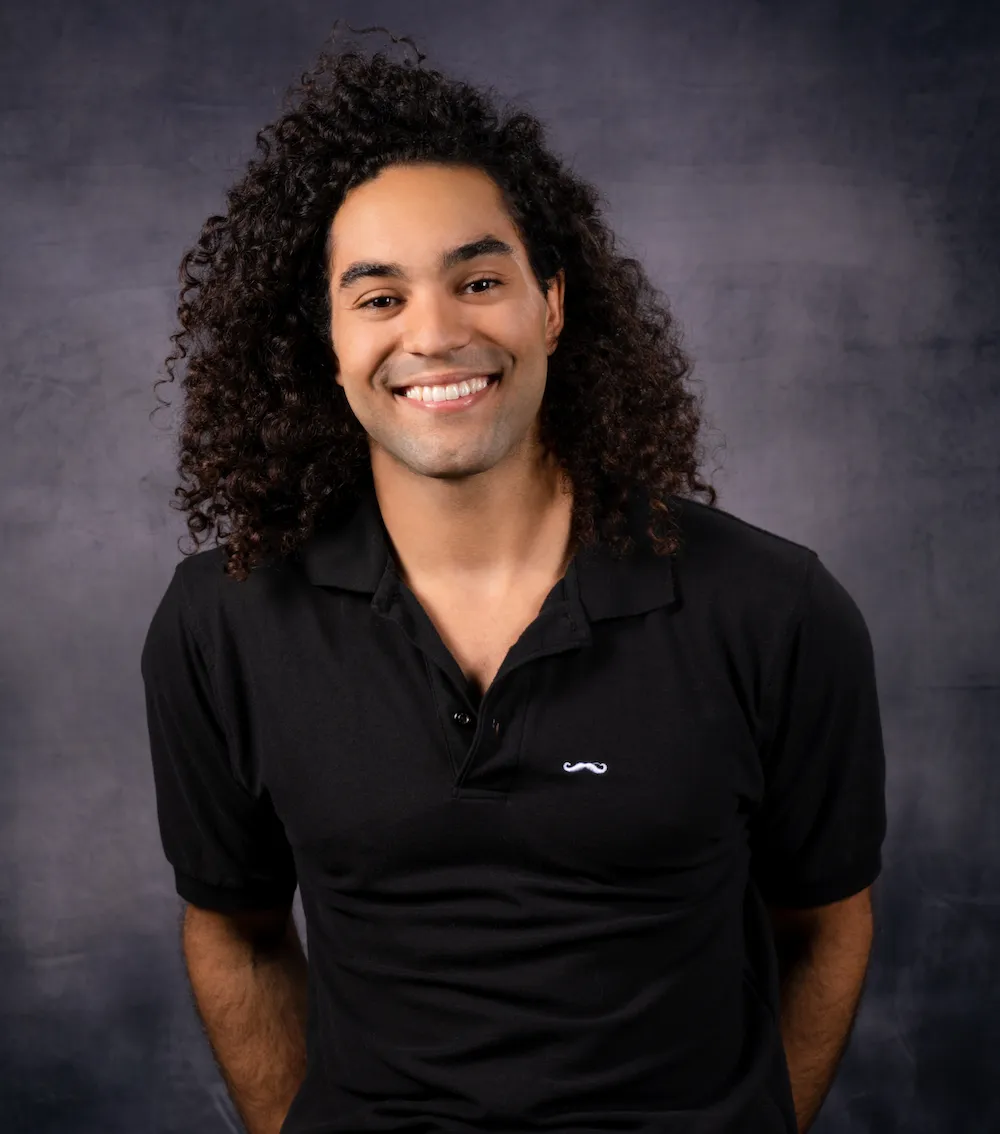
Frenchy Digital Founder: Chris Machetto
Whether you're an LA healthcare startup, a fintech scale-up, or a retail brand with millions of users, the same playbook applies: start with the problem, choose the smallest model that solves it, run it on-device when you can, push to the cloud when you must, and instrument everything. If you'd like to see how this playbook applies to your app, the Frenchy Digital team is one call away.
- Related reading: our guide to AI Integration Services in Los Angeles
- Related reading: our complete Mobile App Development LA guide for 2026
- Related reading: iOS App Development LA for Core ML deep-dives
- Related reading: Android App Development LA for TFLite / NNAPI deep-dives
- Bookable: free 30-minute ML strategy call with a Frenchy Digital engineer
Ready to Ship Machine Learning in Your Mobile App?
Frenchy Digital has delivered 50+ AI/ML mobile apps across Los Angeles, Paris, and Geneva. Book a free ML strategy call and we'll map the fastest path from idea to production.
Ready to Ship Machine Learning in Your Mobile App?
Frenchy Digital's 49-person team has shipped 50+ AI/ML mobile apps across LA, Paris, and Geneva. Book a free ML strategy call and we'll map the fastest path from idea to production.
1517 S Bentley Ave Apt 204, Los Angeles CA 90025