












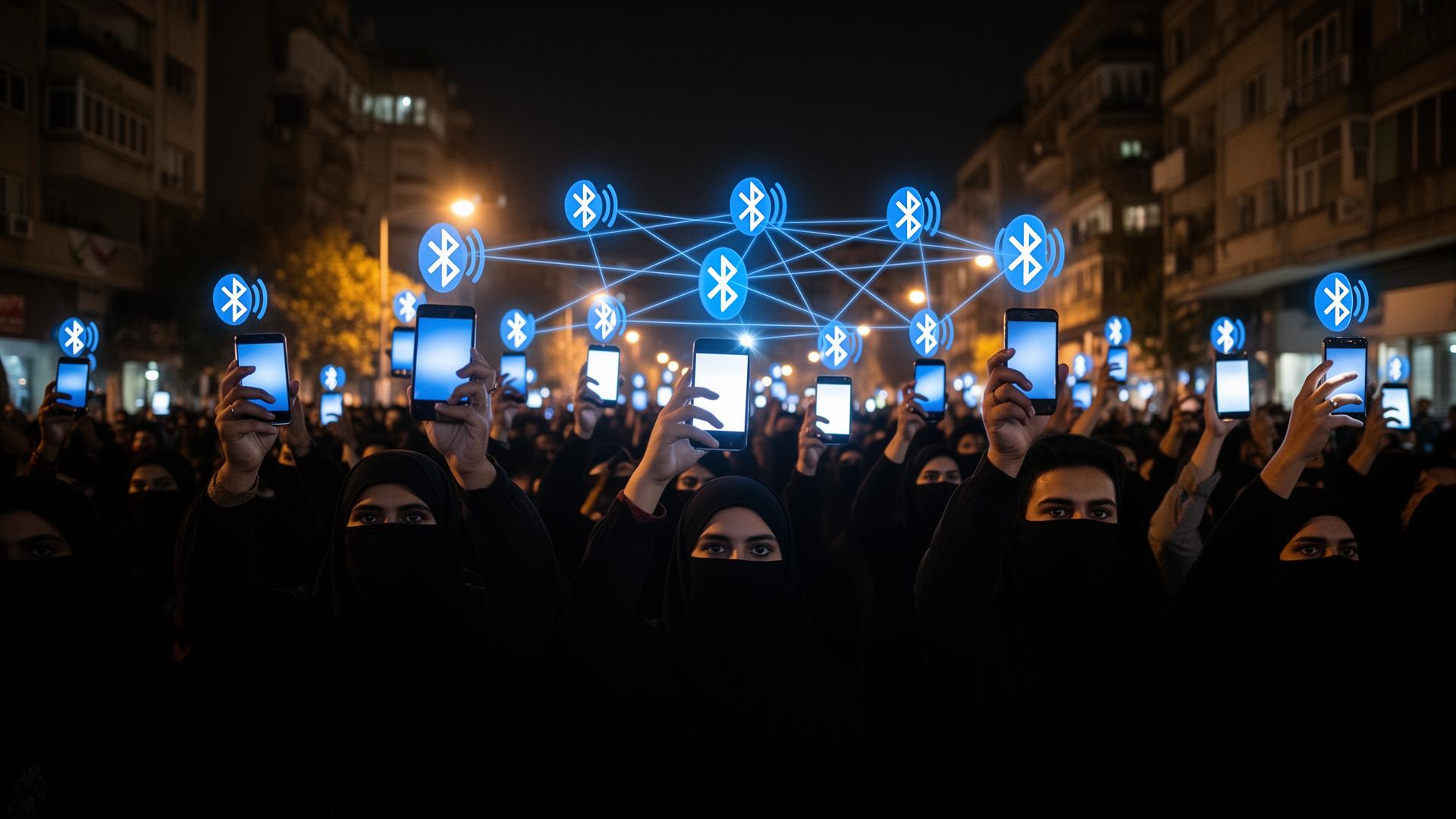
Introduction: Why Offline Messaging Matters Now More Than Ever
As I write this on January 15, 2026, Iran has been completely cut off from the global internet for over a week. No Instagram. No WhatsApp. No email. No video calls with family abroad. For 85 million Iranians, digital communication with the outside world has been severed as their government attempts to hide a violent crackdown on nationwide protests. According to HRANA (Human Rights Activists News Agency), at least 2,571 people are confirmed dead, including 2,403 protesters, 147 government/security personnel, 12 children, and 9 non-protesters, with 779 more deaths under review. The internet blackout ensures we may never know the full scope of the violence. In this digital darkness, offline messaging apps using Bluetooth mesh networking have become not just useful tools but literal lifelines enabling protesters to coordinate, families to locate each other, and the world to glimpse what's happening inside Iran.
This isn't theoretical. This is happening right now. And it's exactly why offline messaging technology matters.
Modern offline messaging apps use Bluetooth Low Energy to create peer-to-peer communication networks
Offline messaging apps represent a fundamentally different paradigm from traditional internet-based platforms like WhatsApp, Signal, or Telegram. Rather than relying on cellular networks or Wi-Fi to transmit messages through centralized servers, offline apps create decentralized mesh networks where nearby devices communicate directly via Bluetooth or Wi-Fi Direct. Each smartphone becomes both client and relay node, passing encrypted messages from device to device until they reach intended recipients: no internet, no cellular service, no infrastructure required.
In July 2025, Jack Dorsey, co-founder of Twitter (now X) and founder of Block, released BitChat, bringing mainstream attention to this technology. The open-source app operates entirely over Bluetooth Low Energy (BLE) mesh networks, enabling encrypted peer-to-peer communication without any centralized servers. Within months, BitChat saw explosive adoption during political crises: 70,000 downloads in Madagascar during September protests, 50,000 downloads in Nepal in a single day during demonstrations, and unknown but significant adoption in Iran where it now serves protesters risking their lives for freedom.
"According to Statista, Bridgefy, the leading offline messaging app predating BitChat, has accumulated over 12.5 million users globally, with massive spikes during every major protest or disaster where internet fails."
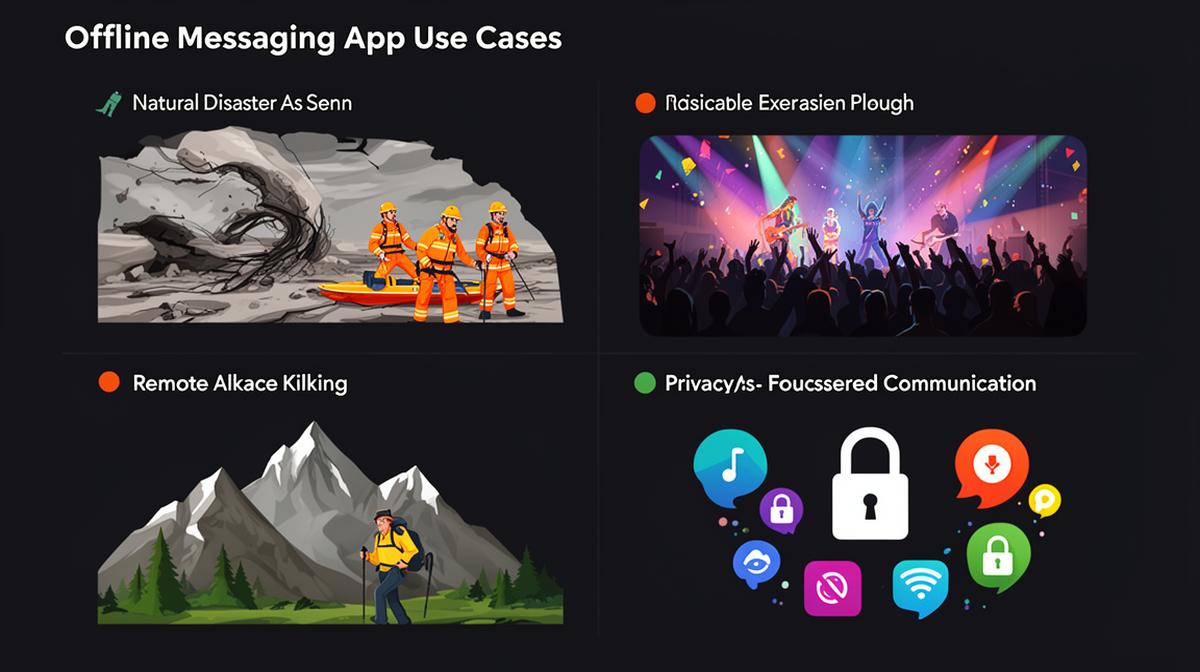
But offline messaging apps serve purposes beyond political protest. Natural disasters that destroy cellular infrastructure leave survivors needing to communicate and coordinate rescue. Large events like music festivals and sporting events overwhelm cellular networks with crowd density. Remote areas lack reliable coverage entirely. Privacy-conscious users value communication that never touches centralized servers or creates metadata trails. Each of these scenarios benefits from device-to-device communication that works completely independently of traditional infrastructure.
At Frenchy Digital, we've worked on various communication platforms and peer-to-peer networking technologies. Our custom mobile app development expertise spans real-time communication, mesh networking protocols, and end-to-end encryption implementation: exactly the skills required for offline messaging apps. As events unfold in Iran, we're acutely aware that the technology we build can have profound human impact, enabling communication when it matters most.
Iran Internet Blackout 2026: Offline Messaging in the Darkest Hour
The situation unfolding in Iran as of January 13, 2026, provides the most compelling and tragic real-world demonstration of why offline messaging apps are not academic curiosities but critical infrastructure for human rights and freedom.
The Complete Internet Shutdown: January 8-Present
On January 8, 2026, the twelfth day of nationwide protests, Iranian authorities took the extraordinary step of imposing a complete internet and telecommunications blackout across the entire country. At approximately 8:30 PM local time, internet connectivity plummeted to near-zero levels as the Islamic Republic disconnected its 85 million citizens from the global internet. NetBlocks, the internet monitoring organization, confirmed "Iran is now in the midst of a nationwide internet blackout" affecting all major service providers.
"Iran is now in the midst of a nationwide internet blackout affecting all major service providers including Telecommunication Company of Iran (TCI), MCI, and Irancell networks." (NetBlocks)
But this wasn't just an internet shutdown. It was total communication severance. Landline telephones stopped working. Mobile phone networks went dark. Attempts to call Iranian numbers from abroad failed to connect. The regime didn't just block websites or throttle speeds; they pulled the plug on the entire telecommunications infrastructure.
The shutdown's impact extends far beyond protest coordination. Digital banking ceased functioning: Iranians couldn't transfer money, pay bills, or access accounts. Hospitals lost connectivity to medical databases and coordination systems. Pharmacies couldn't process digital prescriptions. Businesses relying on internet commerce shut down. The digital economy simply stopped. Ambulances struggled to coordinate. Families couldn't locate each other. The blackout crippled normal life for every single Iranian, punishing an entire population for the actions of protesters seeking change.
What Sparked the Protests: Economic Collapse
The protests erupted on December 28, 2025, in Tehran, triggered by severe economic crisis. Iran's rial currency collapsed to over 1.4 million per US dollar, a catastrophic devaluation making basic necessities unaffordable. Inflation reached 40% annually. Food prices soared for rice, meat, and staples of the Iranian dinner table. Economic pressure intensified after the UN reimposed sanctions in September 2025 over Iran's nuclear program, following the devastating twelve-day war with Israel in June 2025.
But the protests quickly evolved beyond economic grievances. Demonstrators called for the fall of the Islamic Republic system itself. Crowds chanted in support of Reza Pahlavi, the exiled crown prince. Protests spread to all 31 provinces with nearly 600 demonstrations documented by Human Rights Activists News Agency. Traditional bazaar merchants in Tehran, Tabriz, Isfahan, Mashhad, and Kerman, historically conservative supporters of the regime, closed their shops in solidarity with protesters.
The Death Toll and Violent Crackdown
As of January 14, 2026, at least 2,571 people have been killed since protests began according to HRANA. This includes 2,403 protesters, 147 government/security forces, 12 children, and 9 non-protesters, with 779 additional deaths under review. The Iranian government officially acknowledged approximately 2,000 deaths, blaming "terrorists." NPR reports the death toll has surpassed 2,500, while Iran International and CBS News report unverified estimates from activists ranging from 6,000 to over 12,000 deaths. The internet blackout makes verification impossible.
| Source | Total Deaths | Details | Date |
|---|---|---|---|
| HRANA (U.S.-based) | 2,571 | 2,403 protesters, 147 security, 12 children, 9 non-protesters; +779 under review | Jan 14 |
| Iranian Government | ~2,000 | Includes civilians and security; blames "terrorists" | Jan 13-14 |
| NPR | >2,500 | Surpassed 2,500 amid crackdown | Jan 14 |
| Center for Human Rights | 490 | Conservative estimate (protesters only) | Jan 11 |
Amnesty International continues investigating additional deaths that occurred after the internet shutdown when documentation became impossible. Protests have now entered day 18 across 187 cities according to ISW's Iran Update.
"People in Iran daring to express their anger at decades of repression and demand fundamental change are once again being met with a deadly pattern of security forces unlawfully firing at, chasing, arresting and beating protesters, in scenes reminiscent of the Woman Life Freedom uprising of 2022." Diana Eltahawy, Amnesty International
Supreme Leader Ayatollah Ali Khamenei declared that "rioters must be put in their place." More ominously, Iran's attorney general warned that anyone participating in protests would be considered an "enemy of God," a religious charge carrying the death penalty under Islamic law. The internet blackout enables this violence to occur with reduced international scrutiny.
Offline Messaging Apps as Digital Lifeline
During the blackout, offline messaging apps have become critical tools for survival and coordination. Apps like BitChat, Bridgefy, and Briar enable protesters to:
- Coordinate meeting points and demonstration times without internet
- Share real-time safety warnings about security force movements
- Report casualties and arrests for documentation
- Plan evacuation routes from violence
- Maintain psychological connection during isolation
The apps work through Bluetooth mesh networking where messages hop from device to device. A protester in Tehran can send a message that passes through dozens of phones within Bluetooth range (30-100 meters) until reaching someone near a border area with connectivity, who can then relay information to the outside world.
Starlink and Government Countermeasures
Many Iranians had adopted Starlink satellite internet receivers despite the government never authorizing the service. Starlink played a significant role during the 2022 Mahsa Amini protests. However, since the June 2025 war with Israel, Iran has been jamming GPS signals, affecting Starlink receivers which use GPS for positioning. This represents sophisticated technical countermeasures.
Critically, GPS jamming doesn't affect Bluetooth mesh networks, which operate entirely independently of satellite infrastructure or GPS. While Starlink requires specialized receivers and working GPS, offline messaging apps need only smartphones with Bluetooth, technology already in every Iranian's pocket.
Historical Context: Iran's Pattern of Digital Repression
This is Iran's third major nationwide internet blackout in recent years. In November 2019, during "Bloody November" protests, Iran imposed a six-day complete shutdown. During this blackout, security forces killed an estimated 1,500 protesters. In 2022-2024 during the Mahsa Amini protests, more than 500 people were killed. The pattern is unmistakable: internet blackouts enable mass violence with minimal international awareness.
BitChat: Jack Dorsey's Vision for Decentralized Offline Communication
Understanding Jack Dorsey's BitChat provides essential insights into offline messaging architecture, design philosophy, and the practical challenges of building decentralized communication systems.
Origin Story and Philosophical Foundation
On July 6, 2025, Jack Dorsey posted to X that he was "spending the weekend learning about Bluetooth mesh." The next day, BitChat launched as an open-source project with code available on GitHub under permissionless public domain licensing. The philosophical foundation aligns with Dorsey's longstanding advocacy for decentralization.
BitChat embodies several core principles:
- No central servers or infrastructure dependency
- No user accounts, phone numbers, or persistent identifiers
- Complete privacy with no tracking, analytics, or data collection
- Open-source codebase enabling public auditing
- IRC-style minimalist interface evoking 1990s internet culture
Technical Architecture: Hybrid Dual-Transport
BitChat implements sophisticated hybrid architecture combining two complementary transport layers:
Bluetooth Low Energy (BLE) Mesh: Local Communication
- • Direct peer-to-peer within 100-meter radius
- • Multi-hop message relay (maximum 7 hops configured)
- • Completely offline operation
- • Noise Protocol Framework for end-to-end encryption with forward secrecy
- • Store-and-forward caching for offline recipients
Nostr Integration: Internet-Based Communication
- • Location-based geohash channels for nearby users
- • Global message propagation when online
- • Intelligent routing (Bluetooth when offline, Nostr when online)
- • Seamless fallback between modes
Real-World Adoption and Impact
BitChat's adoption demonstrated significant demand for offline messaging during political crises:
- iOS TestFlight beta reached 10,000-user cap within days
- Madagascar protests (Sept 2025): 70,000 downloads in one week
- Nepal protests (Sept 2025): 50,000 downloads in a single day
- By late September 2025: approximately 360,000 total downloads globally
Limitations and Honest Challenges
BitChat faces several significant limitations developers acknowledge:
- Range constraints: 100m between devices, 300m through multi-hop
- Network density dependence: works poorly in sparse populations
- Battery consumption: 20-40% faster drain than normal usage
- Private message encryption hasn't undergone external security audit
- Limited features: no media sharing, voice messages, or reactions
Understanding Bluetooth Mesh Networking Technology
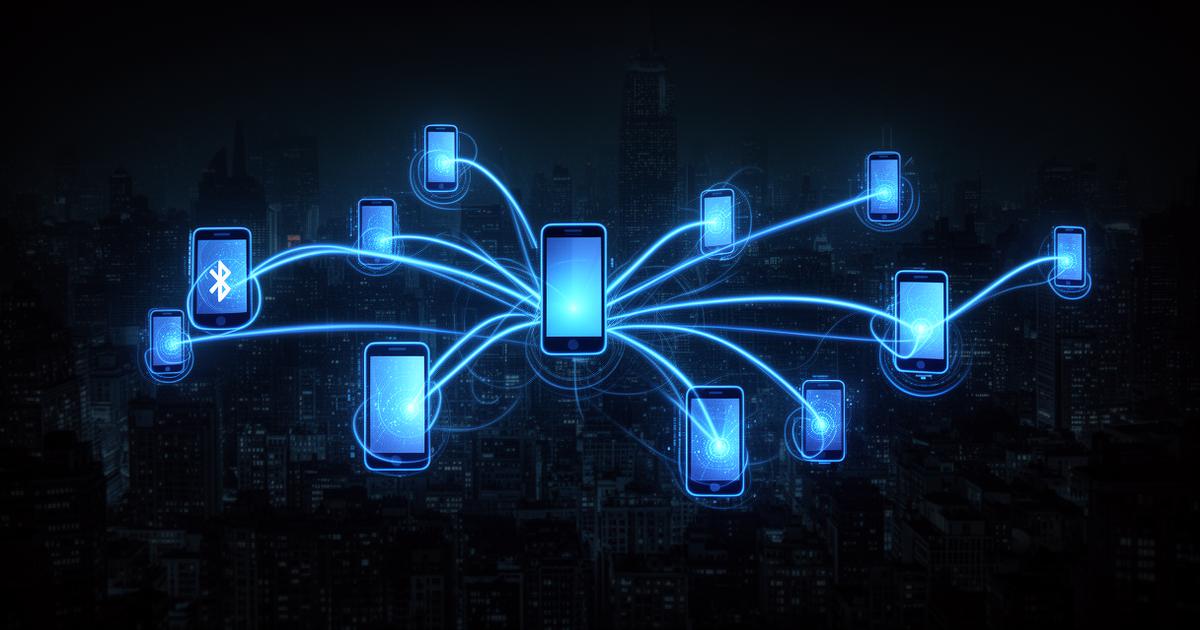
Bluetooth mesh networks enable smartphones to relay messages through multiple hops, extending range across urban environments
How Bluetooth Mesh Networks Fundamentally Differ
Traditional Bluetooth creates point-to-point connections between two devices: your phone to your headphones. Each connection is direct, one-to-one, and requires explicit pairing. Bluetooth mesh networking fundamentally reimagines this architecture, creating many-to-many networks where each device can communicate with multiple others simultaneously, and critically, where messages can "hop" through intermediate devices to reach distant destinations.
The technology leverages Bluetooth Low Energy (BLE), which consumes significantly less power than classic Bluetooth while providing sufficient bandwidth for text messaging. In a mesh network, each device serves dual roles: as a client sending and receiving its own messages, and as a relay forwarding messages for others. This creates a self-organizing, decentralized network with no single point of failure.
Message Propagation: Managed Flooding
When you send a message in an offline messaging app, the propagation mechanism works through what's called "managed flooding." Your device broadcasts the encrypted message to all nearby devices running the same app within Bluetooth range (typically 30-100 meters). Each receiving device that isn't the intended recipient rebroadcasts the message to its neighbors, decrementing a TTL (time-to-live) counter with each hop. The message continues hopping through the network until it reaches the intended recipient or the TTL expires, typically set to 7-10 hops maximum.
Range, Density, and the Network Effect
Bluetooth LE range varies significantly based on environment. Indoor environments with walls typically achieve 30-50 meter range. Outdoor environments with line-of-sight can extend to 50-100 meters. Multi-hop relay extends effective range dramatically when sufficient network density exists. With each hop adding 30-50 meters, a 7-hop network can theoretically span 200-350 meters. In dense environments like protests where thousands are packed closely, messages can travel kilometers.
Network density proves absolutely critical. The apps require roughly one user per 100-200 meters to maintain network continuity. Gaps larger than Bluetooth range create network partitions where messages cannot cross.
Store-and-Forward for Asynchronous Communication
If the intended recipient isn't currently connected or is out of range, nearby "friendly" nodes cache the message and continue attempting delivery. When the recipient eventually comes online or moves into range, stored messages are delivered. Apps typically implement size limits (100-200 messages), time limits (24-48 hours), and priority schemes where important messages are retained longer.
Comparison to Wi-Fi Direct
Some offline messaging apps support Wi-Fi Direct as alternative or complement to Bluetooth. Wi-Fi Direct offers dramatically higher bandwidth (hundreds of Mbps vs ~1 Mbps) and longer range (up to 200 meters). However, Wi-Fi Direct has substantially higher battery consumption and less mature mesh networking protocols. Most apps prioritize Bluetooth LE for its superior battery efficiency, adding Wi-Fi Direct for specific use cases like large file transfers.
Real-World Use Cases Beyond Political Protests
While political protests generate headlines and demonstrate offline messaging's most critical applications, the technology serves diverse use cases across emergency response, entertainment, privacy, and everyday communication scenarios.
Political Protests
Coordinate when governments cut internet access. Used in Iran, Hong Kong, Myanmar, Madagascar, Nepal.
Natural Disasters
Communicate when infrastructure is destroyed. Critical after 2023 Turkey-Syria earthquake (50,000+ deaths).
Large Events
Stay connected at festivals, concerts, conferences when 50,000+ attendees overwhelm cellular networks.
Remote Operations
Maritime, wilderness hiking, mining, construction sites, research stations lacking coverage.
Privacy-First Communication
Messages never touch centralized servers. Avoids corporate/government surveillance and metadata trails.
Cost Reduction
Free communication in developing markets where mobile data is expensive relative to income.
Existing Offline Messaging Apps: Comparative Analysis
Several offline messaging apps exist with different approaches, features, and trade-offs. Understanding the competitive landscape helps developers identify opportunities.
Bridgefy: The Market Leader
12.5M+ total users
Over 12.5 million users globally. Gained prominence during Hong Kong's 2019 protests and Myanmar's 2021 coup. Uses Signal Protocol for end-to-end encryption.
Briar: Maximum Security
Gold standard for activists
Open-source, passed independent security audit by Germany's Cure53. Multiple transport options: Bluetooth, Wi-Fi Direct, and Tor. Contact addition requires in-person QR code scanning.
BitChat: Jack Dorsey's Vision
360K+ downloads
Launched July 2025, open-source with IRC-style minimalist interface. Uses Noise Protocol Framework with Nostr integration for hybrid online/offline operation.
FireChat (Discontinued)
Legacy lives on
Pioneered mainstream offline messaging during Hong Kong's 2014 Umbrella Movement. Demonstrated technology viability at scale but lacked end-to-end encryption.
Market Gaps and Opportunities
Comparing existing apps reveals several opportunities: No app perfectly balances security, usability, and features. iOS support lags Android across most apps. Media and file sharing remains limited. Battery optimization varies widely. Monetization remains unsolved. These gaps represent opportunities for new entrants or improvements to existing apps.
How Frenchy Digital Builds Offline Messaging Apps
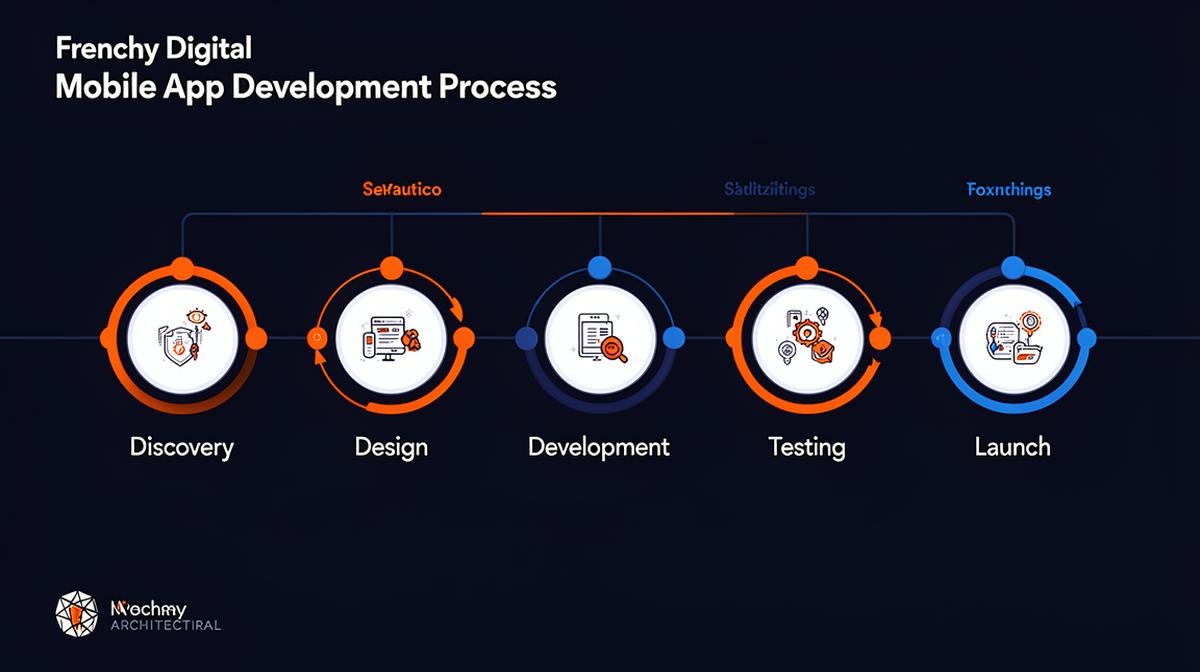
At Frenchy Digital, we've developed expertise in peer-to-peer networking, real-time communication, and encryption implementation. When clients approach us about building offline messaging capabilities, we follow a systematic process ensuring technical excellence, security, and practical usability.
Discovery & Requirements
2-3 weeks$5,000-$8,000Stakeholder interviews, technical requirements analysis, competitive analysis, legal/ethical review. Define platform requirements, feature scope, security needs, scale expectations.
Technical Proof of Concept
3-4 weeks$12,000-$18,000Validate BLE mesh connectivity, multi-hop relay, store-and-forward, encryption integration. Cross-platform testing, battery consumption measurement, range testing.
Core Development
8-12 weeks$60,000-$120,000Production-quality mesh networking layer, end-to-end encryption, messaging layer, user interface, contact management, platform optimization for iOS and Android.
Advanced Features
4-6 weeks$30,000-$60,000Media sharing, group chat and channels, hybrid online/offline support, location and mapping features, analytics and monitoring (privacy-respecting).
Security Audit & Compliance
3-4 weeks$15,000-$25,000External penetration testing, encryption implementation review, metadata leakage testing, compliance documentation. Essential for high-risk contexts like protests.
Launch & Ongoing Support
Ongoing$3,000-$15,000/monthApp store submission, launch communications, bug fixes, performance improvements, OS updates, security patches, feature additions based on feedback.
Why Choose Frenchy Digital
Our Los Angeles location enables close collaboration with clients while our international presence (Paris, Geneva, Évian) provides development efficiency and global perspective. We bring proven expertise in:
- Peer-to-peer networking and mesh protocols
- End-to-end encryption and security implementation
- Cross-platform mobile development (iOS and Android)
- Real-time communication systems
We understand that offline messaging apps often serve critical humanitarian purposes, as demonstrated by current events in Iran. We take this responsibility seriously, ensuring our implementations are secure, reliable, and worthy of trust when they're used for life-or-death communication.
Technical Challenges and Proven Solutions
Offline messaging app development faces unique challenges beyond traditional app development. Our experience across multiple projects has identified common pitfalls and effective solutions.
Battery Consumption
Problem: Continuous Bluetooth operation increases battery drain 20-40% compared to normal usage.
Solutions:
- Adaptive advertising intervals based on battery level
- Intelligent connection management
- Background optimization reducing activity when backgrounded
- User power modes for low battery situations
Message Delivery Reliability
Problem: Mesh networks don't guarantee delivery. Messages may be lost due to network partitions, TTL expiration, or relay node disconnection.
Solutions:
- Delivery confirmations with automatic retries
- Aggressive store-and-forward caching
- Priority queues for important messages
- Honest status indicators ('sent', 'delivered', 'unknown')
Spam and Abuse Prevention
Problem: Open mesh networks are vulnerable to spam flooding, malicious message storms, and denial-of-service attacks.
Solutions:
- Rate limiting per device
- Friend lists restricting private messages
- Proof-of-work requirements
- Reputation systems and user blocking
Platform Restrictions
Problem: iOS and Android impose restrictions on background Bluetooth operation that complicate mesh networking.
Solutions:
- Proper background modes and capability declarations
- Local notifications for incoming messages
- User education about foregrounding
- Graceful degradation when background operation isn't possible
Network Congestion
Problem: At very high density (thousands of users), naive mesh flooding can overwhelm networks and decrease delivery.
Solutions:
- Adaptive TTL based on observed density
- Message aggregation and compression
- Selective relay algorithms
- Priority-based forwarding for critical messages
Business Models and Monetization Strategies
Monetizing offline messaging apps presents unique challenges. The most critical use cases (protests, disasters) involve users who can't or won't pay during crisis. Yet development and maintenance require funding.
Free & Open Source (Donation-Supported)
Example: BitChat
Advantages:
- • Maximum user adoption
- • Strong privacy/security
- • Trust from high-risk users
- • Community contributions
Disadvantages:
- • Unsustainable without benefactor/grants
- • No dedicated support team
- • Unclear long-term viability
Freemium with Premium Features
Example: Various apps
Advantages:
- • Balances accessibility with revenue
- • Free tier serves critical use cases
- • Premium users fund development
Disadvantages:
- • Defining 'premium' vs 'essential' is ethically challenging for human rights apps
Advertising-Supported
Example: Bridgefy free version
Advantages:
- • Completely free for users
- • Proven monetization model
- • Scalable revenue
Disadvantages:
- • Poor user experience
- • Privacy concerns
- • Protesters won't use ad-supported apps
Enterprise/Organizational Licensing
Example: Custom deployments
Advantages:
- • Substantial revenue per customer
- • Enables customization
- • Long-term relationships
Disadvantages:
- • Requires enterprise sales capability
- • Doesn't directly serve individual protesters
Hybrid Approach: Many successful apps combine models: free for individual users serving critical use cases, premium subscription for power users, enterprise licensing for organizations, and accepting donations from supporters.
Ready to Build an Offline Messaging App?
Whether you're developing protest coordination tools, disaster response systems, event communication platforms, or privacy-focused messaging, Frenchy Digital can help.
1517 S Bentley Ave Suite 204, Los Angeles CA 90025
Frequently Asked Questions
Conclusion: The Future of Decentralized Communication
As I finish writing this on January 13, 2026, Iran remains in complete digital darkness. Eighty-five million people cut off from the internet. Thirty-six confirmed dead, countless more injured, thousands arrested. Families unable to locate loved ones. The world unable to fully witness what's happening because the regime has weaponized information access itself.
And yet, despite the blackout, despite the violence, despite the government's best efforts to silence dissent, communication continues through offline messaging apps. Messages hop from phone to phone through Bluetooth mesh networks. Protesters coordinate. Families connect. Information flows, slowly and imperfectly, but it flows.
This is why offline messaging technology matters. This is why Bluetooth mesh networking isn't academic curiosity but critical infrastructure. This is why Jack Dorsey's BitChat, despite its minimalist interface and acknowledged limitations, represents something profound: a reminder that communication is a human right that shouldn't depend on infrastructure governments can shut down.
The lessons from Iran, building on earlier lessons from Hong Kong, Myanmar, Madagascar, and Nepal, are clear:
- Authoritarian governments will shut down the internet when their survival is threatened
- Offline messaging apps work not just in principle but in practice
- The technology serves legitimate, life-saving purposes for human rights and free expression
- Adoption must occur before crises: people can't download apps without internet
At Frenchy Digital, we're honored to potentially contribute to this technology that serves such critical human needs. We understand that code we write might one day enable someone to coordinate a rescue, warn others of danger, or simply connect with a loved one when all other communications have been severed.
Stay strong, Iran. Your messages are getting through. Not all of them, not easily, but some. And the world sees you, even through the digital darkness your government has imposed. Technology alone won't bring freedom, but it ensures you're not completely alone in the struggle.
For those interested in building offline messaging capabilities or learning more about this technology, contact Frenchy Digital. We're here to help turn ideas into reality, concepts into code, and aspirations into applications that might one day save lives or preserve freedom.
Sources & References
Iran Protests Death Toll (January 2026)
- At least 2571 killed in Iran's protests, Trump says 'help is on...': Reuters
- At least 2,571 killed in Iran's protests, says U.S.-based rights group: CNBC
- Deaths from Iran's crackdown on protests pass 2500: NPR
- Around 2,500 reportedly killed in protests as Donald Trump tells...: ABC News
- Death toll in Iran protests surpasses 2,500 as internet blackout continues: Yeni Şafak
- Iran protest death toll expected to rise as Tehran blames 'terrorists': Euronews
- 2026 Iran massacres: Wikipedia
- Over 12000 feared dead after Iran protests: CBS News
- More than 2,000 people reported killed at Iran protests: BBC
- At least 12000 killed in Iran crackdown during internet blackout: Iran International
- Iran: Massacre of protesters demands global diplomatic action: Amnesty International
- Iran Update, January 13, 2026: Institute for the Study of War (ISW)
- January 13, 2026: Iran protests updates: CNN
Technology & Mesh Networking
- NetBlocks: Internet Monitoring Organization
- Bridgefy: Offline Messaging App
- Briar Project: Secure Mesh Messaging
- Statista: Market Research Data
- Apple Bluetooth Developer Documentation
- Android Bluetooth Developer Guide
- Noise Protocol Framework
- Signal Protocol Documentation
- Nostr: Notes and Other Stuff Transmitted by Relays