Key Takeaways
- •As of April 2026, iOS apps must be built with Xcode 16 and iOS 18 SDK; failure to update prevents all new app submissions
- •Android apps must target API level 35 (Android 15) for new submissions as of August 31, 2025
- •Apps abandoned for 5+ months face significant technical debt requiring 40-80 hours of development work
- •New age rating system requires updates by January 31, 2026 for iOS apps
- •Regular maintenance (quarterly updates) costs far less than emergency updates: $3K-$5K/quarter vs $15K-$30K for catch-up
Introduction to Updating Deprecated Mobile Apps in 2026
In January 2026, thousands of mobile app developers are facing a critical decision: update their apps to meet the latest iOS and Android requirements or watch them become progressively unusable and eventually inaccessible to users. The rapid pace of mobile platform evolution creates an ongoing challenge: apps that functioned perfectly in August 2025 now require significant updates to remain compatible with current App Store and Google Play requirements.
The situation is particularly acute in 2026 because both Apple and Google have implemented major platform changes. Apple's iOS 18 introduced significant architectural changes, new privacy requirements, and updated design guidelines. Google's Android 15 (API level 35) brought security enhancements, behavior changes, and new permission models. Apps built before these releases using older SDKs and development tools cannot be submitted to app stores without substantial updates.
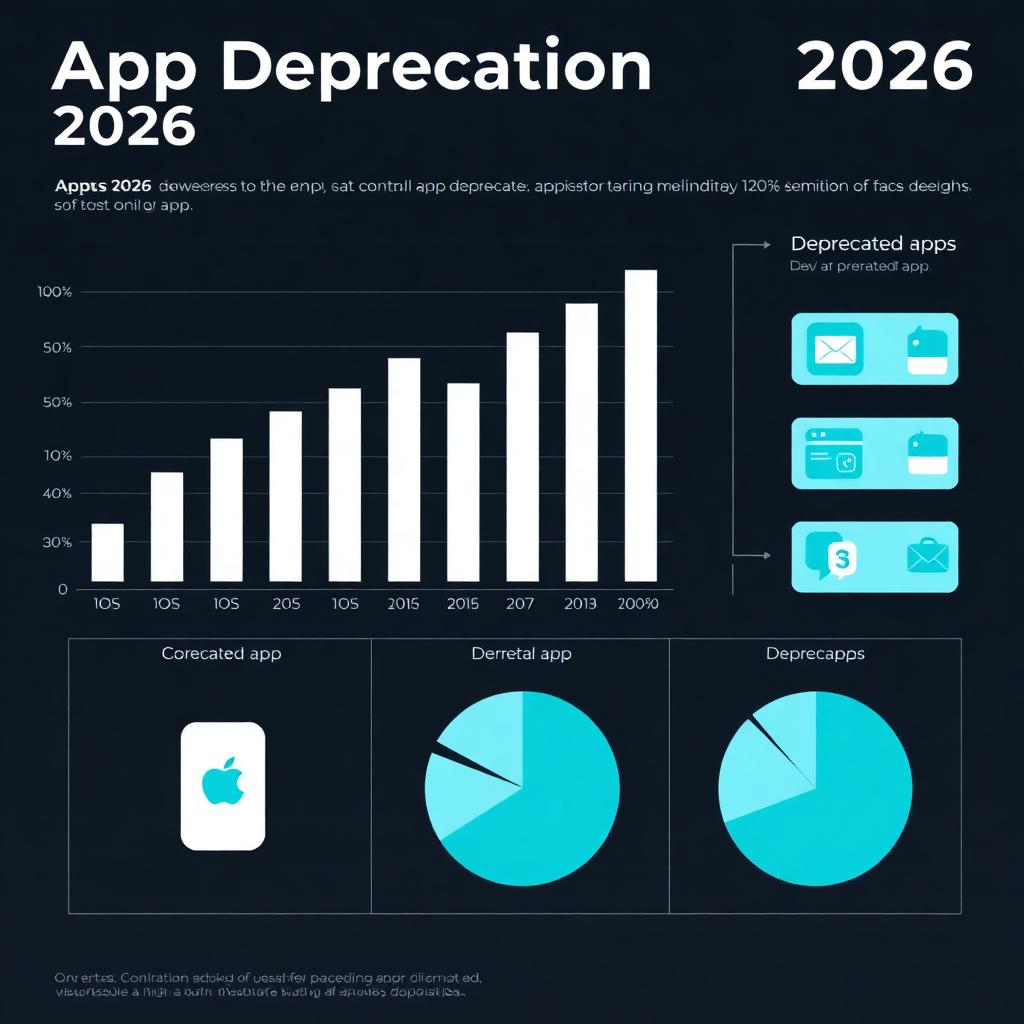
Data visualization showing the scope of deprecated apps in 2026
According to Statista, over 35% of iOS apps on the App Store haven't been updated in the past six months as of January 2026, and approximately 40% of Android apps on Google Play face similar obsolescence. This represents millions of apps potentially facing removal or reduced discoverability unless their developers take action.
2026 App Store Requirements Overview: What Changed
The Cumulative Impact of Platform Evolution
Mobile platforms evolve continuously, but certain periods see concentrated changes that create inflection points for developers. 2025-2026 represents one such period. Both Apple and Google released major OS versions (iOS 18 and Android 15) with substantial architectural changes, tightened security and privacy requirements, implemented new age verification systems, and deprecated significant APIs and frameworks.
Why Apps Become Deprecated
Apps become deprecated through several mechanisms:
- Platform requirement changes Apple or Google mandate new SDK versions
- API deprecation Platforms remove or change APIs apps depend on
- Security vulnerabilities Older SDKs contain security flaws
- Dependency obsolescence Third-party libraries become incompatible
- Behavioral changes Platform modifications alter how code behaves
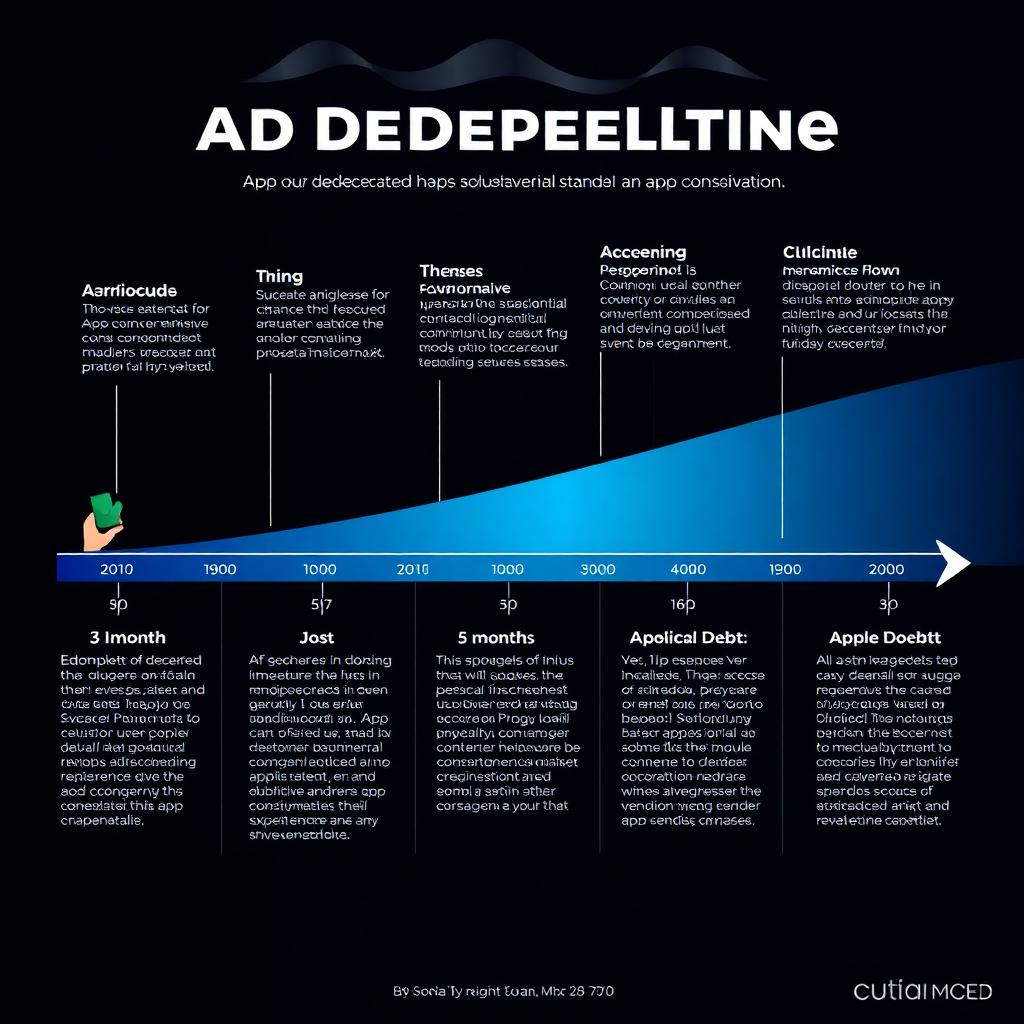
Timeline showing escalating consequences of app deprecation
The Business Case for Immediate Updates
Apps represent significant business assets with development costs ranging from $50,000 to $500,000+ for most business applications. Allowing these assets to deprecate wastes previous investment and forces complete rebuilds costing far more than maintenance updates. The cost of updating grows exponentially with delay: quarterly updates require 10-20 hours, 6-month updates require 40-80 hours, and apps abandoned for a year could require complete rebuilding.
iOS App Store Requirements and Changes in 2026
Xcode 16 and iOS 18 SDK Mandate (April 2026)
The most impactful change is Apple's requirement, effective April 2026, that all apps submitted to App Store Connect must be built with Xcode 16 or later using the iOS 18, iPadOS 18, tvOS 18, visionOS 2, or watchOS 11 SDK. Apps built with earlier Xcode versions cannot be submitted after this date.
New Age Rating System (Deadline: January 31, 2026)
Apple introduced a completely revised age rating system in July 2025 that expands rating categories from 4 to 7 (4+, 9+, 12+, 13+, 16+, 17+, 18+). All developers must provide responses to the updated age rating questions by January 31, 2026. Failure to complete this questionnaire prevents submitting app updates.
Technical Deprecations and Removals
iOS 18 deprecated several commonly used APIs: UIWebView was finally removed (requiring migration to WKWebView), certain MapKit methods were deprecated, some Core Location methods changed, and push notification APIs saw updates affecting implementation.
Google Play Store Requirements and Changes in 2026
Target API Level 35 Requirement
As of August 31, 2025, new apps and app updates must target Android 15 (API level 35) or higher. The consequence of not updating is severe: apps targeting API level 33 or lower are hidden from users on Android 14 or newer devices. As users upgrade, non-compliant apps disappear from their view of Google Play.
Developer Verification Requirement (September 2026)
Starting September 2026 in select countries and globally in 2027, only apps from verified developers can be installed on certified Android devices. This requires legal business name, D-U-N-S number for organizations, and identity verification documentation.
| Requirement | iOS/App Store | Android/Google Play | Deadline |
|---|---|---|---|
| SDK/API Level | Xcode 16, iOS 18 SDK | API Level 35 (Android 15) | April 2026 (iOS) August 2025 (Android) |
| Age Rating | New 7-category system | Age verification in select states | January 31, 2026 (iOS) May-July 2026 (Android) |
| Developer Verification | Existing Apple Developer | New verification required | September 2026 (Android) |
| Non-Compliance Result | Cannot submit updates | Progressive invisibility | Immediate vs Gradual |
Case Study: Reviving FitTrack Pro After 5 Months of Abandonment
Background
FitTrack Pro is a fitness tracking app developed by a Los Angeles-based startup in 2024. The app was built with React Native, targeting iOS 17 SDK and Android API level 34. After the development team was laid off in August 2025, the app received no updates for five months.
In January 2026, new funding arrived and Frenchy Digital was hired to revive the app, requiring updates to meet current requirements, fix broken functionality, and prepare for new feature development.
Initial Assessment: The Technical Debt
iOS Issues Found
- • Needed Xcode 16/iOS 18 SDK rebuild
- • 3 deprecated iOS APIs
- • 2 libraries with security vulnerabilities
- • Age rating questionnaire incomplete
- • StoreKit using deprecated APIs
Android Issues Found
- • Target API level update needed (34→35)
- • 2 incompatible dependencies
- • Deprecated photo access permissions
- • Background location violations
- • Deprecated push notification methods
Results
The technical debt assessment concluded the app required approximately 60-80 hours of development work across both platforms, plus 20-30 hours of QA testing, documentation, and submission. Total project cost was approximately $22,000 over 5 weeks, far less than a complete rebuild would have cost.
Common Technical Challenges
SDK Version Mismatches
Projects built with older Xcode/Android Studio versions won't open correctly in newer versions. Build configurations may need manual updates.
Deprecated API Replacements
Finding and replacing deprecated APIs can be time-consuming. Some replacements have different behaviors requiring code adjustments.
Third-Party Library Conflicts
Old dependencies may conflict with new SDK requirements. Some libraries may be abandoned, requiring replacements.
Breaking Behavioral Changes
New OS versions often change how features behave. Background processing, permissions, and notifications frequently affected.
Device Compatibility Issues
Apps may behave differently on newer devices and OS versions. Screen sizes, notches, and dynamic islands require UI adjustments.
Hidden Regressions
Updates may introduce subtle bugs not caught during development. Comprehensive testing across OS versions is essential.
Step-by-Step Update Process
- Audit current codebase
- Identify deprecated APIs
- Review dependency versions
- Document platform gaps
- Install latest Xcode/Android Studio
- Update development certificates
- Configure new build settings
- Update target SDK/API levels
- Replace deprecated APIs
- Update third-party dependencies
- Fix compilation errors
- Test on multiple OS versions
- Regression testing
- Performance testing
- Security audit
- Complete age rating questionnaire
- Update store listings
- Submit for review
- Monitor and address feedback
Handling Deprecated APIs and Libraries
Deprecated APIs represent functionality that platform vendors have marked for removal in future OS versions. Effective API migration follows proven patterns:
- Catalog all deprecated API usage using IDE warnings and static analysis tools
- Understand the replacement by reading migration guides and documentation
- Implement incrementally update one deprecated API at a time, testing after each replacement
- Handle edge cases where deprecated APIs offered functionality not perfectly replicated
- Update tests to cover new API usage, ensuring behavior remains consistent
Testing and Quality Assurance
Testing updated deprecated apps requires more rigor than testing new features because updates can introduce subtle regressions. Your test matrix should include:
- Minimum supported OS version Verify no regressions
- Major versions between minimum and latest Spot check
- Latest stable release Comprehensive testing
- Beta versions if available Identify upcoming issues
Use physical devices for critical testing, simulators/emulators for broader coverage, and cloud testing services like BrowserStack for devices unavailable locally.
Costs and Timelines for Updates
The economics strongly favor regular maintenance over periodic rescue updates. Here's how costs compare:
| Approach | Frequency | Cost Per Update | Annual Cost | Technical Debt |
|---|---|---|---|---|
| Regular Maintenance | Quarterly | $3,000-$5,000 | $12,000-$20,000 | Minimal |
| Semi-Annual Updates | Every 6 months | $15,000-$30,000 | $30,000-$60,000 | Moderate |
| Annual Rescue | Every 12 months | $30,000-$60,000 | $30,000-$60,000 | High |
| Emergency Rescue | 18+ months | $60,000-$150,000+ | Varies | Critical |
Preventing Future Deprecation: Best Practices
Establish Regular Update Cadence
Quarterly updates are ideal for most business apps. They prevent technical debt accumulation while maintaining reasonable costs. Schedule updates around platform release cycles (iOS in September, Android mid-year).
Monitor Platform Announcements
Subscribe to Apple Developer News and Google Play Developer News. Participate in beta programs for advance access to new OS versions, allowing testing before public release.
Maintain Dependency Currency
Check for updates monthly. Automate security vulnerability scanning using tools like npm audit, Snyk, or Dependabot. Address critical vulnerabilities immediately.
Allocate Budget for Maintenance
Plan 15-20% of original development budget annually for maintenance. For a $100,000 app, budget $15,000-$20,000 per year for updates, bug fixes, and improvements.
App Maintenance in Los Angeles: Local Considerations

The Los Angeles tech ecosystem for app maintenance
Los Angeles hosts a mature app development ecosystem with Silicon Beach companies setting high standards. The entertainment industry demands cutting-edge technology, and strong university programs (USC, UCLA) produce talented developers. This competitive environment means LA users expect polished, current apps.
LA Market Maintenance Costs
Typical hourly rates in Los Angeles: $150-$250 for established agencies, $100-$150 for boutique studios, and $75-$125 for smaller firms. While LA rates are high, proximity provides value through easier communication, understanding of local markets, and California regulatory familiarity.
How Frenchy Digital Can Help Update Your Deprecated App
At Frenchy Digital, we specialize in rescuing deprecated apps and bringing them current with 2026 platform requirements. Our systematic approach, platform expertise, and proven processes help Los Angeles businesses and international clients overcome technical debt.
Comprehensive Assessment
Thorough analysis of platform gaps, deprecated APIs, and dependencies
Prioritized Strategy
Phased update plans addressing critical deadlines first
Platform Expertise
Deep iOS and Android expertise through beta programs and conferences
Quality Assurance
Comprehensive testing across OS versions and devices
🚀 Ready to Update Your Deprecated App?
Contact Frenchy Digital Today:
📞 Phone: (424) 272-5601
💬 WhatsApp: Message Us on WhatsApp
Frequently Asked Questions
Conclusion
Updating deprecated mobile apps in 2026 requires understanding evolving platform requirements, systematic approaches to addressing technical debt, and realistic planning for costs and timelines. The investment in regular maintenance pays for itself many times over compared to emergency rescue updates.
Whether your app has been abandoned for a few months or over a year, the path forward involves honest assessment, prioritized updates, comprehensive testing, and ideally ongoing maintenance to prevent future deprecation. At Frenchy Digital, we're ready to help bring your app back to life.

Top Rated & Verified