The problem
Dr. Peter K. Cudjoe is an oral and maxillofacial surgeon opening a practice in Miami focused on one thing: third-molar extractions under IV sedation or general anesthesia. When he came to us his credentialing was about three weeks old. The practice questionnaire came back with "no" or a blank for nearly every line. No practice management system, no hardware, no vendor relationships, no compliance documents. One surgeon, one nurse practitioner, a bilingual patient base, and no front-desk staff.
The brief was to build the layer a receptionist normally is: answer the phone, screen the patient, quote what can be quoted, book the consult, collect intake and consent, and remind people to show up. And to do it in a way that a Florida dental regulator, a HIPAA auditor and a nervous patient at 11pm would all be fine with.
What the practice needed
- A phone line that is always answered: Bilingual, honest about being an AI, and able to hand off to a human on defined triggers.
- Booking that is real: Every appointment the agent offers has to exist in the schedule, with intake screening before it is confirmed.
- Compliance as code: Consent, retention, PHI handling and advertising rules that the codebase enforces rather than a binder describes.
- A public site that converts and complies: Procedures, cost, financing, emergencies and a Notice of Privacy Practices, fast and accessible.
How AI is used
A voice agent with the disclosure first
The practice line is answered by Ava, a Retell AI voice agent running in English and Spanish. The very first audio a caller hears is the recording and AI disclosure, played before speech recognition starts, because Florida requires all-party consent to record. The agent's prompts are versioned markdown files in the repository, reviewed like code, and never edited in the vendor console, where we found identity and storage settings drifting from what the practice had approved.
Four agents, each with a narrow job
Scheduling
Insurance and eligibility
Intake and consent
Recall and smart-fill
What the agent is not allowed to do
The highest-risk failure we identified was the voice agent quoting a price. Florida's dental advertising statute makes an "all-inclusive" fee claim non-compliant, so pricing moved to written quotes after consultation, and the agent's rules were rewritten and tested against that. A regression suite replays call scenarios with personally identifiable information redacted, and when it has nothing to replay it says so loudly instead of reporting a pass.
How we built it
Two apps in one monorepo
The marketing site has no client components. Every page arrives as complete HTML in the first response, because the AI answer engines the practice wants to appear in fetch pages without running JavaScript. A build check fails on any client component, and the content security policy blocks hydration on purpose, so nothing on the page waits on a script. The only JavaScript a browser downloads is the Next.js runtime, about 142 KB compressed and loaded asynchronously, kept out of the first paint and held under a 150 KB budget in CI, plus a small consent script. Google Analytics loads only after a visitor allows it in the cookie banner. That is what keeps a healthcare site fast on a phone in a parking lot. The clinic app carries online booking, emergency booking, intake and the staff portal, on Supabase with the HIPAA add-on and row-level security from the first migration, hosted on Vercel Pro under a business associate agreement.
Open Dental is the system of record, isolated behind a strict adapter boundary so the practice can change practice-management software without rewriting the agents. Twilio, Paubox, Dropbox Sign, Brivo door access, Stripe and camera integrations sit behind the same kind of boundaries.
What shipped
Timeline
- 30 July 2026: Initial specification and site. Practice questionnaire returned the next day.
- 5 to 7 August 2026: General anesthesia permit confirmed. Practice address corrected across every surface.
- 27 August 2026: Retell booking tools and patient online booking live.
- 28 to 29 August 2026: Cash-first pivot with compliant pricing language, Notice of Privacy Practices, email preferences, design overhaul, agent regression suite, call-review console and staff portal relocation.
- 23 September 2026: Bookings capture who the patient is, and the clinic line is published.
- 14 October 2026: Consent-gated Google Analytics on the marketing site. Web booking becomes an appointment request with a preferred time, behind Turnstile, honeypot and fill-time spam checks. The voice agent gets a shorter greeting, a callback offer and booking up to 60 days out.
- 15 October 2026: In network with twelve dental plans. The voice agent's insurance tool answers in-network questions and runs live eligibility through Stedi.
- 19 to 20 October 2026: Verified callers hear their oral surgery benefits as ranges. Two-layer cookie consent with a settings dialog.
The live site and booking today
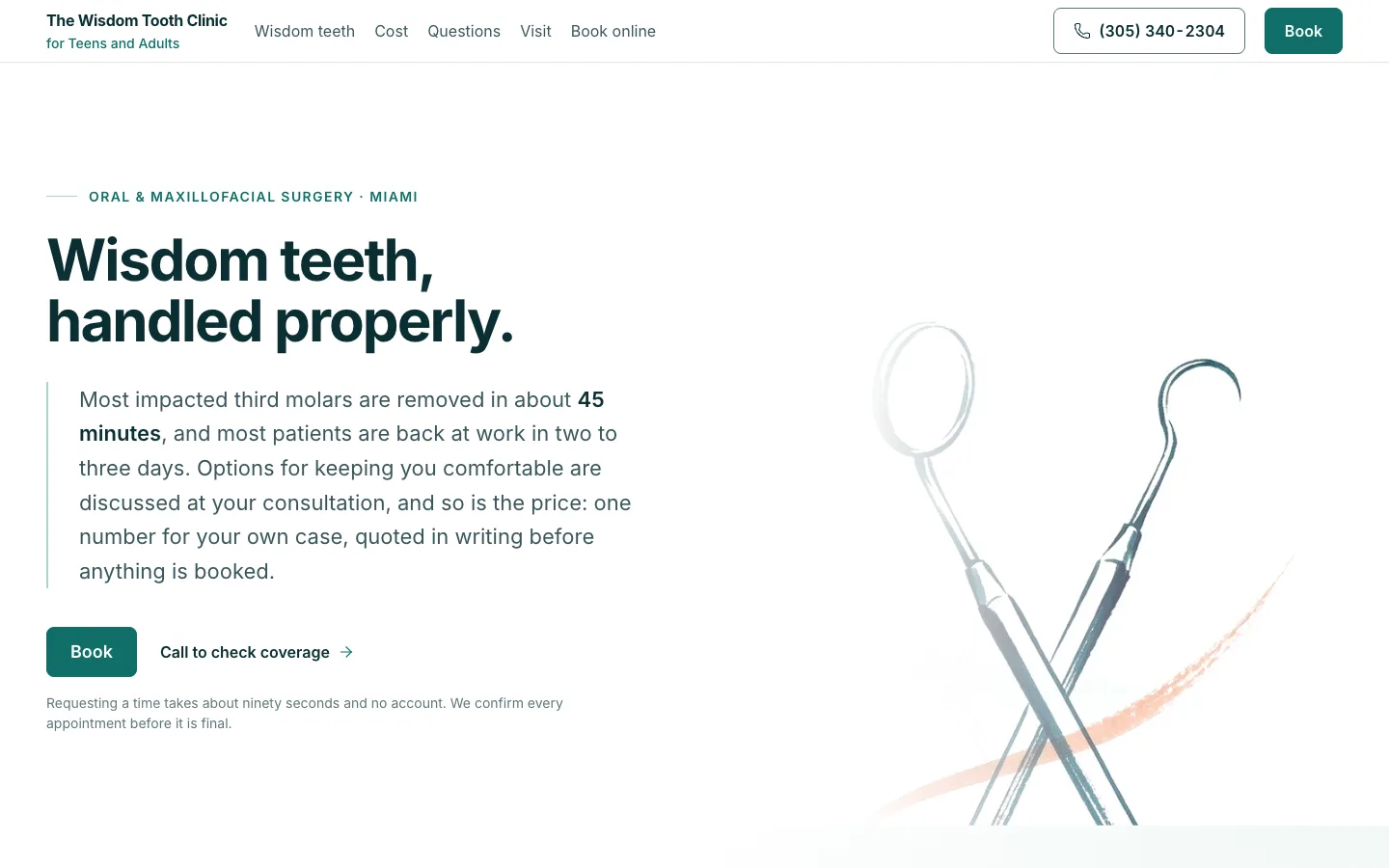
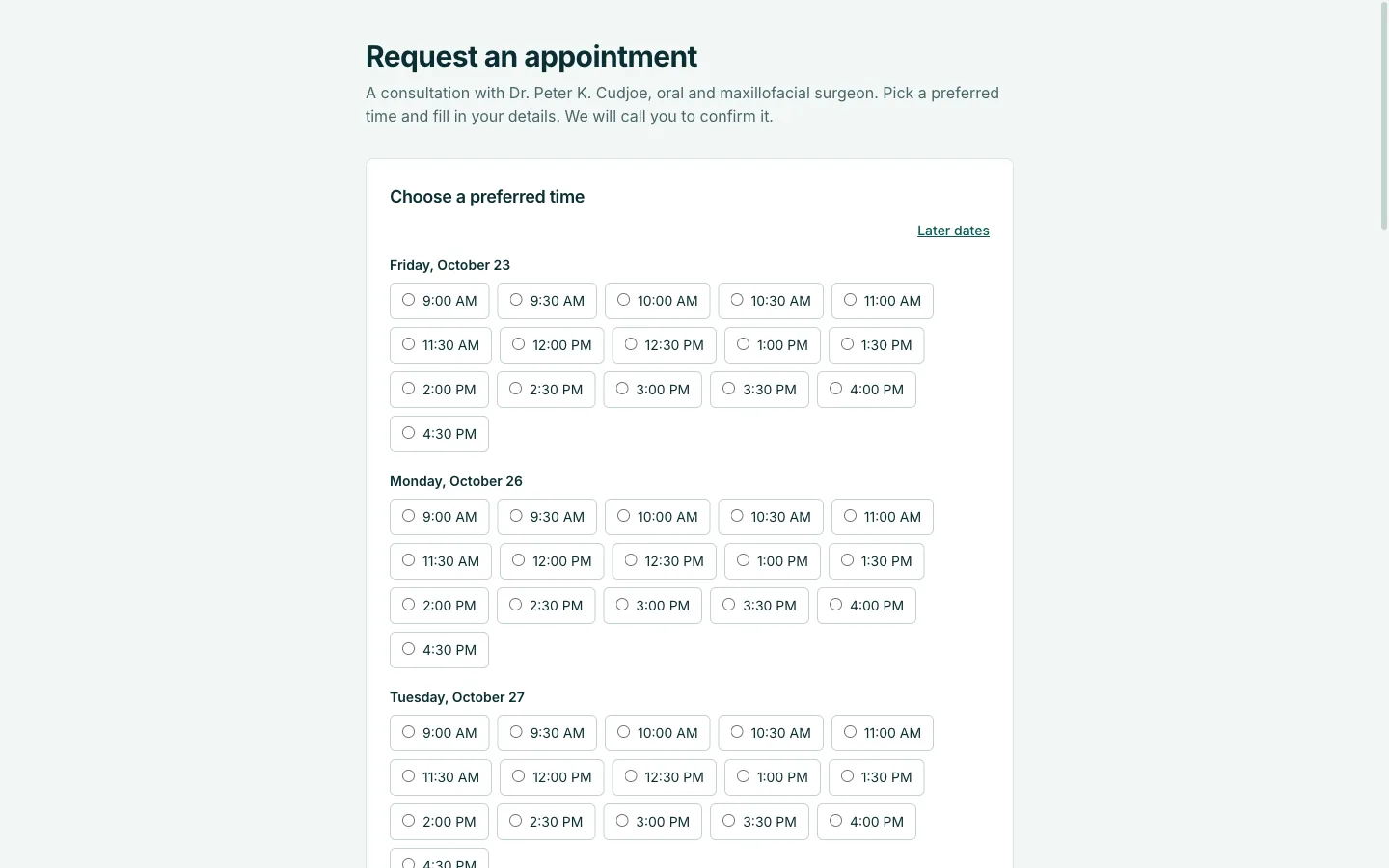
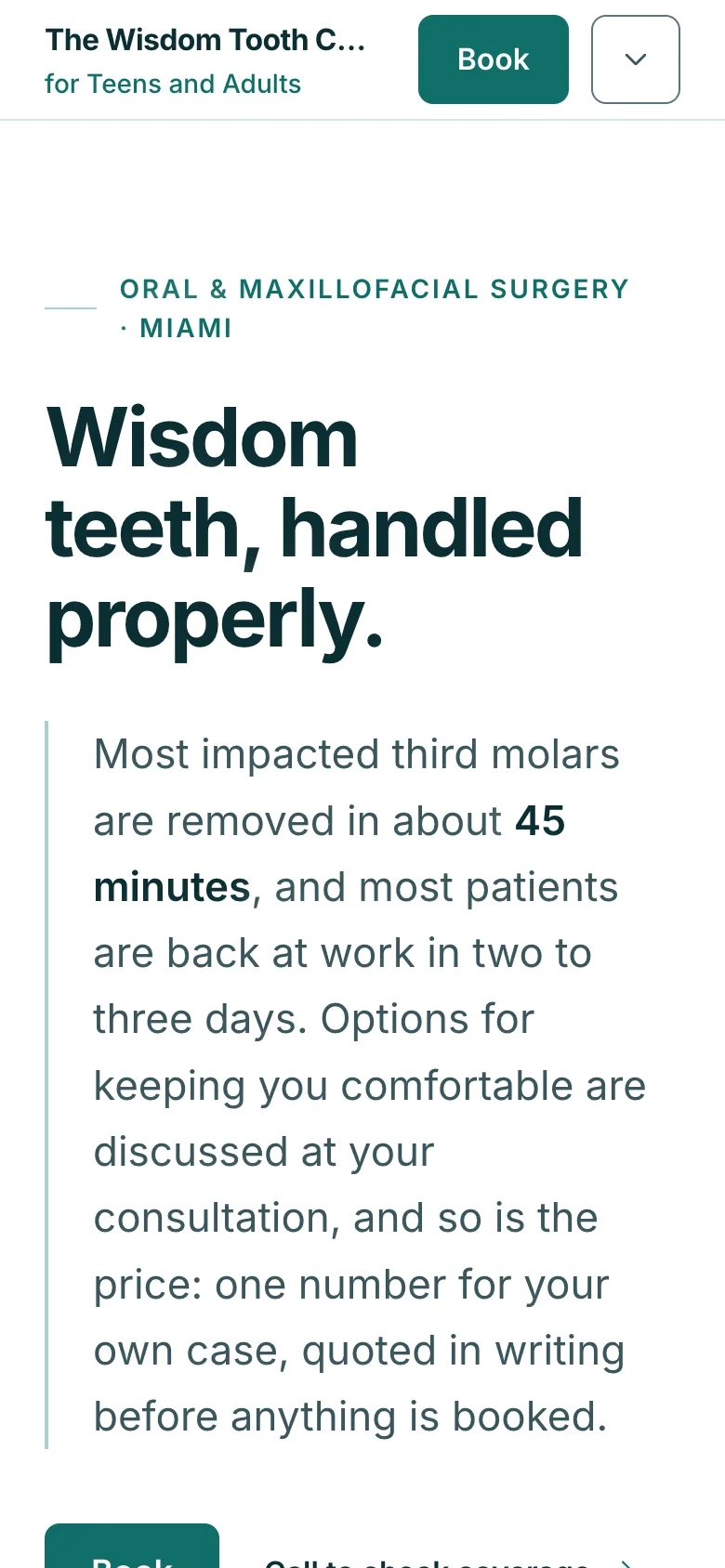
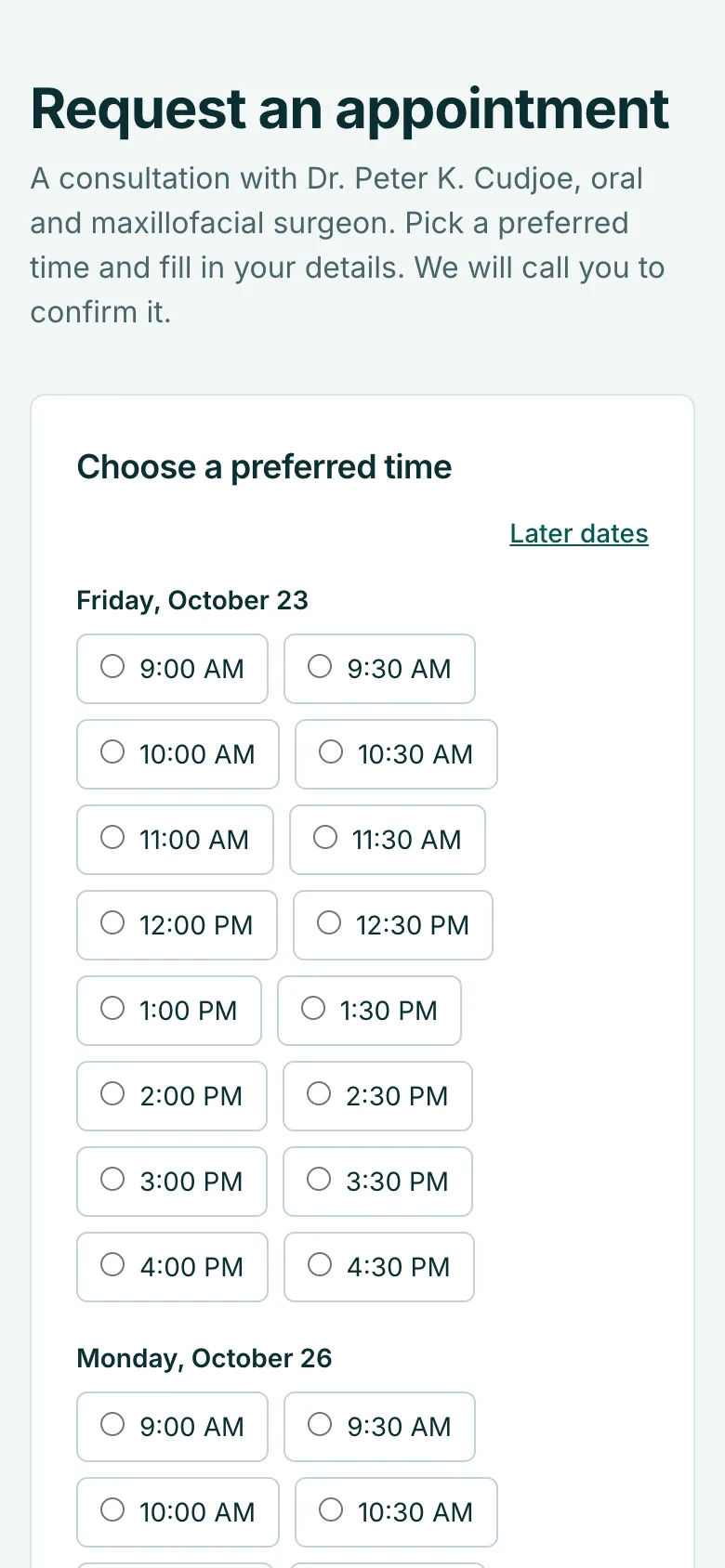
Captured from wisdomtoothclinicmiami.com and the booking app in October 2026. A Book button leads through a quick spam check to the appointment request, where a patient picks a preferred consultation time and the practice calls to confirm it.
Problems worth talking about
47 booking links to a hostname with no DNS
Vendor console drift
The unstaffed clinic that could not exist
Fewer services, truer site
Where it stands
Targets, stated as targets
The build plan sets acceptance gates: booking conversion above 55%, human hand-off under 15%, no-shows under 6%, waitlist fill above 70%, intake completion above 90%, verified across 20 staged calls and 12 emergency transcripts. The practice is newly opened and those are not yet measured, so this page does not report them as results. What we can state is that the site and web appointment requests are live, the voice agent is deployed and answers insurance questions for twelve in-network plans, and the whole platform went from first commit to live booking in 31 days.
Red flags are deterministic code, not model output.
— Zero Front Desk engineering rule
What This Project Does Well
Technologies Used
Next.js App Router, TypeScript strict, Node 22, pnpm and Turborepo monorepo, Supabase Postgres (HIPAA add-on, RLS) and Edge Functions, Vercel Pro with BAA and Vercel Cron, Retell AI, Twilio voice and SMS, Stedi 270/271 eligibility, Cloudflare Turnstile, consent-gated Google Analytics, OpenAI under BAA, Paubox, Dropbox Sign, Brivo access control, Stripe, Open Dental adapter boundary, Vitest, Playwright
Ask AI for a summary of The Wisdom Tooth Clinic by Frenchy Digital.
Open your assistant of choice with the question already written.
Ready to Build Something Similar?
Let's discuss how we can help transform your business with a custom digital solution.