








354 names, one choice
On November 11, 2026, the Claude service partner directory listed 354 companies. Each one is a possible AI agents development company for your project.
That count comes from one vendor program. Other builders are in a different program or in none. The list of possible builders is longer than any buyer can read.
The obvious question is short: which company is the best? I think that it is the wrong question. This guide gives a better one, and a method to answer it.
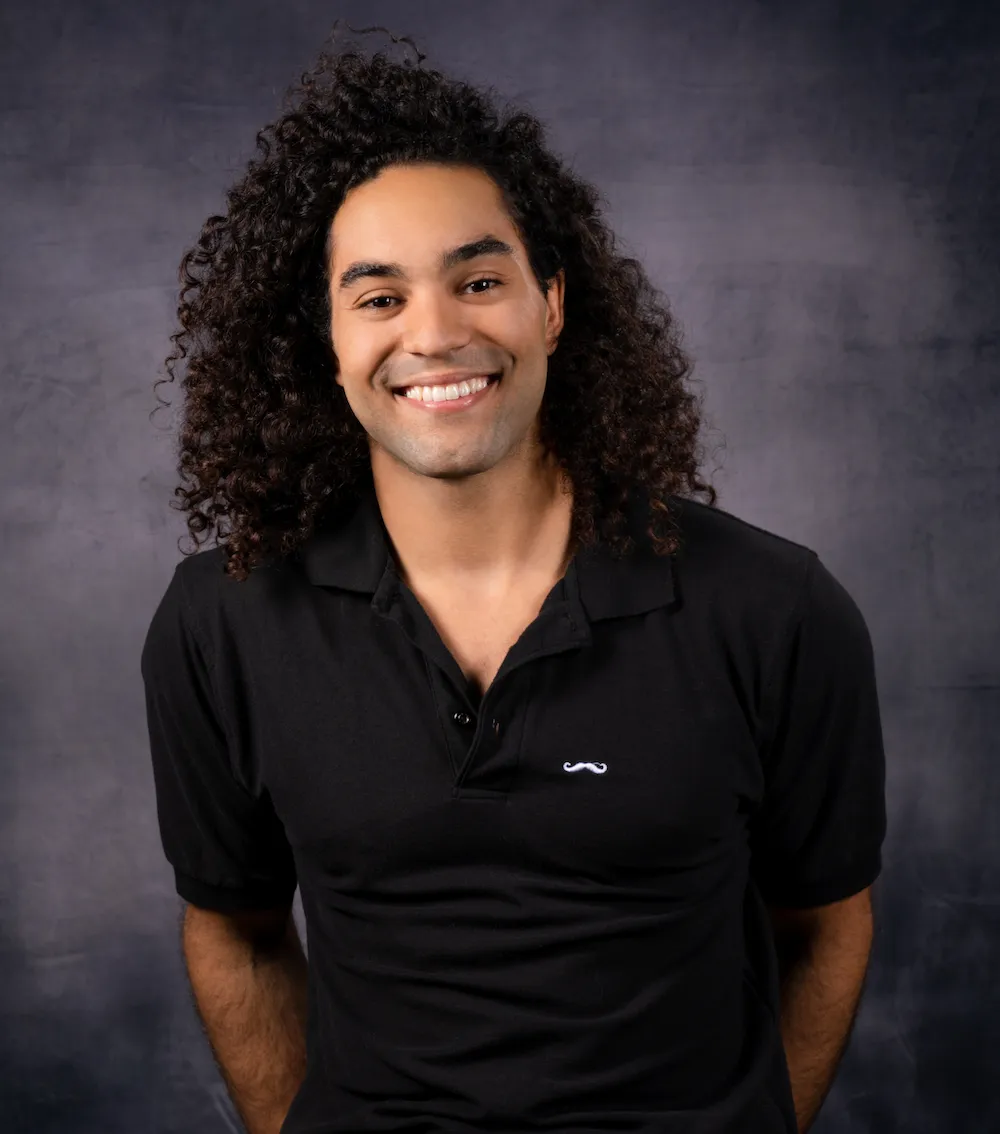
I am Chris Machetto. I run Frenchy Digital, and we build agents for clients. So I have a commercial interest in your choice.
For that reason, I did three things. I ranked eight other companies only on facts that you can check. I did not give my own company a score. I put our offer after the list, with its weak points.
This is the order of the guide. First, a better question and a test of whether you need a company at all. Then six checks that take about one hour for each company, and the ranked list. The guide ends with the proposal, the contract, the warning signs and a plan for this week.
The wrong question
Most buyers select an agent company the way that they select any agency. They look at the logos of past clients, the size of the team and the quality of the demo. That method is reasonable, because it works for many kinds of services.
It works less well here, for one reason. A demo shows that an agent can work one time. It does not show that the agent works on the hundredth unusual case in your data.
A wall of logos has a similar problem. It shows that a company did work for a brand. It does not show what the work was, or if it included an agent.
Think about a used car lot. When a buyer cannot see which cars are good, every seller says that each car is good. The useful signals cost a bad seller too much to fake: an inspection report, a warranty and a written history of repairs.
Agent companies have the same kind of signals. A vendor directory that requires certified people and production customers is one. A published price is another, because the company must then honor it. A contract clause that gives you the code is a third.
A percentage on a home page costs nothing to write. A list of awards costs little more.
Do you need a company at all?
Some buyers do not need an AI agents development company. Anthropic sells the models, and it says this directly in Building effective agents.
When building applications with LLMs, we recommend finding the simplest solution possible, and only increasing complexity when needed. This might mean not building agentic systems at all.
Anthropic, Building effective agents (December 19, 2024)
There are three routes to an agent, and only the last route needs a company like ours.
- 1.Switch on an agent in software that you pay for now.: Check if your help desk or your CRM includes an agent. If it does, test it in draft mode first.
- 2.Build the agent yourself on a no-code platform.: You pay a subscription and you give your own time. The limit is the list of connectors and actions that the platform offers.
- 3.Hire a company to build a custom agent.: You pay for a project and for support after launch. In return, the agent can reach your own systems and follow your own rules.
The full comparison of the three routes, with list prices, is in our guide to AI agents for business. Read it first if you are not sure which route fits.
A company becomes necessary under three conditions. The agent must read or write in a system that no packaged product reaches. The agent must follow a rule that a settings page cannot express. Or you must own the code and the data.
If none of the three is true, stop here. A packaged agent costs less, and you can test it faster.
Five kinds of builder
The word company covers very different organizations. The directory shows the range. Its 17 Global Premier partners include Accenture, Deloitte and Boston Consulting Group. Its 295 Select partners include firms that need only 10 certified people for that tier.
| Kind of builder | Example in this guide | A good fit when | What to check first |
|---|---|---|---|
| Global consulting firm | Accenture, Deloitte and Boston Consulting Group, at the Global Premier tier | The project covers many countries or business units | The names of the people who will build, and the minimum size of a project |
| Large engineering firm | CI&T, Caylent and Bounteous, at the Preferred tier | You need a large team on a cloud platform that you use now | How many of the certified people will work on your account |
| Specialist firm or talent network | A.Team, 28Stone Consulting and Accelerize360, at the Select tier | You need senior builders for one industry or one cloud | Who owns the code, and who supports the agent after the builders leave |
| Small senior-led agency | Frenchy Digital, our own company, not scored | One agent, a fixed budget and direct access to the person in charge | Security attestations, and capacity if the project grows |
| Freelancer | Not ranked in this guide | A narrow prototype, with a technical owner on your side | Continuity, and a signed transfer of the code |
No row is better than the others. Each row fits a task, a budget and a level of risk.
The ranked list below has firms from three of the rows. I left the Global Premier firms out of the ranking. Their size makes them a different purchase, and a score would compare different things.
Do you consider a freelancer or a hire for your own team? I compare those routes in hire an AI agent developer: freelancer, agency or in-house. That article shows the arithmetic of a full salary.
One more distinction is important. A builder and a vendor are different. A vendor sells you a product that it owns. A builder makes something that you own, if the contract says so. This guide is about builders.
Six checks in one hour
These six checks use only public pages. Each check takes about ten minutes. I used the same six checks for the ranked list below, so you can repeat my work.
Check 1: Will a model vendor list them?
Model vendors now publish directories of service partners. Anthropic started the Claude Partner Network on March 12, 2026. It committed an initial $100 million to training, technical support and joint marketing for partners.
On June 3, 2026, it added a Services Track with three tiers and published minimums. Select requires at least 10 active certified individuals and 2 joint customers in production in the past 12 months. It also requires 1 public customer story.
Preferred requires at least 100 certified individuals, 15 deployed customers and 3 public stories. Global Premier requires at least 1,000 certified individuals and 100 deployed customers in three or more regions.
A tier costs effort to get, so it is a real signal. It is also narrow. It shows experience with one family of models, and it says nothing about the quality of one project.
To check, open the directory and search for the name. Read the tier on the profile. Do not rely on a badge on the website of the company.
Check 2: Do they publish a price?
A published price is rare in the two samples that I scored. In my list of eight, one company published a dollar figure. One more company described a pricing model with no figure. Six companies published nothing about price.
A price on a page is useful even when it is not your price. It shows the unit: a project, a month, an engineer or an outcome. It also shows that the company will talk about money before the third call.
To check, look for a pricing page or an FAQ. If you find nothing, ask for a written range on the first call.
Check 3: Can they name a client and say what the agent did?
A useful case study names the client and says what the agent does. It says which systems the agent reads, what it changes and where a person approves.
Some case studies hide the name of the client. A confidentiality clause can require that, so a hidden name is not a fault by itself. But then the description of the agent must be specific.
To check, read the best case study on the site. Count the systems and the actions that it names. Then ask for a reference call with that client.
Check 4: Will you own the code?
This check has a legal reason. Under U.S. copyright law, a commissioned work is a work made for hire only in nine categories. The parties must also sign a written agreement that says so.
Circular 30 of the Copyright Office lists the nine. They include a translation, a compilation, a test and an atlas. Custom software is not on the list by name. The circular adds that a work that fails any requirement is not a work made for hire.
So the usual tool is an assignment. Section 204(a) of the Copyright Act says that a transfer of copyright ownership is not valid unless it is in writing and signed. A sentence on a website does not do that. The contract does.
To check, look for a statement about ownership on the site. Then ask for the clause in writing. This is not legal advice, so give the clause to your lawyer.
Check 5: Can they show a security report?
The AICPA describes SOC as a suite of services that CPAs provide on the controls of a service organization. Its SOC 2 guide notes that customers and business partners often request a SOC 2 report.
A logo in a footer is not a report. Ask for the report or the certificate, under a nondisclosure agreement if necessary. Then read the period and the scope.
Healthcare adds a second document. Under 45 CFR 164.502(e), a covered entity can let a business associate handle protected health information with satisfactory assurances. Those assurances must be in a written contract or other written agreement. That document is the business associate agreement.
Check 6: Do they say how they test the agent?
I give this check the most weight. Anthropic writes that the autonomous nature of agents means higher costs and the potential for compounding errors. It recommends extensive testing in sandboxed environments, with the appropriate guardrails.
A good builder can describe the test. It is a set of real past cases, a pass mark that you set before the run and a new run after each change. I explain that setup in AI agent evaluation and observability.
Also ask about prompt injection. OWASP puts it first, as LLM01, on its 2025 list of risks for LLM applications. No builder can prevent it fully. So ask what the agent can do after it reads text that you do not control.
Eight directory partners, ranked
I took eight companies from the Claude service partner directory and scored them with the six checks. None of them is in our earlier ranking of ten AI agent development companies, so the two lists together cover 18 firms.
How I scored them
Each check gives 0, 1 or 2 points, so the maximum is 12. These are the rules for each check.
- Directory tier.: Preferred gives 2 points. Select gives 1 point.
- Price.: A dollar figure on the website of the company gives 2. A pricing model with no figure gives 1.
- Named case.: A named client on a page that says what the agent does gives 2. An agent case with no client name gives 1. So does a named client on a page that does not say what the agent does.
- Code and IP.: An explicit statement that the client owns the work gives 2. Vague language gives 1.
- Security.: A named SOC 2 Type 2 or ISO 27001 statement gives 2. SOC 2 with no type gives 1.
- Testing.: A stated measurement of the accuracy of an agent gives 2. Guardrails, approvals or oversight with no measurement give 1.
What I excluded. I did not score accuracy, return on investment or any outcome percentage. The company itself is the source of every such number on these sites. I did not use review sites, because I did not check them today. I did not score the size of the team.
When and how. I read every page on November 11, 2026. Ties go to the higher directory tier, then to alphabetical order. To check a score, open the profile in the directory and the pages that I cite.
A score of zero means that I did not find the fact on the pages that I read. It does not mean that the fact does not exist.
| Rank | Company | Tier | Price | Named case | Code and IP | Security | Testing | Total of 12 |
|---|---|---|---|---|---|---|---|---|
| 1 | A.Team | 1 | 2 | 1 | 2 | 2 | 2 | 10 |
| 2 | CI&T | 2 | 1 | 1 | 0 | 2 | 2 | 8 |
| 3 | Accion Labs | 1 | 0 | 1 | 0 | 2 | 1 | 5 |
| 4 | Caylent | 2 | 0 | 1 | 0 | 0 | 1 | 4 |
| 5 | 28Stone Consulting | 1 | 0 | 2 | 0 | 0 | 1 | 4 |
| 6 | Accelerize360 | 1 | 0 | 2 | 0 | 0 | 1 | 4 |
| 7 | Bounteous | 2 | 0 | 0 | 0 | 0 | 1 | 3 |
| 8 | 3Pillar Global | 1 | 0 | 0 | 0 | 0 | 1 | 2 |
A.Team
Senior builders, a public price and a public ownership clause
Suits: buyers who want senior builders on a fixed scope, and who need a SOC 2 Type 2 statement.
What I verified: the directory profile lists A.Team at the Select tier, at 88 University Place in New York. Its forward-deployed engineers page gives a price: roughly $25,000 a month for a senior builder, fully loaded. The same page says that A.Team is SOC 2 Type 2 compliant.
Its AI solutions page has the only explicit ownership statement in the eight. It says that everything it builds belongs to the client and that it retains no rights to any deliverable. The same page says that A.Team measures accuracy continuously.
What I did not find: named agent clients. The case files hide client names and say that details changed. The $25,000 figure is for one engineer, not for a defined agent project. At that rate, three months of one builder is $75,000. The outcome percentages on its home page are its own claims, and I do not use them.
CI&T
Listed engineering firm with an ISO 27001 statement
Suits: large organizations that want a listed company with offices in many regions.
What I verified: the directory profile lists CI&T at the Preferred tier. Its home page says that it is on the New York Stock Exchange as CINT, with more than 8,000 people in over 25 countries. Its about page says that it is ISO 27001 certified.
Its conversational agents page describes content filters, accuracy testing and escalation to a person. Its delivery page states a pricing model that rewards efficiency, not hours, but it gives no figure.
What I did not find: a statement about ownership of client code. The results on its delivery page withhold client names under NDA, so I did not score them. Its site uses two names for its directory status, so check the directory itself. One page states a 95% failure rate for enterprise generative AI with no source. I refuse that number, for the reason in the warning signs section.
Accion Labs
Pittsburgh firm with ISO marks and cloud partner claims
Suits: buyers who use several clouds and want a firm that names ISO certifications.
What I verified: the directory profile lists Accion Labs at the Select tier, in Pittsburgh. The profile has one case study about a 300-step manual workflow that became an automated system. It names no client. The footer of its site shows ISO 27001, ISO 27701 and ISO 9001 marks.
Its technology partners page claims AWS Advanced Tier, Microsoft Gold and Google Cloud partner status. Its Claude services page lists HR requests that AI agents complete, with no client named. It also says that it validates each change before merge.
What I did not find: a price, an ownership statement, a named agent client or a SOC 2 statement. The ISO marks are logos. Ask for the certificates and their scope.
Caylent
AWS partner at the Preferred tier
Suits: companies that run on AWS and want Claude through Amazon Bedrock.
What I verified: the directory profile lists Caylent at the Preferred tier, in Irvine, California. It names Smarsh in a case study about an agentic software lifecycle on Amazon Bedrock and Claude Code. Caylent says on its site that it is an AWS Premier Tier Services Partner.
Its Anthropic practice page gives a schedule but no price. The schedule is three days to scope, two weeks to a prototype and one month to a production build.
What I did not find: a price, an ownership statement or a security attestation on the pages that I read. Those pages do not say in detail what the agents do for Smarsh. Its outcome percentage for Smarsh is a company claim.
28Stone Consulting
New York builder for capital markets, with a named agent case
Suits: capital markets and financial services firms that want a New York builder.
What I verified: 28Stone says that it started in 2011 and has its headquarters in New York. The directory profile lists it at the Select tier. Its Ultumus case study names the client and describes the agent: it reads a design system and builds the screens.
The same page says that the output was not production-ready by itself. People still reviewed, corrected and refined the designs. I like that sentence, because it states a limit.
What I did not find: a price, an ownership statement, a security attestation or a partner status other than the directory. Its throughput multiples are its own claims.
Accelerize360
Salesforce and Snowflake consultancy
Suits: companies with data in Salesforce or Snowflake that want an agent on that data.
What I verified: the directory card calls it a Salesforce and Snowflake consultancy that builds AI agents on reliable data. The profile shows the Select tier. A post on its site names Elite Insurance Partners. It says that Claude Code committed code and opened pull requests, and that changes moved to production only after approval.
That agent helped the developers of Accelerize360 on a client project. The client does not operate it. I scored it as a named case, because the page names the client and says what the agent did.
What I did not find: a location on the profile, a price, an ownership statement or a security attestation. The time savings in the post are its own claims.
Bounteous
Preferred partner with a large certified team
Suits: enterprises that want many certified Claude people and an agent management platform.
What I verified: the directory profile lists Bounteous at the Preferred tier. Its Anthropic page says that Anthropic named it a Preferred Services Partner at launch. The page shows 750+ certified Claude architects. Its Arc page describes guardrails, human approvals, traceability and cost controls in agent workflows.
What I did not find: a named agent client, a price, an ownership statement or a security attestation. Its home page did not load in full for me, so a fact may be there that I missed.
3Pillar Global
Select partner with little public detail
Suits: buyers who will ask for everything on a call and do not need it on a website.
What I verified: the directory profile lists 3Pillar Global at the Select tier. Its old domain sends visitors to 3pillar.ai. The home page describes AIRE, an agentic harness with governance and human oversight at each step.
What I did not find: a location, a named agent case, a price, an ownership statement or a security attestation. Its one public case study is a modernization project with no client name. A low score here means a quiet website. It does not mean poor work.
This list is not a review of the work of these firms. I scored public evidence only, and a sales call can fill most of the gaps.
What the scores show
Add the eight totals: 10, 8, 5, 4, 4, 4, 3 and 2. The sum is 40, so the average is 5.0 of 12. The leader has twice the average.
The columns say more than the rows. Two companies of eight published anything about price. One published a statement that the client owns the code. Three named a security attestation. Two described how they measure the accuracy of an agent.
That matches the result of our earlier ranking of ten other companies. In both samples, price and code ownership were the facts that firms published least. So whoever is on your shortlist, plan to ask for both in writing.
The directory tier did not predict the total. Two of the three Preferred partners scored 4 and 3. The top score went to a Select partner.
A tier measures size and experience with Claude. It does not measure what a firm tells a buyer before the contract. Use the tier as a filter, then use the other five checks to decide.
The sample has one more pattern. Two of the eight firms have a New York address: A.Team in the directory and 28Stone Consulting on its own site. If you need a builder in the city, that is a short list to start with.
How to read a proposal
After the checks, invite two or three companies to a call. Send the same written questions to each one before the call. Compare the written answers, not the conversations.
| Ask this | A good answer | A weak answer |
|---|---|---|
| What will the agent read, and what will it change? | A list of systems, each one with read access or write access | "It integrates with everything" |
| Where does a person approve? | Named actions that wait for approval, such as payments, refunds or messages to many people | "The agent is fully autonomous" |
| How will you test it before launch? | A set of real past cases, a pass mark that we agree first, and a new run after each change | "We test it thoroughly" |
| What happens when the model changes? | The test set runs again before the new model goes live | No answer, or a new contract |
| Who owns the code, the prompts and the data? | The client, through a signed assignment in the contract | A license with no scope and no end date |
| What does it cost after launch? | A monthly figure, plus usage that the client pays to the model provider | Usage with a markup and no figure |
| Who will do the work? | The names and roles of the people on the project | "Our team" |
| How do we stop or leave? | A notice period, a data export and a handover of the code | No exit clause |
The middle column is not a perfect answer. It is the shape of an answer that you can check later.
One answer deserves more attention than the others: the test. If your data is not sensitive, ask each finalist to run its agent on 20 of your past cases before the contract. A company that cannot do that before the contract will not find it easier after.
For the shape of a published result, see our Beyond Points case study. It reports a live run of 30 real searches before beta. The product returned ranked results for 29 of them, with a 0% error rate and a median time of 20 seconds.
The same page says what the team did not measure. It does not quote user counts, bookings or dollars saved, because the product had not opened to the public. That is the kind of limit that I want to see in any proposal.
Also read what the proposal leaves out. A proposal with no line for support after launch hides a cost. A proposal with no line for model usage hides a second cost.
Five terms for the contract
I am not a lawyer, and this is not legal advice. This is the list that I give to the lawyer of a client, so that the review is short.
- 1.A signed assignment of the code.: Name the code, the prompts, the tests and the documentation. The Copyright Act requires a signed writing for a transfer of copyright ownership. A statement on a website is not that writing.
- 2.Access to the repository from the first week.: Ask for the code in an account that you control. Then the handover is a habit, not one event at the end.
- 3.Clear terms for your data.: Write down who can see your data and how long they keep it. Ask each model provider the same question.
- 4.Acceptance tied to the test.: Define acceptance as a pass mark on the agreed test set. Then both sides know when the project is complete.
- 5.An exit.: Include a notice period, an export of the data and the logs, and a handover of the code. If the agent touches protected health information, put the business associate agreement in the same packet.
On the third term, read the policy of the model provider, not only the policy of the builder. For example, the Anthropic privacy center says that by default it does not use inputs or outputs from its commercial products to train its models. That covers its API. The same page says that explicit feedback can change that.
Ask your lawyer about the copyright of code that AI tools help to write. In its January 2025 report, the Copyright Office concluded that AI assistance in the process of creation does not bar copyright. It also said that prompts alone are not enough for protection.
Two of these terms protect you even if the project goes well. Ownership and the exit let you change builders later, with no need to start again.
Warning signs at each step
The full list of ten warning signs is in the checklist for the hire of an AI agent developer. This section adds the signs that I found while I scored the eight companies. They are in the order that you meet them.
- On the website: a market statistic with no source. One site in my sample states that 95% of enterprise generative AI initiatives fail to deliver. That number is in a family of failure rates with no reliable source, and I refuse to print it as fact.
- On the website: outcome percentages with the client names withheld. A confidentiality clause can explain the missing names. It cannot make the numbers checkable.
- In the directory: a tier on the website that is different from the tier in the directory. Trust the directory.
- On the call: a team with no names. Ask who will write the code and who will answer the phone after launch.
- In the proposal: a price before the company asks what the agent must read and write.
- In the contract: a license to your own code, in place of an assignment.
The first sign needs a word of explanation. Three failure rates travel widely in this market: 95% of pilots, 85% of projects and 87% that never reach production. I refuse all three, and I give the reasons in the build versus buy framework. A builder that repeats one of them did not check it.
The law applies to claims that vendors make to businesses, too. On May 21, 2026, the FTC announced proposed orders against Cox Media Group and two other firms. It said that they told small business customers that a special algorithm listened to conversations from smart devices.
The FTC said that the service did not listen to conversations or use voice data at all. The three firms agreed to pay a total of $930,000. On August 27, 2026, the FTC announced that the Commission voted 2 to 0 to approve the final orders.
DLA Piper counted the pattern. Of the last eight such FTC cases, seven involved marketing claims made to other businesses.
The rule is older than these cases. In September 2024, the FTC announced five actions under Operation AI Comply. Its Chair said that there is "no AI exemption from the laws on the books."
A worked example
This is a scenario, not a client. The inputs are plausible, so that you can replace them with your own.
Consider an insurance agency in New York with 40 people. It wants an agent that prepares renewal packets from its agency system and its email. A person reviews each packet before it goes to the client.
Step 1: the three conditions. Assume that no packaged agent reaches the agency system. Then condition one is true, and a company is necessary.
Step 2: the shortlist. The agency selects four names: two from the directory, one New York specialist and one small agency. Six checks at ten minutes each is one hour for each name. Four names take four hours.
Step 3: the written questions. Eight questions to four companies give 32 answers. The agency reads them in one afternoon. Then it invites two companies to a paid test.
Step 4: the test set. The agency collects 150 past renewals and writes down the correct packet for each one. It sets a pass mark of 90% before any run. At 150 cases, 90% allows 15 failures.
Step 5: the budget. Suppose that one finalist is us. Our price is $5,000 plus a $5,000 setup fee, so $10,000 to start. After launch, it is $2,500 a month. Year one is $40,000 plus usage, and each later year is $30,000 plus usage.
Check the year one figure: $10,000 plus 12 months at $2,500 is $40,000. Three years cost $40,000 plus $30,000 plus $30,000, which is $100,000 before usage.
Now compare the A.Team figure for one senior builder, roughly $25,000 a month. Three months of one builder is $75,000. The two numbers buy different things, so compare the scope, not only the total.
The agency now has four facts for each finalist: the six checks, the written answers, the test result and the cost for three years. That is enough to decide. In this scenario, the work takes about one week of part-time effort.
Is your company in New York? Our team for AI agent development in New York can help with the shortlist and the test set.
The disclosed pick: Frenchy Digital
This section is an advertisement, and I label it that way. Frenchy Digital is my company. I did not score it in the list above, because a company cannot score itself fairly.
Our disclosed pick: Frenchy Digital
These are the facts that you can check. We started to operate in 2016. An agent from us costs $5,000 plus a $5,000 setup fee, so $10,000 to start. After launch, it costs $2,500 a month.
You pay model usage directly to the provider, so usage has no markup from us. Year one costs $40,000 plus usage. Each later year costs $30,000 plus usage.
We sign business associate agreements with healthcare clients. We hold no SOC 2, ISO 27001 or HITRUST attestation. If your procurement requires one of those, select a company that has one, such as A.Team or CI&T from the list above.
Our public agent evidence is the Beyond Points case study. It shows a confirmation step before each transfer, booking, payment and cancellation. It also shows a published live run and an audit of claims that the product made.
Where we fit: one agent, a fixed budget and direct access to me. Where we do not fit: a program across many countries, or a procurement process that requires an attestation.
On the six checks, judge us yourself. Our price is on this page. Ask us for the ownership clause and the test plan in writing, the same as for any other company.
To talk about your shortlist, book a discovery call. If a packaged agent or a different builder fits better, I will say so.
Limitations
This is what I did not verify, or decided not to use as evidence.
- I scored eight companies from one vendor directory. Firms that work mostly with other models do not appear in it.
- I read each site on November 11, 2026, and only a few pages of each site. A zero means that I did not find the fact on those pages.
- The directory page shows only a preview of each tier. I could not read the full lists of 42 Preferred and 295 Select partners.
- I did not check review sites today, so no entry shows a rating.
- I could not open the Gartner and OpenAI pages that I planned to cite, because they refused automated access. I used no facts from them.
- Every outcome percentage on the sites of the companies is a claim of the company. I did not test any of them.
- The worked example is a scenario with assumed inputs, not a client.
- I am not a lawyer. The legal points are a list for your lawyer, not advice.
One fact gives context to all of this. The Census Bureau put AI use at 19.8% of U.S. businesses as of May 3, 2026. The market for builders is young, and public evidence is still thin. Expect the scores in this guide to change as firms publish more.
Three tasks for this week
- 1.Write down the task and check the three conditions. If none is true, test a packaged agent first.
- 2.Select four names. Run the six checks on each name and write down the score.
- 3.Send the eight written questions to the top two or three. If your data allows it, ask each one to run on 20 past cases.
Then compare the written answers side by side. The difference between the companies is easier to see on paper than on a call.
Start with the task.
Which Builder Is Right for Your Task?
Book a discovery call with Frenchy Digital, a senior-led, Black-owned agency in Los Angeles. Bring your task and your shortlist. We will run the six checks with you. If a different builder fits better, we will tell you.
Do You Want a Second Opinion on Your Shortlist?
Book a discovery call. Bring your task and the names on your shortlist. We will run the six checks with you, and we include our own weak points.
1517 S Bentley Ave Suite 204, Los Angeles CA 90025
Frequently Asked Questions
Sources & References
- 1Claude: Service partners directory (checked November 11, 2026)↗
- 2Anthropic: Claude Partner Network announcement (March 12, 2026)↗
- 3Anthropic: Services Track and Partner Hub of the Claude Partner Network (June 3, 2026)↗
- 4Claude Partner Hub: A.Team profile↗
- 5A.Team: AI solutions↗
- 6A.Team: Hire forward deployed engineers↗
- 7A.Team: Case files↗
- 8Claude Partner Hub: CI&T profile↗
- 9CI&T: About us↗
- 10CI&T: How we deliver↗
- 11CI&T: AI conversational agents↗
- 12Claude Partner Hub: Accion Labs profile↗
- 13Accion Labs: Claude enterprise services↗
- 14Accion Labs: Technology partners↗
- 15Claude Partner Hub: Caylent profile↗
- 16Caylent: Anthropic consulting and engineering↗
- 17Claude Partner Hub: 28Stone Consulting profile↗
- 1828Stone: Building an agentic design workflow with Claude Code for Ultumus↗
- 1928Stone: About us↗
- 20Claude Partner Hub: Accelerize360 profile↗
- 21Accelerize360: How we cut application development time in half using Claude Code↗
- 22Claude Partner Hub: Bounteous profile↗
- 23Bounteous: Anthropic partnership↗
- 24Bounteous: Bounteous Arc↗
- 25Claude Partner Hub: 3Pillar Global profile↗
- 263Pillar: Home page↗
- 27U.S. Copyright Office: Circular 30, Works Made for Hire (revised August 2024, PDF)↗
- 28Cornell LII: 17 U.S. Code 204, Execution of transfers of copyright ownership↗
- 29U.S. Copyright Office: Part 2 of the Artificial Intelligence report, copyrightability (January 29, 2025)↗
- 30Cornell LII: 45 CFR 164.502, Uses and disclosures of protected health information↗
- 31AICPA and CIMA: System and Organization Controls, SOC suite of services↗
- 32AICPA and CIMA: SOC 2 reporting on an examination of controls at a service organization↗
- 33Anthropic Privacy Center: Is my data used for model training?↗
- 34Anthropic: Building effective agents (December 19, 2024)↗
- 35OWASP GenAI Security Project: Top 10 for LLM applications↗
- 36FTC: FTC announces crackdown on deceptive AI claims and schemes (September 25, 2024)↗
- 37FTC: Cox Media Group and two other firms to pay nearly $1 million to settle charges (May 21, 2026)↗
- 38FTC: FTC finalizes orders with Cox Media Group and two other firms (August 27, 2026)↗
- 39DLA Piper: FTC AI washing action underscores enforcement in business to business context (May 26, 2026)↗
- 40U.S. Census Bureau: AI use at U.S. businesses, Business Trends and Outlook Survey (May 26, 2026)↗
Related Articles You May Find Helpful
- Top 10 AI Agent Development Companies 2026: #1 Frenchy Digital
- 10 Red Flags When Hiring an AI Agent Developer
- Hire an AI Agent Developer: Freelancer vs Agency vs In-House
- How Much Does an AI Agent Cost in 2026?
- No Code AI Agents: What They Can Do and When to Move to Code
- AI Agents Near Me: How to Find an AI Agent Builder in New York