









Évian-les-Bains: A Thermal Spa Town on Lake Geneva
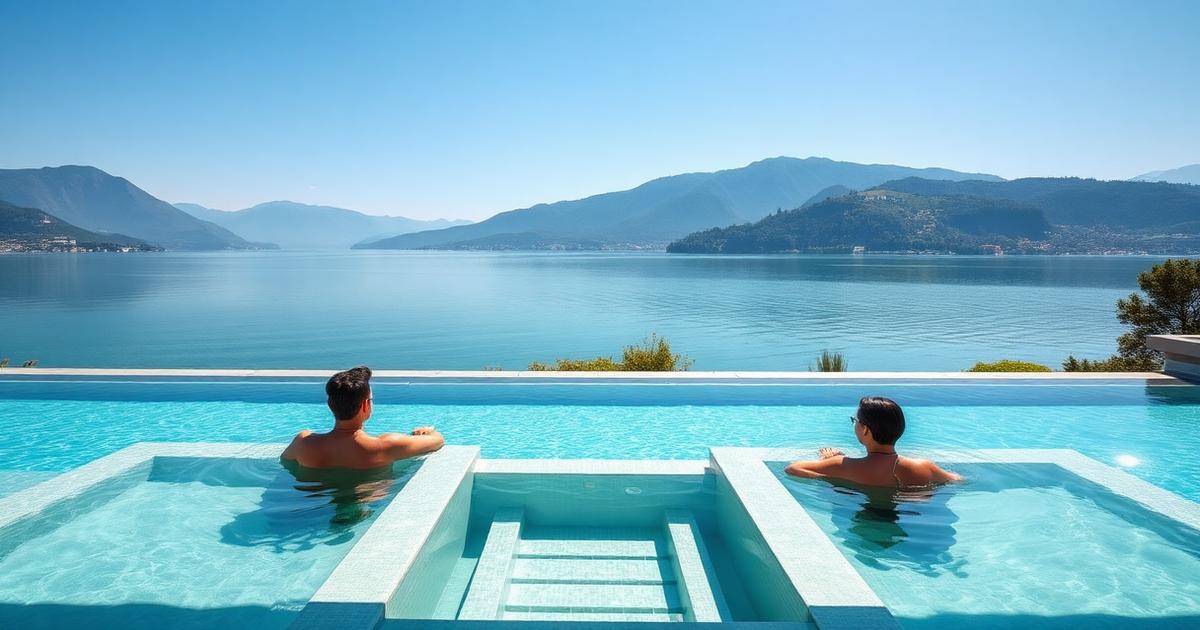
Évian-les-Bains sits on the southern, French shore of Lake Geneva (Lac Léman) in the Haute-Savoie department of eastern France, in the shadow of the French Alps and a short crossing from Switzerland. Long before it became a globally recognized bottled-water brand, it was a spa town in the traditional European sense: a place people traveled to specifically to take the waters. That history matters for anyone building a digital product for the destination, because the app isn't just competing with generic hotel booking apps; it's representing more than two centuries of wellness heritage to a clientele that expects the brand experience to feel as considered as the physical one.
The town's identity as a wellness destination dates to 1789, when the Marquis de Laizer discovered the therapeutic properties of a local spring, later named the Cachat spring after the owner of the garden it flowed through. The first thermal baths opened in 1806, a mineral water company and bottling operation followed in the 1820s, and in 1878 the French Academy of Medicine formally recognized the water's therapeutic properties: a credibility milestone that helped cement Évian's reputation. The town officially adopted the name "Évian-les-Bains" in 1865 to emphasize its status as a spa resort, and the ornate thermal baths building that opened in 1902 during the town's Belle Époque boom still stands today, now serving as the Palais Lumière cultural center.
Today, Évian-les-Bains is home to Les Thermes Évian (the town's original thermal baths) and to the privately owned Evian Resort, which includes two hotels with dedicated spas (the Hôtel Royal and Hôtel Ermitage) along with the Evian Resort Golf Club. That golf course hosts The Evian Championship, currently one of the LPGA Tour's major championships, drawing an international field and audience to the town every July. The combination of a historic public thermal-cure tradition, a modern private luxury resort, championship-level sport, and Michelin-recognized dining (Hôtel Royal's Les Fresques holds a Michelin star) is what makes Évian's wellness tourism market distinctive, and what a serious digital platform for the destination needs to reflect, rather than treating it as a generic hotel-and-spa template.
The Luxury Wellness Tourism Boom
Wellness tourism is one of the fastest-growing segments of global travel, and the numbers back up why destinations like Évian-les-Bains are investing in better digital infrastructure rather than resting on heritage alone. According to the Global Wellness Institute, global wellness tourism expenditure reached approximately $894 billion in 2024, up roughly 13.8% from 2023, one of the fastest growth rates across the entire wellness economy, with spending projected to exceed $1 trillion by 2029. The broader global wellness economy, which includes wellness tourism alongside spas, beauty, nutrition, and fitness, grew 7.9% in the same period to reach a new peak of $6.8 trillion.
Supply is scaling to match demand: the Global Wellness Institute counted 201,861 spas worldwide in 2024, up from 175,482 in 2019, growth of roughly 15% in five years. For an established spa town like Évian, that growth is both an opportunity and a competitive pressure. Guests choosing a wellness trip increasingly compare not just treatment menus and thermal water pedigree, but the ease of researching, booking, and managing an entire multi-day wellness itinerary digitally, often against newer resorts elsewhere that were built with a mobile-first booking experience from day one.
- Heritage alone isn't enough: A historic thermal-cure pedigree earns trust, but guests still expect 2026-grade digital convenience (real-time availability, mobile payments, and instant confirmations) regardless of how old the springs are.
- The guest is increasingly international: A Lake Geneva destination draws visitors from across Europe, the Gulf, and North America, which raises the bar for multilingual support, currency handling, and time-zone-aware booking.
- Wellness spending skews toward experience, not just treatment: Modern wellness travelers plan around a full itinerary (spa, cuisine, activity, rest), which is exactly what a unified app can coordinate and a patchwork of separate booking pages cannot.
What Luxury Guests Expect From a Digital Experience Today
Mobile has become the default channel through which travelers research and book stays, and luxury guests are no exception. Industry booking data shows mobile devices now drive a majority of hotel bookings (around 58% or more in 2025, and considerably higher in some markets), and mobile-optimized booking experiences convert meaningfully better than desktop-only alternatives. For a luxury operator, the practical implication is straightforward: if the booking and guest-service experience isn't excellent on a phone, a meaningful share of prospective guests will simply have a worse first impression of the brand before they ever arrive.
Luxury travelers specifically have less patience for friction than the average traveler. Recent hospitality research finds that a significant share of luxury guests expect not to wait in line at all (for check-in, for a table, for a treatment start time), which puts real pressure on the reliability of whatever system is coordinating those moments behind the scenes. Hotels with well-integrated guest apps have reported measurable gains in guest satisfaction scores, and features like mobile check-in, digital room keys, and in-app service requests have moved from novelty to baseline expectation across the luxury segment.
For a thermal spa and Alpine resort destination, this translates into a specific set of guest expectations: browsing and booking a multi-day treatment protocol before arrival, receiving personalized pre-arrival guidance (what to bring, contraindications, timing recommendations), managing dining and activity reservations from one place, and having a direct concierge channel for last-minute requests, all without needing to call the front desk or juggle separate confirmation emails from the hotel, the spa, and the golf club.
Core Features of a Thermal Spa & Resort App
A luxury wellness app for a destination like Évian needs to go well beyond a basic appointment calendar. The core feature set typically spans discovery, booking, the on-property stay, and post-visit relationship management.
Guest-Facing Feature Set
- Treatment & wellness journey booking: Real-time availability across therapists, treatment rooms, and thermal facilities, with support for multi-day protocols and package pricing, not just single appointment slots.
- Digital intake and consultation forms: Secure, GDPR-compliant health and preference questionnaires completed before arrival, so therapists have what they need without guests re-answering the same questions on-site.
- Room booking and mobile digital key: Integrated hotel reservations with mobile check-in/checkout and NFC or Bluetooth-based digital room keys, removing physical key cards entirely.
- Dining and activity reservations: Restaurant bookings (including Michelin-level dining that requires careful table and timing management), golf tee times, and lake or Alpine activity scheduling in the same itinerary view.
- Concierge messaging: A direct, in-app channel to guest services for requests, changes, and recommendations, replacing phone calls and reducing front-desk load during peak season.
- Personalized itinerary and wellness tracking: A day-by-day view of a guest's stay (treatments, meals, activities) with the ability to reschedule, and optional wellness-journey summaries guests can revisit after checkout.
Beneath the guest-facing surface, an admin and operations layer is just as important: therapist and staff scheduling, real-time inventory across treatment rooms and thermal facilities, package and membership management, and reporting that lets management see occupancy and treatment-utilization trends across the property, the operational backbone that makes the guest-facing promises actually deliverable.
Alpine Resort Systems: Beyond the Spa
Évian-les-Bains sits at the intersection of lake and mountain, and a true resort platform for the destination needs to account for both. Beyond the thermal spa itself, an Alpine luxury resort ecosystem typically spans multiple properties, a golf course, lake-based activities, and often nearby ski access in the surrounding Haute-Savoie mountains during winter, each with its own booking rhythm and seasonal demand pattern.
Multi-property coordination is the defining technical challenge here. When a brand operates more than one hotel, as Evian Resort does with the Hôtel Royal and Hôtel Ermitage, a guest app needs a shared identity and loyalty layer so a guest's profile, preferences, and history follow them regardless of which property they're staying at, alongside property-specific booking logic (each hotel may have different room types, dining venues, and spa access rules). Golf adds another layer of complexity: tee-time systems tend to run on their own specialized software, particularly for a championship-caliber course that hosts a major professional tournament and needs to manage member play, guest play, and tournament blackout dates without conflicts.
| System | Primary Function | Integration Challenge |
|---|---|---|
| Property Management System (PMS) | Room inventory, rates, reservations, housekeeping status | Needs a real-time API so the guest app never shows a room as available that's already booked |
| Spa Management Software | Therapist scheduling, treatment room inventory, intake records | Must securely share only booking availability with the guest app while keeping health-related intake data access-controlled |
| Golf Tee-Time System | Course scheduling, member vs. guest play, tournament blackout dates | Often a specialized, less modern system with limited API support, requiring custom integration work |
| Restaurant Reservation System | Table availability, seating time management for fine dining | Needs tight timing coordination with spa and activity schedules to avoid conflicting bookings |
| Loyalty & CRM | Guest profiles, preferences, stay history across properties | Must unify guest identity across every other system so preferences and history follow the guest everywhere |
Seasonality compounds all of this. A destination that draws summer lake tourism, a July golf major, and shoulder-season wellness retreats needs a booking and staffing system flexible enough to handle sharply different demand curves throughout the year: something a rigid, single-purpose booking tool typically can't do well, but a custom-built platform can be designed around from the start.
Data Privacy, Health Data, and Compliance
Because the app is built for a French destination serving European and international guests, GDPR compliance isn't optional, and for a wellness and spa platform, it carries extra weight compared to a standard hotel app. GDPR applies to any organization processing the personal data of people in the EU, regardless of where the guest is a citizen of or where the company building the app is headquartered, and it grants guests concrete rights: to know what data is held about them, to request corrections or deletion, and to receive a copy of their stored data within 30 days of a request.
The part that matters most for a thermal spa specifically is what GDPR calls "special category" data: information about health, and by extension the allergies, mobility limitations, cardiovascular conditions, pregnancy status, or skin sensitivities a guest discloses on a spa intake form to make sure a treatment is safe for them. This category requires explicit, separately obtained consent (not just an accepted terms-of-service checkbox), encryption of that data both in transit and at rest, strict role-based access so only the therapists and staff who need it can see it, and a documented lawful basis for why it's being processed at all. Hotels and spas must also sign a Data Processing Agreement with every third-party vendor that touches guest data, and are required to notify the relevant supervisory authority within 72 hours of a data breach that poses risk to guests, with direct notification to affected guests when the risk is high.
A spa intake questionnaire is not just a form: under GDPR, it's a health data collection point that requires its own consent flow, its own access controls, and its own security posture, separate from the rest of the booking experience.
Payment handling brings a second compliance layer: PCI DSS, the industry standard governing how card data is captured, transmitted, and stored. For a luxury platform handling large deposits and multi-night packages, the practical approach is almost always to route payments through a PCI-compliant processor and store only tokenized payment references in the app's own database, rather than handling raw card numbers directly, reducing both compliance scope and breach risk. Together, GDPR and PCI DSS aren't obstacles to a good guest experience; they're the baseline that lets a luxury brand credibly promise discretion and security to a clientele that expects exactly that.
Technology Stack and Architecture Choices
The right technical architecture for a luxury wellness platform balances guest-facing polish with the reliability needed for a 24/7 hospitality operation. For the mobile guest app, a cross-platform framework such as React Native is typically the most efficient route to native iOS and Android apps from a shared codebase, covering booking, itinerary management, push notifications, and messaging. Native modules are then used selectively where the platform genuinely requires them: NFC-based digital room keys being the clearest example, since that functionality depends on deeper hardware-level access than a purely cross-platform layer reliably provides.
Because not every prospective guest will download an app before booking, a companion web app or progressive web app usually sits alongside the native app, covering spa menu browsing, room and treatment booking, and initial reservations from any browser, with the native app taking over for on-property features like the digital key and concierge messaging once a stay is confirmed. On the backend, the priority is a real-time, API-first architecture that can talk cleanly to the PMS, spa management software, and other third-party systems described above, with a unified booking and inventory layer preventing the double-booking and coordination failures that plague resorts running four disconnected reservation systems.
AI has a genuine, practical role here too, not as a gimmick, but for things like matching a guest's intake profile to appropriate treatment recommendations, powering a concierge chat that can answer common questions instantly before escalating to a human, and generating personalized pre-arrival guidance based on a guest's booked itinerary. Frenchy Digital's MVP development approach for hospitality clients typically starts with the highest-value guest journey, usually spa and room booking, validated with real guests before expanding into the fuller multi-property ecosystem described in the previous section.
Development Costs and Timelines for 2026
Luxury wellness and Alpine resort platforms vary widely in cost depending on scope, the number of properties involved, and how deep the third-party integrations run. The following ranges reflect what a project like this realistically costs to build well in 2026, based on Frenchy Digital's own estimating framework for hospitality and wellness clients. Treat them as planning ranges, not fixed quotes, since every property's existing systems and ambitions differ.
| Tier | Scope | Estimated Cost | Typical Timeline |
|---|---|---|---|
| Spa & Wellness Booking MVP | Treatment booking, guest intake forms, room reservations, basic concierge messaging for a single property | €200,000: €350,000 | 3-4 months |
| Full Resort Guest Experience Platform | Adds mobile digital key, dining reservations, loyalty integration, personalized itinerary, and deeper PMS integration | €350,000: €550,000 | 5-7 months |
| Multi-Property Alpine Resort Ecosystem | Multiple hotels, golf tee-time integration, unified cross-property loyalty, AI concierge, full admin/operations suite | €550,000: €800,000+ | 8-12+ months |
A few factors reliably push costs toward the higher end of each range: integrating with legacy, on-premise property management or spa management systems that lack modern APIs; supporting more than two or three languages with fully localized content and support flows; and building bespoke design work to match an established luxury brand identity rather than adapting a template. Conversely, starting with a tightly scoped MVP focused on the single highest-value guest journey, typically spa and room booking together, and expanding from there based on real guest usage is usually the fastest way to reach a working, revenue-generating platform without overbuilding features guests may not actually use.
Why Frenchy Digital for Luxury Wellness App Development
Frenchy Digital builds mobile apps, web apps, and AI-integrated products for hospitality, wellness, and tourism brands alongside its broader startup and enterprise work, the exact combination a project like a thermal spa and Alpine resort platform requires: real-time booking systems that unify multiple specialized third-party systems, GDPR-compliant handling of sensitive guest intake data, PCI-compliant payment flows for high-value packages, and guest-facing design polished enough to match a luxury brand's expectations rather than a generic booking template.
Frenchy Digital is headquartered in Los Angeles, with international teams in Geneva, Switzerland and Paris, France, giving a project based on the French shore of Lake Geneva a team with genuine regional proximity and time-zone overlap alongside US-based engineering hours, which matters when a project spans property teams on the ground in Haute-Savoie and coordination with an agency working across time zones. Whether the goal is a focused spa booking MVP, a full guest experience platform, or a multi-property Alpine resort ecosystem, Frenchy Digital's MVP development and startup consulting services scope the right starting point before committing to a full build, and a security audit is available for properties that already have a booking system but need to verify it meets GDPR and PCI DSS standards before scaling.
Ready to build a wellness platform worthy of a destination like Évian-les-Bains? Schedule your free discovery call and get a scoped plan for your thermal spa, hotel, or Alpine resort app.
Ready to Build Your Luxury Wellness Platform?
Get a scoped plan and realistic cost estimate for your thermal spa, Alpine resort, or wellness tourism app in 3-5 business days.
1517 S Bentley Ave Suite 204, Los Angeles CA 90025