






Introduction: The Digital Space Revolution
Space exploration has entered a new era, not just technologically, but in how humanity experiences it. NASA's digital transformation, spearheaded by the NASA+ streaming platform and Virtual Guest Program, represents one of the most ambitious public engagement initiatives in the agency's history.
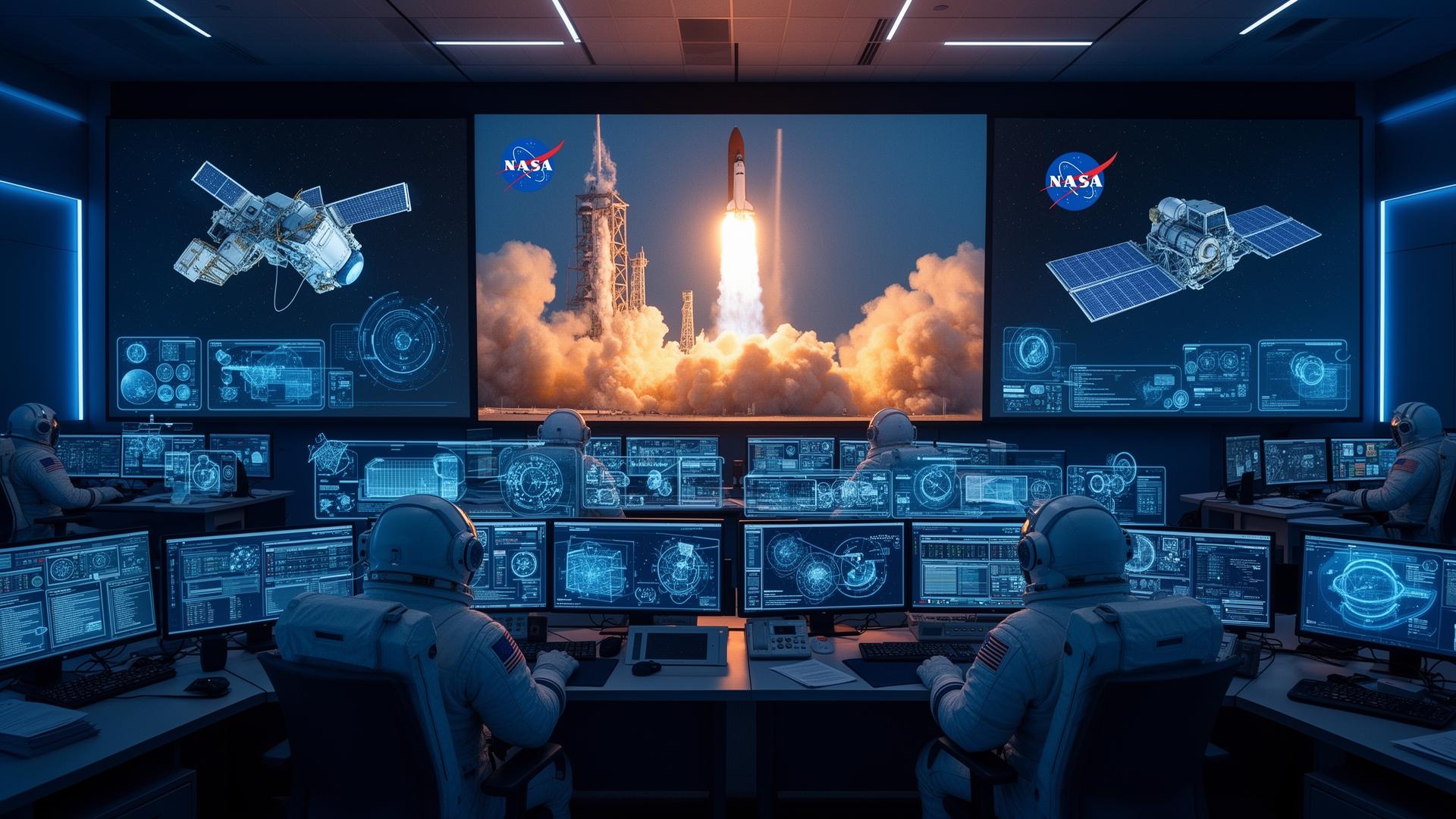
With over 30 million monthly viewers and 300 million annual streams, NASA has successfully democratized access to space exploration. From the Artemis missions returning humans to the Moon to the James Webb Space Telescope's cosmic discoveries, millions now experience these historic moments in real-time through sophisticated digital platforms.
For mobile app developers and enterprise technology leaders in Los Angeles and globally, NASA's digital ecosystem offers invaluable lessons in building engagement platforms that scale, captivate audiences, and deliver mission-critical real-time content.
Key Achievement
NASA+ reached 5 million concurrent viewers during the Artemis I launch, more than many Super Bowl streaming events. This demonstrates the massive appetite for authentic, educational content when delivered through exceptional digital experiences.
The Digital Imperative: Why NASA Embraced Streaming
NASA's transformation from traditional broadcast partnerships and physical visitor programs toward comprehensive digital platforms reflects strategic recognition that public engagement fundamentally determines the agency's future when taxpayer funding requires political support that understanding and enthusiasm enable sustaining.
Enterprise Digital Transformation Initiative
Launched in 2020 as outlined in the 2022 NASA IT Strategic Plan (Goal 3), the Enterprise Digital Transformation initiative targets mission acceleration, discovery enhancement, decision-making improvement, and operations optimization through federated models using open interfaces and automation.
Enterprise DT Core Areas
- Mission Acceleration: Faster project execution through automation
- Discovery Enhancement: Advanced analytics improving scientific outcomes
- Decision-Making Improvement: Data-driven insights across directorates
- Operations Optimization: Cost reduction while improving efficiency
The federated model enables progress across ten NASA directorates including Aeronautics Research, Exploration Systems Development, Science, and Space Operations: centralized mandates would prove ineffective given NASA's organizational complexity requiring distributed innovation that center-specific needs accommodate.
Broadcast Television Limitations
Traditional network coverage of space missions dramatically declined from the Apollo era when launches dominated primetime, through the Space Shuttle period when routine operations proved less newsworthy, toward the current reality where commercial networks provide minimal coverage excluding major milestones.
This reduction reflects broader television industry transformation: cable fragmentation and streaming disruption created hundreds of channels competing for audiences whose attention television no longer monopolizes when digital alternatives prove infinitely abundant.
Global Audience Democratization
NASA increasingly recognizes that space exploration proves an international endeavor requiring cooperation transcending national boundaries: a reality that the International Space Station partnership exemplifies when fifteen nations collaborated and the Artemis lunar program involves international partners whose domestic populations require understanding and supporting that engagement demands.
Cost Efficiency & Sustainability
Traditional physical visitor programs and broadcast partnerships prove expensive requiring substantial staff supporting modest audiences. Kennedy Space Center Visitor Complex accommodates thousands daily while virtual programs reach millions simultaneously: marginal cost per additional viewer approaches zero versus physical visitors whose incremental costs remain substantial.
NASA's Technology Foundation: Core Systems
Understanding NASA's digital ecosystem requires examining the foundational technologies that public-facing applications depend upon: infrastructure that decades of investment and expertise created enabling capabilities that surface simplicity belies underlying complexity.
Drupal CMS Architecture (Legacy)
NASA leveraged Drupal as its core content management system powering NASA.gov and numerous mission-specific websites including NASA Science domains from 2013 through much of the 2020s. The Drupal implementation enabled:
- Scalable Data Presentation: Handling massive datasets from Earth observation satellites, planetary missions, and research programs requiring dynamic visualization
- Multi-Site Management: Operating dozens of interconnected websites across NASA centers through unified platform
- API-First Architecture: REST and GraphQL APIs enabling mobile applications and third-party integrations
- NASA Science on Drupal Central: Supporting Earth Science Data and Information System (ESDIS)
WordPress Transition (2023)
NASA transitioned from Drupal to WordPress in late 2021 following a modernization effort detailed in NASA's 2022 IDEA Act report, launching the new platform with the Horizon Design System (HDS) by April 2023 for www.nasa.gov and science.nasa.gov.
| Aspect | Drupal Era | WordPress Era |
|---|---|---|
| Platform | Drupal 7/8 on AWS | WordPress with HDS |
| Pages Managed | 250,000+ across sites | Consolidated architecture |
| Design System | Custom per-site | Unified HDS components |
| Training | Developer-focused | LearnDash integration |
OpenStack Cloud Computing
NASA co-developed the OpenStack infrastructure-as-a-service platform through the Nebula project at NASA Ames Research Center: technology that now powers millions of compute cores globally when major cloud providers and enterprises adopted what NASA's contribution initiated.
Notable NASA open-source releases at code.nasa.gov and software.nasa.gov include:
- OpenStack: Cloud computing platform powering millions of global compute cores
- WorldWind: 3D interactive virtual globe (preceded Google Earth)
- Traffic Management Advisor: Air traffic optimization algorithms
- MESSENGER Image Processor: Planetary mission data processing tools
Google Cloud AI/ML Partnership
NASA partnered with Google Cloud for AI and machine learning infrastructure providing training, dashboards, and project management through NASA STEM Gateway: computational demands of modern space science require analyzing petabytes of satellite imagery, processing deep space communications, and modeling complex systems.
Earthdata Cloud Distribution
NASA increasingly adopts cloud infrastructure for Earth Science data distribution through Earthdata Cloud enabling researchers to access massive datasets without downloading hundreds of terabytes: computation moves to data rather than data moving to computation.
Delay-Tolerant Networking (DTN)
NASA pioneered networking protocols accommodating communications delays that interplanetary distances create: light-speed limitations impose minutes or hours latency that terrestrial internet protocols cannot tolerate. Consultative Committee for Space Data Systems (CCSDS) standards ensure compatibility across agencies and missions.
Security Implementation
NASA applies Continuous Diagnostics and Mitigation (CDM) tools for real-time vulnerability scanning and management integrated with federal dashboards. Additional measures include:
- Drupal Security Kit (SecKit): Blocking XSS, CSRF, and session hijacking
- Database Abstraction: Preventing SQL injection attacks
- Role-Based Access Controls: Granular permissions with MFA
- Immutable Production Code: Write-protected live environments
- Security Operations Centers (SOC): Rapid phishing response
NASA+ Platform Analysis
Platform Overview
Launched in November 2023, NASA+ represents the agency's commitment to making space exploration accessible to everyone. Unlike traditional streaming services, NASA+ is completely free and ad-free, a rare approach that prioritizes public education over monetization.
Available Platforms
- iOS App: Native iPhone and iPad applications with AR features
- Android App: Full-featured Android experience with widget support
- Web: Responsive web application at plus.nasa.gov
- Connected TV: Roku, Apple TV, Fire TV, Android TV apps
- Gaming Consoles: PlayStation and Xbox applications
Content Categories
Live Coverage
Real-time rocket launches, spacewalks, mission updates, and press conferences with expert commentary.
Original Series
Documentary series exploring missions, astronaut training, and behind-the-scenes at NASA facilities.
Educational Content
STEM-focused programming for students, teachers, and lifelong learners.
Archive Access
Historic footage from Apollo, Space Shuttle, and early space exploration eras.
Technical Excellence
NASA+ delivers 4K HDR streaming during major events, with adaptive bitrate technology that adjusts quality based on connection speed. The platform handles massive traffic spikes: scaling from thousands to millions of concurrent viewers within minutes during launches.
Virtual Guest Program Deep Dive
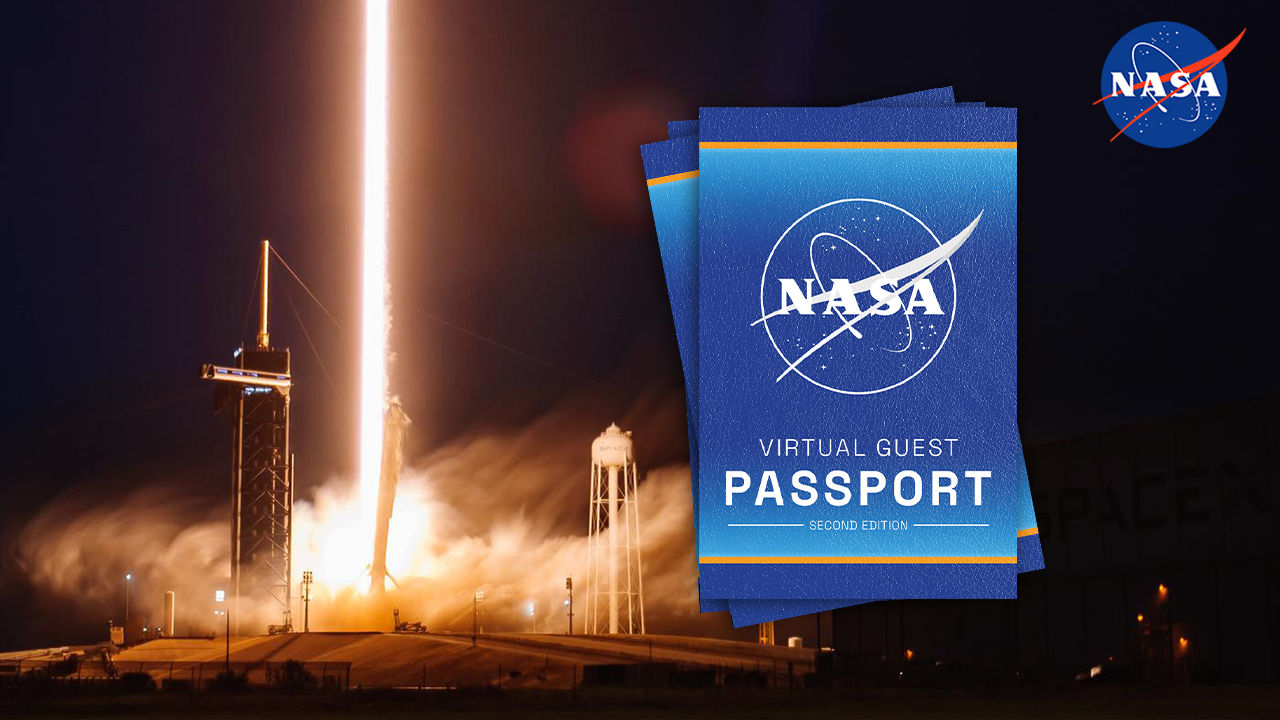
The Virtual Guest Program transforms rocket launches from distant spectacles into personal experiences. Participants receive the same curated journey as in-person guests at Kennedy Space Center, without requiring travel.
Program Features
Pre-Launch Experience
- Registration: Early access to sign up for upcoming launches
- Countdown Updates: Email and push notifications with mission details
- Exclusive Content: Behind-the-scenes videos and astronaut messages
- Social Integration: Shareable "I'm Watching" graphics for social media
Launch Day Features
- Live Streaming: Multiple camera angles and expert commentary
- Real-Time Telemetry: Live data displays showing altitude, velocity, and status
- Interactive Q&A: Questions answered by NASA experts during holds
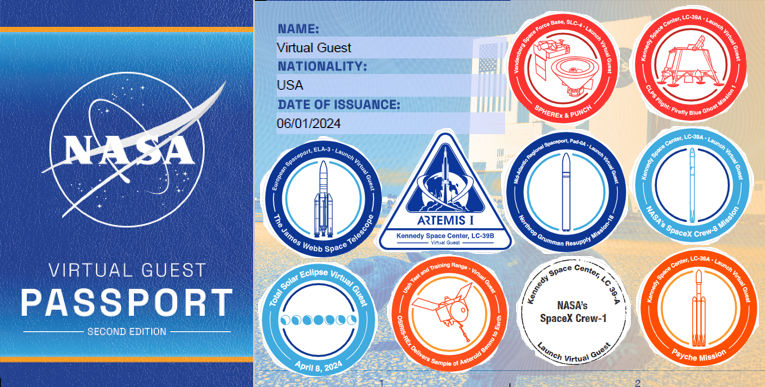
- Virtual Badge: Digital collectible commemorating participation
Post-Launch Engagement
- Mission Updates: Continued coverage of mission milestones
- Photo Galleries: High-resolution imagery from the launch
- Certificate Downloads: Personalized participation certificates
- Social Sharing: Pre-designed graphics celebrating the launch
Engagement Impact
The Virtual Guest Program has registered over 2 million participants since inception, with 78% returning for multiple launches. This demonstrates the power of gamification and personalization in building sustained audience engagement.
Eventbrite Integration & Event Management
NASA utilizes Eventbrite as the primary public-facing registration platform for Virtual Guest Program events, a strategic choice that provides scalable infrastructure, familiar user experience, and powerful integration capabilities.
Why NASA Chose Eventbrite
- Scalability & Reliability: Proven infrastructure handling millions of registrations that high-profile launches generate when NASA's own systems might struggle with traffic spikes
- User Experience: Familiar interface that registrants recognize, eliminating learning curves that custom systems create
- Payment Processing: Built-in capability for paid events though NASA primarily offers free access
- Mobile Applications: Native iOS and Android apps that Eventbrite maintains
- Analytics & Reporting: Comprehensive dashboards providing demographic data and registration trends
- Email Marketing: Automated workflows sending confirmation, reminders, and follow-up messages
- API Integration: RESTful APIs enabling NASA's internal systems to synchronize registration data
Implementation Details
Custom Branding
NASA-branded event pages maintaining agency visual identity despite using commercial platform.
Registration Workflows
Multi-step forms collecting participant information, preferences, and demographics for program evaluation.
Capacity Management
Waitlists and registration limits when interactive features require controlling participant count.
Data Privacy
Compliance with federal privacy requirements ensuring Eventbrite's terms prove compatible with government obligations.
Virtual Passport Gamification System
The Virtual Passport program employs behavioral psychology principles to encourage continued participation:
- Digital Stamps: Collectible badges commemorating event attendance: implementation using blockchain or traditional database with cryptographic signatures ensuring authenticity
- Achievement Tracking: Progressive recognition as participants attend multiple events, leveraging completionism psychology
- Social Sharing: Integration with social media enabling displaying achievements for organic promotion
Commemorative Certificates
Personalized documents generated post-event through:
- Dynamic PDF Generation: Server-side rendering using PDFKit, ReportLab, or wkhtmltopdf
- Personalization: Participant names, event details, and unique identifiers via mail merge-style substitution
- Distribution: Email delivery via SendGrid, AWS SES, or similar services enabling millions of messages
Proprietary Systems
While Eventbrite handles public registration, certain NASA operations require internal systems: classified events with security clearance verification, employee conferences on NASA's intranet, and international partner coordination requiring mission-specific authentication.
AR/VR Virtual Experiences
NASA offers immersive augmented and virtual reality experiences enabling interactive exploration of spacecraft, facilities, and missions: technologies that extend engagement beyond passive video consumption.
Augmented Reality Applications
- AR Spacecraft Assembly: Mobile applications using ARKit (iOS) and ARCore (Android) overlaying 3D models in physical space: enabling examining rockets, satellites, and rovers at scale that physical models cannot provide
- AR Navigation: Visitor center applications providing wayfinding and point-of-interest information through camera overlay
360-Degree Virtual Tours
Immersive experiences visiting NASA facilities using WebVR, Three.js, and 360-degree video playback with equirectangular projection:
- ISS Virtual Tour: Panoramic imagery enabling exploring International Space Station modules: experience that physical access impossibility makes virtual exploration invaluable
- NASA Center Tours: Virtual visits to Kennedy Space Center, Johnson Space Center, and other facilities improving geographic accessibility
- Technical Implementation: Browser-based delivery without requiring specialized applications
Interactive Educational Games
- Mission Simulators: Applications recreating mission scenarios teaching orbital mechanics, rendezvous, and landing, built with Unity or Unreal Engine providing physics simulation and 3D graphics
- Engineering Challenges: Problem-solving activities introducing aerospace concepts via HTML5, WebGL, and JavaScript frameworks
- Citizen Science Projects: Applications enabling public contribution to real research including image classification and data analysis through crowdsourcing methodologies
NASA Engages Platform
Specialized system connecting NASA experts with educators, students, and communities, coordinating virtual presentations, Q&A sessions, and educational outreach enabling scaling expert access that physical visits cannot achieve:
- Video Conferencing Integration: Zoom, Microsoft Teams, or WebEx enterprise deployments
- Scheduling System: Calendar integration managing expert availability for thousands of annual engagements
- Content Repository: Educational materials, presentation templates, and mission briefings
- Tracking & Reporting: Engagement metrics, reach statistics, and impact assessment
Technology Architecture
Building platforms that handle millions of concurrent users requires sophisticated architecture. Here's how NASA's systems achieve global scale:
Infrastructure Components
| Component | Technology | Purpose |
|---|---|---|
| Mobile Apps | React Native | Cross-platform iOS/Android delivery |
| Streaming | AWS Media Services | Adaptive bitrate video delivery |
| CDN | CloudFront/Akamai | Global content distribution |
| Real-Time Data | WebSocket/GraphQL | Live telemetry streaming |
| User Management | AWS Cognito | Authentication and profiles |
| Notifications | Firebase/SNS | Push notification delivery |
Scaling Strategies
During launches, traffic can spike from 50,000 to 5,000,000 concurrent users within minutes. NASA's infrastructure handles this through:
- Auto-Scaling: Cloud resources automatically provision based on demand
- Edge Caching: Content cached at edge locations worldwide
- Load Balancing: Traffic distributed across multiple server clusters
- Graceful Degradation: Lower quality streams served if capacity is strained
Real-Time Telemetry
The telemetry displays showing live rocket data represent one of the most technically impressive features. Data flows from mission control to viewers with sub-second latency:
- Data Collection: Sensors on the rocket transmit to ground stations
- Processing: Mission control systems aggregate and validate data
- Distribution: WebSocket servers push updates to connected clients
- Rendering: Client apps display animated gauges and charts
Engagement Metrics & Impact
Viewership Statistics
SpaceX Crew Dragon: NASA's Commercial Crew partner, revolutionizing astronaut transport to the International Space Station
Notable Launch Events
- Artemis I (2022): 5M+ concurrent viewers, largest NASA streaming event
- Artemis II (2025): 8M+ concurrent, first crewed lunar mission in 50 years
- SpaceX Crew Missions: 2-3M average concurrent viewers
- James Webb Deployments: 1.5M+ for major mirror/sunshield events
Demographic Reach
NASA's digital platforms successfully engage diverse audiences:
- K-12 Students: 15M+ annual educational streams
- 18-34 Age Group: Largest demographic at 38% of viewers
- International: 45% of traffic from outside United States
- Mobile: 62% of viewing occurs on mobile devices
Frenchy Digital Implementation Methodology
Frenchy Digital L.L.C., a minority-led firm specializing in application development, AI integration, web applications, CRM systems, and cloud infrastructure, provides implementation services that replicate NASA-scale capabilities for organizations lacking internal technical teams.
Milestone-Based Pricing Approach
Our structured process manages risk and ensures alignment through defined phases:
| Phase | Investment | Timeline | Deliverables |
|---|---|---|---|
| Research & Discovery | $5,000 | 2 weeks | Requirements gathering, technical assessment, strategic roadmap |
| Prototype Development | $13,000 | 4 weeks | Core functionality demo, UI mockups, technical proof-of-concept |
| Full Development | $80,000+ | 3-6 months | Complete implementation, integrations, security hardening, training |
| Maintenance & Support | $11,000+/year | Ongoing | Monitoring, updates, feature enhancements, technical support |
Phase 1: Research & Discovery ($5K / 2 weeks)
- Requirements gathering through stakeholder interviews
- Technical infrastructure assessment
- Competitor analysis and best practices research
- Strategic roadmap development
- Feasibility analysis and risk identification
- Deliverable: Comprehensive proposal with architecture recommendations
Phase 2: Prototype Development ($13K / 4 weeks)
- Core functionality demonstration
- User interface mockups and design system
- Technical proof-of-concept validating architecture
- User testing with representative audience
- Iterative refinement based on feedback
- Deliverable: Interactive prototype demonstrating key features
Phase 3: Full Development ($80K+ / 3-6 months)
- Complete platform implementation
- Integration with existing systems
- Security hardening and compliance implementation
- Performance optimization and load testing
- Content migration and data transformation
- User training and documentation
- Deliverable: Production-ready platform with full functionality
Phase 4: Maintenance & Support ($11K+/year)
- Ongoing monitoring and incident response
- Regular updates and security patches
- Feature enhancements and improvements
- Technical support and troubleshooting
- Performance optimization and scaling
- Deliverable: Continuous platform operation and evolution
Technology Stack Recommendations
Small Organizations (Budget <$50K)
Vimeo OTT for streaming ($500/month), Eventbrite for events, WordPress with custom plugins, PWA instead of native mobile, Google Analytics (free)
Medium Organizations ($50K-$200K)
Brightcove or Kaltura streaming ($3K-$8K/month), custom React/Node.js platform, React Native mobile apps, AWS infrastructure, Google Cloud AI
Large Organizations ($200K+)
AWS Media Services custom infrastructure, Drupal enterprise CMS (NASA model), native iOS/Android apps, custom AI/ML models, FedRAMP-authorized cloud
Accessibility & Compliance
All implementations include Section 508 compliance for federal agencies:
- WCAG 2.1 AA standards implementation
- Screen reader compatibility (JAWS, NVDA, VoiceOver)
- Keyboard navigation without mouse requirement
- Closed captioning for all video content
- Audio descriptions for visual content
- Investment: Incremental 15-20% over base development
FedRAMP Authorization Support
For federal agencies requiring cloud security standards, Frenchy Digital provides comprehensive support:
- • 300+ NIST SP 800-53 security controls implementation
- • Continuous monitoring infrastructure
- • Third-party assessment coordination
- • Investment: $100K-$250K authorization process (12-18 months)
Case Study: Museum Virtual Programs
A natural history museum implementing NASA-inspired virtual programming demonstrates how organizations can replicate these capabilities at appropriate scale.
Client Requirements
- Live-streamed educational programs and curator talks
- On-demand video library of collections and exhibitions
- Virtual tours using 360-degree imagery and AR
- Event registration and participant management
- Educational resources and curriculum integration
- Global accessibility and multi-language support
Frenchy Digital Solution
| Phase | Scope | Investment |
|---|---|---|
| Research | Stakeholder interviews, audience research, technical assessment, competitive analysis | $5,000 |
| Prototype | Interactive mockups, sample content integration, user testing | $13,000 |
| Development | Streaming platform, virtual tours, event registration, mobile apps, AI features, accessibility | $85,000 |
| Annual Maintenance | Hosting, CDN, security updates, analytics, strategic recommendations | $15,000/year |
Development Breakdown ($85K)
- Streaming Platform: Brightcove integration for live and on-demand video: $15,000
- Virtual Tours: Custom WebVR implementation with 360-degree content: $25,000
- Event Registration: Eventbrite integration with custom portal: $12,000
- Mobile Applications: React Native iOS and Android apps: $20,000
- AI Features: Google Cloud Vision API for image recognition: $8,000
- Accessibility: WCAG 2.1 compliance implementation: $5,000
Results Achieved
First-Year ROI Analysis
Benefits: $230,000 (reach expansion + cost savings + productivity gains)
Investment: $118,000 (development + first year maintenance)
Ongoing Annual ROI: $230,000 benefits vs. $120,000 costs = 92% return
Enterprise Applications & Opportunities
The technologies powering NASA's platforms have broad enterprise applications:
Industry Applications
- Corporate Events: Live streaming product launches and shareholder meetings
- Sports: Real-time telemetry for racing and athletic performance
- Education: Interactive learning platforms with live experiments
- Healthcare: Live surgical education and telemedicine
- Manufacturing: Real-time production monitoring dashboards
Working with Frenchy Digital
Based in Los Angeles (home to SpaceX, JPL, and aerospace innovation), Frenchy Digital specializes in building enterprise-grade streaming and engagement platforms. Our team has delivered 50+ mobile applications with real-time capabilities for clients ranging from startups to Fortune 500 companies.
Whether you're building a live event platform, IoT dashboard, or educational streaming service, we bring NASA-level quality to your digital experience.