










The Paris Luxury Landscape in 2026
Paris is not just a city with luxury boutiques: it is the operational and creative headquarters of the global luxury industry. LVMH, the world's largest luxury group with more than 75 maisons including Louis Vuitton, Christian Dior, and Tiffany & Co., is headquartered on Avenue Montaigne. Kering, the Paris-based conglomerate behind Gucci, Saint Laurent, Bottega Veneta, Balenciaga, Alexander McQueen, and Boucheron, sits a short walk away. Between them, the two groups set much of the pace for how the entire industry approaches technology, from boutique design to what a "flagship" experience means on a phone screen.
The scale involved is significant. According to the 2025 Bain & Company and Fondazione Altagamma Luxury Study, the global personal luxury goods market totaled roughly €358 billion in 2025, essentially flat after a mild pullback the prior year. What has changed is where that spend happens: Bain's research indicates online channels now account for an estimated 28-30% of the global luxury market, with brand-owned digital platforms outperforming third-party marketplaces. For a maison, that means the app or website is no longer a marketing add-on to the boutique: it is one of the largest single sales channels the brand has, and increasingly the first and sometimes only touchpoint a client has with the brand before ever stepping into a store.
That shift explains why LVMH runs La Maison des Startups, a technology accelerator hosted at Station F in Paris that has worked with dozens of luxury-tech startups across categories from personalization to supply-chain traceability since 2017. The house of a maison's technology stack today spans far more than a storefront: 3D and AR product visualization, clienteling tools for boutique staff, blockchain-based authentication, and increasingly the regulatory infrastructure the EU is building around product transparency. The rest of this guide walks through each of those pieces: what they are, why maisons are investing in them, and what it realistically takes to build one.
Digital Flagship Experiences: The App as Maison
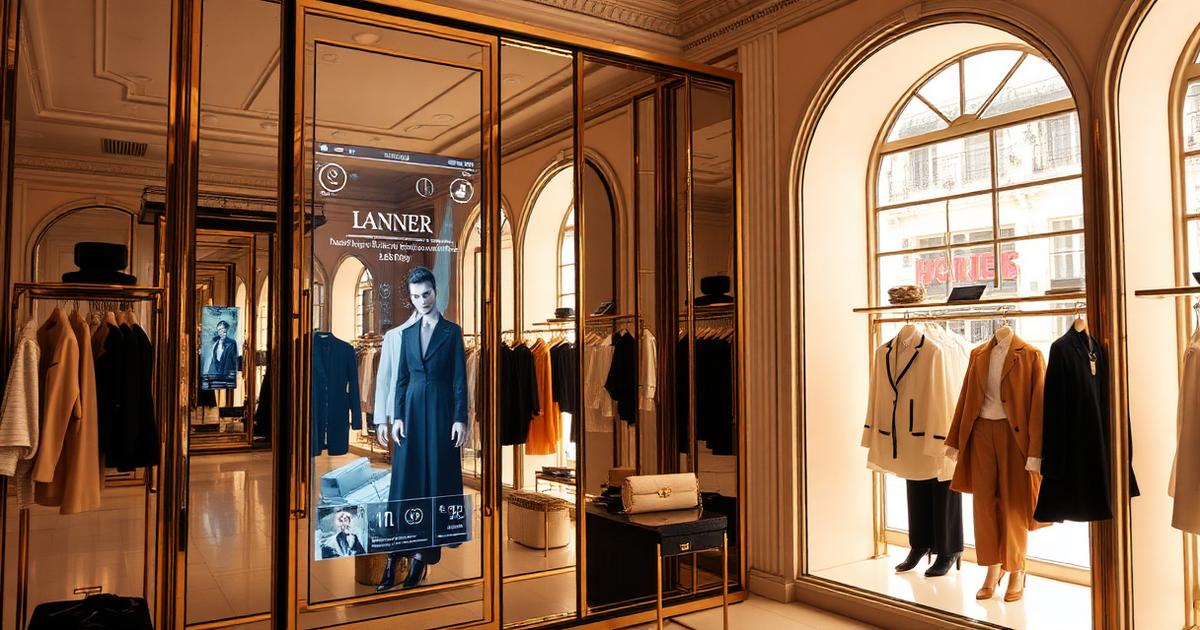
A "digital flagship" is the term the industry uses for an app or web experience built to carry the weight of a maison's most important physical boutique (its architecture, lighting, service level, and storytelling) rather than functioning as a generic online store optimized purely for checkout speed. The distinction matters commercially: a client browsing a €15,000 handbag is not making the same decision as someone adding a phone case to a cart, and the interface needs to reflect that difference in pacing, detail, and trust-building rather than push toward the fastest possible transaction.
What a Digital Flagship Typically Includes
- High-fidelity product visualization: 3D rendering or 360° photography detailed enough to show stitching, hardware, and material texture, often paired with augmented reality try-on. Gucci, Louis Vuitton, Dior, and Burberry have all shipped AR try-on features in their apps, covering categories like eyewear, sneakers, and beauty.
- Editorial and craftsmanship content: Long-form storytelling about a piece's materials, technique, or design history, positioned alongside the product rather than buried in a separate blog: treating the product page as a piece of brand content, not just a listing.
- Appointment and private shopping booking: Direct scheduling into in-boutique or virtual one-to-one appointments with a sales advisor, bridging the app back into human service rather than treating digital and in-store as separate channels.
- Limited or exclusive drops: Time-gated or invitation-only access to new collections or rare pieces, reinforcing scarcity and rewarding the app's most engaged clients rather than opening every release to the broadest possible audience.
Some of the most ambitious digital flagship work has moved into spatial computing entirely. Balenciaga partnered with Apple to build an app for the Apple Vision Pro headset showcasing its Spring 2025 collection: an early signal that "flagship" experiences are starting to extend beyond flat screens into immersive formats. Most maisons don't need to start there. A well-executed 3D product viewer, genuine craftsmanship storytelling, and a frictionless appointment booking flow on a standard mobile app already covers the vast majority of what makes a digital flagship feel like the real thing.
Personal Shopping and Clienteling Platforms
Clienteling is the practice of a boutique sales advisor maintaining an ongoing, personalized relationship with a client: remembering their sizing, style preferences, and past purchases, and reaching out proactively when something relevant arrives. It's one of the oldest traditions in luxury retail, and one of the newest categories of enterprise software, because doing it well at scale across dozens of boutiques and thousands of clients is no longer realistic with notebooks and memory alone.
A modern clienteling app is almost always built for the advisor's iPhone or iPad rather than a back-office desktop, because the tool needs to be usable while standing on the boutique floor mid-conversation. It typically pulls from the brand's CRM and point-of-sale systems to show a live client profile (purchase history, sizing notes, wishlist items, and prior conversation summaries) and lets the advisor check stock across the boutique network, place a hold on an item, or send a secure in-app message, all without needing to step away from the client or exchange a personal phone number.
| Capability | What It Solves | Typical Integration |
|---|---|---|
| Unified client profile | Advisor lacks context on returning clients across boutique visits | CRM (Salesforce, Microsoft Dynamics, or a proprietary system) |
| Cross-boutique stock visibility | An item is in stock at another location but the advisor can't see it | Inventory / ERP system |
| Appointment scheduling | Private shopping requests happen by phone or email with no shared calendar | Calendar and booking backend |
| Secure client messaging | Advisors resort to personal WhatsApp or SMS to follow up with clients | In-app messaging with encryption and audit logging |
The technical challenge in clienteling software is rarely the interface itself: it's the integration work. A maison's CRM, inventory system, and point-of-sale platform are often decades-old enterprise systems that were never designed to expose a real-time API, and much of a clienteling project's timeline goes into building reliable bridges to those systems rather than designing screens. Our enterprise app solutions guide covers this integration reality in more depth for teams evaluating a build.
Blockchain Authentication and the Fight Against Counterfeiting
Counterfeiting is a structural, industry-wide problem for luxury goods, and it's one of the clearest cases where the biggest players in the industry chose to build shared infrastructure rather than compete on it separately. In April 2021, LVMH, Prada Group, and Cartier (part of the Richemont group) announced the Aura Blockchain Consortium, a shared blockchain platform purpose-built for luxury product authentication and traceability. OTB later joined as a founding-tier member, and the consortium has since grown to encompass dozens of participating brands, encrypting more than 40 million individual products onto its blockchain.
The mechanics are straightforward from a client's point of view, even though the backend is sophisticated. A brand embeds an NFC chip or a discreet QR code into a garment, bag, or accessory at the point of manufacture. That physical marker is linked to a blockchain record containing the item's materials, production details, and (as it moves through the supply chain and gets sold) an updated ownership and provenance history. A client scanning the chip with their phone sees verified proof the piece is genuine, along with its documented history, without the brand needing to expose the underlying blockchain infrastructure directly.
The mechanism is the same either way: a physical marker (NFC or QR) tied to a digital record, checked against a source of truth the brand controls. Blockchain adds a decentralized, harder-to-tamper audit trail; a well-secured centralized database can deliver most of the same client-facing benefit for a lower engineering cost.
For a maison building its own authentication layer rather than joining a shared consortium, the core engineering decision is less about blockchain specifically and more about designing a tamper-resistant chain of custody: how a unique identifier gets assigned at manufacture, how it survives resale and repair, and how the verification check is exposed to a client without leaking data that would help a counterfeiter reverse-engineer the system. Our security audit service is often the right starting point for maisons evaluating how robust an existing authentication flow actually is before investing further in it.
Maison Heritage: Digitizing Savoir-Faire
Savoir-faire (the specific, often generations-old craftsmanship techniques behind a maison's products) is one of the primary things that separates a luxury house from a mass-market alternative, and it's a large part of what justifies the price of the piece. Communicating that story well in a digital product is a commercial decision, not a marketing afterthought, because a client who understands why a bag takes forty-plus hours of hand-stitching to complete is making a very different purchase decision than one comparing two similarly-priced options on price and photos alone.
Building this into an app well requires treating heritage content as first-class product data, not a separate blog that lives apart from the shopping experience. That typically means an archive layer connecting each product to its relevant craftsmanship technique, atelier, or historical reference; real photography or video of the making process rather than stock imagery; and a content structure that lets the same heritage asset be reused across multiple related products instead of being written once and forgotten. Maisons with deep archives, decades or in some cases over a century of design history, have a genuine content advantage here if the archive is digitized and structured well enough to be searchable and reusable inside the app, rather than sitting in physical or unindexed form.
The technical lift is mostly a content architecture and digital asset management problem rather than a novel engineering one: a well-tagged media library, a flexible content model that lets editorial and commerce teams collaborate without engineering involvement for every update, and fast image and video delivery so a heritage story doesn't slow down the shopping experience it's meant to enhance.
Omnichannel: Bridging Boutique and App
The most common mistake in luxury retail app projects is building a strong standalone app that has no real connection to the boutique network: a beautiful digital flagship that a boutique advisor can't see into, or a clienteling tool that doesn't reflect what's actually happening in-store. Omnichannel, in a luxury context, specifically means the boutique staff and the app are working from the same live data, not that the brand simply has both a website and physical stores.
- Reserve online, collect or try in boutique: A client browses and holds an item in the app, then completes the purchase, or tries it on first, during an in-person appointment, rather than choosing one channel over the other.
- Cross-boutique inventory visibility: An advisor or the app itself can see stock at other locations in real time, so a client isn't told an item is unavailable when it's simply at a different boutique.
- Unified purchase and interaction history: A purchase made in-store shows up in the app's order history, and a client's app browsing informs what an advisor prepares for their next appointment, rather than each channel starting from zero.
- Consistent loyalty and status recognition: A client's tier, spend history, and perks apply identically whether they're checking out in the app or at the boutique register, avoiding the disconnect of "digital-only" or "in-store-only" benefits.
Getting this right depends far more on integration architecture than on the app's design. The technical decision that matters most early in a project is which system is the single source of truth for inventory, client profiles, and orders, usually the existing enterprise CRM and ERP, and building the app as a well-designed client of that data, rather than accidentally creating a second, competing record of the same information that inevitably drifts out of sync.
GDPR and the EU Digital Product Passport
Two regulatory frameworks shape how a luxury retail app for the European market has to be architected, and both carry real engineering implications rather than being purely legal or marketing concerns.
The first is GDPR, which has governed data privacy across the EU since 2018 and applies to any brand serving EU residents regardless of where the company is headquartered. Clienteling and personal shopping apps are a particularly sensitive case, because they're specifically designed to hold detailed personal data: purchase history, sizing, style preferences, and sometimes facial landmark data captured for AR try-on features. That means the app needs explicit, documented consent for data collection, a clear lawful basis for using purchase history in personalization, mechanisms for a client to access or request deletion of their data, and access controls that limit which boutique staff can see which client's full profile, not just a privacy policy page, but architecture decisions baked into how the CRM integration and staff permissions are actually built.
The second is newer: the EU's Ecodesign for Sustainable Products Regulation (ESPR), which entered into force in July 2024 and introduces the Digital Product Passport (DPP): a QR-accessible digital record of a product's materials, durability, and traceability data. Textile-specific requirements are expected to arrive via delegated acts in 2027, with an additional transition period after that before compliance becomes mandatory, so most maisons realistically have until roughly 2028 before enforcement begins. The DPP is explicitly designed to be consumer-facing rather than a hidden backend compliance record, which means the same NFC or QR infrastructure many maisons are already building for anti-counterfeiting purposes through initiatives like Aura is a natural place to surface DPP data once the requirement lands: a reason to design the authentication layer with room to grow rather than treating it as a single-purpose feature.
Cost, Timeline, and What to Build First
Budgets for luxury retail app projects vary enormously depending on scope, and the biggest cost driver is almost never the visual design: it's the number of internal enterprise systems (CRM, ERP, inventory, payments, and often a legacy point-of-sale platform) the app needs to integrate with reliably. The table below reflects general industry-informed ranges for enterprise-grade retail app builds of this type, not a fixed price list, since every maison's existing systems and market footprint differ.
| Scope | Typical Investment | Typical Timeline | Best For |
|---|---|---|---|
| Focused pilot | €80,000-€250,000 | 8-14 weeks | A single boutique network testing one core feature: appointment booking, a lookbook, or a basic clienteling tool |
| Full digital flagship | €250,000-€750,000 | 4-7 months | A maison-defining app with 3D/AR product visualization, heritage content, and CRM-connected booking |
| Multi-market ecosystem | €500,000-€2,000,000+ | 9-18 months | Personal shopping, authentication, loyalty, and omnichannel inventory across many boutiques, languages, and markets |
For maisons approaching this for the first time, the highest-leverage starting point is almost always a scoped pilot rather than the full ecosystem: pick the boutique network, client segment, or single feature (clienteling, or a digital flagship product experience) most likely to prove the concept, ship it well, and use real usage data to justify the larger integration investment. Our 90-day MVP development guide covers this staged approach in detail, and our MVP development service is built around exactly this kind of scoped-first, expand-later strategy for enterprise clients.
Why Frenchy Digital for Luxury Retail and Fashion Technology
Building for a luxury maison is a different discipline than building a typical ecommerce app. The visual and interaction quality bar is higher, the enterprise integration work (CRM, inventory, point-of-sale) is usually the hardest part of the project, and the compliance stakes, GDPR today, the EU Digital Product Passport soon, are non-negotiable rather than optional polish. Frenchy Digital builds digital flagship experiences, clienteling and personal shopping platforms, and heritage-driven product storytelling with that discipline in mind, from initial architecture through the integration work that connects an app to a maison's real inventory and client systems.
Frenchy Digital is headquartered in Los Angeles, with international teams in Geneva, Switzerland and Paris, France, giving clients a team that understands both the technical demands of enterprise retail integration and the cultural and regulatory context of building for the European luxury market directly. Whether the need is a first digital flagship pilot, a clienteling platform for boutique staff, or a full security audit of an existing authentication system, our team scopes the project around what a maison's existing systems can actually support, not just what looks good in a pitch deck.
Frenchy Digital Capabilities for Luxury Retail
- Digital flagship experiences: 3D/AR product visualization, craftsmanship storytelling, and appointment booking built as one connected product.
- Personal shopping and clienteling platforms: CRM- and inventory-integrated mobile tools for boutique sales advisors.
- Authentication architecture: NFC, QR, and blockchain-ready product verification systems designed for tamper resistance.
- GDPR- and DPP-ready data architecture: consent, deletion, and product transparency data modeled in from day one.
- Enterprise integration: connecting new client-facing apps to existing CRM, ERP, and point-of-sale systems without disrupting boutique operations.
Ready to bring your maison's boutique experience to mobile? Schedule your free discovery call and get a clear, scoped plan for your digital flagship, personal shopping platform, or heritage experience, before you commit budget to a full build.
Ready to Build Your Maison's Digital Flagship?
Get a scoped architecture plan and realistic budget for your digital flagship, personal shopping platform, or heritage experience, before you commit to a build.
1517 S Bentley Ave Suite 204, Los Angeles CA 90025
Frequently Asked Questions
Sources & References
- 1Bain & Company: Luxury Is Ready for a New Era After Stabilizing in 2025↗
- 2Bain & Company: Online Luxury Sales Approach a Milestone↗
- 3LVMH: Our Group↗
- 4Kering: Official Site↗
- 5Aura Blockchain Consortium↗
- 6LVMH: La Maison des Startups↗
- 7European Commission: Ecodesign for Sustainable Products Regulation↗
- 8European Commission: Data Protection (GDPR)↗