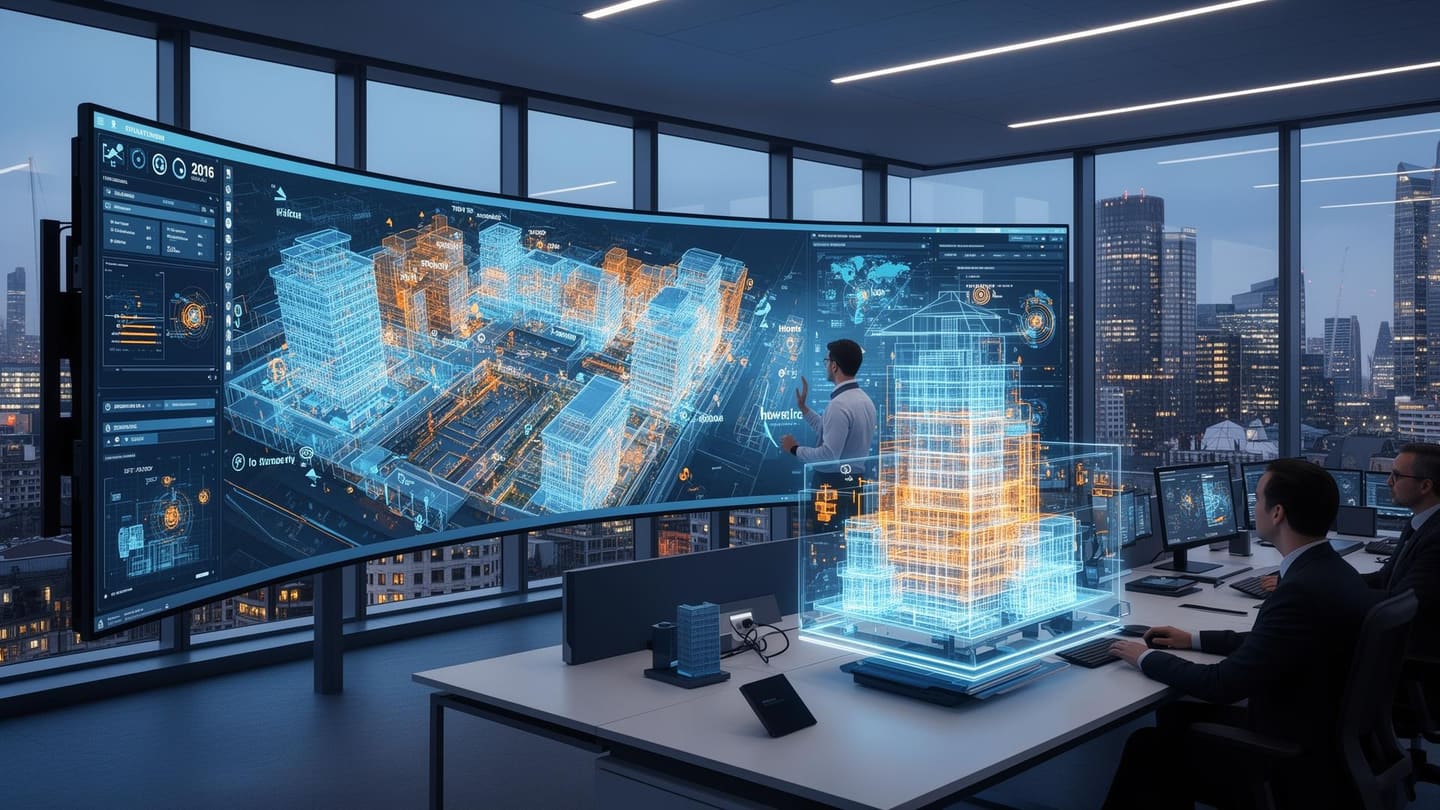
The commercial real estate sector has undergone a fundamental transformation over the past five years, evolving from buildings as passive containers of physical space into intelligent, responsive environments where every system, from HVAC and lighting to access control and occupancy monitoring, connects through integrated digital platforms that optimize energy efficiency, enhance occupant experience, and generate valuable data about how people actually use buildings.
When a facilities manager at a newly constructed office tower in London's Canary Wharf begins their morning routine in 2026, they're not walking floors with clipboards checking mechanical systems or responding reactively to tenant complaints. Instead, they're reviewing a comprehensive digital twin platform on their mobile device that shows real-time energy consumption across every zone, predictive maintenance alerts identifying equipment likely to fail within the next thirty days, occupancy patterns revealing which conference rooms remain consistently underutilized, air quality measurements detecting CO2 levels requiring ventilation adjustments, and security incidents from the previous night including every person who accessed the building, which credentials they used, and precisely which areas they entered.
This transformation from reactive building management to predictive, data-driven operations represents more than operational convenience: it fundamentally restructures property economics by reducing energy costs through optimization that can cut consumption twenty to forty percent, preventing expensive emergency repairs through predictive maintenance that addresses problems before catastrophic failures occur, improving tenant satisfaction and retention through responsive environments that automatically adjust to occupancy patterns and preferences, enhancing security through comprehensive access tracking and behavioral analysis identifying anomalous patterns suggesting threats, and generating new revenue opportunities through space-as-a-service models where flexible workspace gets allocated dynamically based on real-time demand rather than static lease agreements.
London's Smart Building Leadership
London has emerged as Europe's leading smart building innovation hub, with the city's historic commitment to architectural excellence combining with aggressive carbon reduction targets, a thriving technology sector, and substantial real estate development activity creating ideal conditions for validating new building technology solutions. Research from JLL and CBRE confirms that the presence of major property developers including British Land, Canary Wharf Group, and international firms managing premium office portfolios creates demand for differentiated buildings that command rent premiums through superior technology and sustainability credentials.
The 2026 Smart Building Market and Technology Transformation Imperatives
According to Statista, the global smart building market has grown to exceed one hundred twenty billion dollars annually in 2026, with Europe representing approximately thirty percent of this total and the UK accounting for a substantial portion of European investment driven by aggressive climate commitments and a mature commercial real estate sector. Despite this substantial market size, the vast majority of existing buildings, particularly those constructed before 2015, remain "dumb" structures with minimal connectivity, creating enormous retrofit opportunities for technology platforms that can be overlaid on existing building infrastructure without requiring comprehensive renovations.

The energy crisis that has affected Europe since 2022 has dramatically accelerated smart building adoption, and Deloitte's real estate outlook confirms that property owners now recognize optimizing energy consumption represents one of the few controllable operating expenses when electricity and gas prices fluctuate unpredictably. This aligns with the UK government's net-zero carbon commitments, which increasingly require commercial landlords to demonstrate measurable emissions reductions. The buildings implementing comprehensive monitoring and automated optimization consistently achieve fifteen to thirty percent energy reductions compared to similar manually-managed properties, translating to annual savings of tens or hundreds of thousands of pounds for large commercial properties while also reducing carbon emissions aligning with corporate sustainability commitments.
Hybrid Work Impact
Average London office buildings now see peak occupancy on Tuesdays through Thursdays at 70-80% of pre-pandemic levels, while Mondays and Fridays see less than 50% occupancy, creating opportunities for intelligent systems that adjust operations based on actual occupancy.
Cybersecurity Imperatives
Connected building systems have become targets for sophisticated threat actors. Security architecture requires network segmentation, encryption, authentication, and anomaly detection to protect building controls from compromise.
McKinsey's research on the future of work confirms that tenant expectations around workplace quality have escalated substantially, with competition for talent driving companies to prioritize office environments that provide superior experiences compared to working from home. The buildings that can demonstrate measurably better air quality through continuous CO2 and particulate monitoring, that provide personalized environmental controls allowing individuals to adjust temperature and lighting in their immediate areas, that offer seamless access and visitor management eliminating friction from security checkpoints, and that enable frictionless amenity access for services like fitness centers or cafeterias command meaningful rent premiums while experiencing lower vacancy rates than commodity office buildings offering only basic functionality.
Gartner identifies digital twins as a top strategic technology trend for the built environment, noting that the technology has matured from theoretical concept to practical implementation, with comprehensive virtual models of physical buildings now enabling simulation of proposed changes before implementation, optimization of complex systems through algorithmic approaches impossible with manual control, predictive analysis forecasting equipment failures or energy consumption under different scenarios, and training environments where building operators can practice responding to emergencies without risking actual building systems. The digital twins integrate real-time data from thousands of sensors with building information models (BIM), equipment specifications, and operational algorithms to create living representations that remain synchronized with physical reality.
Core Features That Transform Building Operations and Occupant Experience
Building smart building applications that genuinely improve operational efficiency and occupant satisfaction rather than simply digitizing existing manual processes requires understanding where traditional building management breaks down and where technology creates leverage that manual approaches cannot achieve. The feature prioritization should focus ruthlessly on capabilities that either reduce operating costs through energy savings and improved efficiency, increase revenue through rent premiums and reduced vacancy, or enhance security and compliance reducing liability and regulatory risks.
Comprehensive Access Control and Mobile Credential Management
The traditional physical access control using key cards, fobs, or PIN codes creates numerous operational challenges including credential administration consuming security staff time issuing cards, canceling access for departed employees, and managing complex permission matrices determining which individuals access which areas, physical credential costs and replacement logistics when cards get lost or stolen, security vulnerabilities from credential sharing or unauthorized duplication, and limited audit trails often recording only entry times without capturing which specific credential was used or whether the person holding it was actually authorized.
Mobile Credential System Benefits
- Secure Element Storage: Smartphone trusted execution environments store encrypted credential data that cannot be extracted even if devices are compromised
- Instant Provisioning: Administrators assign access permissions that automatically propagate to user devices within seconds: no security desk visits required
- Granular Permissions: Room-level precision with time-based restrictions and zone limitations controlling movement within buildings
- Elevator Integration: Automatically call elevators and pre-select authorized floors for contactless operation
- ML Anomaly Detection: Identify unusual patterns like access at unexpected times or credential sharing behaviors
The credential provisioning happens instantly through mobile applications rather than requiring physical visits to security offices, with administrators assigning access permissions that automatically propagate to user devices within seconds. The employee starting work on Monday morning receives their building access credentials Sunday evening through the application, arriving at the office Monday with full access without requiring security desk visits or temporary badges. The just-in-time provisioning extends to visitors and contractors, with hosts sending temporary credentials valid for specific time windows and areas, eliminating visitor logbooks and temporary badge administration.
Digital Twin Integration for Predictive Building Management
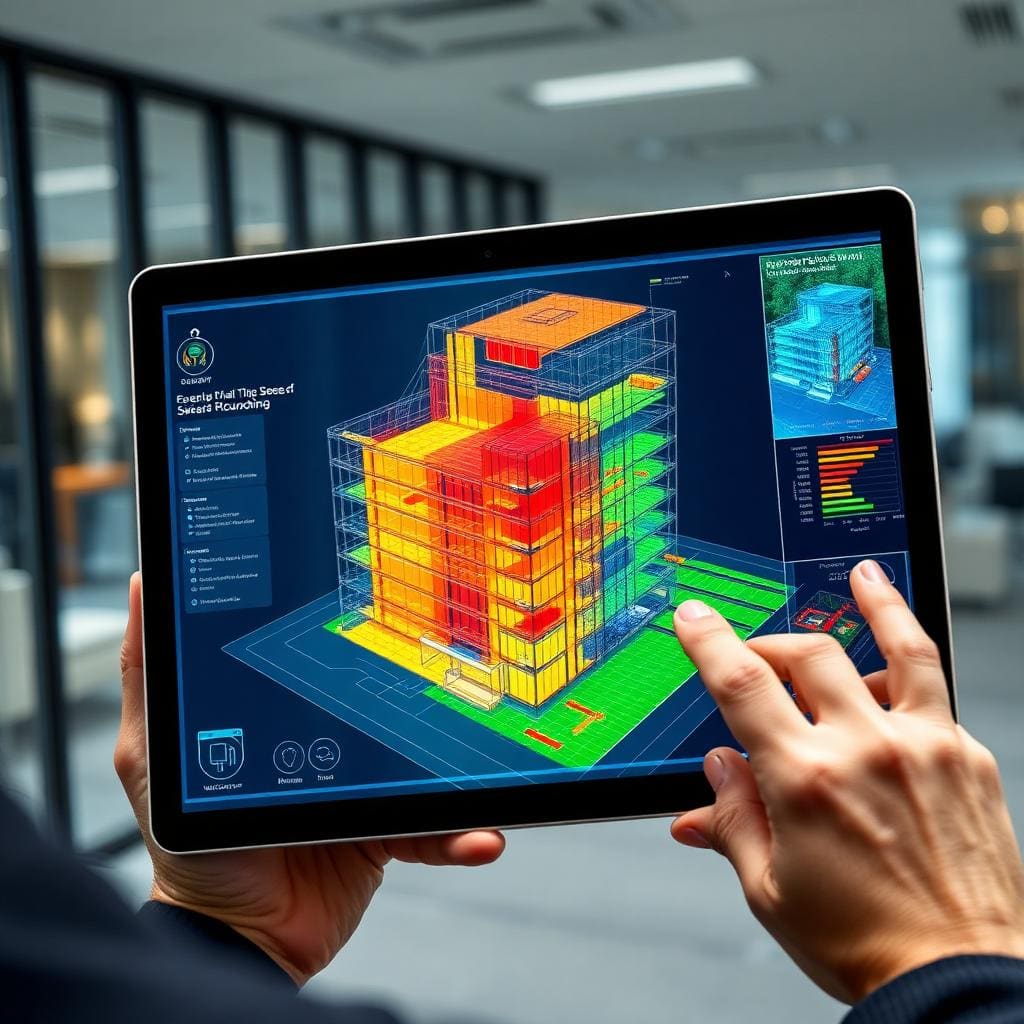
The digital twin platform creates comprehensive virtual representations of physical buildings that remain synchronized with real-world conditions through continuous data flows from thousands of IoT sensors monitoring everything from temperature and humidity to equipment operating status and energy consumption. The 3D visualization shows building geometry, mechanical systems, electrical distribution, plumbing, and architectural features in interactive models that facilities teams can navigate, rotating and zooming to examine specific areas or systems with detail levels from overall building views down to individual equipment components.
The real-time data overlay displays current conditions throughout buildings, with color-coding showing temperature variations across zones, equipment status indicators revealing which systems operate normally versus which show anomalies, occupancy heat maps indicating where people congregate, and energy consumption patterns highlighting the most intensive users. The historical playback enables reviewing past conditions, potentially identifying root causes of problems by examining what changed leading up to failures or understanding usage patterns by analyzing typical weekday versus weekend behavior.
The predictive maintenance algorithms analyze equipment operating parameters including vibration signatures from motors and compressors, temperature profiles from bearings and electrical connections, runtime hours accumulated on components with finite lifespans, and performance degradation like reduced cooling capacity from HVAC systems or decreased pumping efficiency from circulation pumps. The machine learning models trained on historical failure patterns learn to recognize precursor signatures that typically appear before equipment failures, generating maintenance work orders thirty to ninety days before anticipated problems rather than waiting for catastrophic failures that might occur during peak demand periods causing expensive emergency repairs and occupant discomfort.
Intelligent HVAC and Lighting Control for Energy Optimization
The HVAC and lighting systems typically consume sixty to seventy percent of total building energy in commercial properties, making them the highest-impact targets for optimization while also being complex systems where simple strategies like reducing runtime or setback temperatures create occupant comfort problems that drive complaints and workarounds undermining savings. The intelligent control systems balance energy efficiency against occupant comfort through algorithms considering multiple factors and learning from outcomes.
The demand-controlled ventilation adjusts outside air intake based on measured CO2 levels indicating actual occupancy rather than running at maximum rates designed for theoretical peak occupancy that rarely materializes. The CO2 sensors installed in return air ducts or throughout occupied spaces measure concentrations, with ventilation rates modulating to maintain levels below 1000 ppm considered the threshold for optimal cognitive performance. Studies show that even moderately elevated CO2 concentrations around 1400 ppm impair decision-making and reduce productivity, making air quality optimization valuable beyond pure energy considerations.
The daylight harvesting automatically dims or extinguishes electric lighting in areas receiving sufficient natural light through windows and skylights, reducing electricity consumption while maintaining recommended illumination levels. The photosensors measure actual light levels, with control algorithms adjusting fixtures to supplement natural light only as needed. The circadian lighting profiles adjust color temperature throughout the day, providing cooler blue-enriched light during morning hours when alertness is desired and warmer tones in the evening supporting circadian rhythms and reducing sleep disruption.
Hotel-Specific Guest Experience and Operations Management
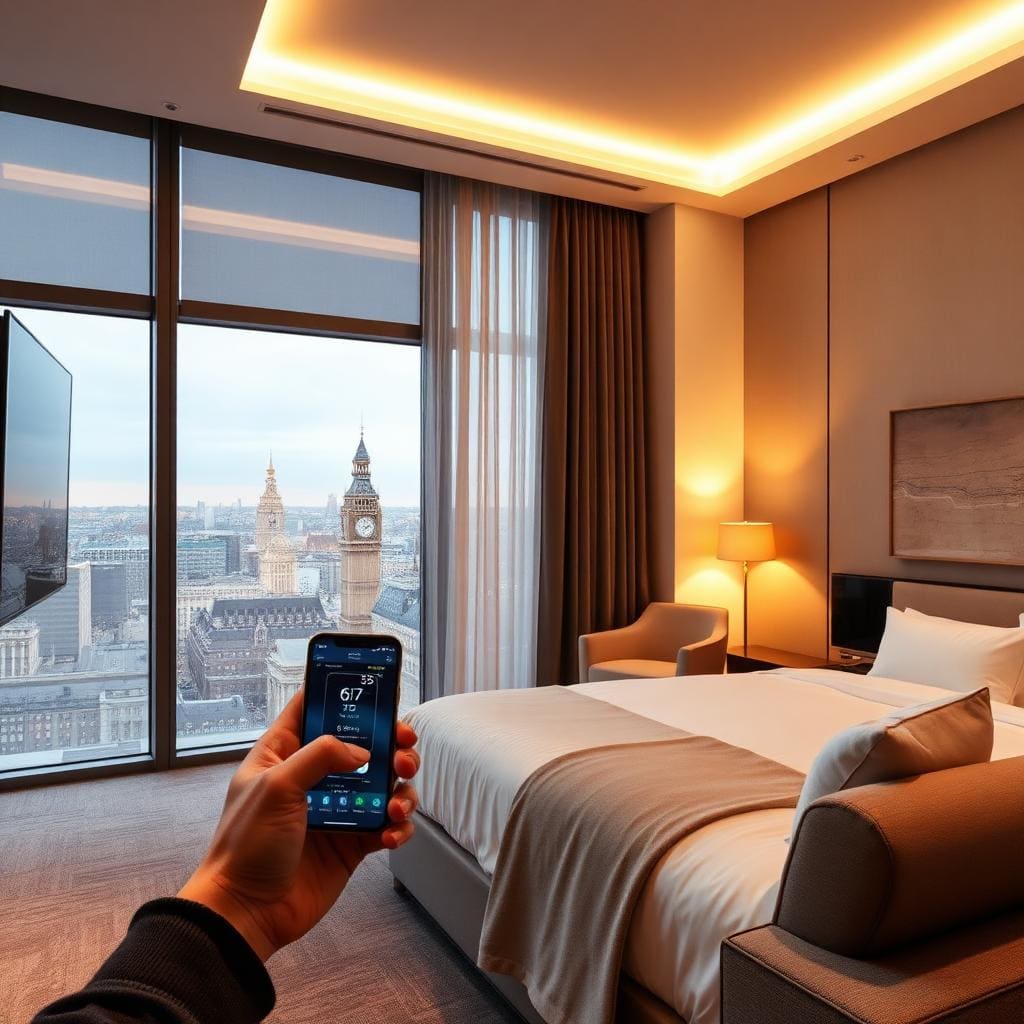
The hospitality applications of smart building technology create unique requirements around guest privacy, rapid credential turnover as guests check in and out daily, personalization based on guest preferences and loyalty status, and revenue optimization through dynamic pricing and inventory management. The hotel platforms must balance operational efficiency against service quality expectations where guests paying premium rates for luxury accommodations demand immediate responsiveness and flawless execution.
The mobile check-in and digital key system eliminates reception queues by enabling guests to complete check-in formalities through mobile applications before arrival, receiving room assignments and digital keys that grant immediate access without reception desk visits. The early arrival guests who complete online check-in during their journey from the airport arrive at hotels ready to go directly to rooms if housekeeping has completed cleaning, dramatically improving first impressions compared to traditional check-in processes requiring waiting in lobbies while paperwork gets completed.
The room personalization remembers guest preferences from previous stays, automatically configuring temperature, lighting, television channels, and even minibar contents to match individual preferences when rooms get assigned. The returning guest arriving at their room finds the temperature at their preferred 20°C, blackout curtains already drawn to their usual position, and their favorite champagne chilled in the minibar, creating "they remembered me" moments that drive loyalty and positive reviews. The preference learning happens implicitly through analyzing how guests adjust default settings, identifying patterns like always turning temperature cooler or always closing curtains completely.
Security Operations Center Dashboard and Incident Management
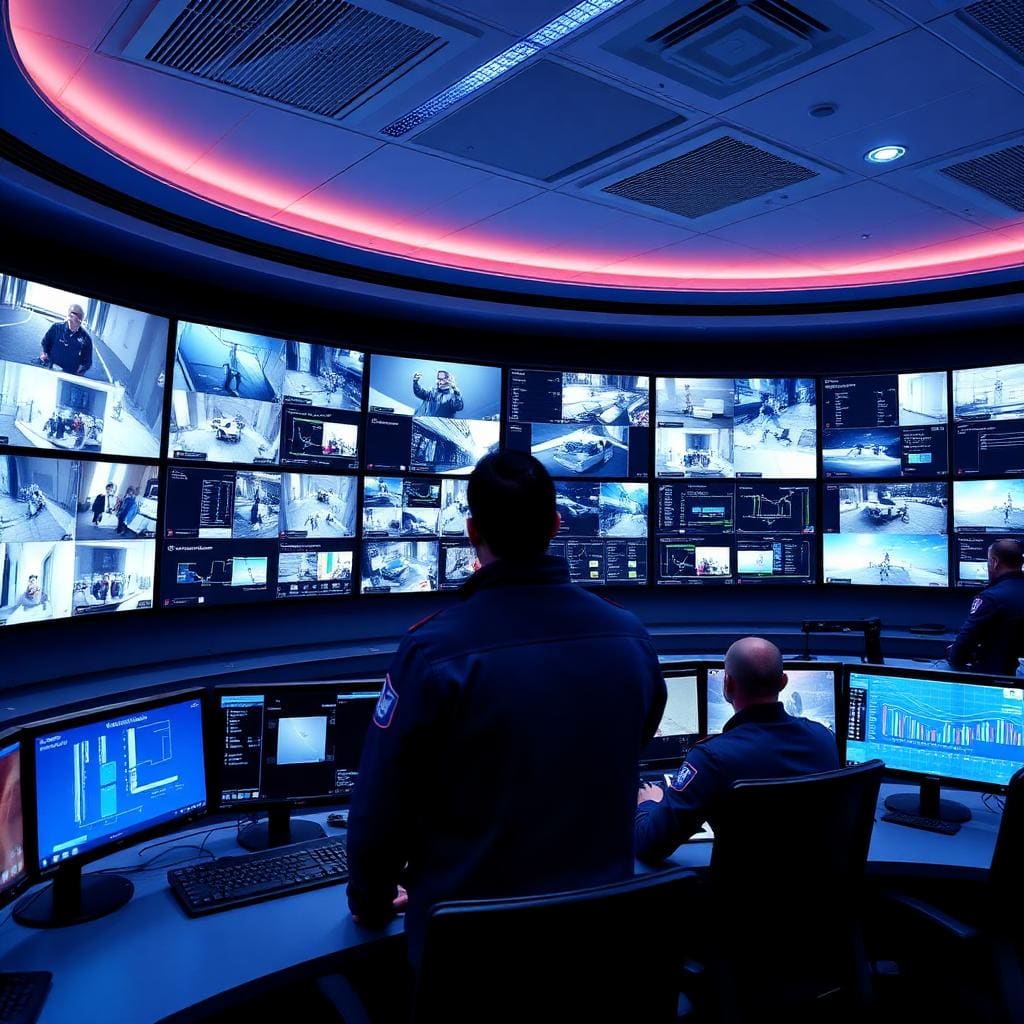
The security operations requirements for modern commercial buildings and hotels extend far beyond simple access control to encompass comprehensive threat detection, emergency response coordination, regulatory compliance documentation, and integration with law enforcement when incidents require external intervention. The security platform must provide unified visibility across diverse systems including access control, video surveillance, intrusion detection, fire life safety, and elevator monitoring while enabling rapid response through mobile communication with security personnel and automated protocols.
The unified security dashboard aggregates events from all connected systems into a single interface showing current building status, active alarms requiring attention, recent access events potentially indicating suspicious activity, and video feeds from cameras covering critical areas. The role-based views ensure that different personnel see relevant information: security supervisors see comprehensive building-wide status while individual guards see their assigned zones, and facilities managers see only the subset of security information relevant to their responsibilities without access to sensitive surveillance footage.
The automated threat detection uses machine learning to identify anomalous patterns that simple rules would miss, learning what constitutes normal behavior and flagging deviations warranting investigation. The algorithm might learn that a particular contractor typically accesses mechanical rooms on weekday afternoons, generating alerts when that credential gets used at 3 AM on Sunday suggesting credential theft or sharing. The tailgating detection using video analytics identifies when multiple people enter through a single credential presentation, catching unauthorized access attempts that door sensors cannot detect.
Technical Architecture for Scalable Smart Building Platforms
Building comprehensive smart building platforms requires integrating diverse systems using different communication protocols, handling enormous data volumes from thousands of sensors generating measurements continuously, ensuring cybersecurity protecting critical infrastructure from sophisticated threats, and maintaining high reliability since building system failures can create safety hazards or operational disruptions affecting hundreds or thousands of occupants.
IoT Integration Architecture and Protocol Handling
The IoT sensor and actuator landscape in modern smart buildings encompasses thousands of devices using dozens of different communication protocols, with building automation systems traditionally using BACnet or Modbus, access control systems using OSDP or Wiegand, lighting systems using DALI or DMX, and newer IoT sensors using MQTT, LoRaWAN, or proprietary protocols. The integration architecture must accommodate this heterogeneity through abstraction layers that present consistent internal interfaces regardless of underlying device protocols.
Protocol Gateway Architecture
Building Automation
- • BACnet for HVAC systems
- • Modbus for industrial equipment
- • DALI/DMX for lighting
- • OSDP/Wiegand for access control
IoT Sensors
- • MQTT for lightweight sensors
- • LoRaWAN for long-range wireless
- • REST APIs for cloud integration
- • Edge computing for local processing
The protocol gateway approach deploys edge computing devices at building locations that translate between various device protocols and standardized APIs consumed by cloud platforms, concentrating protocol complexity in gateway layers while keeping cloud systems simpler and more maintainable. The device management capabilities handle provisioning of new sensors, firmware updates maintaining security and functionality, monitoring of device health detecting communication failures or battery depletion requiring intervention, and decommissioning of replaced or failed devices.
Security Architecture and Encryption Standards
Beyond technical safeguards, platforms handling occupancy tracking and access logs must comply with UK GDPR as enforced by the Information Commissioner's Office, which requires encrypted data storage, clear privacy policies, and documented retention schedules for any personal data collected through building systems.
Defense-in-Depth Security Layers
- Encryption in Transit: TLS 1.3 with strong cipher suites for all network communications, certificate pinning preventing man-in-the-middle attacks
- Encryption at Rest: AES-256 encryption for databases, file systems, and mobile devices with HSM-based key management
- Access Control: Role-based permissions restricting access based on job functions and matter assignments, MFA required
- Audit Logging: Immutable logs recording all access with timestamps, user identity, and specific data accessed
- Network Segmentation: Building systems isolated from corporate networks preventing lateral movement
Digital Twin Platform and 3D Visualization Engine
The digital twin platform requires integrating building information models containing detailed geometric and system information created during design and construction with real-time operational data from IoT sensors, creating dynamic virtual representations that remain synchronized with physical reality. The BIM integration imports 3D geometry, system specifications, equipment locations, and design parameters from formats like IFC (Industry Foundation Classes) or proprietary tools like Revit and AutoCAD, providing the structural foundation for digital twins.
The 3D visualization engine renders building models through web-based graphics using WebGL or through native mobile rendering APIs, enabling interactive navigation through buildings with performance adequate for complex models containing hundreds of thousands of geometric elements. The level-of-detail management dynamically adjusts model complexity based on viewing distance and device capabilities, showing simplified representations for distant views and progressively loading detailed geometry as users zoom into specific areas.
Development Timeline and Investment Requirements for 2026
Understanding realistic timelines and budgets helps property owners and facility managers make informed decisions about smart building technology investments, whether to build custom platforms or use commercial building management systems, and how to phase development to deliver value incrementally while managing the substantial financial commitments that comprehensive solutions require.
The comprehensive smart building platform spanning access control, digital twin visualization, HVAC optimization, occupancy analytics, and hospitality operations typically requires fifteen to twenty months from initial planning through production deployment, reflecting the complexity of integrating diverse building systems, the extensive IoT sensor deployment and commissioning, AI model development and validation, and the careful change management required to drive adoption among facilities teams accustomed to traditional building management approaches.
Development Phase Breakdown
Full Platform Investment
Per large commercial building
- • iOS and Android mobile applications
- • Backend platform with digital twin engine
- • IoT gateway deployment and sensors
- • Building system integration
- • AI model development
- • Comprehensive testing
Phased Approach
Initial phase (6-9 months)
- • Mobile access control
- • Energy monitoring dashboard
- • Basic occupancy analytics
- • Security infrastructure foundation
- • Validates ROI before full investment
- • Measurable energy savings
The operational costs consume thirty to sixty thousand pounds annually per building covering cloud infrastructure hosting, data storage for historical sensor data, cellular or network connectivity for IoT gateways, software maintenance and updates, and ongoing support. These costs scale with building size and sensor density, potentially reaching higher levels for very large properties or portfolios spanning multiple buildings.
Why Frenchy Digital Excels at Smart Building Application Development
Building comprehensive smart building platforms requires specialized expertise spanning IoT integration, real-time data processing, 3D visualization, AI model development, building automation protocols, and mobile application development. Frenchy Digital brings this multifaceted capability through five years developing AI-powered mobile applications combined with deep expertise in IoT systems, real-time architectures, and secure platform development.
IoT Integration Expertise
Deep understanding of BACnet, Modbus, MQTT, and building automation protocols. Edge gateway architectures enabling efficient integration without wholesale infrastructure replacement.
3D Visualization
WebGL, Three.js, and mobile 3D rendering expertise creating responsive digital twin interfaces that facilities teams actually want to use.
AI Development
Predictive maintenance modeling, optimization algorithms, and anomaly detection delivering measurable energy savings and operational improvements.
Security-First Architecture
Defense-in-depth security protecting building systems from sophisticated threats. Network segmentation, encryption, and comprehensive audit capabilities.