












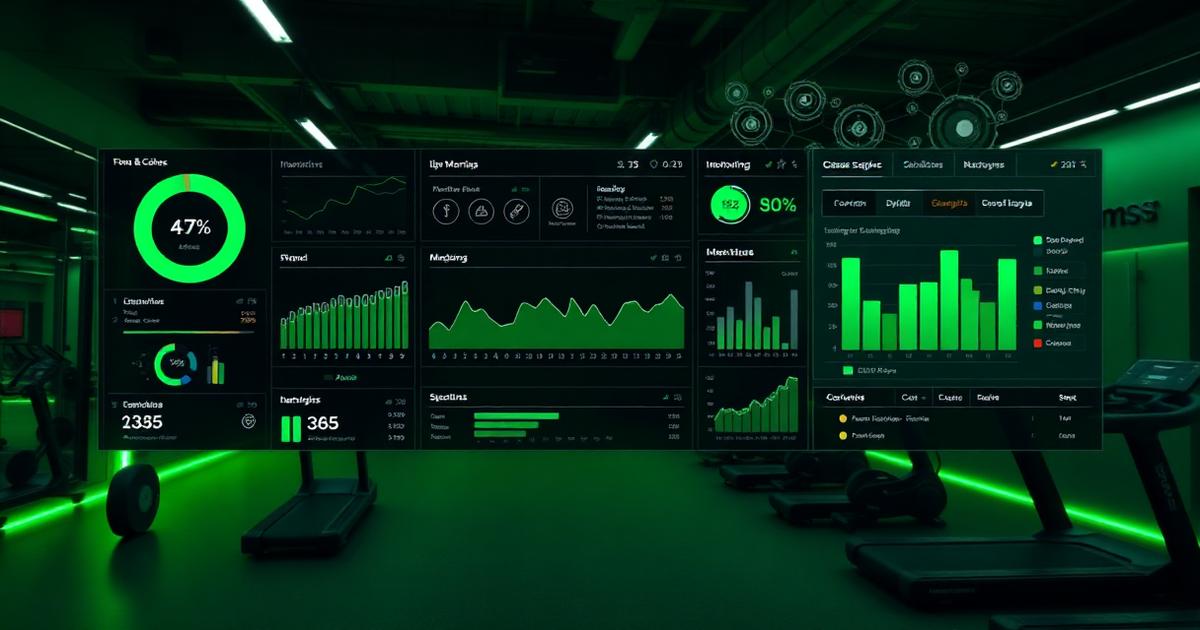
The Gym Operations AI Landscape in 2026
The gym management software market continues to grow, with AI-powered solutions commanding an increasing share. Fitness facility operators face mounting pressure from boutique studios, at-home fitness platforms, and rising operational costs, making intelligent automation not just advantageous but essential for survival.
AI agents for gym operations address the full spectrum of facility management challenges: from predicting member churn before it happens to optimizing HVAC systems based on real-time occupancy. The IHRSA Global Report indicates that facilities leveraging AI across operations see 35% lower operational costs and 22% higher revenue compared to non-AI competitors.
| Operations Area | AI Application | Cost Impact | Implementation Complexity |
|---|---|---|---|
| Member Retention | Churn prediction & intervention | 25-40% reduced churn | Medium |
| Class Scheduling | Demand forecasting & optimization | 20% higher utilization | Low-Medium |
| Equipment | Predictive maintenance IoT | 60% less downtime | Medium-High |
| Energy | Smart HVAC & lighting | 20-35% cost reduction | Medium |
| Sales | Lead scoring & nurturing | 30-50% better conversion | Medium |
| Staffing | Demand-based scheduling | 15-25% labor savings | Low |
| Capacity | Real-time flow management | 18% satisfaction increase | Medium |
For gym owners evaluating AI solutions, the key decision is between SaaS platforms with built-in AI features and custom-built solutions tailored to specific operational needs. Our AI agent development team helps facilities make this determination based on their scale, complexity, and competitive positioning.
Intelligent Member Management & Retention
Member retention is the single most impactful metric for gym profitability. Acquiring a new member costs more than retaining an existing one, and member turnover remains a persistent challenge across the industry. AI agents transform retention from reactive (responding to cancellation requests) to predictive (intervening weeks before members even consider leaving).
Advanced churn prediction models analyze 50+ behavioral signals including visit frequency trends, time-of-day patterns, class attendance changes, social connections within the gym, payment method changes, and even weather-correlated visit patterns. Deloitte's research shows these models can identify at-risk members 30-60 days before cancellation.
AI Member Lifecycle Management
- Onboarding Intelligence: Personalized 90-day onboarding sequences based on member goals, experience level, and behavioral clustering with similar successful members.
- Engagement Scoring: Real-time engagement scores combining visit data, app usage, class bookings, and social interactions to create comprehensive member health metrics.
- Intervention Triggers: Automated outreach via email, SMS, or in-app notifications when engagement scores drop below personalized thresholds, with messaging tailored to individual motivation profiles.
- Win-Back Campaigns: AI-optimized re-engagement campaigns for lapsed members, with timing, messaging, and offer personalization that achieve 15-25% reactivation rates.
- Lifetime Value Prediction: ML models forecasting individual member LTV to prioritize retention efforts on high-value members and optimize acquisition spend.
Retention Economics
A 1,500-member gym losing 40% annually needs 600 new members/year just to maintain size. AI reducing churn to 25% saves 225 members, equivalent to $270,000-$675,000 in annual revenue at $100-$250/month average membership fees, far exceeding any AI implementation cost.
AI-Powered Class & Staff Scheduling
Class scheduling in multi-format fitness facilities is a complex optimization problem. AI scheduling agents balance member demand patterns, instructor availability and expertise, room capacity, equipment requirements, and revenue optimization to create timetables that maximize both utilization and member satisfaction.
| Scheduling Factor | Traditional Approach | AI-Optimized Approach | Improvement |
|---|---|---|---|
| Class Timing | Fixed weekly schedule | Dynamic based on demand forecasting | +20% attendance |
| Instructor Assignment | Seniority/availability | Performance-matched to class type | +15% ratings |
| Room Allocation | First-come basis | Capacity-optimized by format | +12% utilization |
| Waitlist Management | Manual FIFO | Predictive no-show backfilling | -35% empty spots |
| New Class Testing | Gut-feel decisions | A/B testing with demand prediction | 2x success rate |
| Staff Scheduling | Fixed shifts | Demand-based flexible scheduling | -18% labor costs |
The staff scheduling component alone typically delivers 15-18% labor cost savings. AI agents forecast hourly foot traffic using historical patterns, local event calendars, weather data, and seasonal trends to ensure adequate front desk, cleaning, and training floor coverage without overstaffing during quiet periods. Learn more about optimizing operations with our property management AI guide.
Predictive Equipment Maintenance
Equipment downtime directly impacts member experience and retention. A single broken treadmill during peak hours affects dozens of members. AI predictive maintenance systems use IoT sensors to monitor equipment health continuously, forecasting failures before they occur and optimizing maintenance schedules.
IoT Sensor Stack for Gym Equipment
- Vibration Sensors: Detect bearing wear, belt degradation, and mechanical imbalances in cardio machines 2-4 weeks before failure.
- Usage Counters: Track total cycles, weight loads, and operating hours to schedule preventive maintenance based on actual usage rather than calendar time.
- Motor Current Monitors: Identify electrical degradation and motor stress patterns that indicate impending failure in motorized equipment.
- Environmental Sensors: Monitor temperature and humidity around equipment to prevent corrosion and optimize climate control for equipment longevity.
- Cable Tension Gauges: Measure cable stretch and wear in strength machines, scheduling replacements before safety-critical failures.
Facilities implementing predictive maintenance report 60% reduction in unexpected equipment downtime, 20-30% extension in equipment lifespan, and 25% reduction in total maintenance costs. The initial IoT sensor investment of $200-$500 per machine typically pays for itself within 6-9 months through extended equipment life and reduced emergency repair callouts.
Energy & Facility Optimization
Energy costs represent 6-10% of total gym operating expenses, with HVAC being the largest component. AI energy management systems integrate occupancy sensors, weather forecasts, utility rate schedules, and equipment heat output models to optimize facility comfort while minimizing costs.
| Energy System | AI Optimization Strategy | Typical Savings | Comfort Impact |
|---|---|---|---|
| HVAC | Occupancy-predictive pre-conditioning | 25-35% | Improved (pre-cooled/heated) |
| Lighting | Zone-based occupancy dimming | 40-60% | Neutral (maintained in active zones) |
| Ventilation | CO2-demand ventilation control | 20-30% | Improved (better air quality) |
| Hot Water | Usage pattern prediction | 15-25% | Neutral |
| Equipment Power | Off-peak charging, idle shutdown | 10-20% | None |
Smart building integration also supports sustainability marketing, which increasingly influences member acquisition. According to McKinsey, 68% of fitness consumers consider environmental practices when choosing a gym, making AI energy optimization both a cost reduction and a marketing tool.
Revenue & Sales AI Optimization
AI revenue optimization for gyms spans the entire member lifecycle from lead generation through upselling and renewal. AI sales agents analyze prospect behavior, demographic data, and historical conversion patterns to prioritize leads and personalize sales approaches.
- Lead Scoring: ML models scoring inbound leads based on demographics, website behavior, inquiry type, and similarity to high-LTV existing members, improving sales team efficiency by 40%.
- Dynamic Pricing: AI-optimized membership pricing based on demand elasticity, competitive positioning, seasonal patterns, and individual price sensitivity analysis.
- Upsell Intelligence: Predictive models identifying members most likely to purchase personal training, premium memberships, or ancillary services based on usage patterns and engagement trajectory.
- Referral Optimization: Identifying members most likely to generate referrals and timing referral incentive offers for maximum conversion.
- Secondary Revenue: AI-powered retail recommendations, F&B suggestions, and supplement subscriptions personalized to individual training goals and purchase history.
Facilities using AI-driven revenue management can see higher average revenue per member through improved pricing, targeted upselling, and reduced discounting. The combination of retention improvements and revenue optimization creates a compounding effect that accelerates facility growth.
Capacity & Member Flow Management
Post-pandemic capacity management has evolved from a compliance requirement to a member experience differentiator. AI capacity agents provide real-time occupancy tracking, predictive crowding alerts, and intelligent booking systems that distribute demand across off-peak hours.
Smart Capacity Management Features
- Real-Time Occupancy Display: Live occupancy data displayed in-app and at entry points, showing current capacity by zone (cardio, weights, studio, pool) with color-coded crowding indicators.
- Optimal Visit Time Suggestions: Personalized recommendations for less crowded visit windows based on individual member schedules and preferred equipment/areas.
- Peak Hour Booking: Optional reservation system for peak hours that guarantees equipment access while allowing walk-ins during non-peak times.
- Flow Heatmaps: Visual heatmaps of facility usage patterns informing layout optimization, equipment placement, and expansion planning decisions.
- Demand Shaping: Dynamic incentives (reduced rates, bonus rewards points) for off-peak visits that redistribute demand and improve overall facility utilization.
Operational Analytics & Decision Intelligence
The true power of AI in gym operations emerges when individual systems connect into a unified analytics platform. Executive dashboards powered by AI provide facility operators with real-time operational intelligence and predictive insights for strategic decision-making.
| Dashboard Module | Key Metrics | AI Insight Type | Decision Support |
|---|---|---|---|
| Member Health | NPS, engagement scores, churn risk | Predictive | Retention investment allocation |
| Financial | Revenue/member, CAC, LTV, ARPU | Diagnostic + Predictive | Pricing and promotion strategy |
| Operations | Utilization, maintenance, energy | Prescriptive | Capex and staffing decisions |
| Marketing | Lead pipeline, conversion, channel ROI | Diagnostic | Marketing budget allocation |
| Competitive | Market share, pricing position, reviews | Descriptive | Positioning and differentiation |
These analytics platforms transform gym management from intuition-based to data-driven. Our health data analytics guide explores the underlying data architecture patterns that power these intelligence systems.
Facility Implementation Case Studies
Case Study: Regional Gym Chain (28 Locations)
A mid-market gym chain deployed AI across all 28 locations for member retention, class scheduling, and energy management, and saw member churn decline, energy costs fall, and class utilization increase over the following year.
Case Study: Premium Boutique Studio
A high-end boutique cycling studio implemented AI for dynamic pricing, waitlist optimization, and personalized member experiences, and saw revenue per class rise, no-show rates fall with predictive backfilling, and member satisfaction scores improve.
Case Study: University Recreation Center
A large university recreation center used AI for capacity management and equipment maintenance, reducing peak-hour congestion complaints, improving equipment availability, and allowing it to handle more daily visits without facility expansion.
Frenchy Digital: Gym Operations AI Solutions
At Frenchy Digital, we build AI-powered gym management platforms that integrate member analytics, predictive maintenance, intelligent scheduling, and revenue optimization into unified operational intelligence systems. Our solutions serve single-location studios through multi-site chains.
Our Gym AI Capabilities
- Member Intelligence Platform: 360-degree member profiles with churn prediction, engagement scoring, and automated retention workflows.
- IoT Equipment Management: Sensor integration with predictive maintenance, usage analytics, and automated service scheduling for all equipment types.
- Smart Scheduling Engine: AI-optimized class and staff schedules that maximize utilization while minimizing labor costs.
- Revenue Optimization Suite: Dynamic pricing, upsell intelligence, and lead scoring tools that increase per-member revenue by 15-25%.
- Executive Dashboard: Real-time operational intelligence with predictive analytics for strategic facility management decisions.
Explore our AI agent development services or see how we approach AI personal training solutions for the complete fitness technology picture.
Transform Your Gym with AI
From member retention to equipment maintenance, we build AI-powered management platforms that optimize every aspect of fitness facility operations.
1517 S Bentley Ave Suite 204, Los Angeles CA 90025