






Phase 1: Ideation & Problem Validation
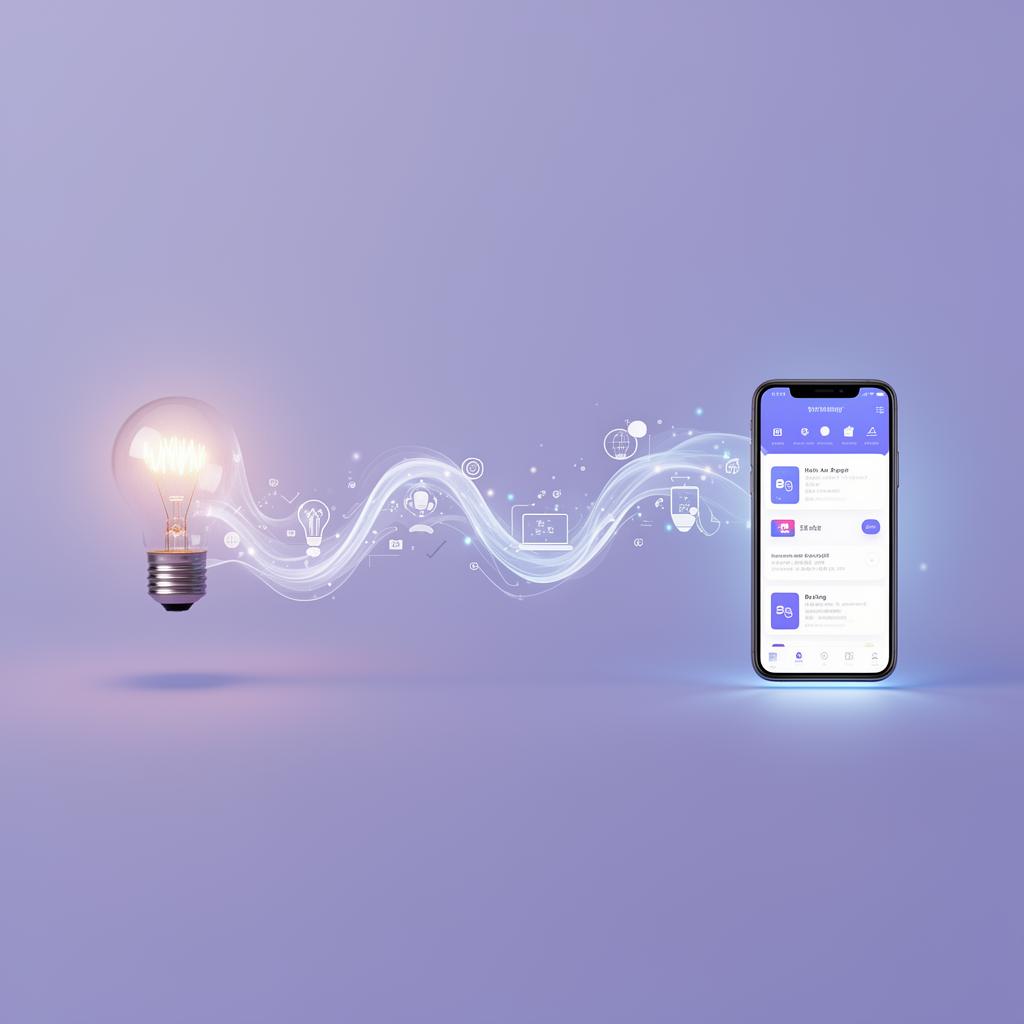
Every successful product starts with a problem worth solving: not a feature list, not a technology stack, and certainly not "an app like Uber but for X." The ideation phase is where the agency helps you separate genuine market opportunities from assumptions dressed up as ideas.
What happens in this phase: The agency interviews you to understand the origin of the idea, the problem you believe it solves, the users you think have this problem, and how those users currently solve it without your product. They then conduct independent validation: searching for existing solutions, analyzing why those solutions succeed or fail, and identifying whether the problem is frequent, intense, and valuable enough to build a business around.
Key questions the agency should ask: Who specifically has this problem? How do they solve it today? What would make them switch? How much would they pay? How often do they have this problem? If you cannot answer these questions with evidence, the agency should push you to find answers before proceeding.
Ideation Validation Checklist
| Criterion | Pass | Fail | Action If Failing |
|---|---|---|---|
| Specific user identified | Named persona with demographics | Everyone / anyone | Conduct 5 user interviews |
| Problem verified as real | Users confirm they have this problem | Founder assumption only | Run survey with 50+ target users |
| Existing workaround identified | Users currently solve this somehow | No one has tried to solve this | Investigate why: may be non-problem |
| Switching trigger clear | Users would switch for specific benefit | Nice to have, not need to have | Test willingness to pay |
| Market size estimable | TAM/SAM/SOM calculable | Cannot define addressable market | Research adjacent markets and competitors |
| Technical feasibility known | Core functionality is buildable | Requires unproven technology | Run technical spike in discovery |
The output of this phase is not a product spec. It is a validation memo: the problem is real (or not), the user is identifiable (or not), the opportunity is worth pursuing (or not). At Frenchy Digital, we have advised clients to stop pursuing ideas that failed validation, saving them $100K+ in wasted development. A good agency tells you when not to build.
Phase 2: Discovery & Market Research
Discovery is where the agency transforms a validated idea into a product definition. This phase typically takes 2-4 weeks and produces the foundation for every decision that follows. Skipping discovery is the most expensive shortcut in product development: it guarantees rework, budget overrun, and often failure.
Discovery activities:
- Stakeholder interviews: 60-90 minute sessions with founders, domain experts, and potential customers to capture knowledge, constraints, and success criteria.
- Competitive analysis: Deep review of 5-10 direct and indirect competitors, mapping their features, pricing, user experience, and identified gaps.
- User research: Generative interviews with 8-12 target users, journey mapping, and persona development. Not surveys, conversations.
- Market sizing: Total Addressable Market (TAM), Serviceable Addressable Market (SAM), and Serviceable Obtainable Market (SOM) calculations with data sources.
- Technical feasibility: Architecture assessment, API availability review, integration complexity scoring, and platform recommendations.
- Business model validation: Unit economics, pricing strategy, acquisition channel identification, and LTV/CAC modeling.
Discovery deliverables: A comprehensive discovery report containing user personas (with quotes and behavioral data), journey maps, competitive gap analysis, technical architecture recommendations, feature prioritization matrix, risk register, and a validated product brief with realistic budget and timeline estimates.
"The big question of our time is not Can it be built? but Should it be built? This is the discovery question. And it can only be answered by getting out of the building and talking to customers."
Eric Ries, The Lean Startup
At Frenchy Digital, discovery is a fixed-price engagement ($8K-$20K depending on complexity) that runs before any design or engineering contract. Clients receive a validated product brief they can take to any agency, or use to raise funding. It is insurance against building the wrong product.
Phase 3: Product Strategy & Prioritization
With a validated idea and discovery findings, the agency now defines what to build, in what order, and why. Strategy is the bridge between research and execution, and it is where many agencies stumble by saying yes to every feature request instead of making hard prioritization calls.
Strategic decisions made in this phase:
- MVP vs. full product scope: What is the minimum viable product that tests core assumptions? What features are deferred to v2, v3, or never?
- Platform strategy: iOS first, Android first, or both? Web companion app? Progressive web app? The decision impacts timeline, budget, and user reach.
- Monetization model: Freemium, subscription, one-time purchase, advertising, or B2B SaaS? Each requires different UX patterns and backend architecture.
- Integration strategy: What third-party APIs, payment processors, analytics tools, and auth systems are required?
- Success metrics: What does success look like in 30, 90, and 180 days? How will it be measured?
- Go-to-market approach: Private beta, public launch, or phased rollout by geography or user segment?
Prioritization frameworks used by top agencies:
| Framework | Best For | How It Works |
|---|---|---|
| RICE | Data-rich environments | Scores features by Reach, Impact, Confidence, and Effort |
| Kano Model | Understanding user satisfaction | Classifies features as basic, performance, or delight factors |
| MoSCoW | Time-constrained projects | Buckets features as Must, Should, Could, or Won't have |
| Value vs. Complexity | Quick prioritization | 2×2 matrix plotting user value against implementation difficulty |
| Story Mapping | User journey alignment | Organizes features by user activity and priority within each activity |
The output of strategy is a prioritized product roadmap with versioned releases, a defined MVP scope with acceptance criteria, and a technical architecture document. This becomes the contract between client and agency, not a fixed spec, but a shared understanding of priorities that can adapt as learning happens.
Phase 4: UX/UI Design & Prototyping
Design translates strategy into something users can see, touch, and feel. In professional agencies, design is not decoration: it is the expression of research findings, the visualization of user flows, and the foundation for engineering decisions. A well-designed product reduces engineering complexity; a poorly designed one inflates it.
The design phase in a top-tier agency:
- Information architecture: Defining the structure of content, navigation patterns, and screen hierarchy before a single pixel is placed.
- User flows: Mapping every path a user can take (signup, onboarding, core task, error recovery, logout) with decision points and edge cases.
- Wireframes: Low-fidelity grayscale layouts that establish layout, content, and functionality without visual distractions. Tested for usability before visuals are added.
- High-fidelity mockups: Pixel-perfect screens with brand colors, typography, imagery, and micro-interactions. Built in Figma or Sketch with auto-layout and design tokens.
- Interactive prototypes: Clickable simulations that behave like the real app. Used for stakeholder reviews, investor demos, and usability testing with real users.
- Design system: A reusable component library (buttons, inputs, cards, modals) with documentation, ensuring consistency across the product and speed in development.
Design deliverables: User flow diagrams, wireframe set (all key screens), high-fidelity mockups, clickable prototype (InVision, Figma, or ProtoPie), design system component library, and developer handoff package with specs, assets, and motion guidelines.
Design Phase Timeline & Investment
| Scope | Timeline | Investment | Deliverables |
|---|---|---|---|
| MVP (5-10 screens) | 3-4 weeks | $15K-$30K | Flows, wireframes, mockups, prototype, basic design system |
| Consumer App (20-40 screens) | 5-7 weeks | $35K-$70K | Full flows, wireframes, mockups, prototype, comprehensive design system |
| Enterprise Platform (50+ screens) | 8-12 weeks | $70K-$150K | Complex flows, wireframes, mockups, prototype, advanced design system with theming |
At Frenchy Digital, every design phase includes at least one round of usability testing with 5-8 real users. We do not proceed to engineering until the prototype validates that users can complete core tasks without confusion. This single practice prevents 60-80% of post-launch UX issues.
Phase 5: Engineering & Development
Engineering is where the product becomes real. In a professional agency, development does not start when design ends: it starts as soon as architecture is defined, with backend infrastructure and API scaffolding running parallel to visual design. This overlap is one of the biggest time-savers in integrated delivery.
Engineering phases within development:
- Architecture and scaffolding (Weeks 1-2): Database schema design, API contract definition, authentication system, CI/CD pipeline setup, and cloud infrastructure provisioning. The skeleton of the application.
- Sprint-based feature development (Weeks 3-16+): Two-week agile sprints with planning, daily standups, demos, and retrospectives. Each sprint delivers working, testable functionality.
- API and backend development: Server-side logic, third-party integrations, data processing pipelines, and admin dashboards. Often invisible to users but critical to product function.
- Frontend and mobile development: React, React Native, Swift, or Kotlin implementation of designed screens. Component-based development using the design system.
- Integration and systems testing: Connecting frontend to backend, testing API contracts, verifying data flows, and ensuring third-party services (payments, push notifications, analytics) function correctly.
Engineering practices that separate great agencies from average ones:
| Practice | Great Agency | Average Agency |
|---|---|---|
| Version control | Git with branch protection, PR reviews, CI/CD | Git without process, direct pushes to main |
| Testing | Unit, integration, and E2E tests with >70% coverage | Manual testing only, no automated suite |
| Code quality | Linting, type checking, documented code | Inconsistent style, minimal documentation |
| Deployment | Automated CI/CD to staging and production | Manual FTP uploads, no staging environment |
| Monitoring | Error tracking, performance monitoring, logging | No observability, bugs reported by users |
| Security | Auth best practices, input validation, dependency audits | No security review, hardcoded secrets |
Engineering investment ranges:
- MVP backend + single frontend: $50K-$120K
- Multi-platform mobile app + web admin: $150K-$400K
- Enterprise platform with integrations and compliance: $400K-$1M+
Phase 6: QA, Testing & Stabilization
Quality assurance is not a phase that happens after development: it is a continuous practice that runs parallel to engineering. But there is a critical stabilization window before launch where testing intensifies and the product is hardened against real-world conditions.
Testing layers in a professional agency:
- Unit testing: Automated tests for individual functions and components. Run on every code commit via CI/CD. Target: >70% code coverage.
- Integration testing: Verifying that modules, APIs, and services work together correctly. Critical for catching contract mismatches between frontend and backend.
- End-to-end (E2E) testing: Automated browser/app tests that simulate real user journeys (signup, purchase, logout) on staging environments.
- Manual exploratory testing: Skilled QA engineers use the app creatively to find edge cases, usability issues, and unexpected behavior that automation misses.
- Device and OS testing: Testing on real devices (not just simulators) across screen sizes, OS versions, and manufacturers. iOS 15-17, Android 10-14 minimum in 2026.
- Performance testing: Load testing APIs, measuring app startup time, monitoring memory usage, and ensuring smooth 60fps animations.
- Security testing: Dependency vulnerability scans, input validation testing, authentication bypass attempts, and OWASP Mobile Top 10 review.
- Accessibility testing: Screen reader compatibility, color contrast verification, keyboard navigation, and dynamic text sizing.
Stabilization sprint: The 2-3 weeks before launch are dedicated to bug triage and fixing. No new features. The team operates from a prioritized bug backlog, working from crash-inducing issues down to cosmetic polish. A professional agency will not launch with known crashes or data-loss bugs, period.
QA Investment by Product Tier
| Tier | Testing Approach | Timeline | Investment |
|---|---|---|---|
| MVP | Manual + selective automation | 1-2 weeks | $5K-$12K |
| Consumer App | Automated + manual + device lab | 2-3 weeks | $15K-$35K |
| Enterprise | Full automation + pen testing + compliance audit | 3-4 weeks | $40K-$80K |
Phase 7: Launch & Go-to-Market
Launch is not uploading a binary to the App Store. It is a coordinated release of the product, marketing, support, and analytics infrastructure. Agencies that treat launch as an afterthought deliver products that no one finds, no one understands, and no one uses.
Pre-launch checklist (2-3 weeks before):
- App store assets: Screenshots, preview videos, descriptions, keywords, and metadata optimized for ASO (App Store Optimization). Each platform has different requirements.
- Analytics instrumentation: Events, funnels, and cohorts configured in Amplitude, Mixpanel, or Firebase. Without analytics, you are flying blind.
- Crash reporting: Firebase Crashlytics, Sentry, or Bugsnag configured with alerting thresholds.
- Support infrastructure: Help documentation, FAQ, in-app feedback mechanism, and support channel (chat, email, or ticketing system).
- Marketing readiness: Website landing page, press kit, social media assets, and email sequences prepared. The agency does not do your marketing, but they should deliver assets you can use.
- Server scaling: Load balancers, auto-scaling groups, and CDN configuration tested under simulated load.
- Rollback plan: If the launch introduces critical issues, how quickly can you revert? Database migrations need backward compatibility.
Staged launch approach:
| Stage | Audience | Purpose | Duration |
|---|---|---|---|
| Alpha | Internal team + agency | Catch critical bugs before external eyes | 1 week |
| Closed Beta | 50-200 invited users | Real usage data, early feedback, rating seeding | 2-3 weeks |
| Soft Launch | 1-2 geographic markets | Test marketing, refine onboarding, validate metrics | 2-4 weeks |
| Public Launch | Global availability | Full marketing push, PR, paid acquisition | Ongoing |
Post-launch (the first 90 days): Monitor analytics daily for the first two weeks, then weekly. Triage crash reports within 24 hours. Respond to every user review, especially negative ones. Run your first A/B test on onboarding within 30 days. Plan v1.1 features based on usage data, not founder intuition.
Realistic Timelines & Budgets
The following ranges reflect verified 2026 market data from agency quotes, Clutch reviews, and direct client references. Use them to sanity-check any proposal you receive.
| Phase | MVP (4-6 mo) | Consumer App (6-10 mo) | Enterprise (10-18 mo) |
|---|---|---|---|
| Ideation & Validation | $0-$5K | $0-$10K | $5K-$20K |
| Discovery & Research | $8K-$20K | $15K-$40K | $30K-$80K |
| Strategy & Roadmap | $3K-$8K | $8K-$20K | $20K-$50K |
| UX/UI Design | $15K-$30K | $35K-$70K | $70K-$150K |
| Engineering | $50K-$120K | $150K-$400K | $400K-$1M+ |
| QA & Testing | $5K-$12K | $15K-$35K | $40K-$80K |
| Launch & Support | $3K-$8K | $10K-$25K | $25K-$60K |
| Total Build | $84K-$203K | $233K-$600K | $590K-$1.44M |
| Post-Launch (mo 1-3) | $8K-$15K | $25K-$60K | $60K-$120K |
Important: These are total project costs, not monthly retainers. Monthly burn rates during active development range from $25K-$60K/month for MVPs, $60K-$120K/month for consumer apps, and $120K-$250K/month for enterprise platforms. The most expensive month is typically month 4-6 of engineering, when the full team is staffed.
MVP vs. Full Product: How to Choose
The MVP debate is not about building less. It is about learning faster. A true MVP has just enough functionality to test core assumptions with real users. It is not a half-finished product; it is a complete, polished experience around a narrow feature set.
| Dimension | MVP | Full Product |
|---|---|---|
| Goal | Validate core assumptions | Serve complete market need |
| Timeline | 3-5 months | 8-14 months |
| Budget | $80K-$200K | $250K-$800K |
| Feature Set | 1-2 core user flows | Complete feature matrix |
| Platforms | iOS OR Android (not both) | iOS + Android + Web |
| Design Polish | Professional but scoped | Premium, differentiated |
| Backend | Essential APIs only | Scalable, multi-service architecture |
| Analytics | Basic events and funnels | Cohort analysis, attribution, custom dashboards |
| Best For | Startups, new ideas, unvalidated markets | Proven demand, Series B+, enterprise requirements |
When to choose MVP: You have a new idea without proven demand. You are pre-Series A. You need to show traction to raise funding. You want to test multiple concepts quickly. Your market is uncertain or evolving.
When to choose full product: You have validated demand through an existing product, waitlist, or beta. You have Series A+ funding. You are replacing an existing product that users already depend on. You have enterprise clients with compliance or integration requirements. Your competitors have full-featured products and you need parity.
"If you are not embarrassed by your first product release, you have launched too late. The goal of an MVP is to start the learning process, not to build the final product."
Reid Hoffman, LinkedIn Co-Founder
Your Role as a Client
The best agency-client relationships are partnerships, not vendor transactions. Your involvement at key moments determines product quality more than any agency process. Here is what professional agencies expect from clients, and what you should expect from yourself.
- Be available for decisions: Agencies cannot build without direction. When a decision is needed, respond within 24-48 hours. Delayed decisions compound into delayed launches.
- Provide domain expertise: You know your industry, users, and constraints better than any agency. Share that knowledge generously in discovery and throughout development.
- Attend weekly demos: 30-60 minutes to review sprint progress, provide feedback, and adjust priorities. This is not optional. It is the steering mechanism.
- Test builds actively: When the agency sends a staging build, use it. Click every button, try edge cases, and report bugs with reproduction steps. Your testing complements their QA.
- Respect the process: If the agency recommends user testing before engineering, listen. If they push back on scope creep, thank them. Process exists to protect your investment.
- Prepare for launch: The agency builds the product; you build the audience. Start marketing, PR, and user acquisition planning 6-8 weeks before launch.
- Be honest about constraints: Budget, timeline, technical limitations, political dynamics. Hiding constraints from your agency guarantees bad decisions.
Time commitment by phase: Ideation/discovery: 4-6 hours/week. Design: 3-5 hours/week. Engineering: 2-4 hours/week. QA/launch: 5-10 hours/week. Total over a 6-month project: approximately 100-150 hours of your time, less than one month of full-time work spread across half a year.
10 Red Flags in Agency Process
These warning signs predict failed engagements with high confidence. If an agency exhibits more than two, proceed with extreme caution.
- No discovery phase: They want to start coding immediately. This means they are not interested in whether your idea works, only in billing hours.
- Cannot explain their process: Vague answers like 'we are agile' or 'we will figure it out as we go' mean they have no process. Every professional agency can walk you through their phases, deliverables, and decision gates.
- Fixed-price quote before requirements are defined: An agency that quotes $200K after a 30-minute call is guessing. Guessing leads to change-order warfare later.
- No user testing in design: Designs go straight to engineering without validation with real users. The first users to see your product are the ones who download it from the app store.
- No staging environment: You only see the product when it is 'done.' There is no incremental feedback, no course correction, and no confidence in what you are getting.
- Offshore team with no transparency: You cannot talk to the people building your product. Communication goes through account managers who are not technical.
- No QA phase: Testing is 'included in development', meaning it is not done. Bugs are found by users, not testers.
- Launch treated as the end: The contract ends at app store submission. There is no post-launch support, no analytics review, and no iteration planning.
- No IP ownership clause: The agency retains rights to your code, designs, or both. You are renting your own product.
- Scope changes accepted without impact analysis: Every change is 'no problem', until the deadline slips and the budget doubles. Professional agencies assess and communicate impact.
Frequently Asked Questions
These questions represent the most common concerns from founders and product leaders navigating the idea-to-launch process with an agency for the first time.
From Idea to Launch: Making It Real
The journey from idea to launched product is not a linear assembly line. It is a series of validated learning loops, each reducing risk and increasing clarity. The agencies that consistently deliver great products are not the ones with the most developers or the flashiest portfolios. They are the ones with the most disciplined process: research before assumptions, prototypes before production, testing before launch, and iteration before scale.
The seven-phase framework in this guide (ideation, discovery, strategy, design, engineering, QA, and launch) is not theoretical. It is the process Frenchy Digital and the best agencies in the industry use every day. It is designed to answer the question that matters most: not "Can we build this?" but "Should we build this, and if so, what is the smartest way to do it?"
The red flags in this guide are real. We have seen clients burned by agencies that skipped discovery, launched without QA, or disappeared after app store submission. We have also seen clients succeed spectacularly when they partner with agencies that treat process as a competitive advantage, not overhead.
If you have an idea and need a partner to take it to launch, with validation, transparency, and senior-level execution at every phase, book a free 30-minute discovery call with Frenchy Digital. We will validate your idea, map your seven-phase journey, and give you an honest assessment of scope, budget, and timeline. If we are not the right fit, we will tell you who is.
Have an app idea and need a clear path to launch?
Book a free 30-minute discovery call with Frenchy Digital. We will validate your idea, map your seven-phase journey, and give you a realistic budget and timeline, whether or not you work with us.
1517 S Bentley Ave Suite 204, Los Angeles CA 90025
Frequently Asked Questions
Sources & References
- 1CB Insights: The Top 20 Reasons Startups Fail↗
- 2McKinsey: Product Development Success Factors↗
- 3Standish Group: CHAOS Report↗
- 4Harvard Business Review: The MVP Myth↗
- 5Nielsen Norman Group: UX Research Methods↗
- 6Apple: App Store Review Guidelines↗
- 7Google Play: Policy Center↗
- 8DORA: State of DevOps Report↗
- 9Y Combinator: How to Build Product↗
- 10First Round Review: The Product-Market Fit Guide↗