












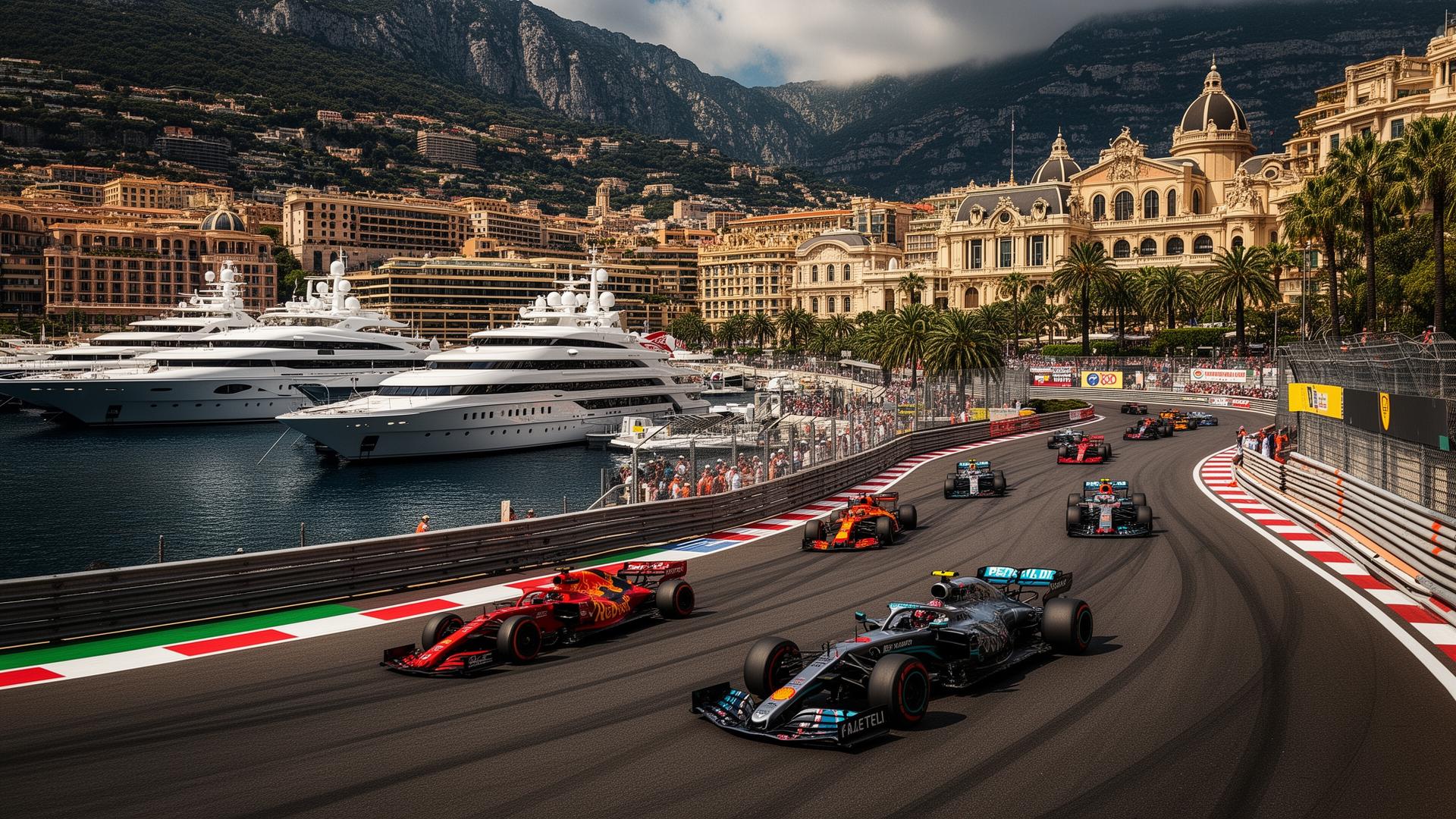
Monaco Grand Prix: The Digital Transformation of Motorsport's Crown Jewel
The Monaco Grand Prix represents the pinnacle of motorsport prestige: a race that transcends sport to become a global cultural phenomenon attracting royalty, celebrities, and 100,000+ visitors to the tiny principality each May. According to Statista, F1 reached 1.5 billion cumulative TV viewers in 2025. For app developers, Monaco GP presents unique opportunities and challenges that make it the ultimate proving ground for fan experience platforms.
Unlike any other circuit on the F1 calendar, Monaco's 3.337km street circuit weaves through the heart of Monte Carlo, passing the famous Casino, threading through the tunnel, and skirting the harbor where superyachts worth €50M+ serve as floating hospitality venues. This creates a mobile development environment unlike any other: one where connectivity drops in tunnels, ultra-high-net-worth users demand white-glove digital experiences, and integration with Monaco's exclusive hospitality ecosystem is as important as race tracking.
"Digital engagement is the future of F1 fan experience. Monaco represents our most challenging and rewarding environment: fans expect real-time data, exclusive access, and seamless integration with the glamour that defines the weekend."
Stefano Domenicali, F1 CEO
Monaco GP by the Numbers (2025)
- 100,000+ race weekend visitors to a principality of 39,000 residents
- €3 billion annual economic impact for Monaco
- 500+ superyachts in Port Hercule during race weekend
- 78% of attendees are international visitors (Europe, Middle East, Americas)
- Average hospitality spend of €15,000-€50,000 per VIP guest
- 1.5 billion cumulative TV viewers across race weekend
The convergence of motorsport technology and ultra-luxury hospitality creates a unique app development landscape. Successful Monaco GP apps must deliver real-time race data with sub-200ms latency while simultaneously integrating yacht booking, helicopter transfers, and Michelin-star dining reservations, all within an interface that reflects the sophistication expected by Monaco's discerning audience.
Monaco GP App Development Complexity Factors
| Factor | Challenge | Technical Solution |
|---|---|---|
| Tunnel Dead Zones | 2.5km of intermittent connectivity | Offline-first architecture with mesh networking |
| Concurrent Users | 100,000+ during race peak | Global CDN with edge computing |
| VIP Expectations | White-glove digital experience | Personalized AI concierge features |
| Multi-language | French, English, Italian, Russian minimum | Real-time translation for commentary |
| Hospitality Integration | Yacht, helicopter, casino systems | Bespoke API partnerships |
| Security Requirements | UHNW personal data protection | Zero-trust architecture with biometrics |
This guide provides the comprehensive technical and strategic framework for developing Monaco GP fan experience platforms: from real-time telemetry integration to VIP hospitality management systems that meet the exacting standards of motorsport's most prestigious event.
Fan Experience Platform Architecture
Building a Monaco GP fan experience platform requires a sophisticated multi-layer architecture that balances real-time performance with the reliability needed for mission-critical race weekend operations. The architecture must support everything from casual fans following the race to VIP guests managing complex hospitality schedules.
Core Platform Components
- Race Tracking Engine: Real-time F1 Live Timing API integration with sub-200ms latency for position updates, gap calculations, and sector times
- Circuit Navigation: Interactive 3D maps of the Monaco circuit with grandstand locations, hospitality areas, and real-time crowd density
- Hospitality Hub: Integrated booking system for yacht experiences, Paddock Club, rooftop terraces, and exclusive events
- Social & Community: Fan engagement features including predictions, reactions, and connection with other attendees
- Commerce Platform: Official merchandise, experience upgrades, and VIP package purchases with Stripe Connect
- Personalization Engine: AI-driven content recommendations based on favorite drivers, teams, and viewing preferences
The fan experience layer must accommodate vastly different user personas: from first-time visitors seeking navigation help to Monaco regulars managing their social calendar across multiple yacht parties and hospitality events. This requires dynamic UI adaptation based on user profile and context.
User Persona Architecture
| Persona | Primary Needs | Key Features | Revenue Potential |
|---|---|---|---|
| Casual Fan | Race following, basic navigation | Live timing, circuit map, schedule | €0-€50/year (free tier) |
| Enthusiast | Deep telemetry, driver insights | Sector analysis, radio, onboard | €100-€200/year premium |
| Hospitality Guest | Event management, VIP access | Yacht booking, concierge, access QR | €500-€5,000/event |
| Ultra VIP | White-glove experience | Dedicated concierge, helicopter, security | €10,000+/weekend |
| Corporate Host | Multi-guest management | Guest lists, hospitality coordination | €25,000+/package |
The platform architecture must support graceful degradation for connectivity challenges unique to Monaco. The tunnel section between Portier and Nouvelle Chicane creates a 2.5-second connectivity gap for spectators in certain grandstands. Offline-first design patterns with intelligent sync queuing ensure users never miss critical race moments.
Technical Stack Recommendation
- Mobile Framework: React Native with New Architecture (Fabric, TurboModules) for iOS and Android
- Real-time Data: WebSocket connections with automatic reconnection and state reconciliation
- Offline Storage: WatermelonDB for complex offline queries with sync conflict resolution
- Maps & Navigation: Mapbox GL with custom tileset for circuit-specific rendering
- Video Streaming: HLS with adaptive bitrate through AWS Media Services
- Push Notifications: Firebase Cloud Messaging with priority channels for race alerts
User authentication flows must support multiple entry points: from general public downloads to invitation-only VIP access codes. Integration with Monaco hospitality partners requires federated identity management to provide seamless experiences across yacht booking, casino rewards, and race access systems.
Real-Time Race Tracking Systems
Real-time race tracking is the technical heart of any F1 fan app. For Monaco GP, this means processing millions of data points per second (car positions, speeds, tire temperatures, DRS status, and radio communications) and delivering them to 100,000+ concurrent users with sub-200ms latency.
F1 Live Timing Data Architecture
| Data Type | Update Frequency | Latency Target | Technical Approach |
|---|---|---|---|
| Car Position | 10 Hz (10 times/second) | <100ms | WebSocket with position prediction |
| Gap to Leader | 1 Hz | <200ms | Server-side calculation with edge caching |
| Sector Times | On completion | <500ms | Event-driven with push notification |
| Tire Compound | On change | <1 second | Polling with intelligent caching |
| Team Radio | When broadcast | <3 seconds | Audio streaming with transcription |
| Onboard Video | 25 fps stream | <5 seconds | HLS adaptive bitrate streaming |
The F1 Live Timing API provides the authoritative data source for all timing and telemetry information. Integration requires partnership with Formula One Management (FOM) and AWS, which powers F1 Insights analytics. Akamai provides CDN infrastructure for global stream delivery, while Stripe Connect handles marketplace payments. Mapbox enables custom circuit map rendering. Firebase Cloud Messaging delivers real-time race alerts. GDPR and Monaco's strict privacy laws govern VIP data protection requirements.
Live Timing Integration Best Practices
- Implement WebSocket connection pooling for scalable real-time data distribution
- Use position prediction algorithms to smooth visual updates during data gaps
- Cache static data (driver info, car specs) aggressively to reduce API calls
- Implement delta compression for position updates to minimize bandwidth
- Create fallback polling mechanism for WebSocket connection failures
- Use edge computing (Cloudflare Workers, AWS Lambda@Edge) to reduce latency
Monaco's unique circuit layout creates specific challenges for race tracking visualization. The 3.337km circuit includes 19 corners, significant elevation changes, and the famous tunnel section. Custom map rendering must account for the tight street circuit layout while providing clear visualization of car positions and overtaking opportunities.
"The Monaco circuit generates more data challenges than any other. The tunnel creates GPS shadows, the narrow track makes position accuracy critical, and the crowd density tests every aspect of our real-time infrastructure."
Rob Smedley, F1 Director of Data Systems
Monaco-Specific Technical Challenges
- Tunnel GPS Shadow: 2.5-second GPS blackout requires dead reckoning with accelerometer data
- Track Width Precision: 7.8m average width demands centimeter-level position accuracy
- Elevation Rendering: 42m elevation change requires 3D map rendering for context
- Corner Density: 19 corners in 3.3km requires optimized corner-by-corner analysis
- Crowd Interference: 100,000 devices in 2km² requires aggressive connection management
Advanced features like predictive pit stop analysis and race strategy simulation require additional data processing capabilities. Machine learning models trained on historical Monaco GP data can provide predictions for undercut windows, safety car probability, and optimal tire strategies, features that command premium subscription pricing.
VIP Hospitality & Yacht Integration
Monaco GP hospitality represents the ultimate expression of luxury motorsport experience. During race weekend, Port Hercule transforms into a floating city of 500+ superyachts, each hosting exclusive events with guest lists that read like international who's who registries. For app developers, this creates a unique opportunity to build hospitality management platforms that serve ultra-high-net-worth individuals.
Monaco GP Hospitality Ecosystem
| Venue Type | Capacity | Price Range | App Integration Priority |
|---|---|---|---|
| Paddock Club | 1,500 guests | €8,000-€15,000/person | Critical: Official F1 access |
| Superyacht (50m+) | 20-50 guests | €200,000-€1M/weekend | High: Charter integration |
| Rooftop Terrace | 100-300 guests | €5,000-€20,000/person | High: Access management |
| Casino de Monte-Carlo | Limited | By invitation | Medium: SBM partnership |
| Helicopter Transfers | 4-6 passengers | €2,000-€5,000/transfer | High: Booking system |
| Restaurant (Michelin) | By reservation | €500-€2,000/person | Medium: Table management |
The yacht booking integration requires specialized API partnerships with charter companies and marina management systems. Port Hercule operates under Monaco Port Authority, and integration with their berth management system is essential for real-time availability and booking confirmation.
Yacht Charter Integration Requirements
- Real-time berth availability from Port Hercule management system
- Charter pricing with dynamic weekend premiums (typically 300-500% markup)
- Guest manifest management for security clearance
- Tender service scheduling for harbor transportation
- Catering coordination with approved Monaco suppliers
- AV equipment booking for viewing parties (screens, sound systems)
Société des Bains de Mer (SBM), which operates the Casino de Monte-Carlo, Hôtel de Paris, and Hôtel Hermitage, represents the most important hospitality partnership for Monaco GP apps. Their API integration provides access to the most exclusive venues and enables seamless experience packages combining race access with luxury accommodations.
VIP Concierge Feature Set
- AI Concierge Chat: 24/7 multilingual assistant for reservations, transportation, and recommendations
- Event Calendar Sync: Integration with personal calendars for hospitality schedule management
- Access Credentials: Digital passes with QR codes for venue access and VIP security checkpoints
- Transportation Hub: Helicopter, limousine, and yacht tender booking with real-time tracking
- Guest Management: Tools for hosts to manage invitations, RSVPs, and guest communications
- Expense Tracking: Real-time spend tracking and corporate billing for hospitality hosts
Security integration for VIP hospitality apps requires coordination with Monaco's police and private security firms. Ultra-high-net-worth guests expect discrete but comprehensive security features including panic buttons, location sharing with security teams, and encrypted communications for sensitive party planning.
"The intersection of yachting and motorsport during Monaco GP creates the world's most concentrated gathering of wealth. Digital platforms must match the sophistication and discretion our guests expect in every interaction."
Gaëlle Tallarida, Managing Director
Technical Architecture & Scalability
Monaco GP app architecture must handle extreme traffic spikes during race weekend while maintaining enterprise-grade reliability. The challenge is unique: 100,000+ concurrent users in a 2km² area, all demanding real-time data during the 78-lap race. This requires careful infrastructure planning with global CDN distribution and edge computing capabilities.
Infrastructure Requirements
| Component | Normal Load | Race Weekend Peak | Scaling Strategy |
|---|---|---|---|
| API Requests | 10K/min | 500K/min | Auto-scaling K8s with regional pods |
| WebSocket Connections | 5,000 | 150,000 | Connection pooling with load balancing |
| Video Streaming | 1,000 concurrent | 50,000 concurrent | AWS Media Services with CDN |
| Database Queries | 1,000/sec | 50,000/sec | Read replicas with caching layer |
| Push Notifications | 10K/hour | 5M during race | Batch processing with priority queues |
| Storage (media) | 100 GB | 2 TB (during weekend) | S3 with CloudFront distribution |
Edge computing is essential for maintaining low latency during peak race moments. Deploying compute nodes in Monaco (via OVHcloud or local providers), Nice, and Milan ensures sub-100ms response times for European users while global CDN distribution serves international audiences.
Recommended Cloud Architecture
- Primary Region: AWS eu-west-3 (Paris) for GDPR compliance and Monaco proximity
- Edge Locations: Cloudflare Workers in Monaco, Nice, Milan for sub-50ms latency
- Database: AWS Aurora PostgreSQL with read replicas in 3 European zones
- Real-time: AWS API Gateway WebSocket with Lambda for message routing
- Video: AWS MediaLive + MediaPackage with CloudFront distribution
- Analytics: Snowflake for real-time dashboard and historical analysis
Graceful degradation strategies are critical for Monaco's challenging connectivity environment. The app must provide meaningful functionality even when users experience degraded connectivity in the tunnel section or during peak crowd density around the harbor.
Offline-First Architecture Patterns
- Local-First Data: WatermelonDB for complex offline queries with background sync
- Predictive Caching: Pre-load likely content based on user location and schedule
- Delta Sync: Efficient sync protocol that only transfers changed data
- Conflict Resolution: Last-write-wins with user notification for hospitality bookings
- Queue Management: Offline action queue with automatic retry on connectivity
- Progressive Enhancement: Core features work offline, enhanced features require connection
Monitoring and observability become critical during race weekend operations. Real-time dashboards tracking user experience metrics, API response times, and infrastructure health enable rapid response to issues. On-call engineering teams should be stationed in Monaco during race weekend for immediate incident response.
Investment Analysis & ROI
Monaco GP app development represents a significant investment with substantial revenue potential. The unique combination of racing fans and ultra-high-net-worth hospitality guests creates multiple monetization pathways that can justify development budgets ranging from €500K to €2M+.
Development Cost Breakdown
| Component | Basic Tier | Premium Tier | Enterprise Tier |
|---|---|---|---|
| Discovery & Design | €50,000 | €100,000 | €200,000 |
| Race Tracking Core | €100,000 | €200,000 | €400,000 |
| Hospitality Integration | €75,000 | €200,000 | €500,000 |
| AR/Immersive Features | N/A | €150,000 | €300,000 |
| Backend Infrastructure | €75,000 | €150,000 | €300,000 |
| F1 API Licensing | €100,000/year | €250,000/year | €500,000/year |
| Testing & QA | €50,000 | €100,000 | €200,000 |
| Launch & Marketing | €50,000 | €100,000 | €200,000 |
| TOTAL | €500,000 | €1,250,000 | €2,600,000+ |
Annual operating costs for a Monaco GP app platform range from €200K-€500K depending on scale. This includes F1 API licensing renewals, cloud infrastructure, customer support, content creation, and ongoing feature development for annual platform evolution.
Revenue Model Analysis
| Revenue Stream | Users/Transactions | Price Point | Annual Revenue |
|---|---|---|---|
| Premium Subscription | 50,000 users | €100/year | €5,000,000 |
| Hospitality Booking Commission | €10M GMV | 12% commission | €1,200,000 |
| Merchandise Sales | 10,000 transactions | €80 avg order | €800,000 |
| VIP Experience Packages | 500 packages | €5,000 avg | €2,500,000 |
| Sponsor Integration | 5 sponsors | €200,000 avg | €1,000,000 |
| B2B Hospitality Tools | 50 corporate clients | €25,000/year | €1,250,000 |
| TOTAL POTENTIAL | €11,750,000 |
ROI timelines for Monaco GP apps vary based on scale and partnership structures. Basic fan apps can achieve profitability within 2-3 years through subscription revenue. Enterprise hospitality platforms with yacht booking integration can see faster returns due to high transaction values and commission rates.
Investment Return Timeline
- Year 1: Platform launch, 25,000 users, €1.5M revenue (loss of €500K-€1M)
- Year 2: Feature expansion, 75,000 users, €4M revenue (break-even to profit)
- Year 3: Full hospitality integration, 150,000 users, €8M revenue (€3M+ profit)
- Year 4+: Expansion to other GP circuits, €15M+ revenue potential
Strategic partnership with the Automobile Club de Monaco or Formula One Management can significantly alter the investment equation. Official app status brings marketing support, exclusive data access, and credibility that accelerates user acquisition and commands premium pricing.
Security & Monaco Compliance
Security requirements for Monaco GP apps extend beyond standard GDPR compliance. The principality's strict privacy laws, combined with the ultra-high-net-worth user base and sensitive hospitality data, demand enterprise-grade security architecture with additional protections for VIP personal information.
Regulatory Compliance Requirements
| Regulation | Jurisdiction | Key Requirements | Implementation |
|---|---|---|---|
| GDPR | EU/Monaco | Data subject rights, DPO, consent management | Privacy-by-design architecture |
| Monaco Data Protection | Monaco | Stricter than GDPR for financial data | Local DPO, Monaco hosting option |
| PCI DSS | Global | Payment card data security | Stripe Connect (PCI Level 1) |
| FIA Regulations | Global | Timing data usage restrictions | API licensing compliance |
| Maritime Law | Monaco | Yacht charter booking requirements | Licensed charter partners only |
VIP user protection requires additional security measures beyond standard app development. Ultra-high-net-worth individuals face unique threats including social engineering, physical security risks from location exposure, and targeted attacks on personal data.
VIP Security Features
- Biometric authentication (Face ID, Touch ID) required for VIP features
- End-to-end encryption for all messaging and concierge communications
- Location privacy controls with optional fuzzing for public features
- Discrete mode that hides sensitive booking and calendar information
- Panic button integration with Monaco security services
- Guest list protection with watermarked digital passes
Infrastructure security must account for the high-value target nature of Monaco GP apps during race weekend. DDoS protection, rate limiting, and anomaly detection become critical to prevent attacks that could disrupt hospitality operations or expose user data.
Security Architecture Components
- Zero-Trust Network: All API calls authenticated and authorized regardless of origin
- WAF Protection: Cloudflare or AWS WAF with custom rules for race weekend traffic
- DDoS Mitigation: Multi-layer protection capable of handling 100Gbps attacks
- Encryption at Rest: AES-256 encryption for all stored data with key rotation
- Audit Logging: Comprehensive logging of all data access for compliance
- Penetration Testing: Annual third-party security audits with bug bounty program
AR & Immersive Experiences
Augmented reality features transform Monaco GP from a passive viewing experience into an interactive spectacle. AR overlays can provide real-time car identification, driver statistics, and historical context, bringing the race to life for spectators throughout the circuit.
AR Feature Categories
| Feature | Technology | User Value | Development Complexity |
|---|---|---|---|
| Live Car Overlay | ARKit/ARCore + ML | Identify cars with driver/team info | High: Real-time tracking |
| Circuit Annotations | Location-based AR | Corner names, braking zones, history | Medium: Static content |
| Virtual Garage Tour | WebAR or Native AR | 360° team garage exploration | Medium: Content creation |
| Historical Comparisons | Video overlay | Compare current lap to legends | High: Video processing |
| Photo Mode | AR scene placement | Virtual F1 cars at iconic spots | Low: Asset placement |
| Pit Stop Simulation | Interactive AR | Experience tire change timing | High: Animation/physics |
The live car overlay feature represents the most technically challenging AR implementation. It requires real-time object detection to identify F1 cars in the camera view, correlation with timing data to determine which car is visible, and overlay of relevant information, all within the 16ms frame budget for smooth 60fps AR.
Live Car Overlay Technical Requirements
- Core ML / TensorFlow Lite model trained on F1 car silhouettes (team liveries)
- GPS correlation with car positions to validate visual identification
- Sub-100ms inference time for real-time overlay without visible lag
- Graceful degradation when cars are too distant or partially obscured
- Battery optimization: AR sessions should support 30+ minutes of use
- Offline model support for tunnel sections with poor connectivity
Virtual garage tours and behind-the-scenes content provide premium engagement that justifies subscription pricing. Partnerships with F1 teams for exclusive 360° content, driver interviews, and technical deep-dives create value that differentiates from free alternatives.
Immersive Content Partnership Opportunities
- Team Garage Access: 360° tours of garage setups with technical commentary
- Driver POV: In-car footage with telemetry overlay and driver audio
- Pit Lane Insights: Behind-the-scenes strategy and preparation content
- Hospitality Preview: Virtual tours of yacht and venue experiences for booking
- Historical Archive: Classic Monaco GP moments with AR enhancement
F1 & ACM Partnership Strategy
Successful Monaco GP app development often hinges on strategic partnerships with Formula One Management (FOM), the Automobile Club de Monaco (ACM), and key hospitality stakeholders. These relationships unlock exclusive data access, marketing support, and credibility that accelerate user adoption.
Key Partnership Stakeholders
| Partner | Value Provided | Partnership Model | Typical Terms |
|---|---|---|---|
| Formula One Management | Live Timing API, official status | Licensing agreement | €100K-€500K/year + rev share |
| Automobile Club de Monaco | Event coordination, local credibility | Event partnership | Sponsorship + revenue share |
| Société des Bains de Mer | Casino, hotel integration | API partnership | Commission-based (10-15%) |
| Port Hercule / Monaco Marina | Yacht berth availability | Data partnership | Per-transaction fee |
| F1 Teams | Exclusive content, merchandise | Content licensing | Per-team negotiation |
| Monaco Government Tourism | Promotion, event coordination | Official partnership | In-kind marketing support |
The path to official F1 app status requires demonstrating technical capability, financial stability, and alignment with F1's brand values. FOM evaluates potential partners based on their ability to enhance fan experience while protecting the commercial interests of the sport.
Official Partnership Application Process
- Initial proposal submission to F1 Commercial team with concept deck
- Technical capability assessment including infrastructure review
- Financial due diligence and insurance requirements verification
- Pilot program at selected GP (often smaller event before Monaco)
- Contract negotiation including licensing fees and revenue share
- Integration with F1 tech team for API access and data feeds
For developers unable to secure official partnerships, alternative approaches include hospitality-focused apps that don't require F1 data licensing, or fan community platforms that aggregate publicly available information. These approaches have lower barriers to entry but also reduced monetization potential.
Implementation Roadmap
Monaco GP app development requires a 12-18 month timeline to execute properly, with key milestones aligned to the annual F1 calendar. Development should begin immediately after one Monaco GP to allow maximum preparation time for the following year's event.
18-Month Development Timeline
| Phase | Duration | Deliverables | Key Activities |
|---|---|---|---|
| Discovery & Planning | Months 1-3 | PRD, architecture, partnerships initiated | Stakeholder interviews, API evaluation, team assembly |
| Core Development | Months 4-9 | MVP with race tracking, basic hospitality | Frontend/backend build, F1 API integration, testing |
| Hospitality Integration | Months 10-12 | Full booking system, VIP features | Partner API integration, payment systems, concierge |
| Testing & Validation | Months 13-15 | Production-ready platform | Load testing, security audit, on-site validation |
| Soft Launch | Months 16-17 | Limited release at prior GP | User feedback, performance optimization, bug fixes |
| Monaco GP Launch | Month 18 | Full production release | Marketing push, support team deployment, monitoring |
On-site validation during the development cycle is essential. The team should attend the Monaco GP during the development year (Month 12-13) to understand the venue, test connectivity, and build relationships with hospitality partners. This field research informs critical product decisions.
Post-Launch Evolution Roadmap
- Year 2: Expand to 5 additional GP circuits (Barcelona, Silverstone, Monza, Singapore, Abu Dhabi)
- Year 2: Launch B2B hospitality management tools for corporate clients
- Year 3: Add AR features including live car overlay and virtual garage tours
- Year 3: Develop white-label platform for other motorsport series
- Year 4: Expand to endurance racing (Le Mans, WEC) and historic events
- Year 5: Full F1 calendar coverage with season-long fan engagement platform
Team composition for Monaco GP app development should include senior mobile engineers with real-time systems experience, backend architects familiar with high-scale event infrastructure, designers who understand luxury brand aesthetics, and project managers with motorsport or entertainment event experience.
Recommended Team Structure
- Technical Lead: Senior architect with real-time systems and event platform experience
- iOS/Android Engineers (4): React Native or native specialists with AR/streaming experience
- Backend Engineers (3): Node.js/Python with WebSocket, microservices, high-scale infrastructure
- DevOps/SRE (2): Kubernetes, AWS, monitoring, on-call during race weekends
- UX/UI Designers (2): Luxury brand experience, real-time data visualization
- Product Manager: Motorsport or entertainment industry experience preferred
- QA Engineers (2): Performance testing, device coverage, on-site validation
Success metrics for Monaco GP apps extend beyond standard mobile analytics. Key performance indicators should include real-time latency measurements, hospitality booking conversion rates, VIP user satisfaction scores, and revenue per user during race weekend. These metrics inform continuous improvement for subsequent racing seasons.
Ready to Build Your Motorsport Fan Platform?
Whether you're developing for Formula 1, historic racing series, or exclusive hospitality experiences, our team combines motorsport expertise with enterprise mobile development.
1517 S Bentley Ave Apt 204, Los Angeles CA 90025
Frequently Asked Questions
Sources & References
- 1Formula 1 Official: F1 TV and Live Timing↗
- 2Automobile Club de Monaco: Grand Prix History↗
- 3Monaco Tourism Office: Events Calendar↗
- 4FIA: Technical Regulations↗
- 5Société des Bains de Mer: Monaco Hospitality↗
- 6AWS: F1 Insights Powered by AWS↗
- 7Statista: Formula 1 Global Viewership↗
- 8McKinsey: Sports Industry Digital Transformation↗