











Milano Cortina 2026: Italy's Return to the Winter Olympics
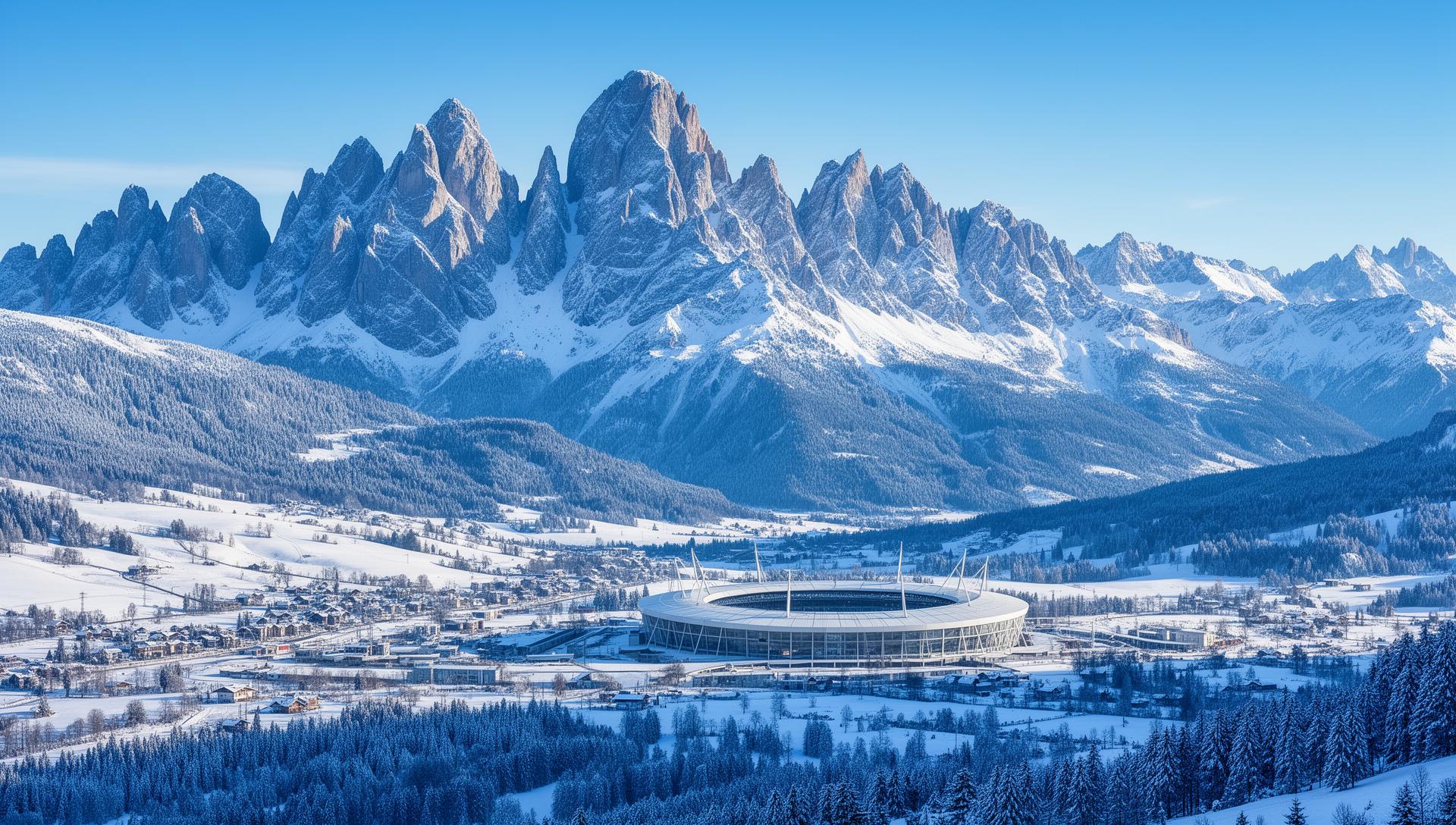
The Milano Cortina 2026 Winter Olympics marks Italy's return to hosting the Winter Games after Torino 2006. This edition presents unique challenges: venues spread across 22,000 km² from urban Milan to the alpine peaks of Cortina d'Ampezzo, Livigno, and Bormio. For app developers, it's a masterclass in multi-venue, multi-context digital experience design.
Unlike concentrated Games in a single city, Milano Cortina requires fans to navigate between dramatically different environments: from the Lombardy plains (speed skating, hockey) to the Dolomites (alpine skiing, bobsled) to Valtellina (cross-country, biathlon). The official app must serve as both event companion and travel coordinator.
"The Olympic experience increasingly lives in fans' pockets. The official app is no longer supplementary: it's essential to how modern audiences engage with the Games, whether in venues or watching from home."
Thomas Bach, IOC President
Milano Cortina 2026 by the Numbers
- 16 competition venues across 4 venue clusters spanning 22,000 km²
- 109 medal events across 16 sports disciplines
- 2,900+ athletes from 90+ National Olympic Committees
- 1.2 million expected spectators across all venues
- 10M+ projected app downloads globally
- 3 billion+ cumulative TV viewers worldwide
The venue distribution creates both challenges and opportunities. Challenges include connectivity in mountain areas, transportation coordination, and venue-specific content. Opportunities include showcasing Italy's diverse landscapes and creating lasting tourism legacy for the regions.
Milano Cortina 2026 Venue Clusters
| Cluster | Location | Sports | Key Venues |
|---|---|---|---|
| Milan | Lombardy | Hockey, skating | PalaItalia, Fiera Milano |
| Cortina d'Ampezzo | Veneto | Alpine skiing, bobsled | Tofana, Sliding Centre |
| Livigno | Lombardy | Freestyle, snowboard | Aerials/Moguls, Snowboard Park |
| Valtellina | Lombardy | Nordic, biathlon | Bormio, Santa Caterina |
| Verona | Veneto | Opening Ceremony | Arena di Verona |
This guide provides the technical framework for building Olympic-scale fan experience platforms: from real-time results integration to the infrastructure required to serve millions of concurrent users during peak medal events.
Fan Experience Platform Architecture
Olympic fan apps serve diverse audiences with varying needs: venue spectators need navigation and real-time event updates; remote fans want live streaming and results; athletes' families seek personalized tracking. The architecture must accommodate all while maintaining performance at massive scale.
Core Platform Features
- Live Results: Real-time event updates with sub-second latency from Olympic Results System
- Event Schedule: Complete competition calendar with personalization and alerts
- Venue Navigation: Offline-capable maps for all venues with wayfinding
- Athlete Profiles: Career history, event schedule, and live race tracking
- Medal Tracker: Country standings with historical comparisons and predictions
- Digital Ticketing: Mobile tickets with venue access and Apple/Google Wallet integration
- Transportation: Olympic shuttle schedules, Trenitalia integration, journey planning
- Live Video: Streaming highlights and selected live events (rights-dependent)
The architecture must separate concerns clearly: a content layer managing events, athletes, and venues; a real-time layer handling results and tracking; a personalization layer managing favorites and notifications; and a commerce layer for ticketing and merchandise.
Technical Architecture Layers
- Content Management: Headless CMS for editorial content across 10+ languages
- Real-Time Data: Event-driven architecture with WebSocket distribution
- Personalization: ML-powered recommendations and alert management
- Commerce: Ticketing platform integration with fraud detection
- Media: CDN-distributed video with adaptive bitrate streaming
- Analytics: Real-time usage tracking for capacity and experience optimization
User experience must accommodate first-time visitors unfamiliar with Olympic sports alongside hardcore fans tracking multiple events simultaneously. Progressive disclosure and smart defaults help beginners while power features serve experts.
User Persona Feature Mapping
| Persona | Primary Needs | Key Features | Context |
|---|---|---|---|
| First-Time Fan | Understanding, navigation | Sport explainers, venue maps | In-venue |
| Hardcore Fan | Multi-event tracking, deep stats | Custom dashboards, detailed results | Multi-screen |
| Country Fan | National team following | Medal alerts, athlete tracking | Both |
| Athlete Family | Personal tracking | Live GPS, event notifications | In-venue |
| Remote Viewer | TV companion, social | Sync with broadcast, social features | Home |
| Corporate Guest | Hospitality access | VIP venue features, dining | In-venue |
Real-Time Results & Event Tracking
Real-time results are the heartbeat of any Olympic app. When Federica Brignone crosses the finish line in the Giant Slalom, millions of fans expect immediate updates. This requires deep integration with Olympic timing and results infrastructure.
Real-Time Data Sources
| System | Data Type | Latency Target | Provider |
|---|---|---|---|
| Olympic Results System (ORS) | Official results, standings | <1 second | IOC/Atos |
| Omega Timing | Live timing, intermediate times | <500ms | Omega |
| GPS Tracking | Athlete positions (skiing, biathlon) | <2 seconds | Swiss Timing |
| Live Video | Broadcast feeds, highlights | <5 seconds | OBS |
| Venue Status | Capacity, weather, delays | <30 seconds | OCOG |
| Social | Athlete posts, reactions | Near real-time | Meta/X APIs |
The Olympic Results System (ORS), managed by the IOC and Atos, provides the authoritative data feed for all official results. Omega handles live timing with sub-500ms precision, while Olympic Broadcasting Services (OBS) delivers broadcast feeds. Integration requires partnership with AWS for cloud infrastructure and Akamai for global CDN distribution. Statista reports cumulative Winter Olympics viewership exceeding 2 billion, and McKinsey projects sports fan apps will represent a $15B market by 2028.
Results Integration Best Practices
- WebSocket connections for push-based result updates
- Optimistic UI updates with reconciliation on official confirmation
- Caching strategies that balance freshness with performance
- Fallback to polling when WebSocket connections fail
- Edge distribution for global low-latency delivery
- Sport-specific rendering for timing formats and rankings
Winter sports present unique tracking challenges. Alpine skiing covers 3km courses with intermediate timing at gates. Biathlon combines skiing and shooting with penalty calculations. Each sport requires specialized result visualization and tracking logic.
Sport-Specific Result Features
- Alpine Skiing: Run times, intermediate splits, course position overlay
- Speed Skating: Lap times, pair racing, personal best comparison
- Biathlon: Skiing time, shooting accuracy, penalty loops
- Figure Skating: Component scores, technical elements, total scoring
- Hockey: Live score, period stats, player tracking
- Curling: End-by-end scoring, stone positions, statistics
Athlete Profiles & Live Tracking
Athletes are the stars of the Olympics, and fan engagement centers on following their journeys. The app must provide comprehensive athlete profiles, event schedules, and, for appropriate sports, real-time GPS tracking that brings fans closer to the action.
Athlete Profile Features
- Biography: Career history, previous Olympics, personal story
- Event Schedule: Competition calendar with result history
- Live Position: GPS tracking during skiing, biathlon, cross-country
- Statistics: Personal bests, world rankings, head-to-head
- Social Integration: Official social media feeds and updates
- Favorites: Follow athletes for personalized notifications
Live GPS tracking transforms how fans experience endurance events. In biathlon or cross-country skiing, fans can watch dots representing athletes move through the course in real-time, understanding gaps and overtakes as they happen.
GPS Tracking Implementation
- Athletes wear GPS transponders transmitting position at 1Hz
- Base stations relay positions to central timing system
- Cloud processing calculates gaps, speeds, and projections
- WebSocket distribution to apps with <2 second latency
- Map overlay shows course with real-time athlete positions
- Split projections predict finish based on current pace
Personalization enables fans to create their own Olympic experience. Following athletes from their country, specific sports, or compelling storylines generates customized content feeds and proactive notifications when favorites compete.
Personalization Features
| Feature | Function | Notification Type |
|---|---|---|
| Follow Athletes | Track specific competitors | Start alerts, results |
| Follow Countries | National team updates | Medal alerts, schedule |
| Follow Sports | Sport-specific content | Event reminders |
| Custom Alerts | Personal notification rules | User-defined triggers |
| Feed Ranking | ML-ranked content relevance | Smart content surfacing |
| Social Sharing | Share favorites and reactions | Social engagement |
Ticketing & Venue Access
Digital ticketing is essential for Olympic operations: managing 1.2 million spectators across 16 venues requires sophisticated mobile credentialing. The app serves as the primary ticket wallet while enabling venue access, seat finding, and secondary market transactions.
Ticketing Feature Set
- Mobile Tickets: Digital tickets with dynamic QR codes for venue access
- Wallet Integration: Apple Wallet and Google Pay pass support
- Seat Finder: AR-enhanced wayfinding to exact seat location
- Ticket Transfer: Send tickets to friends and family with identity verification
- Resale Marketplace: Official secondary market with price caps
- Multi-Event Packages: Session bundles and package ticket management
Security and fraud prevention are paramount. Olympic tickets have high secondary market value, creating incentive for counterfeiting. Dynamic QR codes that refresh, identity verification, and blockchain-backed authenticity help protect ticket integrity.
Ticket Security Features
- Dynamic QR codes refreshing every 30 seconds
- Biometric verification for high-value events (Opening Ceremony)
- Blockchain registration for ticket provenance tracking
- Transfer limits and identity verification requirements
- Real-time invalidation of transferred or resold tickets
- Venue entry logs preventing ticket sharing/reuse
Venue access extends beyond competition venues. Olympic hospitality, athlete villages, and media centers use the same credentialing infrastructure. The app must support multiple credential types with appropriate access levels and venue restrictions.
Investment Analysis & Scale
Olympic app development represents one of the largest mobile investments in sports technology. The scale, security requirements, and integration complexity demand enterprise-level budgets and multi-year timelines.
Development Cost Breakdown
| Component | Standard Games | Complex Games (Milano Cortina) |
|---|---|---|
| Planning & Architecture | €500,000 | €1,000,000 |
| Core App (iOS + Android) | €2,000,000 | €4,000,000 |
| Results Integration | €1,000,000 | €2,000,000 |
| Navigation/Maps | €750,000 | €1,500,000 |
| Ticketing Integration | €750,000 | €1,500,000 |
| Video/Media | €1,000,000 | €2,000,000 |
| Infrastructure/Ops | €1,500,000 | €3,000,000 |
| Testing/Security | €500,000 | €1,000,000 |
| TOTAL | €8,000,000 | €16,000,000+ |
Milano Cortina's distributed venues add approximately 30-50% to typical Olympic app costs. Multi-venue navigation, transportation integration, and offline requirements for mountain areas drive complexity beyond concentrated Games.
Games Period Operations Costs
| Cost Category | Pre-Games (6 mo) | Games Period | Post-Games |
|---|---|---|---|
| Infrastructure | €200,000/mo | €500,000/mo | €50,000/mo |
| Operations Team | €150,000/mo | €400,000/mo | €100,000/mo |
| Content/Updates | €100,000/mo | €250,000/mo | €25,000/mo |
| Support | €50,000/mo | €200,000/mo | €25,000/mo |
| MONTHLY TOTAL | €500,000 | €1,350,000 | €200,000 |
ROI for Olympic apps is measured differently than commercial applications. Success metrics include fan engagement, brand value enhancement, operational efficiency, and legacy platform value for post-Games tourism and regional development.
Infrastructure & Global Scaling
Olympic apps must support extraordinary scale: 10M+ concurrent users during Opening Ceremony and medal events. This requires infrastructure designed for peak loads that may be 100x normal usage, with graceful degradation strategies when limits are reached.
Scale Requirements
| Metric | Normal Operation | Peak Event | Scaling Strategy |
|---|---|---|---|
| Concurrent Users | 500,000 | 10,000,000+ | Auto-scaling Kubernetes |
| API Requests/sec | 50,000 | 2,000,000+ | Edge caching, rate limiting |
| WebSocket Connections | 100,000 | 5,000,000+ | Connection pooling |
| Video Streams | 50,000 | 1,000,000+ | Multi-CDN distribution |
| Push Notifications | 100,000/min | 10,000,000/min | Batch processing, priority |
| Data Storage | 1 PB | 2 PB | Tiered storage, archival |
Global distribution is essential for international audiences. CDN edge nodes in major markets (Europe, Americas, Asia) reduce latency and improve experience for fans watching from home.
Infrastructure Architecture
- Multi-region deployment across Europe, North America, and Asia-Pacific
- Kubernetes orchestration with auto-scaling based on demand signals
- Multi-CDN strategy (Cloudflare, Akamai, Fastly) for redundancy
- Edge computing for low-latency data processing
- Real-time monitoring with automated incident response
- Chaos engineering to validate resilience under failure conditions
Graceful degradation ensures core functionality remains available during extreme peaks. Non-essential features may be temporarily disabled, image quality reduced, or real-time updates throttled to preserve critical path functionality.
Security & Olympic Compliance
Olympic digital infrastructure faces sophisticated threats including nation-state actors, hacktivists, and criminal organizations. Security architecture must anticipate and defend against attacks that could disrupt Games operations or compromise spectator data.
Security Threat Landscape
| Threat Type | Risk Level | Mitigation Approach |
|---|---|---|
| DDoS Attacks | Critical | Multi-CDN, traffic scrubbing, rate limiting |
| Nation-State APT | High | Zero-trust architecture, threat intelligence |
| Ticket Fraud | High | Dynamic QR, identity verification, blockchain |
| Data Breach | High | Encryption, access controls, monitoring |
| App Tampering | Medium | Code signing, runtime protection, integrity checks |
| Misinformation | Medium | Official source verification, content moderation |
The IOC cybersecurity operations center coordinates defense across all Olympic digital systems. App development teams must integrate with this infrastructure, sharing threat intelligence and participating in coordinated incident response.
Security Compliance Requirements
- SOC 2 Type II certification for data handling practices
- GDPR compliance for European spectator data
- PCI DSS for payment processing and ticketing
- IOC security standards and penetration testing requirements
- Coordination with national cybersecurity agencies (Italy, EU)
- Incident response plans with <1 hour acknowledgment SLA
Legacy & Post-Games Transition
Olympic apps shouldn't end with the Closing Ceremony. Thoughtful legacy planning transforms the Games-time platform into a lasting asset for the host region, becoming a tourism, winter sports, and cultural discovery platform for the Dolomites and Milan area.
Legacy Transition Features
- Historical Archive: Complete results, highlights, and memorable moments
- Venue Tourism: Visit competition venues with Olympic context
- Winter Sports Guide: Skiing, snowboarding, and winter activity booking
- Regional Discovery: Dolomites and Milan tourism information
- Event Calendar: Post-Olympic competitions and events at venues
- Community: Olympic fan community and reunion features
The transition from Games platform to tourism app requires careful planning. User data, preferences, and favorites should transfer seamlessly while Games-specific features are replaced with relevant regional content.
Legacy Transition Timeline
- Games + 1 month: Archive mode with full results and highlight access
- Games + 3 months: Tourism features activated, venue visitor information
- Games + 6 months: Regional tourism partnership integration complete
- Games + 12 months: Full transition to Dolomites/Milan tourism platform
- Ongoing: Annual Olympic anniversary features and community events
Legacy planning should begin during initial development, not after the Games. Architecture decisions that facilitate transition (modular content systems, flexible branding, and tourism-ready venue data) reduce post-Games transformation costs significantly.
Ready to Build Your Major Events Platform?
Whether you're developing for Olympic Games, world championships, or major sporting events, our team combines large-scale event expertise with enterprise mobile development.
1517 S Bentley Ave Apt 204, Los Angeles CA 90025